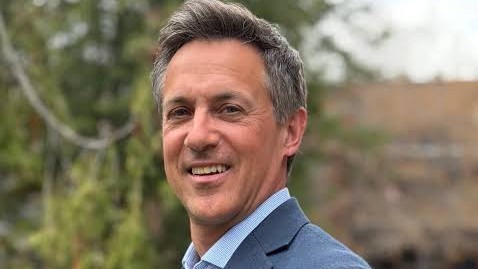
Mayoral candidate and economist Neil Saravanamuttoo says he has been looking to other major cities for solutions to some of the city’s most persistent problems.
For the former executive at the Department of Finance Canada and former chief economist of the G20’s Global Infrastructure Hub, this is the first time running for public office. Saravanamuttoo said he decided to launch his campaign because he was disappointed in Ottawa’s current leadership.
“The status quo is not working and so what I’ve done is say that we have to look elsewhere and find what some of the best practices that other cities have adopted are,” he told OBJ.
In particular, Saravanamuttoo is looking at issues such as housing, downtown revitalization and tourism as areas where outside perspective is needed.
As he prepares to release his full downtown and ByWard Market revitalization plan later this week, he said he’s put homelessness at the core of his platform. One city that has handled the same issue well is Ottawa’s neighbour across the river, he said.
“We see Gatineau has got a very successful project underway called Village Transitiôn, which is a village of tiny homes with wraparound supports and a sense of community,” he said.
Saravanamuttoo said he’d like to see something similar in Ottawa to provide additional support and reduce the number of homeless individuals in high-traffic areas.
“We have to be very empathetic that people are not there by choice,” he said. “They’re there, frankly, because housing is so expensive. People see the mental health aspects of it and assume that’s the major driver. But let’s not underestimate the importance of housing and affordability.”
Where housing is concerned, Saravanamuttoo said he’s been looking at some of the most in-demand cities in the world to understand what they’re doing to accommodate mixed-income earners in expensive areas. He’s proposing a model similar to that of some major European and Asian cities, where the city acts as a landlord for a portion of residential units aimed at middle-income earners.
“In the case of Paris or Vienna, one-quarter of the entire population of those cities lives in city-owned housing and they might live there their whole life. It’s going to be cheaper than what market rents are, but with the same quality that you would find elsewhere.”
Saravanamuttoo shared more details of his platform with OBJ, including his positions on issues most relevant to the Ottawa business community.
The following transcript has been edited for length and clarity.
What are the main pain points for the local economy?
“Different economic players have very different pain points, but there is one that is really the starting point and it’s what you would call basic city services. The common complaint that everyone has is that, whether you’re trying to get customers down to a location or provide a milieu that will attract workers, if we don’t have reasonably priced housing, if we don’t have transit and transportation that works, then it’s just so much more difficult for businesses to prosper. So that’s really, I would say, the number-one concern and by far the most important.
“What we might call the core city business, we’re just not doing as well on that as we could. When I talk to a lot of small retailers or coffee shops, often a great concern for them is around parking and getting people to their location and that’s coupled with irritations around bylaw and just the enthusiasm with which bylaw enforces its rules. To be honest, I actually wonder if bylaw needs to be so precise. I say I think that we need a directive to bylaw to be a little bit more pragmatic and a little bit more sensitive to the citizens of Ottawa.
“And then, of course, if you talk about builders and those in the housing industry, there’s still a lot of red tape. Despite what the mayor claims about having fixed housing and making that more streamlined, it’s still a very cumbersome process, much more so than it needs to be and much less predictable and standardized than it should be. So these are just some of the concerns that I’m hearing across the business sector.”
What plans do you have for nightlife/vibrancy and tourism?
“On nightlife, we’ve got nightlife. We’ve got the night mayor. We’ve got the nightlife action plan. I don’t think there’s a whole lot more that we need beyond that, so I’m not actually particularly focused on the issue of nightlife beyond what we have in place.
“But I am highly interested in the issue of tourism because I think that the city of Ottawa underperforms in tourism. We look at the visitors to places like Toronto and Montreal and many of them skip straight over Ottawa and that’s unfortunate. That’s because tourism in Ottawa is really about seeing government sites and monuments and national museums. We need to move beyond that because what people are looking for more and more in tourism is experiences.
“There are a couple of areas where Ottawa could prosper in this. Number one is what I’ll call outdoor adventure experiences. The outdoor opportunities that we have in the city are phenomenal. We’ve got the National Capital Commission parkways, where we see bike days on the weekend. Other examples are Gatineau Park for things like hiking and cycling and we’ve also got access to Larose Forest, which is just next to the municipality of Russell. It’s really this incredible diversity of opportunities.
“The other experience that we should really play up is Ottawa as an arts and food scene. We’ve got a lot of excellent vendors that can be part of this but we’re just not marketing it enough and not really giving people a reason to come to Ottawa for a foodie weekend. The final experience that we should take advantage of is around festivals. We have a lot of festivals in the city and we should be doing more to help those festivals be successful. When I talk to the festival operators, they say that the city could be doing more in terms of making permitting easier and more dependable. They also say this point about bylaw enforcement and the overzealousness with which it happens; it’s another frustration for festival organizers.”
What type of support might you offer the tech sector?
“The number-one thing I would focus on again is that we have to focus on the municipal basics. When tech companies are trying to hire, they’re trying to hire the best talent they can and bring people to Ottawa. Those people are going to say, ‘Okay, are there decent housing options? Is it easy to get around the city?’ Right now, we’re not scoring particularly well at that. Is this really a place that we want to be? So we need to focus on the basics.
“The second point is we should be more explicit at the city hall level about municipal procurement and help create some local champions. There are a number of tech success stories in the city and we know there are a number of emerging tech companies that really need that first critical client to prove themselves and maybe the city becomes their first major client to prove the viability of their product. We need to look at our procurement and ask if we can be using it to create some of these new champions that could end up becoming world champions.
“Point number three is obviously the issue of tariffs. It’s one that every company is struggling with right now. The city actually needs to have a much better understanding of how tariffs could impact the local economy. What I would do is establish an emergency roundtable with some of our business leaders so that they’re able to communicate very directly and very quickly as to what the tariff impacts are. The mayor needs to be advocating at the provincial and at the federal level to say these are the support packages that we’re going to need to lessen the impact of tariffs. The question is whether the voice of the Ottawa firms that are being impacted is being heard in those provincial and federal discussions. It’s something I don’t believe is happening right now as much as it needs to be happening.”
How would you help to grow defence and security in Ottawa?
“I just want to begin by saying that my wife is a military reservist so I’m a big defender of the Forces and understand the importance of defence, particularly when we’ve had a president next door that has been musing about trying to turn us into the 51st state. This is a very real concern for Canada and it’s something that we need to consider in a way that we haven’t had to consider in the past.
“The first step is that I very much encourage the federal government to go after achieving this Defence, Security and Resilience Bank. I was at the Department of Finance for a number of years and I managed all of Canada’s relations with the multilateral development banks, so I understand this model. I would be a champion of making sure that defence bank, if it comes to Canada, that it does come to Ottawa. We need to make sure it lands here and that would create a lot of very well-paid and high-skilled jobs for local residents that we don’t want to miss out on.
“Number two is I actually agree with the work that’s currently being done about turning Ottawa into a defence innovation hub and I think that’s where Ottawa needs to think of itself and how we need to move it forward. There are some very specific tactics that we need to adopt to make that successful.
“First of all, let’s expedite any permitting and zoning and other land use decisions by the City of Ottawa that can make this happen quickly. If we’re too slow, then you know they may just end up locating elsewhere. We need to make sure that we’re doing all that we can as a city. Number two is we need to really encourage dual-use procurement. We’ve got a large number of tech firms throughout the city that have technologies that could be dual-use and so should be in that procurement process with national defence. (We need) a mayor that can make sure that our firms have a much better ability to access that procurement pool because that is a huge pool that we can tap into.
“We need to work with the universities and the colleges to make sure that we have the specialized talent to work on defence innovation. I’ve had a long, long history with Carleton University as a student but also as the child of faculty members and as a fundraiser. I know the university very well and have seen how they have taken emerging trends and used them to align with certain interests. My father was an aeronautical engineer and he was key to making sure that Carleton became a hub for aerospace engineering. I think there’s a role for the mayor in building the bridges that bring this together and encouraging the universities to move in this direction.”