Bright side of business: The pandemic is just one more challenge for hardworking seamstress

0

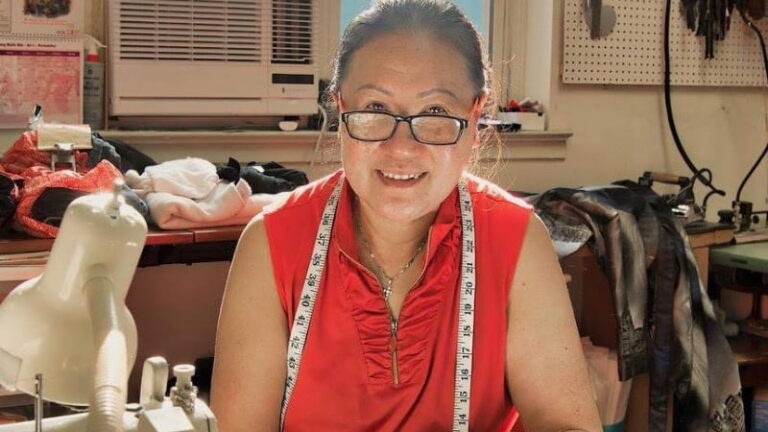
Ever since she opened Lynn’s Tailoring in 2009, entrepreneur and seamstress Lynn Truong has become a key figure in the Byward Market. 

“Hair salons, restaurants, residents — they know me very well,” Truong says. “(Whatever) they need, I say yes.” 

Tailoring is Truong’s family trade. In Vietnam, her grandmother’s company made tablecloths that were exported to France. Her uncle was a tailor and her mother was a dressmaker, running her own shop. 

As a child, Truong would go to school in the mornings and help her mother sew in the evenings. From as young as five, she had an obvious passion for the craft. A few years later, her interest in entrepreneurship grew, too.

In 1991, along with her four young children, Truong moved to Canada from Vietnam. She first started working at Dworkin Furs before moving to Market Cleaners in 1994. After 10 years as a full-time employee, Truong was hungry to work on items like wedding gowns and prom dresses — tasks that required a much larger physical space.

Now, 15 years later, Lynn’s Tailoring is located in the same building as Market Cleaners and Truong works with all types of garments, including wedding gowns and evening wear.
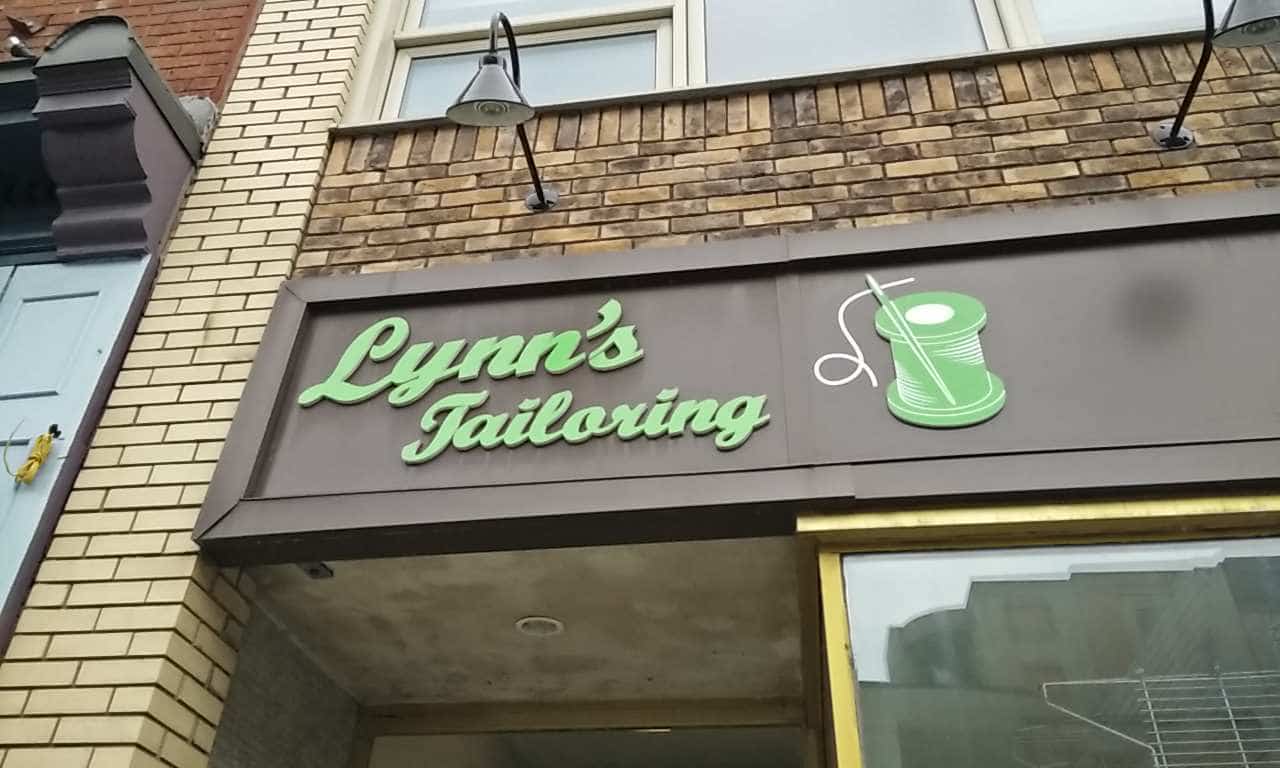
Lynn's Tailoring

But striking out on her own was far from easy. At the start of her entrepreneurial journey, Truong was working seven days a week, 15 hours a day, while also bringing up her children. “It was a big problem, I had to do everything by myself,” she says. “After I closed up shop, I (worked) until midnight.”

Truong’s son and daughter-in-law came on-board to get the business off the ground. “(It was) a lot of work, but I love it,” she says. 

The family’s hard work paid off. Over the past 12 years, Lynn’s Tailoring has built a stellar reputation, with clients from Parliament Hill and Rideau Hall. And while the shop has been running successfully for years, Truong’s youngest son still helps out once or twice a week, continuing the legacy of a family business. 

At the start of the pandemic, Truong shut her doors for four months, before reopening by appointment only. She says that, with COVID-19 putting a hold on weddings and proms and the shutdown of offices, her business went down by 70 per cent. 

Thanks to government subsidies covering 50 per cent of her business’ rent, and with a bump in sales over Christmas, Lynn’s Tailoring has been able to withstand the financial hits. However, the most recent wave of the pandemic is proving a little more challenging. 

Truong says that she’s only seeing two or three customers per day, despite being open full-time. “My (kids are) grown up,” she says. “(They) don’t need me anymore, so I have a lot of time — that’s why I come in here.” 

If things continue the way they are, Truong is nervous about making enough for rent. However, she’s hopeful that, by the time spring rolls around, restrictions will ease and offices around the Byward Market will reopen, giving Lynn’s Tailoring a boost.

“People know me so well,” Truong says of her loyal client base. “Even before COVID, people always (came) over — that’s why I got successful.” 

Looking to the future, Truong says, “I hope I can continue doing what I love.” 

The Bright Side of Business is an editorial feature focused on sharing positive stories of business success.

This column is presented by Star Motors, Ottawa’s original Mercedes-Benz, Mercedes-AMG and Mercedes Van dealer.

Since 1957, Star Motors has provided its customers with the Mercedes-Benz “The Best or Nothing” standard in vehicle selection, service, genuine parts and certified collision repair.

For your convenience, you may shop, research, chat and compare vehicles online at starmotors.ca, and visit the 400 West Hunt Club location or call (613) 737-7827 for the very best in personal service.

 

Bright side of business: Tapri founders savouring success of chai tea venture

0

If you’ve been in a cafe recently, you’ve likely come across chai tea latte – a beverage inspired by a South Asian drink that, over the past several years, has gained huge popularity in North America. 

Now, an Ottawa pop-up shop is tapping into the growing chai tea trend. Tapri serves authentic Indian chai made with fresh herbs and spices and no artificial flavours. 

Co-founder Naina Kansal jokes that Tapri is a “pandemic baby.” In May 2020, she and co-founder Parth Shah – her business partner and now fiancé – visited Quebec City. While trying to find “the perfect morning cup of chai,” they realized they couldn’t – no matter how tasty the alternatives were.

Just before the pandemic, Kansal and Shah had started an eco-friendly swag company, and were building a promising roster of clients. But when COVID-19 hit, sales evaporated almost overnight. 

“We had literally no customers,” Kansal says. 

The pair quickly decided to pivot. Seeing a gap in the market for authentic Indian chai, they began brewing up their new business idea. 

Diversity of cuisine 

Kansal explains that, in North America, Indian food is often associated with delicacies such as butter chicken. She and Shah wanted to show the full diversity of Indian cuisine, which includes the “cup of chai that India is really known for,” she says. 

Dipping into their savings, Kansal and Shah bootstrapped the beverage startup while both still working full-time jobs. They rented a commercial kitchen in Bayview and spent weekends developing recipes and selling chai tea through pop-ups. 

“The whole concept of Tapri is that it’s a roadside experience where you meet people.”

“We were overwhelmed with (the) response from our customers – we had lineups, we had pre-orders,” Kansal says. 

Tapri hired casheries and servers, with customers parking outside and grabbing a drink. 

“The whole concept of Tapri is that it’s a roadside experience where you meet people,” Kansal says. “If you go to India, you will see these tea carts at every mile, and all of them do really well.” 

Once winter kicked in, Kansal and Shah realized customers might not drive all the way to their commercial kitchen. They began dreaming of a retail location, and that’s when they hit a snag.

“Not a lot of investors are looking to invest in retail food and beverage businesses,” Kansal says – especially during a pandemic. 

Once again, the pair decided to take a leap instead of waiting around – this time, developing recipes for South Asian-inspired milk beverages. Their products, including cold cocoa, Badam Milk – a popular Indian beverage made with almond paste – and Thandai, another drink made with almonds, are now sold in four South Asian grocery stores in Ottawa.

Vegan products coming

Kansal also sees plenty of opportunities to grow the business through e-commerce, and Tapri’s products are already available online. Looking ahead, Kansal and Shah want to start offering vegan products – including vegan nachos – while staying true to their commitment to sustainability. 

All of Tapri’s products are natural, with no preservatives, meaning there’s a limited shelf life of three to four weeks per product. Currently, the business sells about 400 to 500 bottles per week – a number the owners are determined to grow. 

“We want to provide that very authentic Indian experience that people crave, and we want to sell those childhood memories in a bottle,” Kansal says.

The Bright Side of Business is an editorial feature focused on sharing positive stories of business success.

This column is presented by Star Motors, Ottawa’s original Mercedes-Benz, Mercedes-AMG and Mercedes Van dealer.

Since 1957, Star Motors has provided its customers with the Mercedes-Benz “The Best or Nothing” standard in vehicle selection, service, genuine parts and certified collision repair.

For your convenience, you may shop, research, chat and compare vehicles online at starmotors.ca, and visit the 400 West Hunt Club location or call (613) 737-7827 for the very best in personal service.

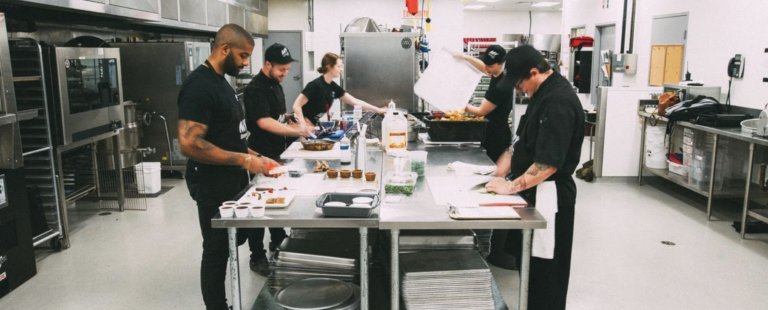
Ottawa catering company grew despite COVID-19, set to surpass its pre-pandemic earnings

0

Without a doubt, My Catering Group (MCG) is one of Ottawa’s favourite catering services, boasting clients like the Ottawa International Airport, the Museum of Nature, Ottawa Art Gallery, and even the Speaker of the House of Commons. 

Founded in 2014 by Derick Cotnam, the business caters everything from corporate events and high-end weddings, to smaller get-togethers, even offering an at-home delivery option. While Cotnam has spent much of his career in the food industry — he was just 14 years old when he first started working at a pizzeria — his journey to MCG had some twists and turns. 

In his early 20s, Cotnam became a sous-chef at a large restaurant in Ottawa. “It was kind of like a sink or swim scenario — I took that and ran with it,” he says. By 24, he had moved to Bermuda to work at a high-end resort. Despite the luxurious venue, staff were working 12 to 14 hours a day, six days a week. 

Seeing how hard it was to find a work-life balance, Cotnam decided to completely switch industries, moving to the financial sector. Within one and a half years, however, Cotnam found that he was “not at all passionate about selling life insurance and investments,” he says. 

A New Chapter 

Cotnam realized his true passion was for “cooking, hospitality and entertaining people,” he says. “I just wanted to figure out a way to be able to do it for myself and with people that I really enjoy working with” — which is where MCG came in. 

By 2012, Cotnam had his business up and running. For two years, he worked various restaurant gigs part-time while running MCG. “For a very long time, I didn’t really take any income from the company,” he says — but come 2014, leading MCG was Cotnam’s full-time job.

Within a handful of years, MCG was landing catering contracts like a 1200-person party for HEXO, an 800-person event for the closing of parliament’s Center Block, and a Deloitte holiday party for 500 people.

For Hexo, MCG provided a chicken-and-ribs-style buffet barbecue, while at Deloitte, they offered a cheese charcuterie station, and “a raw bar where our chefs (were) shucking oysters, putting tuna crudo together in front of people,” Cotnam says.  

The Party’s Over — Or Is It?

Since COVID-19, parties with hundreds of people can feel like a distant daydream. Just before the pandemic hit, MCG had picked up a contract with the Ottawa International Airport to supply their grab-and-go-foods, creating on average $100,000 of revenue per month. 

It was those numbers that made MCG eligible for the government subsidies that kept them in operation for the first part of the pandemic. “Had we not had that job, the business might not be in existence,” Cotnam explains. 

To stay afloat, Cotnam and his team launched ‘MCG At Home’, a meal-delivery platform with a rotating four-course menu. Before the pandemic, Cotnam says his business was on-track to triple its 2019 revenue. As it currently stands, MCG’s forecasts already surpass what they were set to make in January 2020 — three months before COVID-19 hit. 

However, with the pandemic’s current third wave, Cotnam says he’s unsure what lies ahead. “I get pretty friggin anxious about what the future is going to be,” he says. “If everything turns around with the pandemic, there’s going to be lots of opportunities — we’re going to be operating at full capacity.”

The Bright Side of Business is an editorial feature focused on sharing positive stories of business success.

This column is presented by Star Motors, Ottawa’s original Mercedes-Benz, Mercedes-AMG and Mercedes Van dealer.

Since 1957, Star Motors has provided its customers with the Mercedes-Benz “The Best or Nothing” standard in vehicle selection, service, genuine parts and certified collision repair.

For your convenience, you may shop, research, chat and compare vehicles online at starmotors.ca, and visit the 400 West Hunt Club location or call (613) 737-7827 for the very best in personal service.

Bright side of business: Jamieson Law reaps real rewards from going virtual

0

Three years before the pandemic forced the legal industry to move online, Bree Jamieson-Holloway had already opened a virtual law firm – her very first business, launched at the age of 31. 

Even as a child, Jamieson-Holloway always knew she wanted to help people, but “I didn’t really know, at an early age, how I was going to (do that),” she says.

Eventually, she found her calling as a lawyer.

Today, Jamieson-Holloway’s firm, Jamieson Law, helps clients with all aspects of corporate law from employment to commercial leasing, as well as offering wills and estates law. 

On top of giving her team more control over their schedules, going virtual makes legal services more efficient, allowing her to give clients better service while charging lower fees, Jamieson-Holloway says. 

After studying at the University of Ottawa, Jamieson-Holloway got a scholarship to study international relations and business in the U.K. Following a stint at a large international law firm in London, she moved to Hong Kong in 2012 before going back to England.

Entrepreneurial mindset

Despite building a successful career in the U.K., Jamieson-Holloway felt she was a “small pawn in a big wheel of patriarchy.” Referring to her racial background, she adds, “I don’t look like I’m mixed-race, so I think in some ways, that played into my ability to obtain opportunities which maybe I wouldn’t have achieved otherwise.” 

After becoming pregnant with her first child, Jamieson-Holloway and her husband, who she’d met in England, decided to move back to Canada. 

Returning to Ottawa, Jamieson-Holloway had to build her professional network from scratch – but her entrepreneurial mindset and interest in technology gave her the ideal springboard to opening her own firm.

In 2017, Jamieson-Holloway launched Jamieson Law, founding her business on the values of diversity, equity and inclusion, as well as transparency, compassion and trust. For her clients, she says that means offering them easy access to documents and transparency in terms of fees so “they’re not guessing at what their bill is going to be.” 

Looking back, Jamieson-Holloway says that launching her own boutique law firm was “intimidating, nerve-wracking, terrifying – but it was also really exhilarating.” 

In the first year, the Jamieson Law team consisted of Jamieson-Holloway herself and one assistant. After she went on quasi-maternity leave in 2019 and worked part-time for six months, the firm began steadily growing its roster of clients. 

“That was a really powerful feeling as a woman to realize that I could be a mother, and I could still grow a successful business,” she says. 

Today, the firm has a staff of six and is still growing. While the team is currently all women, Jamieson-Holloway says this wasn’t by design.

“I want Jamieson Law to feel accessible to everyone,” she says. 

Consistent growth

The law firm experienced consistent growth throughout the pandemic – something Jamieson-Holloway she wasn’t expecting, considering there’s usually an ebb and flow of clients in contract law. 

Despite this, Jamieson-Holloway has a great deal of sympathy for businesses that have been hit hard by COVID: her other entrepreneurial venture, an in-home service-based platform, had to close in 2020. 

But when it comes to her law firm, Jamieson-Holloway has big plans for the future. 

“We’d like to develop into a prominent international law firm (while) maintaining that boutique-size and feel,” she says, allowing her team to really get to know their clients. “(It’s) so crucial for humankind that businesses recognize that connection is so important.”

The Bright Side of Business is an editorial feature focused on sharing positive stories of business success.

This column is presented by Star Motors, Ottawa’s original Mercedes-Benz, Mercedes-AMG and Mercedes Van dealer.

Since 1957, Star Motors has provided its customers with the Mercedes-Benz “The Best or Nothing” standard in vehicle selection, service, genuine parts and certified collision repair.

For your convenience, you may shop, research, chat and compare vehicles online at starmotors.ca, and visit the 400 West Hunt Club location or call (613) 737-7827 for the very best in personal service.

Bright Side of Business: Building an Ethiopian business from Ottawa

0

Owner of men’s fashion brand Barcon Getta, Russom Haile Woldemichael, has always had an eye for style — and now, he’s determined to combine it with social impact, creating employment opportunities in Ethiopia. 

Born and raised in Ethiopia, Russom and his family left the country following the 1998 war. He and his brother, Seare, went to Kenya before travelling to South Africa, where they began to sell clothing and accessories. After just three years of working as street vendors, they opened their own clothing store. 

“I was introduced to entrepreneurship based on a life skill, not a theory (taught) in school,” Russom says. 

In 2004, Russom moved to Canada, bringing three years of experience as a store owner. Despite this, he struggled to find employment, before eventually joining a parking company. Although he quickly moved up the rungs to management, Russom missed the freedom of making his own schedule — so he switched to driving taxis.

Russom drove cabs full-time for nine years, constantly meeting new people and learning about Ottawa’s fashion landscape – as well as the gaps in the market. “If I want to buy fashion for myself, I have to go to Montreal, and find an independent store importing clothing from Italy, from Spain,” Russom says.  

By 2017, Russom had launched Barcon Getta, completely self-funding the creation and selling of premium-leather men’s shoes and accessories. Still working part-time as a taxi-driver, Russom would create the designs himself, as well as hiring recently-graduated freelance designers in Ethiopia. “I am a new beginner, they are new beginners — I’m giving them a chance,” Russom says. 

Russom sources raw materials in Ethiopia, and ships them to China and Turkey for manufacturing Barcon Getta products. Before the pandemic, Russom would sell the finished items to independent stores in Toronto and Montreal. 

“The problem is COVID happened — so now those businesses have closed,” Russom says. He was left with a choice: give up, or become a retailer himself. Choosing the latter, Russom quit his job as a taxi-driver in 2021 to become a full-time entrepreneur. “The reason I am an online business is because I don’t take ‘no’ as an answer, and I don’t accept failure,” Russom says.

As his business grows, Russom will keep social impact at the heart of his brand. “The benefit has to be not only for me — it has to be beyond me. It has to go to my family, it has to go to my community,” he says.

He explains that Africa is known for its resources. “We have gold, we have diamonds — but we don’t have a company which sells a finished product of diamonds or gold,” he says, using Tiffany & Co. – an American company using African resources — as an example. “I’m trying to bring both worlds together in a fair way.”

Barcon Getta’s laptop bags are the only item fully-made in Ethiopia — but bit by bit, Russom and his other brother Fikre are buying new machinery to create a state-of-the-art manufacturing plant. “By the end of five years, my goal is to have all products made 100% in Africa,” Russom says. 

The Bright Side of Business: A local alternative to the big restaurant delivery apps

0

Necessity is the mother of invention: before the pandemic, Ottawa tech company GetIt Local was a food delivery service at sports stadiums, ferrying beers and hot-dogs so spectators wouldn’t miss any action by leaving their seats. 

The business was growing steadily, with clients lined up in the AHL and NHL. “Obviously, when COVID hit, that crushed our stadium software pretty much overnight,” says co-founder Ben Lacroix. 

By the fall of 2020, Lacroix and co-founder Ryan Hardy had pivoted their model, and GetIt Local became a delivery service for businesses across Ottawa. The app focuses on minimizing the cost of delivery for both consumers and business owners — something that is particularly attractive to restaurant owners, who can lose up to 30 percent of revenue through third-party apps. 

As a consumer, using GetIt Local feels very similar to scrolling through Uber and Skip The Dishes — but unlike those major players, GetIt Local is a monthly subscription service for businesses, offering a sliding price scale from $49 to $499 per month, with no contractual obligations.

On top of this, GetIt Local charges a flat fee for delivery “instead of the whole smoke and mirrors game that the industry plays,” Hardy says, ensuring their drivers receive a fair wage.  

To demonstrate how GetIt Local works, Hardy uses an example of a $100 pizza order. When purchased from “the main global competitor,” he says, $30 would be charged as a back-end fee to the business, with another $10 to $15 charged to the consumer — meaning the third party app makes around $40-$45 off the $100 order.

With GetIt Local — depending on the size of the business — that same transaction could come to $10-$15 in total fees paid by the consumer and the business combined. “It’s a totally new approach that we bring to the table that these current companies do not do — and they’re not willing to do it, because they’re only playing the profit game,” Hardy says.

The app is used by almost 100 restaurants, including the Clocktower Brew Pub, The Grand Pizzeria, Dreamland Café. Lacroix and Hardy expect to be serving around 150 businesses within the next two months – not counting the 30-odd restaurants being added through their recent partnership with Love Local Delivery, another local food delivery service.

At the start of the pandemic, GetIt Local’s only staff members were Lacroix and Hardy, working out of a 200 square-foot office. One year later, they have a staff of 24, and work with 20 contract drivers through Ottawa company Responsible Choice.

“We went through some really rough times in the first few months, just making sure the app works,” Hardy says. “Ben and I definitely have had a couple of sleepless nights as entrepreneurs and business owners, but our team keeps us going — our clients keep us going.” 

As well as expanding across the city, GetIt Local is starting to service non-mainstreet businesses, helping to deliver items for catering companies, bakeries, alcohol stores and more. With a beta version of its app being tested in Calgary, and a new app redesign coming in November, “there’s going to be a big future for us in the coming months,” Hardy says.

The Bright Side of Business is an editorial feature focused on sharing positive stories of business success.

This column is presented by Star Motors, Ottawa’s original Mercedes-Benz, Mercedes-AMG and Mercedes Van dealer.

Since 1957, Star Motors has provided its customers with the Mercedes-Benz “The Best or Nothing” standard in vehicle selection, service, genuine parts and certified collision repair.

For your convenience, you may shop, research, chat and compare vehicles online at starmotors.ca, and visit the 400 West Hunt Club location or call (613) 737-7827 for the very best in personal service.

Considering a career in cybersecurity? Don’t let misconceptions hold you back

0

While some industries have seen a decline in job prospects over the last 18 months, there’s one sector where job opportunities abound: cybersecurity. According to research from Deloitte, the demand for cybersecurity professionals grows by seven per cent every year. After all, almost every company has proprietary data to protect and, given the rapid increase in the number and severity of cyber attacks brought on by the widespread adoption of working and learning from home during the pandemic, the need for skilled professionals is now greater than ever.

I recently completed my Master’s of Computer Science in the Faculty of Engineering at the University of Ottawa. From the start, I was eager to move into cybersecurity. This spring, I landed a job working in a software quality assurance and developer role at Fortinet, a global cybersecurity company, but with a significant presence in many parts of Canada. It’s exciting work that requires creative thinking and problem solving to ensure we consistently deliver a great customer experience, fast performance, and best-in-class security.

Because cybersecurity is a growing field, I get a lot of questions from other job seekers who are curious about this industry but never truly considered it due to their belief that a lack of technical skills will prevent them from pursuing a career in the field. From these conversations, I’ve found that there are many misconceptions about cybersecurity and what background you need to pursue a successful career in this space.

You need a specialized degree

There’s a pervasive idea that it’s “hard” to get into cybersecurity, even for people with a technical background. I heard this a lot and even believed it when I started looking at cybersecurity as a career path. I was working toward my computer engineering degree, and even I thought it might be hard without special courses or training programs.

The fact is, the most important factor to success is a passion for the work. I myself did not even take a cybersecurity course until mid-way through my undergraduate degree. And, while I found that the training was great, having a passion for cybersecurity is what truly propelled me forward.

The higher your level of interest in the topic, the more you will immerse yourself and your technical skills will come along naturally. This doesn’t have to involve a formal education as there are many free resources available for those with the drive to pursue them, including the library of free cybersecurity training courses available through Fortinet’s NSE Training Institute.

Cybersecurity is very niche

People often tell me they think cybersecurity is prohibitively specialized, but I disagree. Cybersecurity is everywhere. There are over 27 billion connected devices globally, including your mobile phone, laptop, TV, speakers, and even doorbell or fridge. Anywhere we keep a password or scan our face or fingerprint, we are interacting with cybersecurity.

From these everyday devices cybersecurity expands into a huge market. Once you understand this, it’s easy to start moving down the path and educating yourself about the industry and the very real threats facing us in today’s connected world.

You need a really technical skillset

While a technical skill set is certainly an asset, I’ve learned that the most valuable skill is curiosity. My path to a career in cybersecurity was curiosity-driven. I wondered how security was maintained and where my data was going every time I logged into a device. People don’t often think about that – we just log in, and that’s that. But I needed to know what was happening beneath the surface and this drove my success.

This trait is personal – you have it, or you don’t. I encourage people to take courses, watch videos, talk to experts, but, most of all, to be curious. Thinking outside of the box will teach you more about cybersecurity than you can imagine.

Girls just aren’t that into cybersecurity?

Even in 2021, there are still many gender biases and a lack of female representation in the tech sector. It should go without saying but gender does not determine if you will be good at cybersecurity. As a woman taking computer engineering, I’ve faced some dated perceptions. I remember during my undergraduate degree signing up for bug bounties, where individuals are compensated by organizations or developers for reporting bugs, and having my male classmates suggest I couldn’t find them – and that my time was better spent on social or beauty apps.

It was a learning moment no doubt, not just for me but for my classmates as well, because you can bet I went ahead and found those bugs. Now, I have my Master’s degree in Computer Science, and I’m employed in the cybersecurity field. Game, set and match.

Now that I’ve dispelled some of the myths about working in cybersecurity, I hope your curiosity is peaked. If you have a curious nature and passion for problem solving, this may be the path for you too. The field is vast and offers countless opportunities for people from all backgrounds and with researchers predicting more job openings than qualified applicants, now is the perfect time to begin your own journey in cybersecurity.

Ishita Shah is a software developer and quality assurance professional at Fortinet.

Bright Side of Business: Juicing up the bottom line

0

Opening just six months before the pandemic hit, Hintonburg fruit juice store, Juice Dudez, has seen some tough days — but now, two years later, things are looking just peachy. 

The business was founded by 26-year old entrepreneur Nasr Nasr, who saw a gap in Ottawa’s market for “fresh juices, smoothies and high-end chocolate desserts,” he says. As well as selling juice — created from local fruit, whenever possible — Juice Dudez offers a range of desserts like waffles and crêpes, drizzled with melted Belgian chocolate. 

Nasr grew up farming fruits and vegetables in Lebanon, which his father would sell or trade. Nasr always enjoyed the work, but “when you grow up in a household that owns a small business, it’s quite stressful,” he says. 

Encouraged by his family to get a more stable job, Nasr enrolled in an engineering school, kick-starting his classes in Lebanon. In May 2017, he decided to move to Ottawa to continue studying — but the motivation didn’t last. “When I was 21, 22, I was always just like, ‘this is not my thing. I was born to be an entrepreneur, this is inevitable,’” Nasr says. 

Leaving school behind, Nasr took on any gig he could find, from pizza deliveries to dish-washing. Eventually, he landed a sales job, working on commission for a company in the financial industry. While the job was challenging at first, he says, “the potential of how much you make is basically unlimited. The harder you work, the better you do.”

To save up enough money to open his own business, Nasr says he worked seven days a week for two years. “I was able to save a few bucks, and I basically used all of it (to open Juice Dudez),” he says. “I did not borrow any money — it was only my savings.”

Juice Dudez opened its doors in September 2019. In its first six months, Nasr says, the business was losing a few thousand dollars per month. “Then when COVID hit, the loss was even bigger — it was horrible.” 

Nasr recalls one particularly difficult evening in March 2020, working alone in the store. “I was only able to sell $70 worth of product,” he says. “It was a Friday night — it was insane.” 

But Nasr quickly pivoted to stay afloat, upping his marketing budget and negotiating rates with third-party delivery apps like Uber. “It’s a 30% fee that they charge, but we were able to bring it down a little,” he says. 

Nasr adds that, as well as this, he tweaked his menu a little: pre-COVID-19, Juice Dudez put a lot of effort into food presentation. Knowing his products now had to travel, he and his team changed up the food design to make them more travel-proof — while still being visually-appealing. 

“One mantra I like to follow in businesses is: you invest in your business when you need the money the most,” Nasr says. 

And it worked: today, Juice Dudez has 12 staff members, up from just four at the start of the pandemic. Nasr says he receives regular offers from investors, and already has the funds to launch a potential corporate branch, should Juice Dudez start franchising. 

“It started very rough, and very small, but the sky is literally the limit,” he says. 

The Bright Side of Business is an editorial feature focused on sharing positive stories of business success.

This column is presented by Star Motors, Ottawa’s original Mercedes-Benz, Mercedes-AMG and Mercedes Van dealer.

Since 1957, Star Motors has provided its customers with the Mercedes-Benz “The Best or Nothing” standard in vehicle selection, service, genuine parts and certified collision repair.

For your convenience, you may shop, research, chat and compare vehicles online at starmotors.ca, and visit the 400 West Hunt Club location or call (613) 737-7827 for the very best in personal service.

Tourism’s curse: First hit, last to recover

0

First hit and last to recover.

That’s the diagnosis for Ottawa’s tourism industry from Jantine Van Kregten, the director of communications of Ottawa Tourism.

What should be the busiest time of year for the city’s operations – September and October – is instead ghostly quiet. The typical conventions, meetings and tours from other countries were cancelled, leaving hotels emptier than they’d like.

“When somebody books a conference for 500 people, that fills up a lot of space,” she said.

Larger conferences and events are booked a year or two in advance, so hotels and conference centres are already looking ahead to 2023 and 2024.  That includes the Shaw Centre – which is open for business and just won the 2020 award for the world’s best convention centre.

Ottawa Tourism came up with several programs to attract people to the National Capital Region. 

The ‘Together Again’ program offered discounts and incentives for future meetings of 10 or more people, while another program offered those who booked two nights at hotels between July 5 and October 9 with $200  to spend at restaurants, tours, and attractions

Steve Ball, president of the Ottawa Gatineau Hotel Association, said the hotel industry is still suffering despite a brief surge on Canada Day weekend when hotels saw a “healthy” amount of traffic from Toronto and Montreal. 

But Ball said in the last few months overall bookings have been spotty, and for the most part people are only booking on weekends. 

Ball said hotels are facing difficulties re-hiring staff, as many have either moved on to other industries or are still taking advantage of government support programs.

Ball said Ottawa hotels don’t expect to see regular booking numbers until 2023. “When it comes to the hotel business meetings and conventions, it takes a lot of planning, prep time, and lead time to host a meeting. So it’s not like a light switch. It’s not going to come back overnight,” he said.

Ball said Ottawa hotels depend on business travel, group meetings, and conventions for revenue, “and because there’s very little of that on the books, we’ve got great hopes that leisure will carry us through the fall.”

There are subtle signs that some business meetings are returning. This fall, Tourism Industry Association of Canada (TIAC) will be holding a meeting at the Westin hotel, while the Tourism Industry Association of Ontario will be at the Brookestreet hotel.

Beth Potter, president and CEO of TIAC, said people are “excited about the ability to come together and network with their colleagues from across the industry and across the country. We’re really looking forward to getting back to a semblance of normalcy.”

Potter said the seasonal nature of the tourism industry puts them at a disadvantage. A full day of business in July can equal a week’s worth business in February.

“Their revenue models just aren’t there yet and they’re not going to be able to be back at normal operating capacity until at least next summer,” she said.

Potter said TIAC will be asking the federal government to either extend the wage and rent subsidy at the original levels of 75 per cent for businesses in the tourism industry or to work with the industry to develop something new and specific for the sector. 

The CFIB is also calling on the federal government to extend the supports.

“We have to ensure that we don’t lose all these businesses that have been supported for this long, right at the time when they can see the light at the end of the tunnel. We just need to get them through to the other side of the tunnel,” Potter said.


The Bright Side of Business: Safi Fine Foods reimagines itself at new Sandy Hill location

0

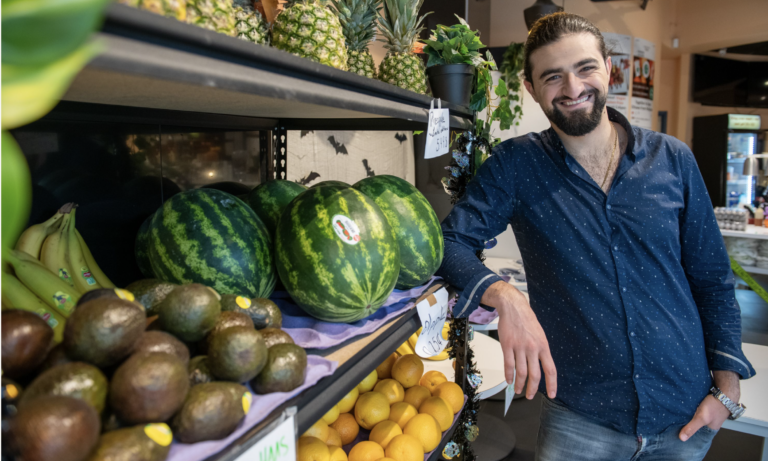
For five years, Mohamed Ali Abdo has been a staple of the Sandy Hill community – first running Safi Meats and later, Safi Fine Foods. 

Now he’s back in business.

Abdo started Safi Meats as an online shop for halal meat with his cousin and longtime mentor, Rashid Ahmed Ali. An entrepreneur at heart, Abdo spearheaded the business’s move into wholesaling, and one of his clients was a store on the corner of Somerset Street and Blackburn Avenue. 

When the owners of that store wanted to sell their business in 2016, Abdo was first in line. 

“To be honest, I wasn’t (financially) ready to buy everything from them,” he says. But after working out a monthly payment plan with the owners, Abdo was able to seal the deal. 

“I never took a loan from the bank, I never took a loan from any association – I saved my own money,” he says.

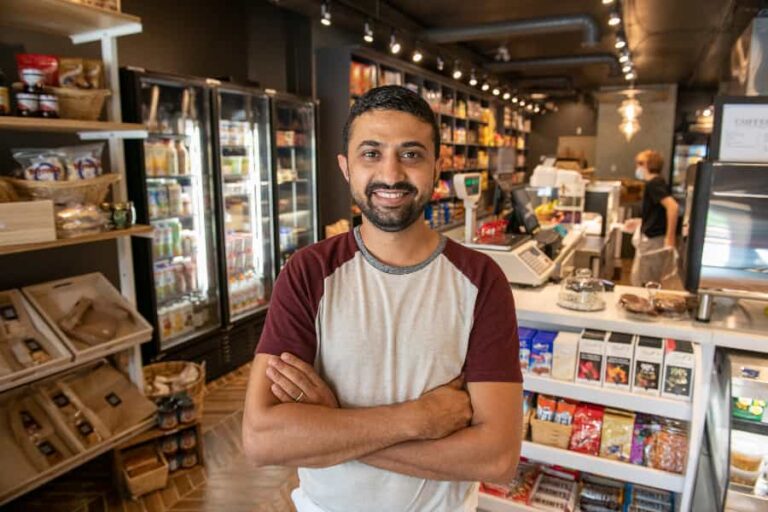
In 2018, Abdo brought his friend from university, Ali Zeddou, into the business. Together, the pair turned Safi Meats into Safi Fine Foods, a convenience store that would sell food essentials as well as grab-and-go meals. 

“Even if I don’t make a lot of profit, if I cover my rent, I pay my staff and I pay all the suppliers, (I’m) happy.”

“Even if I don’t make a lot of profit, if I cover my rent, I pay my staff and I pay all the suppliers, (I’m) happy,” Abdo says.

But after three successful years, Safi Fine Foods was forced to close in January 2020 – just two months before the pandemic. Abdo explains that the building was sold, and its new owner wanted to open up a restaurant where the food store had been. 

“It wasn’t easy,” Abdo says. “It’s like someone comes and takes your baby from you. Safi used to be the baby of the community.” 

After hosting a closing party – but not a goodbye party, Abdo emphasizes – he travelled to Turkey shortly before widespread travel restrictions were imposed, joining his wife on a vacation they’d planned before COVID-19 hit. Determined to relaunch the business, Abdo began searching online for another Sandy Hill property. 

Before long, he heard of a new property being built on the corner of Russell Avenue. By April 2020, he had signed a pre-contract with the developer, with the lease starting last October.

Navigating hurdles

However, there was a long way to go before the store’s grand reopening: from last October to February this year, the building was under construction, and Abdo had to go through the process of applying for commercial zoning. The new location was also about 1,500 square feet smaller than the previous one, meaning every inch of space had to be used wisely.

“But you know what?” Abdo says. “I’m already in the battle, so I have to go to the end.”

And that’s exactly what he did, reopening Safi Fine Foods at the new location this month. Just as he did before, Abdo has continued to support the Sandy Hill neighbourhood, sponsoring events like park cleanups. 

“Without my community, my business (wouldn’t) be successful,” he says. “You have to give and take at the same time.”

The store continues to sell its popular North African and Middle Eastern foods, and it now has a café area with seating and a grocery store section with local produce as well as a commercial kitchen. 

Abdo explains that this is all part of his vision for a Safi Fine Foods franchise.  

“We’re planning for the second, the third, the fourth (store),” he says. “That’s why we’re working on our brand.”

The Bright Side of Business is an editorial feature focused on sharing positive stories of business success.

This column is presented by Star Motors, Ottawa’s original Mercedes-Benz, Mercedes-AMG and Mercedes Van dealer.

Since 1957, Star Motors has provided its customers with the Mercedes-Benz “The Best or Nothing” standard in vehicle selection, service, genuine parts and certified collision repair.

For your convenience, you may shop, research, chat and compare vehicles online at starmotors.ca, and visit the 400 West Hunt Club location or call (613) 737-7827 for the very best in personal service.