Pretty (smart) in pink: New flower café and shop sells itself

0

Luxe Blooms Flower Café is certainly the freshest retail face in Ottawa’s ByWard Market. The plates are pink, the chairs are pink, pink cotton floss adorns some drinks, and the café’s north wall is embellished floor-to-ceiling with powder-pink roses. 

Owner Michelle Louis-Jean says the distinctive décor means marketing often takes care of itself. 

“The first week we opened was a little slow,” she admits, “but as people started coming in and posting their photos on Instagram, Facebook and TikTok, everyone else was like, ‘What is this place? Where is it? Is it in Ottawa? Can I go?’”

The café, at 254 Dalhousie St., opened its doors July 1 of this year and, aside from Louis-Jean’s first anxious week, has remained busy ever since. The café website warns that waits for tables can be 20 to 45 minutes on weekends. Louis-Jean jokes there’s sometimes a second line within the store as well. That’s because the tables directly adjacent to the flower wall are the prime location for selfies. And Louis-Jean loves that energy. 

“It’s a space to come and just meet your friends and family, get all dressed up, all dolled-up, get some great pictures and some great memories,” she says. 

The flower wall itself is an arrangement of flowers Louis-Jean calls “infinity roses.” They are real flowers that do not require water and that maintain their fresh appearance for two to three years thanks to a proprietary infusion technique. 

The buzz and bustle around the wall have spill-over marketing benefits as well. That’s because Luxe Blooms is both a café and a traditional flower shop. Louis-Jean says the lingering crowds make for great cross-promotion.

“When they’re here, they end up inquiring about the flowers and the candles and all the other products that we have,” she explains. “And at the same time, if they’re buying flowers, they’ll buy coffee, some macaroons or pastry.”

Louis-Jean started Luxe Blooms as an online business six years ago when she noticed that no one in Ottawa was doing boxed flower arrangements. She was working as a legal secretary at the time and the flower business was more of a creative outlet and side hustle for her. But interest in the relative novelty of her boxed arrangements got her thinking about a brick-and-mortar store. 

“I like to do things that are different and unique. If it’s been done before, I don’t really have much interest in it,” she explains. “And so I knew that when I was going to open my flower shop, I really wanted it to be something different.”

She is careful to note that flower cafés are not new. There have been similar shops in the U.K. for years, but the idea of integrating it with a flower shop is certainly a first for Ottawa and other Canadian cities. 

“I’ve actually had people come in all the way from Toronto and Montreal. They said that they came all the way to Ottawa to do nothing else,” Louis-Jean says. “They saw it on social media and they just had to come.”

As a self-taught florist with no background in food service, Louis-Jean is an unlikely retail entrepreneur and restaurateur, but she is growing her business. She recently added a full-time florist with a decade of wedding experience to her staff of 10 employees and plans to ramp up her wedding flower business, which can include renting one of two eight-by-eight removable flower walls. She is also looking at adding a balloon bar to complement the mix of fresh and preserved flowers on offer. 

It has been a big change for Louis-Jean, whose online business was a one-woman operation. 

“I wouldn’t say that it’s easier now, because I’m running two businesses, but at least I have a lot more help,” she says. “It’s easier in that sense, but then it’s on a much bigger scale.”

Speaking of scale, she says a second location is the next big thing on the horizon for her.  
ZipGrow and its new ZipPod part of growing agtech sector in Cornwall

0

A new portable turnkey farming system made in Ontario could contribute to improving food security, solving supply chain disruptions and conserving water resources.

Last month, ZipGrow Inc., a Cornwall-based global provider of vertical farming systems, unveiled its latest innovation: the ZipPod.

“The ZipPod fills a niche between big vertical farms and the backyard garden, ideal for the far north or desert conditions or a parking lot in Toronto. It fills a niche that has been lacking until now,” says Eric Lang, president and co-founder of ZipGrow.

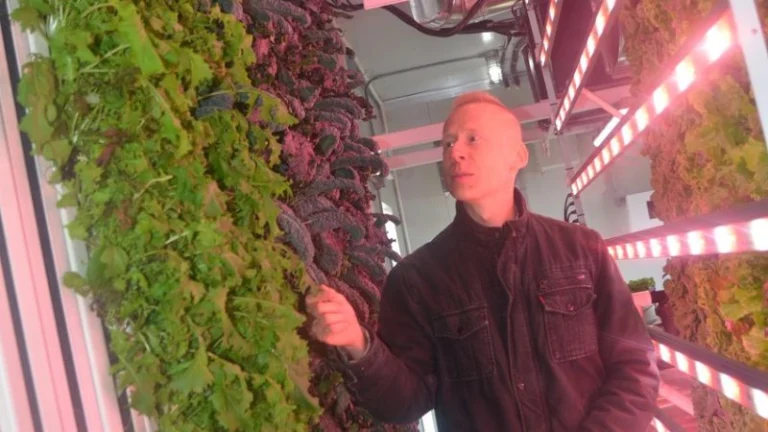
Launched at the International Plowing Match held in Kemptville this past September, the ZipPod resembles a truck shipping container but is actually a purpose-built container farm that compacts anywhere from two to four acres of farmland into a 3,800 cubic foot hydroponic farm. At its launch, the ZipPod garnered a lot of attention, with hundreds of farmers and families wandering its aisles and sampling the produce growing along the walls and down the centre of the container. The ZipPod is a turnkey operation that can be delivered ready for immediate use anywhere in the world.

“The day it arrives, the ZipPod is ready to go and you can get in and start growing. It is a full R22-insulated setup, that is snow load rated and engineering and building code rated so you can drop it either far up north where it’s minus 40C to minus 45C, or far south where it’s plus 40C to plus 45C, or in a parking lot in Toronto,” says Lang.

The pods, like other ZipGrow vertical farm systems, operate on a closed loop system, where water is continually re-circulated resulting in 95 per cent less water use than traditional farming.  

“The ZipPod’s energy requirements … (are) neutral or negative, using about 250 kw/day for 38,500 heads of lettuce per year and almost no water,” says Lang.

The initial cost for a ZipPod is US$179,000 and operating costs are estimated at around US$17,000 to US$20,000 a year. Each container can produce up to 3,200 kg of basil, for example, or 5,200 kg of kale in a year, according to the brochure.

Like all ZipGrow’s vertical farming systems, including its original product the ZipGrow Tower, the ZipPod is designed for soil-less growing using grow mediums such as peat and nutrients tailored to the produce added to the water within an enclosed ecosystem. 

“We control the environment inside — the light — the nutrients and all of that translates into a very flavourful product; no herbicides, fungicides or pesticides,” says Abby Lepak, co-owner of Farm Girl Greens, who operates a ZipGrow vertical warehouse farm in Auburn, N.Y. 

Lepak focuses on growing food for her community and has been in business for almost three years. “We’re the only source of local fresh greens in our community. Our customers and even a chef tell me my lettuce tastes like spring,” she says.

To a large extent, that’s why ZipGrow developed the ZipPod, to make it possible for people in communities that don’t have access to good farmland or where the climate is too harsh to have access to year-round fresh produce grown locally.

“The reality is what drives us is access to healthy food. I’m still a traditional farmer, have been farming all my life,” says Lang, explaining that vertical farming and ZipPod farming are not meant to replace traditional farms but to improve food security.

ZipGrow is one of several agtech companies that have located in Cornwall and are turning the city into the agtech innovation hub of Eastern Ontario. Companies like Cultivatd, Fieldless Farms and ZipGrow are pushing the boundaries of agtech innovations, developing new technologies and services to provide better access to healthy food in a climate of diminishing farmland and food security. 

“We’re fortunate to have a number of leading-edge agtech companies in Cornwall and they’re spurring more. It’s an absolute growth sector for us,” says Bob Peters, manager of economic development with the City of Cornwall.

Bring on the bugs: Kemptville couple start insect-based skincare line

0

Some might suggest that, as our population increases, we’ll have to turn to insects for sustainable products and sustenance. However, for most of us in the Western world, there’s a huge ‘ick’ factor to overcome.  

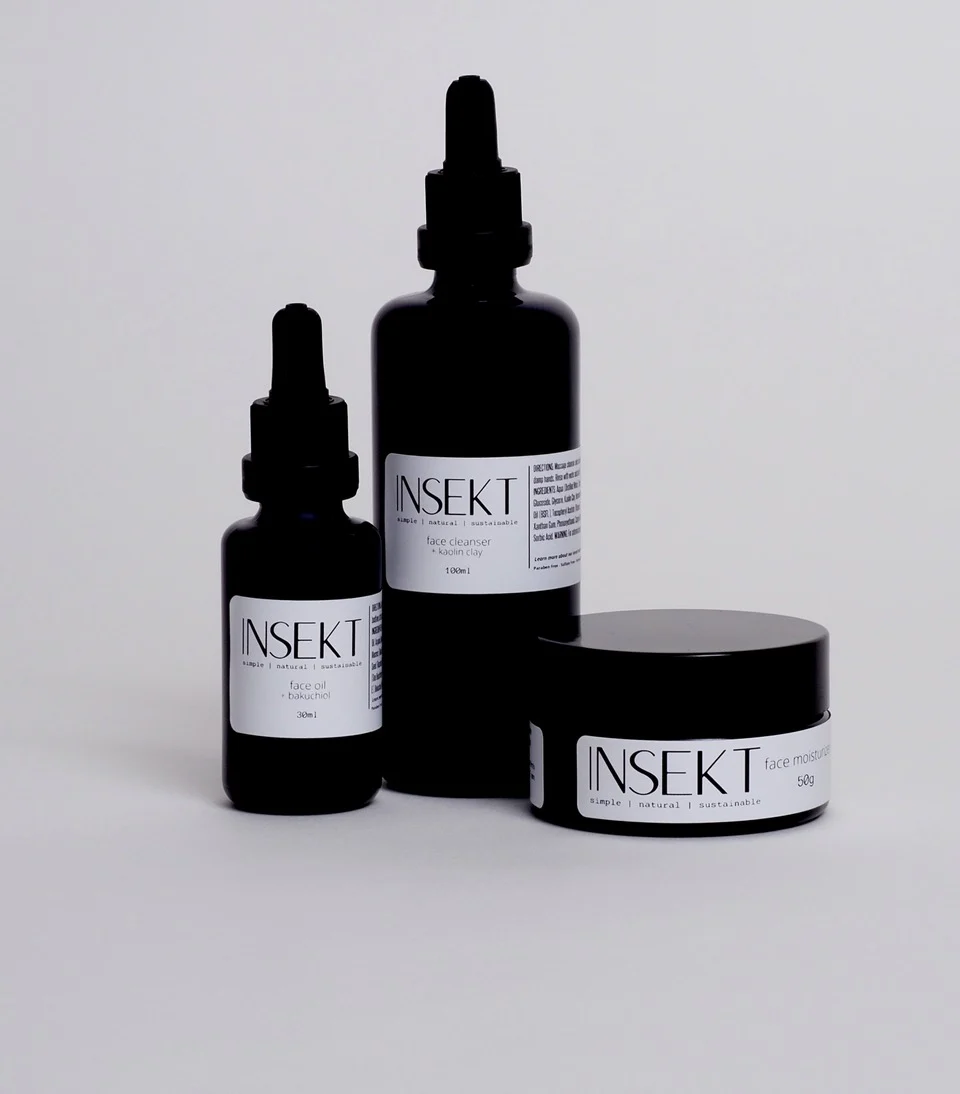
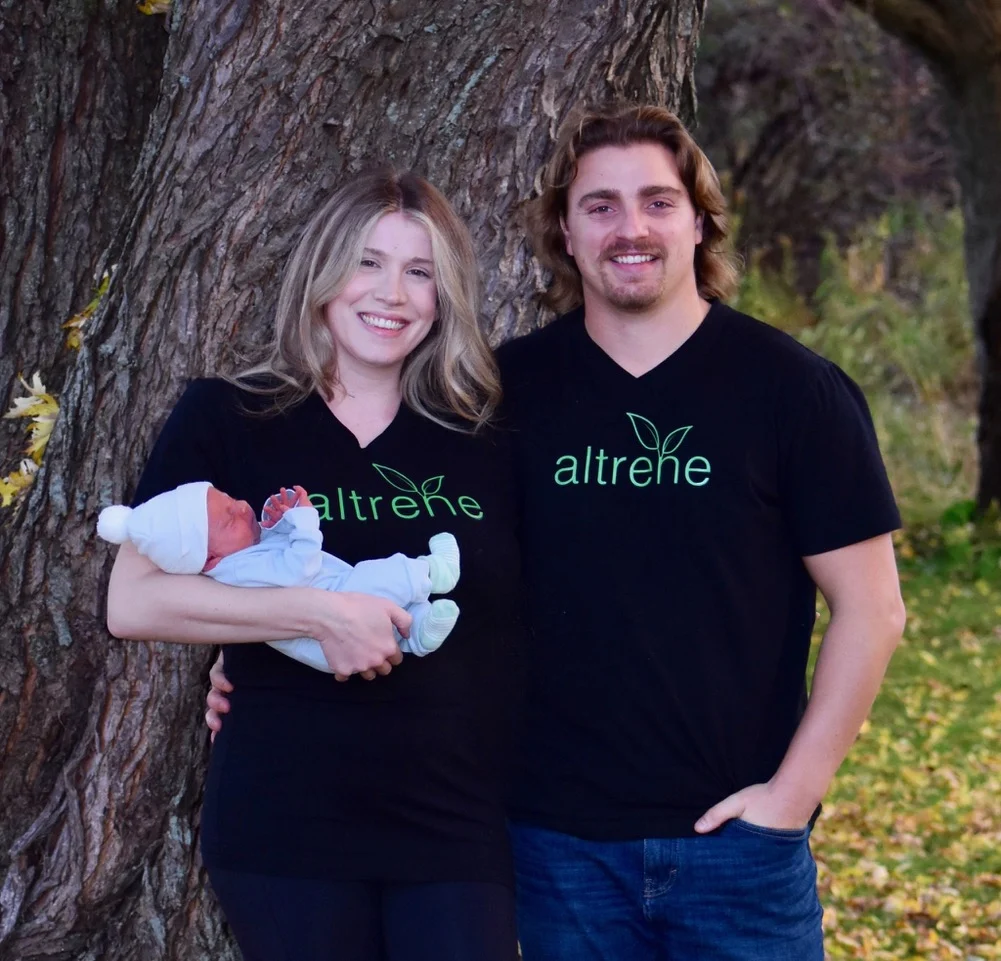
Thomas Clark, a mechanical engineer living in Kemptville, believes he can change that with a line of skincare products made from insect fats and oils.

“Honestly, I was intrigued and kind of grossed out, because putting insects on your face doesn’t sound great,” says Jackie Passarelli, one of the first testers of the products.

Insect fat, it turns out, has all the ingredients that make mainstream skincare products effective. It is rich in lauric acid, oleic acid, linoleic acid, palmitic acid, myristic acid, stearic acid, palmitoleic acid, alpha-linolenic acid and capric acid. All of these ingredients have proven to be anti-bacterial, skin-strengthening, moisture-locking and therefore ideal for softening and cleansing human skin.

“I was intrigued as to how it would compare to other products I use and, honestly, it’s fantastic. It’s super-light on your face, not greasy at all, and it sinks right into your skin. After I tried it, I thought, they’re really onto something here,” says Passarelli.

She’s not alone. A cosmetics manufacturer outside Toronto has agreed to produce the new Insekt line of skincare for a November launch.

“What intrigued us about the Insekt brand is its ethos, ‘Where beauty meets sustainability.’ The decision to manufacture the cleanser and facial moisturizer for Insekt is because Thomas Clark truly understands his brand, has a very clear vision and is taking a stand on the issue of sustainability,” says the cosmetics manufacturer that declined to be named for confidentiality reasons.

For Clark, it’s been a long journey. While in high school he worked for a grocery chain and was shocked to learn how much produce ended up in a landfill. The discovery bothered him for many years and then one day he read an article about a company in British Columbia that farms black soldier flies for animal feed.

“When produce decomposes it releases carbon and a lot of methane and methane is four or five times worse than carbon as an emitter. Black soldier flies capture these emissions before they’re released and upcycle the nutrients to create fats and proteins,” explains Clark. 

Initially, Clark wanted to start a black soldier fly farm in Kemptville. In 2021, he started farming the insects, feeding them fruit and vegetable trimmings and coffee grounds he obtained from a local coffee shop.

“We were using that food waste as a feed for the black soldier fly and then we would harvest them, process them and package them up and feed them to chickens we had in our backyard, so our proof of concept was that it worked,” says Clark.

While the concept worked, scaling the farm up to make chicken feed affordable enough for the farming community proved to be a challenge. 

Insekt

“Because the insect market is so new and the whole concept of insect farming is so new in Canada, nobody was really familiar with it and they didn’t feel comfortable investing,” admits Clark.

More convinced than ever that insect farming was the answer to sustainability, he turned his attention to its by-products.

“Oil is a by-product of the processing of the black soldier fly and it’s essentially just removing all the fat and fatty oils out of the insect and that’s where we thought there is another unique opportunity,” explains Clark.

He ordered some of the fat from Enterra Feed in British Columbia and, with his wife Michelle, started experimenting with it in their kitchen. 

“We bought some other plant-based and natural ingredients and came up with a hand cream and then we kind of transitioned to doing stuff for the face,” recounts Clark.

The couple soon developed formulations for a moisturizer, a cleanser and facial oil they believed in.

“They did a great job with the development of the cleanser and facial moisturizer. The formulas that were provided were complete and detailed so the formulation doesn’t need to be altered to scale it up,” the manufacturer told EOBJ. 

Clark

That’s when the couple started their company Altrene and started marketing the Insekt skincare line of products online. The first batch of products is expected in mid-November.

Clearly invested in the concept, the manufacturer is going so far as to develop a process that stays true to Altrene’s branding.

“In keeping with zero waste and using-less concepts, it was important for us to stay true to the Insekt brand by developing manufacturing procedures that are efficient and optimal. It is important that we be responsible, meaning contribute to less material consumption, less over-production and less waste,” says the manufacturer.

The Insekt line of products uses 100 per cent recyclable glass packaging without the over-sized boxes that characterize so much of the skincare industry. The products themselves are fragrance-free and use only natural products at concentrations that ensure safe daily use.

For now, Clark says Altrene will remain an online store but he’s in talks with 25 shops in the Ottawa area that have expressed an interest in carrying the product on a trial basis.

“At its core, we believe the Insekt brand will inspire systemic change by promoting the concepts of less consumption and better consumption. We believe that the brand is positioning itself for a huge reward,” adds the manufacturer. 
 

Op-ed: Larry O’Brien offers some hard-earned lessons to Ottawa’s mayor-elect

0

Congratulations to Mark Sutcliffe, the 60th mayor of Ottawa!

Full disclosure, Mark — I didn’t support you because I don’t believe a rookie can do the job. But in a great competition, you won. Now comes a few weeks of joyful celebration with old friends and many brand-new friends.

You’re now the mayor of Ottawa, where my great-grandfather came to live in 1847. It is now a large, complex city with over 100 city services being delivered to more than one million residents in 2,500 square kilometres. On a playful note, Ottawa is the only G7 country with a farm in the geographic middle. In other words, you have a very complex and demanding job in front of you.

My first two years were a massive learning experience and if I had a do-over, here is a list of 10 things I would do differently. I offer it as a gift with a hope you succeed, because if you succeed we all succeed.

1) Immediately announce you are going to donate any raise to charity. The raises come by process and you might not even hear about them until it is on the news. Jim Watson did that in 1996 and it’s good politics.

2) Pick a chief of staff that has been in city hall and understands the nature of municipal politics. As a rookie, you will need guidance and wise counsel from someone who knows the way around city hall. Maybe even a former councillor that did not run for re-election?

3) You have had a lot of help getting elected but remember, most of them have zero experience running a city. After studying the city financials for two weeks, I realized my zero-means-zero promise was impossible to keep. Yet, I listened to some well-intentioned stubborn supporters who had no grasp on the issues. I was a rookie and easily led.

4) Get to know all the new and existing councillors quickly. You will need a majority of council on your side to get anything of worth done. I think this will be natural for you and that is good.

5) Meet the heads of the unions quickly and roll over and be submissive. They run the city and, unless the province passes legislation to reverse the binding arbitration clauses, you will never be in control. By the way, there are many qualified and quality people among the 17,000 union workers who want the city to function well. Don’t pick a fight with the union bosses because you can’t possibly win.

6) Review the senior executive team of the city. Ask Watson who among the senior management is capable and trustworthy. Fire anyone you doubt and do it quickly; they can make your life a living hell if they choose.

7) Find a good long-term project that will make the city better and start working on it. There are new technologies you could explore that would continue to position you as a democratic leader. The city could be a world leader in governance.

8) Don’t cancel any major projects; it’s not worth the pain, even if you are right. What the last council completed is where you start from. Fortunately, besides the new hospital, there is not much on the books, so you have a clean slate.

9) Walk back your intentions to not use the new mayor’s powers. Those new powers will be your tool to build a better and stronger Ottawa.

10) Make friends with the provincial government. Although you were elected by the citizens of Ottawa, you are a creature of the province.

And on behalf of all of us who did not vote for you, good luck and I, for one, will be cheering for your success. Good luck.

Larry O’Brien is co-founder of Prio Arts.io, founder of Calian Group and former mayor of Ottawa.
 

Star Wars comes to Barrhaven: Check out some of the coolest robots at the new Amazon warehouse

0

It sounds a bit spooky, but once Amazon’s new Barrhaven facility is fully staffed, the warehouse’s 5,000 robots will outnumber employees by about two to one.

The imposing warehouse, located in the Citigate Business Park near Fallowfield Road and Hwy. 416, boasts more than 2.6 million square feet across four levels and is the most technologically advanced Amazon facility in Canada and one of only four such Amazon facilities across the globe. It will bring approximately 2,500 jobs to the area, but also employs the company’s most cutting-edge robots designed to improve employee safety and productivity. 

The building has a footprint of 450,000 square feet and is designed to handle more than 100,000 packages a day and store up to 20 million items at a time. The building was completed last year at a cost of $200 million and will serve as a key distribution hub for Amazon.

OBJ went inside for a sneak peek at just a few of the robots and automated technologies being deployed, alongside their human counterparts.

H DRIVES

AMAZON


AMAZON

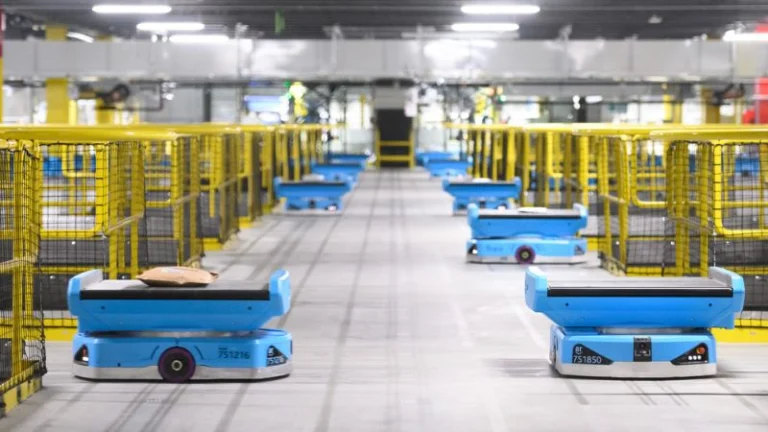
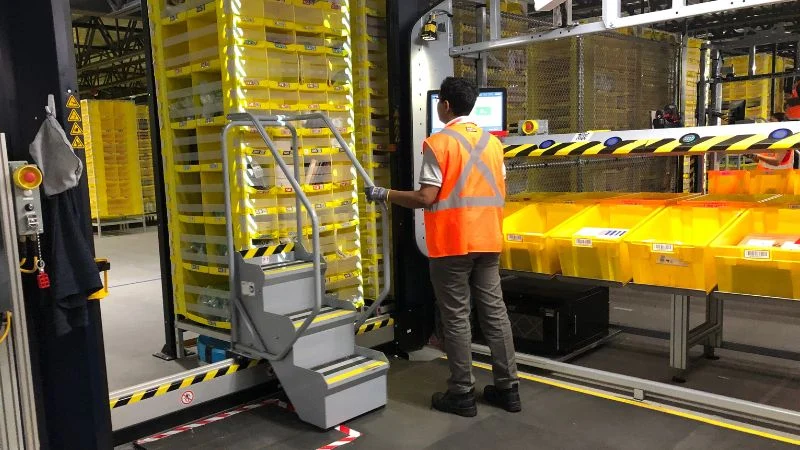
The H stands for Hercules and these robots, which look like oversized Roombas, more than live up to the mythological name. H Drives do the heavy lifting at most Amazon warehouses and fulfillment centres. In service since 2012, they aren’t the newest robots on the block but they are the most dramatic and ubiquitous. How so? Well, Amazon employees don’t comb the aisles for products. Instead, these semi-autonomous worker-bots scoot beneath a shelving “pod,” hoist it slightly off the ground and ferry it to the waiting employee. That’s right, the shelves move so that the workers don’t have to. Up to 4,000 H Drive robots transform the expansive warehouse floor into a fluid labyrinth of constantly shifting shelving pods. 

ROBIN

Robin

The facility’s 24 Robin robotic arms enjoy two distinctions. They put in the longest hours, working up to 22 hours per day, and are the only Amazon robots of their kind in Canada. These agile robotic arms can grab, manipulate and sort packages with minimal human supervision. Five cameras, advanced grips, and sophisticated AI allow the robot to gather information and make decisions about a package in a matter of seconds. The facility’s two dozen Robin robots are directly monitored by six employees and indirectly supported by a team of 12 workers. The Robins also work with a fleet of 950 Pegasus Drive robots that gather the Robin-sorted packages and transport them to shoots, which will guide them on to the delivery stage.   


RWC4 ROBOTIC ARM

AMAZON

From its name, this automated armature might seem like one of those eccentric little droids from the Star Wars universe. Instead, RWC4 is the muscle of the robot team, sorting and building pallets of totes for shipment between Amazon facilities. Customers prefer to receive their entire order in a single package and RWC4’s speed and efficiency help make that possible. The facility has 25 RWC4s. Each is directly monitored by one employee and can sort and build pallets six to 10 times faster than humans. This makes more efficient use of floor space and spares workers the laborious tasks of hoisting and sorting heavy totes. 

 
KERMIT
 

AMAZON

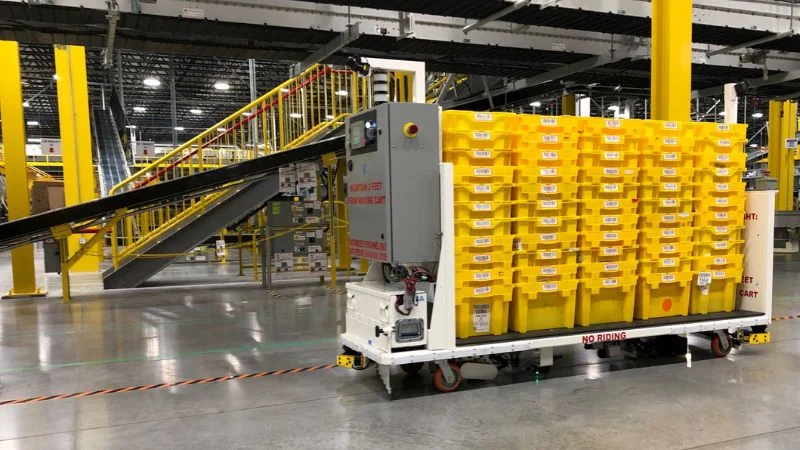
Amazon rolled out this automated trolley technology in the spring of 2021. The new Barrhaven facility sports 12 km of conveyor belts that shuttle yellow totes of merchandise or packages through the stages of packing, sorting and shipping. But what happens to the yellow bins that transport merchandise within or between Amazon facilities? That’s where the Kermit robots come in, acting like a trolley service, hauling yellow totes from places where they are no longer needed, to places where they are. Like a regular trolley, it follows a track, navigating a network of magnetic tape on the floor. Unlike a regular trolley, Kermit has no human driver. Instead, sensors allow it to navigate “decision points,” or intersections of the magnetic tape. In Barrhaven, 10 Kermits keep the totes moving on time. 

Construction financing: The lender’s role & priority under the construction act

0

When a property owner sets out to begin a construction project on their property, the owner arranges new mortgage to finance the construction and pay for the work completed on the project.

This type of mortgage is referred to as a “building mortgage” or a “construction mortgage”. A construction mortgage in Ontario is advanced in stages and each mortgage draw depends on the progress made in the project. Each advance triggers a unique obligation on the mortgage lender under the Construction Act (the “Act”).

The goal of the Act is to protect the general contractor, subcontractors, and suppliers of a construction project that supply services or materials against the default, insolvency, or bankruptcy of others above them in the construction pyramid. This protection is given by allowing contractors, subcontractors, and suppliers to register a construction lien against the property to which they provided services or materials.

A construction lien is essentially a right that a person has in a property which is created when they provide materials and/or services to that property that are “lienable” under the Act. This lien right is much like a bank registering a mortgage (also known as a charge) on title to the property.

Below is an example of a construction pyramid and the different members that can form the pyramid in a construction project.

Graphic

The Act attempts to lessen the impact of the abandonment of a project or of bankruptcy by establishing a fund for the members of the pyramid. The fund is created with a mechanism called a “holdback”. The holdback fund works a bit like insurance and a construction lien forms a charge on the holdback funds.

The members of the pyramid, including the owner, contractor, and subcontractors, are required to holdback funds from any payments made under the project. Under sections 22 and 24 of the Act, the owner is required to hold back from the payments due to the general contractor at least 10 per cent of the value of the work completed at that time. The 10 per cent holdback is referred to as a “statutory” holdback and it can only be released once the contractor’s lien rights have expired.

The lender in a construction mortgage plays an important role in maintaining the holdback. Before an advance can be made in a construction mortgage, the lender must be vigilant in verifying the owner’s/borrower’s construction activities. The lender must first obtain an architect’s or engineer’s certificate before advancing funds to verify the value of the work completed and ensure they are not advancing more than that value.

Next, construction lenders need to be concerned not only with whether a lien arose or was registered on title, but with whether the proper holdbacks were retained by the owner under the Act. As a result, the lender is usually directly involved in the holdback process itself, by deducting 10 per cent of the amount to be advanced under the mortgage loan.

If the mortgage is a construction mortgage, and is therefore directly tied to the construction project, the Act imposes a special priority regime. This priority regime will be explored further in my next article.

Selena Saikaley is an associate in the real estate department at Perley-Robertson, Hill & McDougall LLP/s.r.l. Selena’s practice focuses on residential and commercial real estate, working with buyers, sellers, lenders, landlords, tenants, and investors in various real estate transactions.

To contact, Selena, please click here: https://perlaw.ca/people/selena-saikaley/ 

In the Dragons’ Den: No deal, but lots of lessons learned for Palapa Tours

0

A question many ask us is, “How did Dragons’ Den go?” 

What they mean is … did you get a deal? Yes! We got a great deal! But it’s not what you think. 

Of course, prior to the episode being broadcast, we knew the results, but we were under a non-disclosure agreement until the episode aired. So, was there a handshake? No, we didn’t get one, but we still did get a great deal and we are thrilled with the overall results and experience. Our only disappointment is that with 60 minutes of filming, it has been edited down to seven minutes, leaving lots of good stuff on the cutting room floor. If you tune in to the episode and blink, you may miss the video clip of our boats in the water. We were hoping for at least 30 seconds. As for the dragons and their comments, see below for our thoughts. 

Truth be told, we really don’t need any funding and we are debt-free. Adding an investor to our Ottawa location would have complicated our future plans. In due course, we want our children to oversee the Ottawa Palapa business operation unencumbered by outside investors. Gaby and I in turn will focus on expansion with investors/operators in other cities with Palapa Tours International. So how is this still a great deal? Keep reading …

What we enjoyed most about the Dragons’ Den experience is that not only did they validate the business idea, but two of the dragons said that this is the best lifestyle business they have ever seen. That’s powerful!

So, what exactly is a lifestyle business? 

A lifestyle business (also referred to as a lifestyle venture) is a business set up and run by its founders primarily with the aim of sustaining a particular level of income (i.e. net $300,000) and no more; or to provide a foundation from which to enjoy a particular lifestyle.

Yes, Ottawa Palapa Tours is exactly that. But is that something the dragons want to invest in? The answer is no … they want to see something bigger and, although we have ambitious plans of 100 boats within the next 10 years, Palapa Tours International has yet to derive revenue from the licence partnerships it is establishing.

The dragons love franchise models because it mitigates risk on their investment. Although we are not a franchise, our business license model will drive a significant revenue source, but not yet and that’s where they got stuck. A lifestyle business in a single location did not “float their boat.” 

So, although no handshake, Dragons’ Den exposure is worth well over $125,000 of free advertising across Canada. Entrepreneurs who are interested in doing what we do and being part of “the best lifestyle business” the dragons have ever seen now know about us … tell us that’s not a great deal!

We had the honour and privilege to meet up with Wes Hall from Dragons’ Den prior to our episode airing. Immediately upon seeing us, he said, “Hey, the tiki boat people” and went on to say we had a great pitch. He gave some insight about no deal and it was something we never considered. One of the stumbling blocks for an investor was the “seasonality” of the business. Despite great revenue, he felt that if we were a year-round operation, then it would have been more in line with an investor’s ROI. He did reiterate that our pitch was great and he remembered his FunGlasses!

We chatted about our plans to go south and establish an expansion in Mexico. Wes owns the Harbor Club Resort in St. Lucia and he gave us the name of his managing director. The Harbor Club has a fantastic bay area … so stay tuned.

Looking ahead: once Palapa Tours International has solid revenue numbers from expansion, we do plan on revisiting the den and possibly Shark Tank. Why not! The exposure is amazing, our business model is solid and we love our clients. As we grow, we want to help as many people as we can gain the lifestyle we are building. 

We want to thank all the dragons for their enthusiasm and feedback. We want to thank our producers and those who have been with us each step of the way, including our children. Palapa Tours has marked many special occasions, from birthday parties and engagements to bachelorette parties and weddings. We thank you for allowing us to be a part of your lives.

What’s next? As mentioned, Gaby and I are preparing to spend two months in Mexico, relaxing and visiting resorts for expansion. We are also looking for solid investors to partner with us in their respective cities, as well as at the Palapa Tours International level. We can’t wait for next season and hope you enjoyed the episode: https://www.cbc.ca/dragonsden/m_pitches/palapa-tours

Here are some comments on each dragon:

ROBERT HERJAVEC – During our entire presentation, Robert was the most excited. Why? Because he sees tiki boats on the water in front of his house in California all the time. He validated our business and said the boats in front of his home are always full. However, Robert said he saw it as a limited size market. We think he missed the boat in understanding the overall expansion plan vs just a business in Ottawa. Nonetheless, we loved his overall excitement and enthusiasm.

WES HALL – Also validated that this is a great “lifestyle business” but not one for him. We shall see what the future holds with the resort down in St. Lucia. A deal may still be made for a single location vs investing in our corporate expansion plans. Time will tell and we agree with what Wes said when we met him the second time … to keep knocking on doors and never give up. 

MANJIT MINHAS – She was excited but said that we should focus on booze sales as she felt they were low. Yet, we don’t want to be focused on only selling more drinks as the experience in our opinion is more important. Manjit went on to say that it is a “fun idea” but that there are no real barriers to entry. We wholeheartedly disagree. The American boats never came to Canada because there is a barrier to craftsmanship and safety as per Transport Canada regulations, which we have met. We are not simply a “raft with a bar.” We are the first of our kind in all of Canada and we built a better boat than what is available in the U.S. We don’t think competition will come easily because there is a huge barrier to entry. 

MICHELE ROMANOW – Michele said that she felt the ticket price at $85 was expensive. We are not sure where she grabbed that number from. On average, our tickets are $60 with $45 on Tuesdays and $75 on Saturdays. If you charter the boat, it’s $50 per person. Michele believes we will expand with many boats, it’s a great business but not an investment for her.

VINCENZO GUZZO – Booze cruise? Sees it as a risk. He was comparing us to larger boats of 150 people where safety mosquito nets are in place, so people don’t fall off. Yes, we limit our alcohol sales for the safety of all, yet Manjit felt the sales were too low. Can’t have it both ways. Either we focus on being a cool experience or we focus on being a booze cruise. Risk is part of business but we choose safety first.

ARLENE DICKINSON- Notice no answer from Arlene. Why? Is there something missing? The truth is that our pitch was supposed to be over when all the dragons opt out or we do a deal, but Arlene vanished from any answer. So, we will allow this to remain a mystery.

Our takeaway is that what you see on TV is very far from reality. We are thrilled with the experience, we are thankful to everyone and we already have expansion contracts in place for other cities. Thanks for taking the time to be on this journey with us and our doors are open for any future entrepreneurs seeking to face the dragons. Malaho!

In the Dragons’ Den: Lights, camera, action … it’s sink or swim for Palapa Tours

0

Let’s do this. 

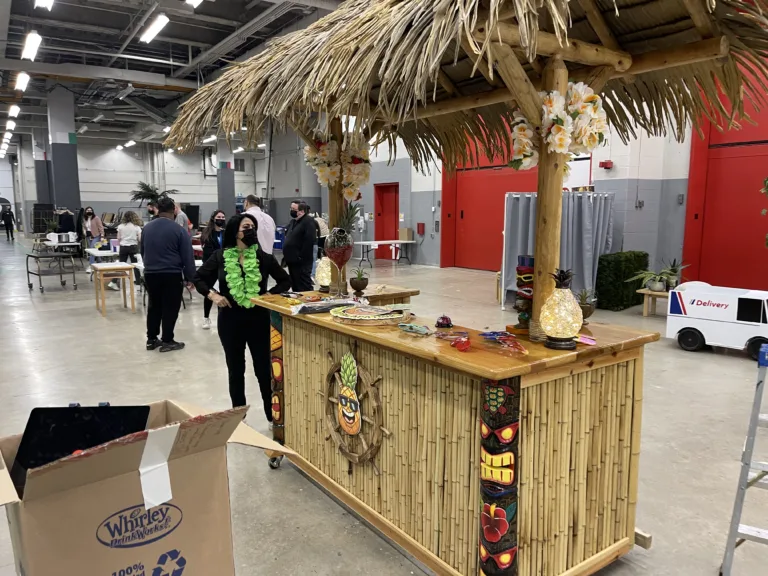
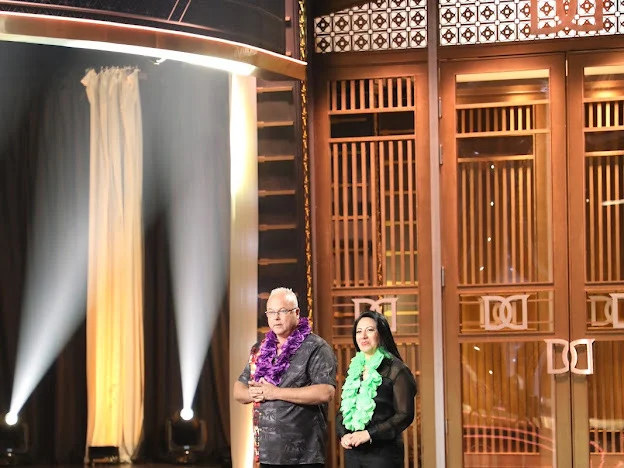
We arrived in Toronto on May 8 and delivered our booth to the CBC studios. Because we were unable to bring our boats, our tiki builder managed to secure, on loan for us, a tiki bar that he built for a client. It was big. All our props required the rental of a 24-foot cube truck. We were told to be in studio at 7 am the following day. All our props would be ready for us and our producer would walk us through some last-minute details.

Once in studio, we were given a small, curtained dressing area and were encouraged to stay there (still due to COVID). We were told that we would be the third to film so to be ready around 11 am. There was lots of buzz going on outside our holding area. 

Once everyone pitching that day (four companies) got settled, we were assembled by the production crew and given some basic pointers of what to expect. After that, each producer had a chance to review their portfolio with CBC’s technical team, directors and the camera guys. Our assigned producer did a walkthrough of our pitch and questions were asked, props were modified. We were good to go! Then we waited and practiced our lines. 

Our biggest challenge was still being able to articulate that, although we have solid revenue numbers with Ottawa Palapa Tours, our ask to the dragons was going to be part of the nationwide expansion with Palapa Tours International, which has yet to generate revenue. Unlike a franchise with royalties being paid, our expansion model derives revenue from licensing the vessels through an operator’s agreement. Realistically, a $250,000 ask for 15 per cent of the company is not something we really needed. A $250,000 investment would add three to four boats to the corporate fleet, but would still require a hands-on operator. We knew the dragons would be too busy for that kind of business investment. 

We voiced our concerns to our producer that we had yet to settle on a pitch angle for the financials. He suggested that we keep it simple and lump everything together in one ask. Have Palapa Tours International own and operate Ottawa Palapa Tours as its flagship business. This strengthened our numbers and eliminated being scolded for a $1.5-million valuation. We agreed to go that route. 

It was time to revisit our script and make the appropriate modifications for the numbers. We knew that all exposure would be amazing across the Dragons’ Den audience. We have an amazing business concept with Palapa Tours and hundreds of five-star rating reviews. Our biggest fear was to stand solid on our revenue model and not stumble under the scrutiny of the dragons’ cross-examination of our financials. Ultimately, not knowing your numbers is the number-one downfall of many pitches. Having a dragon invest but re-evaluate your company’s entire worth, in our opinion, is kind of embarrassing.

“Gaby, Mike, let’s get you hooked up with the microphones, you are up in 10 minutes.”

We’ve got this! Or do we? Now the nerves really start to play havoc and your heart is beating a few beats faster.

We are led into a back area of the stage and instructions are given on where to stand and how to walk into the den. Surprisingly, we were told that we would enter the den twice. The first time, there would be cameras behind the dragons. We would walk in, stand on our mark and smile, then wait for the director to say cut and walk back out. This helped with the nerves since we were given time to digest the lights and cameras and the dragons before walking in a second time. 

Lights … Camera … Action … 

“Aloha, my name is Gaby Saucedo and I am from Ottawa, Ontario.”

“And I am Mike Karpishka, also from Ottawa, Ontario and we are Palapa Tours. We are here today asking for a $250,000 investment for a 15 per cent stake in the business …” 

So how did it go? We are under a non-disclosure about the results. But what we can say is that we are not disappointed with how it went. Fifty minutes in the studio and we know it will be edited down to seven or eight minutes for CBC’s viewing audience. But we can share some highlights and we hope that these do make it on air: 

  • The dragons were extremely caught up in the moment chatting about tiki boats. Most notably was Robert Herjavec (also on Shark Tank) who has smaller tiki boats cruising in front of his waterfront property in California.
  • The dragons had to be stopped from endlessly chatting about how cool the idea was and asked, “Can we discuss numbers now?” This was quite funny given that, most of the time, the dragons almost immediately focus on the financials. 
  • Two of the dragons commented that this was “the best lifestyle business” they had ever seen.

Gaby and I will be sharing our thoughts about the episode on social media after it airs. We’re very curious to know what the dragons said about us after we left the den. You can follow us on Facebook, Instagram and at palapa.tours and read about our reactions and thoughts at obj.ca.

Check us out with the dragons on CBC Dragons’ Den on Oct. 20 at 8 pm. For a sneak preview, watch here: https://youtu.be/SYQQfUMoyUI
 

In the Dragons’ Den: There’s nothing like getting a scolding on national TV

0

Phone rings. “Aloha, thank you for calling Palapa Tours.”

“Hi guys, this is Molly from Dragons’ Den. Congratulations, you have been selected.” Cue the fanfare music in the background! 

Even though it has happened before, you still get a little lightheaded realizing that you beat out thousands of other applicants. In fact, given that Dragons’ Den went from 20 episodes per season to 10 only made it that much more competitive.

Now the real work begins. On the phone, we are told that we will be getting an email with lots of information, including all sorts of disclaimers and non-disclosure agreements, along with a guide to pitching the dragons. A date is selected and you are told that a producer will be calling you to help you prepare. 

Now, Palapa Tours has a tiny little problem: there is no way we can bring our boats to Toronto and they stopped doing virtual Zoom auditions with the last season. So how do we make this exciting? How do we recreate the vibe and attractiveness of our business? This is where the producer helps; they want good television. 

We “float” some ideas around and decide that we will use a combination of our video footage with the props we used in our Zoom audition. The stagehands will see if they can recreate a mock boat. We are skeptical, but go with the flow. There is a giant screen in the den and our video should give a good perspective. 

But what we really need to focus on now is our numbers. What’s the ask? If it’s too high, you lose credibility. If it’s too low, the dragons may opt out because you lack sustainability.

If you are going to walk into the den asking for $250,000 for 10 per cent of the business, you better be ready to defend that your business is worth $2.5 million. Although there are many valuation formulas to use, the dragons keep it relatively simple:

(Investment Ask) x 100

————————  = Valuation ($)

Stake on Offer

If you ask for $100,000 for a 10 per cent stake, you are telling the dragons your company is worth $1 million. 

(100,000) x 100

———————– = $1,000,000

10

Your mom’s encouraging valuation of your business is not a valid valuation. Potential clients are not going to get the dragons to open their wallets. Explaining the vast market share means nothing if you don’t have any sales. 

Now, if you are pre-revenue and really have an amazing idea, they may invest, but it’s going to cost you equity. The biggest mistake we made in the past was overvaluing a business model based on “what if.” Confidence drains out of you when you are being hammered with number questions you can’t defend. They film for 50 minutes and air seven minutes. You can only imagine how much good stuff is left on the cutting room floor. Remember, this is made for TV and getting scolded makes for great entertainment. Everybody loves a good rags to riches bootstrapping Rocky story, but let’s face it, it’s the tabloids that sell. 

Based on Palapa Tours’ sales last summer, we knew we had an amazing product. But if we ask for $1 million for 10 per cent of the business, they will sink our ship. Of course, we believe our business will grow to surpass a $10-million valuation, but to convince the dragons, that’s a whole different story. 

The next challenge is to articulate our business model and plans for expansion. Palapa Tours has a hybrid license partnership model. But will our valuation be based on Ottawa operations or corporate partnership operations? Two different numbers. Do we lump it all together or keep it separate? 

The hardest questions are when the dragons drill you on why you wish to give up company equity when you could instead find money by taking out a loan, reinvesting profits, borrowing (more) from family and friends, selling assets, or applying for government grants.

The dragons are well prepared to roast you if they feel you are there just for the publicity. Yes, they are paid for their segment and realize it’s a reality show, but they are also serious investors and, of course, the publicity is a win. This is where the back and forth with the producer is key. Refining our pitch and practicing for perfection. What’s next? Pulling it all together. Stay tuned. 
 

In the Dragons’ Den: Ottawa tiki-hut operators Palapa Tours get their pitch ship-shape

0

“For that reason — I’m out.”

The few words that sting your soul as a budding entrepreneur on Dragons’ Den.  It’s even worse when the words are echoed five to six times, dragon after dragon. All you can do is hold your head up high and hope it won’t look as bad on TV as it felt in the den. 

Going in, you know the risks. Yet, despite watching all the previous episodes, you get emotionally wrapped up and think, “Our business is different and the dragons would be crazy not to invest!”

Some will make a deal with the dragons, some won’t, so what? All publicity, good or bad, is good, right? Not always. It depends on your expectations. Rejection is tough. I’d already been through it once before with another business.dragons

So, when the call for applications hit social media for season 17 of Dragons’ Den, a wide range of emotions hit. It’s tough enough to get selected once, but to do it all over again … including convincing your Latina business partner that it’s a good thing. The answer is hell-ya! That’s what being an entrepreneur is all about. You grind at all levels. From business excellence and top-notch service, to burning the candle late at night. It’s what most people call luck.  

The application process is simple enough. CBC begins seeking applicants in February/March. You fill out some basic information online and then submit a 60-second elevator pitch. Here’s ours: https://youtu.be/UmgtK7Hk7WE. This is really where you need to nail it. Be creative, be original and, most of all, be authentic. 

Keep in mind, if you simply want money, there are banks, angel investors and venture capitalists. No need to pitch the dragons. So why do it? Because you are not only pitching for an investment with the dragons, but also for good television. If you are not ready to be grilled by experienced investors on national TV, then don’t apply! Rumour has it that only 20 per cent of all handshakes in the den actually turn into solid deals. So, 80 per cent is national exposure — good or bad — and many walk away without anything but their tail between their legs.

Once your application is in, you wait. Maybe they reach out, maybe they don’t. Don’t take it personally. Scrap that! Take it personally! Ask yourself, why? Then apply again the following year (if it makes sense). Follow the dragons and subscribe to any online pitching sessions they do. Learn the little things that make a difference (i.e., Vincenzo loves yellow). Join a toastmaster’s class if you have trouble communicating with passion. 

Palapa

For us at Palapa Tours, we got an email about two weeks after our online application, inviting us to live-audition via Zoom. In the past, they used to do coast-to-coast hotel auditions, but with COVID and all … well, you get it. 

So, what now? Their email gives pointers on how to prepare, but basically you pitch as if you are about to pitch the dragons. From start to finish! Know your business and know your numbers (more on this later). If you can’t impress the producers with why this makes good sense for national television, you will never face the dragons. 

We had 10 days to prepare for a 30-minute Zoom meeting. The truth is, you only have three to five minutes to pitch and then it’s all about questions and answers. Don’t stress too much on the exact ask, as this could change. Be visual, be outgoing and be excited! Don’t worry about the numbers but at the very least have a solid business plan that addresses all scenarios. Gaby and I must have practiced for five to six days, recording ourselves on Zoom. We tweaked the pitch many times. 

Sometimes, visually appealing businesses make it to the den but fall apart afterward like mine did the first time around. We knew we had one shot to impress and it had to be out of the ballpark. We would have loved to film off our boats, but they were still wrapped, so we made the best of it. 

What happens next? You wait. They make it clear … This is totally a “don’t call us, we will call you” scenario. After 10 days of waiting, we figured, oh well, it was worth a shot. But then we got the call 12 days after our audition and were scheduled to face the Dragons May 9! Stay tuned for what happened next.