With demand for electric vehicles growing, Cyclic Materials seeks to recycle the rare earth elements needed to power them

0

A new company is emerging in Kingston’s burgeoning green-tech economy, intent on providing the rare earth elements essential to transitioning from fossil fuels to greener energy by recycling rather than mining them.

“I started this company after years of thinking about the creation of a constant supply of rare earth elements and it appears that one way to do this is to recycle end-of-life products,” says Ahmad Ghahreman, CEO, president and founder of Cyclic Materials.

“It’s an infinite source of materials that is increasing every year,” he adds, explaining that recycling won’t provide 100 per cent of future needs but could account for up to 10 per cent of the market.

Rare earth elements are used in everything from wind turbines to electric vehicles to cell phones and hard drives – anything that uses powerful permanent magnets.  

Canada has some of the largest known reserves and resources of rare earth elements in the world, estimated last year at over 14 million tonnes of rare earth oxides, according to the Natural Resources Canada website.

Mining these elements, however, is difficult. Deposits are small and costly to extract and doing so can have a negative environmental impact, explains Ghahreman, a former associate professor at the mining department at Queen’s University. 

It’s that conundrum that Cyclic Materials is determined to address.

Ghahreman

Ghahreman estimates that his company will eventually comprise 10 per cent of the rare elements market.

“Our objective is, by end of 2026 we will be producing 600 tonnes of rare earth elements per year in North America,” says Ghahreman. “But our vision is global and we are expecting to be operating and producing slightly over 3,000 tonnes a year of rare earth elements globally by 2031.”

To put that in perspective, 3,000 tonnes is equal to about six million electric vehicles or, more accurately, the magnets needed for those vehicles.

That’s no small feat since there isn’t a lot of rare earth metal in any of the recyclables. For example, Ghahreman explains, each electric vehicle on average has two kilograms of rare earth magnets; a rare earth magnet contains about 25 per cent rare earth elements. So, each electric vehicle yields about half a kilogram. While that’s not a huge volume, when multiplied by the number of electric vehicles projected in the near future, it becomes a substantial number.

In September, Cyclic Materials began running a pilot at the Kingston Process Metallurgy (KPM) facility following a successful bench-scale testing completed in July 2022.

“We’re running the pilot plant right now with 10 people. (Ghahreman) came to us because he knows we have the capacity,” says Boyd Davies, vice-president at KPM.

Cyclic Materials has the funding in place to complete the pilot phase and is fundraising for the scale-up.

“The pilot that we’re running right now is already funded, but for our activities in 2023, which will include a larger-scale operation (that) we’re building here in Kingston, we’re actively fundraising through venture capital, banks or other avenues,” says Ghahreman.

The company’s business model and vision are garnering support from Invest Kingston, a non-profit organization that helps attract investments and supports the growth and retention of new and existing businesses in the city.

“Cyclic Materials is a great fit for Kingston’s ecosystem, given the stage and sector they are in. They tie directly to our integrated economic development strategy that focuses on material and process innovation, which are both applicable to Cyclic Materials’ business case,” says Abdul Razak Jendi, investment manager of sustainable manufacturing with Invest Kingston. “It’s a great fit with the battery material and recycling ecosystem Kingston is creating.” 

The company has also got the city’s economic development department interested.

“Cyclic Materials is a very exciting company and I think they’re very close to hitting the commercialization phase,” says Craig Desjardins, director of innovation and partnerships with the city.

The company is in talks with suppliers and consumers of the end product.

“We have letters of intent and memorandums of understanding and definitive agreements with multiple recycling yards, magnet manufacturers and electronic-based recyclers and the list goes on,” says Ghahreman.

He’s also in contact with the largest magnet producers in North America, Europe and Asia, as well as numerous companies that use magnets in their products. 

“For instance, if suppliers to car companies provide motors made with our materials, they could say, ‘This motor of this electric vehicle is made of 100 per cent recycled magnet’, and that’s the dream, honestly, that drives us every day,” says Ghahreman.

The decision by global giant Umicore to locate a major manufacturing facility in the Kingston area is also on the radar.

“Umicore will be producing battery materials and in batteries there is a little bit of application for those metals, so they can be one of the really good customers for us,” says Ghahreman, who has been a consultant to NRCan and the Government of Alaska on rare earth projects over the past 10 years, gaining extensive knowledge of the mining process.

 

Hey, don’t walk through the valley of death: New ‘hub’ shepherds startups through to commercialization

0

A new type of accelerator is about to launch in Kingston and will re-imagine the way start-ups are supported from idea to commercialization, successfully leading them through the “valley of death,” local officials say.

The RXN Hub builds on the city’s existing ecosystem of accelerators and incubators initially developed for the software industry to address the gap that halts chem-tech start-ups in later stages of development from reaching commercialization.

“What we are looking to do is to redefine the way that we take technologies out of the lab, out of universities, out of incubators and accelerators, and bring them to commercialization, where they can be fully sustainable companies or be integrated into large multinationals so that we can bring sustainable technologies to organizations at a commercial scale,” says Sebastian Alamillo, founder and executive director of RXN Hub.

Using standard definitions of technology readiness levels and his own experience in the chem-tech sector, Alamillo has identified what he terms the “valley of death” for innovators attempting to reach the final stages of development.  

“Start-ups are struggling with getting their invention out of the validation stage and into a scale-up and piloting stage,” he says. “Effectively, what a start-up gets when they come to us is centralized access to all the wraparound services that they need in order to build a business, including lab space.”

With plans to begin full operations in 2023, RXN Hub is building a 21,000-square-foot facility in the former Innovation Park building in Kingston. The space will be fully appointed with the scientific equipment that chem-tech companies need to build large-scale pilots for their technologies.  

According to Alamillo, one of the biggest challenges is an assumption that all innovation is the same. Traditional incubators, accelerators, superclusters and open innovation initiatives do not provide a clear model for the commercialization of industrial technologies essential to daily life, he argues.

“So this is us trying to change the narrative and educate that chemistry is different, sustainability is different, that we have to start doing some new things here,” says Alamillo.

It’s no accident that this is all happening in Kingston, with its nearly 100-year history of chem-tech development, whether at Queen’s University, DuPont, Novelis and now Kingston Process Metallurgy (KPM), an integrated chemical process development company with clients around the globe.

“The metallurgy talent present in Kingston through academia and industry makes the city a fertile ground for companies to innovate and grow,” says Abdul Razak Jendi, investment manager, sustainable manufacturing with Invest Kingston.

“In Kingston we have a couple of hundred process development experts that are available, this is why it’s happening here. The city has been a big part of this. It made totally clear sense to them that we have all this talent and expertise and they said this a no-brainer, let’s do it,” says Boyd Davis, principal, project development, and co-owner of KPM.

“All I’m doing is leveraging the existing infrastructure and ecosystem that currently exist and just building on top of it to be able to centralize and leverage the value there, to make sure that the sum of all the individual parts is greater as a whole,” says Alamillo.

The RXN Hub has gathered a network of 90 partners, including KPM, that specialize in some aspect of industrial commercialization. The key to the hub will be collaboration with established accelerators, incubators, industry and government agencies.

“The idea of having better coordination to grow firms and attract firms is a great economic development tool. A hub that grows new start-ups into successful employing firms is obviously a great thing for economic development,” says Craig Desjardins, director of innovation and partnerships with City of Kingston, adding that the city has given conditional approval for a $3-million investment towards the hub’s physical space.

Regional officials scramble to accommodate growing number of players in the EV supply chain

0

Local officials are both frightened and excited as they begin making plans to work with Umicore N.V., a multinational circular materials technology company based in Belgium that recently announced a $1.5-billion investment in Loyalist Township to build a battery materials production plant that will create more than 700 jobs in the area.

“This is a game-changer and I’m excited, not just for Umicore,” says Craig Desjardins, director of innovation and partnerships with the City of Kingston. “I find that size to be almost frightening given the number of jobs we’re going to have to find people for, but it’s also supply chain, that’s what excites me, it’s the companies that are going to come here as part of the ecosystem of Umicore alone.” 

This investment supports the province’s vision of building an end-to-end electric vehicle (EV) supply chain and becoming a North American hub for building the cars of the future. The Umicore near-carbon-neutral facility will manufacture cathode active materials and precursor cathode active materials, components that are critical in the production of EV batteries. The investment is part of Ontario’s goal to develop a vertically integrated battery supply chain able to support large-scale EV production in North America.

“Being at the centre of Canada’s automotive ecosystem base offers critical advantages, such as access to a highly skilled workforce, key infrastructure and access to renewable energy,” said Caroline Jacobs, media relations spokesperson for Umicore.

For example, Kingston’s Li-Cycle, a lithium-ion battery recycling company with a facility in the city’s west end, dovetails with Umicore’s vision.

“With Umicore on the upstream and Li-Cycle at the end of life or new life for materials, it gives us the opportunity for all these companies within the sphere that would surround the spectrum,” said Abdul Razak Jendi, investment manager, sustainable manufacturing with Invest Kingston.

New programs are being developed in Kingston to help ensure that skilled workers are available when Umicore gets started.

“We’re working with Queen’s University to develop the first battery certification program to develop the talent needed,” said Jendi.

According to Mathias Miedreich, CEO of Umicore, the province has everything it takes to establish a sustainable supply chain for battery materials, from Northern Ontario’s mineral sector to EV manufacturing in the south.  

“Once the key customer contracts are in place, this expansion in North America would complete our global rollout of regional supply chains for our automotive and battery cell customers to now three continents,” said Miedreich in a statement announcing the investment. 

Umicore plans to start construction in 2023 on the 350-acre site and expects to begin production by the end of 2025. At full production, the plant will produce annual cathode material volumes sufficient to manufacture batteries for one million battery-electric vehicles. 

Not only is Umicore’s arrival in the region being recognized as another advantage to growing the EV ecosystem in Kingston and area, it builds on what Loyalist Township sees as a period of unprecedented growth.

“This is an important investment for Loyalist and will bring 600 to 700 jobs into the area. We were able to … sell the township to Umicore and are currently in the site plan approval phase,” said Steven Silver, chief administrative officer with the township.

Bright Side of Business: Crossing guard program a good start for people facing barriers to employment

0

Every day on your commute, chances are you pass a crossing guard or two. Standing in their high-visibility gear, they cut a figure that, for many of us, reminds us of our school days. 

That’s no different for Jamie Kwong, who became executive director of the non-profit Ottawa Safety Council (OSC) in January 2022.

“Road safety is something all of us are impacted by, no matter if we drive a car, if we ride a bike, if we’re a pedestrian,” Kwong says. “To have a role that impacts the whole community and makes it safer for everybody, especially the vulnerable road users like children, seniors, cyclists — that’s very important.” 

Currently in its 20th year of offering services to the City of Ottawa, OSC is a major employer, hiring more than 360 crossing guards to watch 280 intersections across the city. It collaborates with 150 schools, serving 2,000 students over 500 shifts.

“They want to get involved in the community,” Kwong says of the crossing guards. “They want to make a difference, to work in their own neighborhood.” 

Kwong and her team are putting their efforts behind hiring new Canadians and others facing barriers to employment to help them earn money while supplementing their resume in a flexible working environment. Currently, 30 per cent of OSC’s crossing guards self-identify as being from diverse communities. 

“For me, it’s really important to be reflective of the community that we serve,” Kwong says. “How can we do outreach better? How do we connect more with agencies that help and support new Canadians?”

To spread the word, OSC is currently working with Ottawa Community Immigrant Services Organization, Hire Immigrants Ottawa and others.

“This is an opportunity that we want more people to be aware of,” Kwong says. “I think sometimes if you’re not on Indeed or if you’re not aware of our program, you (might not) realize it’s a paid opportunity that you can explore.”

And a crossing guard’s job is no small thing. In school zones across Ottawa, the speed limit is 30 to 40 kilometres per hour. Citing a study by Parachute Canada, Kwong says that, when a pedestrian is hit by a vehicle travelling at 30 kilometres an hour, nine out of 10 pedestrians survive. Increase that to 50 kilometres per hour, and only five out of 10 survive. By the time you’re at 65 kilometres an hour, that plummets to one out of 10 pedestrians. 

Kwong says that, unfortunately, over the past few years, the organization has seen an increase in distracted driving and speeding. She adds that some people don’t realize that the crossing guard program is part of the Highway Safety Act — when there’s a guard, cars have to stop.

“The (crossing guard) job has an inherent risk in it because the City has already designated that area needing an extra level of protection,” Kwong says. “(Drivers) need to have patience when kids or seniors are crossing.” 

At OSC, a crossing guard’s hourly pay starts at $17, up to $17.80. Kwong aims to get that up to Ottawa’s living wage of approximately $18.60. 

“In every job, I look at how we create opportunities for people,” says Kwong, whose career has taken her from the non-profit sector to entrepreneurship and the arts. “I see all the discussions right now of refugees settling in, Ottawa attracting refugees — I think that’s a great thing and what we need to do is find ways to connect people to the community.” 

The Bright Side of Business is an editorial feature focused on sharing positive stories of business success.

This column is presented by Star Motors, Ottawa’s original Mercedes-Benz, Mercedes-AMG and Mercedes Van dealer.

Since 1957, Star Motors has provided its customers with the Mercedes-Benz “The Best or Nothing” standard in vehicle selection, service, genuine parts and certified collision repair.

For your convenience, you may shop, research, chat and compare vehicles online at starmotors.ca, visit the 400 West Hunt Club location or call (613) 737-7827 for the very best in personal service.

Will the offline shoppers return? Two ‘destination’ retailers hope so

0

As much as the online world of retail is enticing, it can’t replace the joys of a road trip and an old-fashioned shopping experience.  

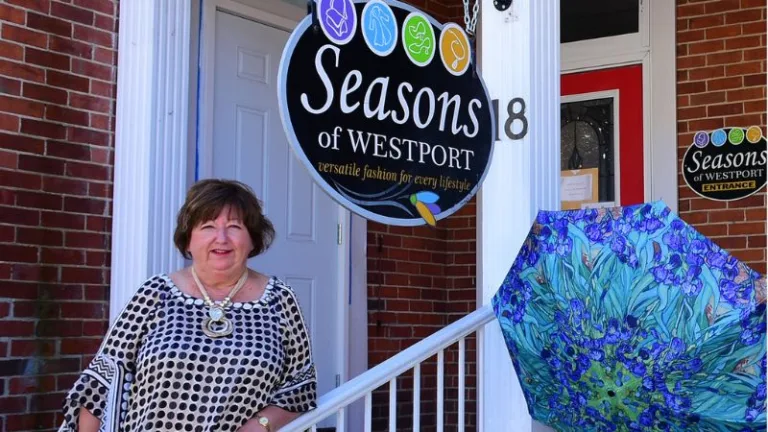
This is especially true for two retailers in Eastern Ontario — Kilborn’s on the Rideau, a department store in Newboro, and Seasons of Westport, a boutique selling women’s fashion and accessories.

One is a destination store, while the other is in a destination town. 

“Kilborn’s is an experience,” asserts Doug McCallum, general manager. “That’s the brand — that’s the whole thing — is coming out and experiencing the store itself and shopping and it’s just as much a social outing as it is a shopping outing.”

The words “department store” might be the first clue as to what sets Kilborn’s apart. Having opened 16 years ago in a modest space in the old village grocery shop, Kilborn’s grew into an extensive store with three buildings, two driveways and many levels, selling a variety of items from fashions and footwear to furniture.

Meanwhile, Seasons of Westport relies heavily on tourists and cottagers who like to dally in the popular village. “We are a destination town,” says Lorilee Reynen, owner of Seasons. 

So, what to do when a global pandemic forces almost everything online and the “destination” — whether town or store — is no longer desirable? The two retailers took somewhat different approaches to the problem. 

Kilborn's

Kilborn’s continued its online presence on Facebook, but chose not to create an online store. Seasons, on the other hand, dove into the online world, especially when Reynen started receiving free business development program offers.

“I signed up for everything, my calendar was full,” she laughs, “and then I applied for the digital transformation grant, which I got, that was $2,500, but the real benefit of it was it signed me up for ShopHere and I had one-on-one training to look after my website.” 

Until then, Reynen had paid a third party to populate and maintain her website, which she says was simply not cost-effective. By learning how to maintain her own site, Reynen has expanded shopping options for her customers. Her clientele still prefers walking into her store, but they seem to like the option of browsing online before visiting and only shopping online if they don’t want to or can’t make the trip.

Meanwhile, Kilborn’s, with its 25,000 square feet of retail space, opted to stay the course and open whenever lockdowns were lifted. McCallum explains that they took advantage of the closures to rearrange the store and make it safer for staff and customers. 

“Kilborn’s was open at 25 per cent capacity, so that’s about 60 people — it’s a big place.  But we removed an enormous amount of stock to create more floor space to enable people to distance properly,” McCallum explains.

Still, the pandemic took quite a bite out of Kilborn’s revenues, dropping sales by half. There was just so much uncertainty and anxiety that, even when the store was open, there were far fewer visitors than normal.

Kilborn's

“I don’t know how many people came out to Kilborn’s on an annual basis before, but I’d say tens of thousands. We used to do a customer appreciation day and we might do that again, but the whole day we’d be packed; there’d be a line-up down the street before we even opened,” says McCallum.

Reynen’s approach was to respond directly to the new reality. A retired nurse, she was quick to research and find well-fitting masks to offer her clientele.

“At that time masks weren’t required but everyone was in a bit of a panic as to getting masks. I advertised these masks through my email list and the response was unbelievable, people were driving from everywhere to buy masks. I had curbside pick-up or I shipped them and, if they were local, I’d drop them off in their mailbox,” recalls Reynen.

Her sales also dropped and, even with the online store, Reynen says her clients — largely an older crowd — didn’t make a lot of direct purchases on the website. “People didn’t necessarily order online as much as they would call or email me.” 

That trend has continued, Reynen adds, with customers previewing stock online and then visiting the store to make a purchase. It’s the reason she’s investing in a point-of-sale system that will link to her website, so she doesn’t need to manually update the site every time something sells out of the store.

For Reynen, the lockdowns and restrictions were bittersweet. They afforded her the time to work on her website and, because her staff were not comfortable coming into work, she found herself unpacking, steaming, pricing and displaying stock.

“The positive thing about that was I probably knew more about my store … than I ever did before,” she chuckles.

On the downside, the brief re-openings were more nerve-wracking than joyful.

“I found it very stressful, there were a lot of people coming into our areas to get out of the big cities and it wasn’t comfortable, especially when masks weren’t mandated.”

For both of these retailers, recovery has been slow, largely because they are in a region that has traditionally hosted a large American summer population.

“Pre-COVID, you would see more cars with U.S. licenses than Ontario, so, yes, that made a big difference. The Americans were always good shoppers because the dollar was always in their favour so nothing is the same as pre-COVID but we’ve made up for it in other ways and done better than we thought we would,” says Reynen.

McCallum agrees. “The summer is critical for a tourist area and the first summer was challenging, we’d lost the U.S. market and the U.S. market is critical in this area, it’s huge and has been for hundreds of years … and it hasn’t really recovered.”

Bright Side of Business: Firehouse Subs franchisees rally community support for first responders

0

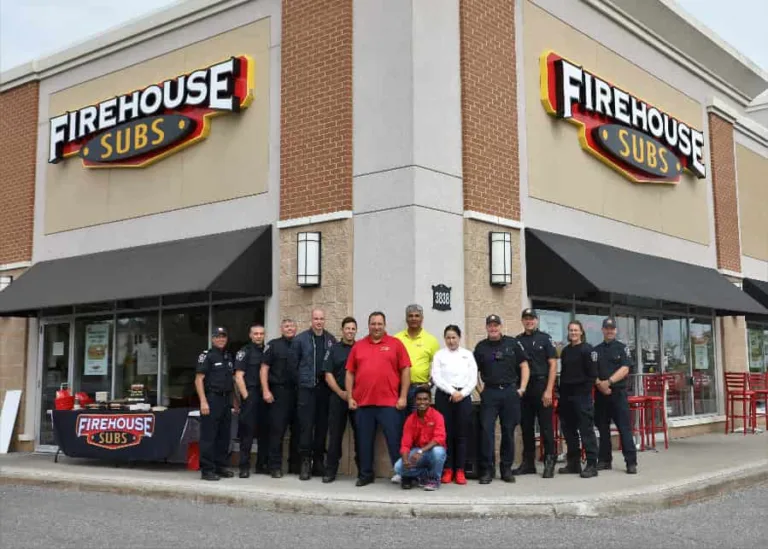
Having grown up with a firefighter father, it’s no surprise that Denis Charbonneau followed in his dad’s footsteps, volunteering as a firefighter for the City of Ottawa for 20 years. 

Charbonneau has also been a football coach and had a career in trophy engraving but, since the pandemic, he’s taken his career in a new direction. He is now trying his hand at food entrepreneurship with the opening of a Firehouse Subs franchise. 

Charbonneau recently launched his Orléans store with Firehouse Subs serial franchisee Pradip Patel. The move seemed almost inevitable. 

Patel explains that, once a week, Charbonneau would come into his restaurant to grab a meal. “I said, ‘Would you stop coming in and buy yourself a restaurant?’” Patel jokes. 

And so that was exactly what Charbonneau did. The two joined forces and now, 18 months later, their Orléans business is thriving. 

Headquartered in the U.S., Firehouse Subs is a restaurant chain serving hot gourmet sub sandwiches. In 2005, the chain’s founders established a Public Safety Foundation, providing funding, lifesaving equipment and education to first responders and public safety organizations. 

$2.2M raised across Canada

Since 2015, more than 50 Firehouse Subs restaurants have opened in Canada, with the Firehouse Subs Public Safety Foundation of Canada awarding more than $2.2 million to public safety organizations. Patel brought the chain to Ottawa in 2017 and has been giving back to the community through his fundraising efforts ever since.

Fundraising is something that’s near and dear to Charbonneau’s heart. As a firefighter, he raised money for various causes, including muscular dystrophy. 

“Giving back to the community and helping others is a big part of my life,” he says. 

“Giving back to the community and helping others is a big part of my life.”

Most recently, the Firehouse Subs Public Safety Foundation granted more than $82,000 to the Ottawa Fire Services, Russell Fire Department and the Township of East Hawkesbury Fire Department. All the money was raised through Firehouse Subs customers. 

“Food is the main part of the business, but every time a customer comes in, (we ask them to) round up,” Patel says. “That’s what’s saving lives every time. That 50 cents might mean nothing to you, but it’s huge for the community.” 

To show the community exactly how huge its contributions are, Charbonneau, Patel and two other franchise owners, Sunita Thapa and Aswin Selvaraj, hosted an event on Sept. 17 displaying the equipment that had been purchased, from thermal equipment to drones. 

“It really drove it home for the guests,” Patel says. 

As well as rounding up customers’ totals, Patel and Charbonneau raise money for the community through a collection box at the cash register and by running events like First Responders’ Month in October. 

Five years after opening his first franchise, Patel and his team have raised $315,000 for the city of Ottawa, including fundraising for an ATV for the Ottawa-Gatineau search-and-rescue team at Rockcliffe Airport. 

Looking ahead, Patel is setting his sights on opening his fifth franchise in Kanata with Charbonneau, Thapa and Selvaraj, as well as working on fundraising, of course. 

“All we want to do is support our community by being there for it,” Patel says.

Never miss a story. Get OBJ’s daily update in your inbox every Monday to Friday. Click here to subscribe.

The Bright Side of Business is an editorial feature focused on sharing positive stories of business success.

This column is presented by Star Motors, Ottawa’s original Mercedes-Benz, Mercedes-AMG and Mercedes Van dealer.

Since 1957, Star Motors has provided its customers with the Mercedes-Benz “The Best or Nothing” standard in vehicle selection, service, genuine parts and certified collision repair.

For your convenience, you may shop, research, chat and compare vehicles online at starmotors.ca, visit the 400 West Hunt Club location or call (613) 737-7827 for the very best in personal service.

Setting up your CIO for success

0

Perhaps you have recently welcomed a new CIO to your organization and are feeling the promise of change. Or maybe you have new business imperatives and have discussed a new mandate with a CIO whom you have worked with for years. 

You know your CIO has a massive responsibility and big job at hand, you also know she is a senior and capable leader. At the same time, you find yourself wondering what you can do as CEO or senior executive to support her? 

Whether you have just promoted or hired a new CIO or have a new mandate for your existing CIO, it is essential to ensure you set them up for success. The following are three areas to contemplate based on Stratford’s experience, working with a multitude of senior leadership teams and CIO’s.

The CIO at the executive table

First, position your CIO as a strategic partner and critical part of your leadership team. It is important that your CIO is at the executive table when your team is discussing business strategy. 

In a digital first world, organizations will be hard pressed to drive successful business strategy, growth, customer engagement and satisfaction, without a robust integrated digital perspective. 

Long gone are the days when the CIO’s sole focus was to provide technical services to the business. While those remain as table stakes, the real reasons for having internal IT teams and CIOs are to advance business strategy.

The CIO’s roadmap

A CIO will often come in with a desire to achieve quick wins and develop a multi-year roadmap driven by business strategy. However, many things will divide their attention including immediate firefighting, addressing unmitigated risks, a backlog of unprioritized projects or dealing with legacy systems. 

They may find skills or leadership gaps in their team, not to mention cultural resistance to change. Yet a strategic IT roadmap and its implementation are essential to ensuring your organization is leveraging digital opportunities for growth and success. 

Ensure your CIO has budget flexibility to expand their personal and team capacity with the right type of consulting services. An objective external perspective and experts who lean-in can make the difference between good intentions that are stalled by distractions and a focused effort for advancement. With this support on their side, the CIO can rapidly have an objective ecosystem assessment and co-create a strategic roadmap to set important milestones and drive change.

Challenge your CIO with business objectives

If the IT department at your organization is seen primarily as a cost-center, then you are not alone. However leading organizations and CIOs are shifting this perspective. IT can become a driver for growth and efficiency and/or profitability.  
With an IT roadmap anchored in business strategy and a cultural shift to an innovative strategic partner, IT can do a lot more than you think. 

Integrate IT into your business strategy and challenge your CIO to innovate in areas critical to your business, such as utilizing data to detect and solve business problems or improving customer experience with new digital and information technologies. 

Your CIO can benefit from external customized advisory and, most crucially, the added leadership capacity to implement critical components of your new roadmap.

An infographic that lists the main points of the article.

I’m reminded of a report I read a while back titled “Business Transformation and the CIO Role”, that I think summed up the plight of CIOs very well, “CIOs have a mandate to innovate in this changing environment. But the daily concerns of running IT and inadequate resources often hold them back.” 

Have you taken the necessary steps to ensure that your CIO is supported and empowered with an appropriate IT Ecosystem? If your CIO is set up for success your business is in a better position to succeed as well.

About Rana Chreyh: A senior executive, professional engineer, and Ivy League MBA business graduate with over 25 years of accomplishments in technology and business domains. Rana’s experience includes digital strategy development and implementation and large-scale solution delivery including for not-profit, technology start-ups, and global Fortune 500 companies. Rana is recognized for her ability to seamlessly transverse and integrate business and IT strategy due to her broad and deep experience profile and industry expertise in technology, manufacturing, process engineering, medical device, HealthTech and healthcare. As Practice Leader, Management Consulting at Stratford, Rana brings her leadership, knowledge, experience, and her team’s expertise to the table to meet your specific needs.
 

Cashing in on cashews: How one entrepreneur kept her zen in a crowded vegan marketplace

0

In 2010, Lynda Turner decided to transition from a vegetarian to a vegan diet. Only problem was, she particularly missed cheese.

As a result, Turner began experimenting with plant-based meals in her kitchen and it wasn’t long before she turned her focus to cheese substitutes. As an ecotoxicologist at Health Canada for almost 20 years, Turner knew how plant-based eating could drastically reduce climate change.

Her strong beliefs prompted her to leave her government job to prove that eating plant-based food could be both simple and satisfying. By 2013, her part-time experiments making cashew cheese had blossomed into her own company, Fauxmagerie Zengarry, a name that recognizes not only her zen outlook on life but also her home in Alexandria in the township of North Glengarry. 

Cashews are rich in nutrients and high in heart-healthy fats. Turner’s recipe was to soak them in water and whip them into a rich and creamy texture to which she added all-natural ingredients, fresh herbs and custom probiotics before aging them to perfection.

In 2016, the company moved into its first commercial kitchen, opened a vegan cheese shop in Alexandria, and started growing herbs in-house on “living walls.” A year later, a new brand identity was introduced, emphasizing eco-friendly packaging and responsibly sourced ingredients. That same year, the company’s product was voted one of the top 10 most innovative at the Grocery Innovation Canada show. In 2018, Turner was selected as one of the “8 Women Changing the World for Animals Through Food” by the Unbound Project. By 2019, the company had moved into a new commercial building that tripled the size of the previous facility.

Then, in 2020, the pandemic pulled the rug out from under Turner’s feet.

“One of the biggest challenges was that we weren’t able to offer samples anymore and do the trade shows,” she recalls. This was a problem since sampling was key to Zengarry’s marketing in the crowded world of vegan cheeses where not all products are created equal, she explains.

Zengarry

Needing a fast solution, Turner decided to launch an online store, something she hadn’t focused on before. Here she ran into the next big challenge: how to ship a perishable product in a way that meshed with her eco-philosophy.

“It’s a bit of a hassle with a product that needs refrigeration to be shipping and overnight shipping can be expensive and not everyone is willing to absorb that cost,” says Turner.  She also didn’t want to use styrofoam shipping containers, eventually finding recyclable cardboard insulated packaging. Today, her shipping is limited to Ontario and Quebec because of the prohibitive cost of overnight shipping across the country.

Over the past two years, Turner has become more comfortable in the online marketplace, even reaching out to online influencers.

“We send them product, educate them on it and are developing this team of Zen-bassadors and working with them to create content that we can also use on our other platforms,” says Turner. “Also, paid influencer advertisers is something that’s really taking the forefront in the social media marketing space right now.”

Almost 10 years after its founding, Zengarry now occupies a 5,000-square-foot manufacturing plant in Alexandria where Turner and her team process cashews into cheese. Looking to the next evolution of her business, Turner is seeking other companies in need of a manufacturing facility.

“We are looking to bring some other brands and do manufacturing in our facility … We would just do the manufacturing, then they would package as they have been packaging and then ship it out as their own product – it’s called co-packaging,” says Turner.

While there have been some twists and turns for Turner, it seems certain that she has found a lucrative and growing niche market. Figures for the global vegan food market put the overall value somewhere between US$17 billion and US$24.3 billion in 2020. Almost all the available research suggests that the market is growing fast.

A 2018 study out of Dalhousie University shows that 63 per cent of vegans in Canada are educated and under the age of 38. They make up more than 10 per cent of the Canadian population — an estimated 6.4 million Canadians.

Certainly, vegan options are now available in most mainstream grocery chains and no longer relegated to health food stores.

“That was one thing that motivated me a lot,” says Turner. “I felt like if plant-based food was more readily available, then more people would make that choice, not just because it’s better for the animals, it’s better for your health, it’s better for the planet and you know there’s so many reasons why.”

But it seems Turner has not left her bureaucratic days completely in the past. The whole vegan food marketplace is shaking up the food industry and raising questions about what to call plant-based food substitutes.

“It’s an ongoing topic,” Turner admits. “The dairy industry has claimed the words cheese, milk and butter and they don’t want plant-based companies using those product names. So (the dairy industry is) poking the Canadian Food Inspection Agency to challenge these companies on using those words.”

The issue first came onto Turner’s radar in 2015.

“At that time, the CFIA allowed us to use the words ‘100 per cent dairy free cashew cheese’, in that order. So we could use that or move away from using the word cheese, because who knows what they’re going to decide next month or next year and changing our packaging is not a small investment,” says Turner, who has rebranded twice, at a cost of about $10,000 each time. 

“The Government of Canada is aware of changes in the marketplace and recognizes the importance of clear guidance on how to label, sell, advertise and package these foods in a manner that is truthful,” the CFIA explains.

The CFIA says it has completed a public consultation to get feedback on proposed guidelines for simulated meat and poultry products and has received requests for clarification for plant-based dairy and egg alternatives.

“These comments have informed our plan for a next round of consultation that is scheduled for fall/winter 2022,” the agency says.

The dangers of real estate auction sales

0

Ottawa residents may have noticed a new way to buy and sell residential properties: online real estate auction sales. Online real estate auction sale companies aim to disrupt the traditional buying and selling process by charging less than the standard real estate agent commission and by allowing potential buyers, or “bidders”, to see what other interested buyers are offering for the property. While the option to auction may seem appealing, interested parties should be aware of the risks.

While the perceived perks of listing or bidding on a property on an auction site may be attractive, buyers and sellers should be aware that real estate auction sale sites are not currently regulated. In contrast, real estate agents and brokers are regulated under the Real Estate and Business Brokers Act (the “Act”) which is enforced by the Real Estate Council of Ontario (“RECO”). Unlike auction sale websites, prospective real estate agents must complete courses to become licensed. Once licensed, they must undertake annual continuing education and be employed by a brokerage overseen by RECO.

Further, RECO ensures that all real estate brokers and agents are insured and that they follow a Code of Ethics. RECO enforces the Act and the Code of Ethics, such that real estate agents who fail to comply are subject to disciplinary measures. These additional protections are not available when buyers and sellers engage a real estate auction sale website.

While auction sale websites may bill themselves as a transparent alternative to the traditional buying and selling process, this transparency does not extend to the auction companies themselves. As they are unregulated, buyers must trust that auction sites are being run responsibly and ethically, without being able to rely on enforcement by RECO if they are not.

Finally, buyers and sellers have limited recourse if something goes wrong. Real estate auction sales are essentially private agreements and so the primary recourse would be through the Court. However, success in Court may be limited because, often, the agreements prepared by auction sale websites contain limitation of liability and indemnity clauses which protect the website to the detriment of the buyer and seller.

Considering the foregoing, real estate auction companies evoke the timeless phrase: “buyer beware”. Buyers and sellers should always consult a real estate lawyer prior to entering into any agreement of purchase and sale. However, this step becomes even more important if you are considering engaging an auction company rather than working with a licensed agent. The members of Soloway Wright’s Real Estate and Development Group are here to answer any real estate law or real estate development questions that you may have and to help guide you through the buying and selling process.

Author Bio: Vanessa Carment is an Associate practising in Soloway Wright LLP’s Real Estate and Development, Commercial Leasing, and Condominium Law groups. Vanessa’s practice consists of all aspects of real estate transactions, including purchases, sales, and financing. She also regularly advises condominium corporation boards on a wide range of condominium matters and is involved in commercial leasing work for both landlords and tenants.

Learn more about Soloway Wright LLP here.

Excitement about the electric vehicle sector palpable at regional municipal conference

0

There was a dignified excitement in the air as elected officials, municipal employees and business representatives gathered to network, showcase and learn from one another at the Ontario East Municipal Conference, which wraps up today in Cornwall.

One issue that was top of mind for most delegates was the electric vehicle supply chain industry. More than $6 billion in EV-related investments has been announced for the region in the past few years.

“I think that’s the exciting thing about the EV sector; I think it’s going to continue to roll at a really aggressive level,” said Stephen Paul, director of community and development services for the county of Lennox and Addington.

With Kingston’s Li-Cycle, an EV battery recycling company, and global giant Umicore’s recent announcement of a first-of-its-kind battery materials production plant being built in Eastern Ontario, there’s a lot of opportunity in the EV landscape.

“So, with Umicore on the upstream and Li-Cycle at the end of life or new life, it gives us an opportunity with companies within the sphere, whether its sub-manufacturers, assembly or any company looking into innovation to fill the gaps,” said Abdul Razak Jendi, investment manager with Kingston economic development.  

It was the first time in two years that the OEMC was held in person and the excitement was palpable. More than 300 delegates gathered at DEV Hotel and Conference Centre in Cornwall, formerly the NAV Centre, for the three-day conference to share ideas, best practices and new initiatives.

“We’re very pleased with the turnout after two years of virtual conferences,” said Jay Amer, executive director of the Ontario East Economic Development Commission, the non-profit organization that organizes the event.

The conference kicked off with welcome remarks from elected officials from the host county Stormont Dundas and Glengarry, but the highlight of the morning presentations was the keynote address from Bill Carr, communications expert and humourist.  

Carr’s presentation managed to parlay a slide deck of pithy aphorisms into a humorous and thought-provoking talk centred on the mental attitudes needed for collaboration and success and the pitfalls that can hamper progress that had attendees laughing and nodding in approval.  

The conference was structured in break-out sessions focused on an array of subjects relevant to economic development in the region, including job creation, immigrant attraction, labour force support, as well as embracing the energy transition both in industry and agriculture, as well as innovation and broadband. 

“It’s a great networking and learning opportunity because it’s all of Eastern Ontario under one roof and the only time we get to meet one on one,” said Melissa Marquardt, economic development manager for Renfrew County.

Never miss a story. Get OBJ’s daily update in your inbox every Monday to Friday. Click here to subscribe.