The animation business is not for the faint of heart, as Rick Morrison will readily tell you. But even Morrison, who’s been running Ottawa’s Big Jump Entertainment studio for more than 15 years, hasn’t seen anything quite like the highs and lows the last few years have brought to his sector. “There’s a new saying […]
Get Instant Access to This Article
Become an Ottawa Business Journal Insider and get immediate access to all of our Insider-only content and much more.
The animation business is not for the faint of heart, as Rick Morrison will readily tell you.
But even Morrison, who’s been running Ottawa’s Big Jump Entertainment studio for more than 15 years, hasn’t seen anything quite like the highs and lows the last few years have brought to his sector.
“There’s a new saying in my industry among a lot of peers that I talk to. It’s ‘survive ’25,’” he says, referring to the growing belief that the industry will climb out of its current trough over the next 12 months or so. “That seems to be the slogan.”
Like animation studios all over the globe, Big Jump has been on a roller-coaster ride since the pandemic.
When much of the world went into lockdown during the COVID crisis, animation studios sprang into action, churning out series after series as demand for new original content from streaming services like Netflix and Amazon Prime went through the roof.
In Ottawa – already a major animation hub thanks to the presence of Big Jump, Mercury Filmworks and other renowned studios – the industry couldn’t hire new workers fast enough as contracts kept rolling in.
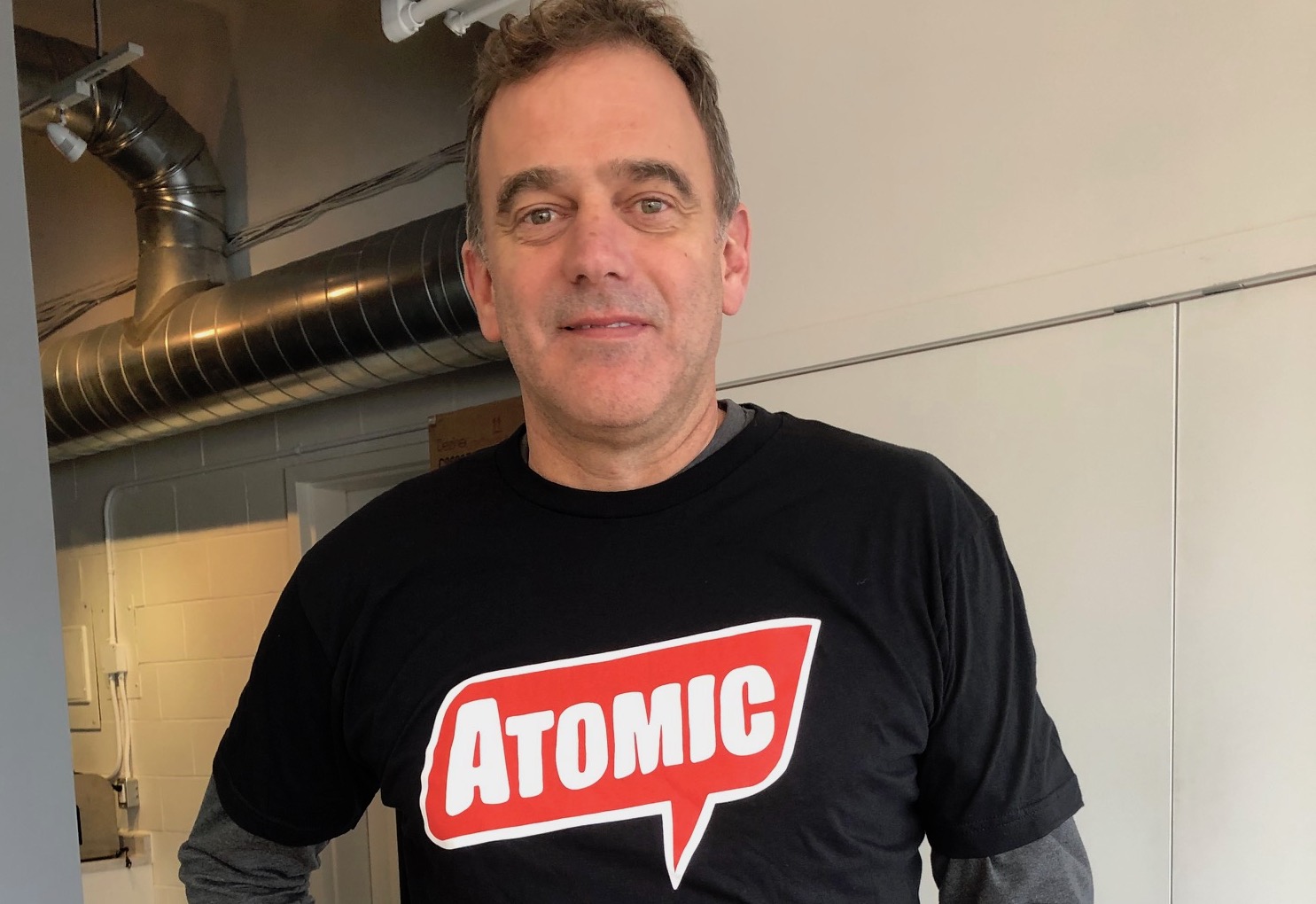
The pandemic triggered “extreme amounts of production,” explains Chris Wightman, the head of Atomic Cartoons’ local operations in Hintonburg and the co-chair of the Ottawa Film Office’s film and TV advisory committee.
“I don’t think we’ll ever see that kind of production again.”
Then, almost as suddenly as the boom began, the pendulum swung in the other direction.
Once the COVID crisis abated, “people got back to their lives,” Morrison says, “and all of a sudden the subscription base (for streaming services) started to wane a bit. So they stopped ordering (new content).”
As a result, the once-gushing pipeline of work flowing to studios like Atomic and Big Jump slowed to a trickle. Meanwhile, actors and writers in two major Hollywood unions went on strike in 2023, putting the brakes on TV and film productions for months.
“We were looking at two features back-to-back and some small pilot work that basically got shelved,” Morrison says.
“Nobody was writing, and actors couldn’t go on site and act. It just halted production. All service (work) coming to Canada virtually dried up.”
Ottawa’s animation industry, which employs hundreds of people and pumps tens of millions of dollars into the local economy every year, was particularly hard hit.
A sector that generated $60 million in economic activity at the height of the COVID-fuelled animation boom in 2022 is expected to contribute only about $15 million this year, according to the Ottawa Film Office.
While animation has always been a cyclical business, Wightman says the past couple of years have been the toughest for the sector in decades.
“Everyone’s seen (downturns) before – it’s just nobody’s seen it quite that deep and prolonged before,” he says. “It hit every (animation hub), every studio. Definitely in Ottawa, it was a slow year for everybody. The green lights were not happening.”
As a result, the wave of hiring earlier in the decade was replaced by massive rounds of layoffs and other cost-cutting measures.
Smaller real estate footprints
Mercury Filmworks, for example, went from 350 employees at the height of “peak TV” in 2022 to a headcount of about 130 today, says founder and CEO Clint Eland.
The studio known for its work with big-name Hollywood clients such as Netflix, Disney, Amazon and Warner Brothers has also downsized its real estate footprint. Mercury is now subletting about 20,000 square feet of the 45,000 square feet of space it leased when it moved to Baseline Road in December 2019.
The shift to hybrid work during the pandemic went smoothly for the industry, Eland says, and most of his employees are now in the office only three days a week.
He doesn’t foresee a need for more space any time soon, even if the volume of work at his shop picks up significantly.
“Since 2019, we’ve had computers in boxes. This space has never been full,” Eland notes. “Fundamentally, the way we work post-pandemic would have changed our footprint anyway.”
Over at Big Jump’s studio on Holly Lane in Ottawa’s south end, Morrison cut his workforce from more than 80 people in the fall of 2023 to about a dozen employees last spring. He began to slowly rehire over the summer as new projects came in, and the firm’s headcount is now back up to around 40.
No boss likes handing out pink slips, but Morrison says he didn’t have a choice.
“We’re building it back up again, but it’s kind of baby steps,” he explains. “It’s a less than desirable place to be, but I also know if we don’t (downsize), we’re not going to be here. That is just business 101.”
Like Mercury Filmworks, Big Jump has also shed much of its real estate.
About two-thirds of its staff now works remotely, Morrison says, and the company has slashed the amount of space it leases from 9,000 square feet last January to about 1,000 square feet today.
And rather than being locked into a long-term lease, Big Jump now rents its office space on a month-to-month basis.
“The best thing we ever did was pivot from the large footprint and concentrate on how we can go more remote and still deliver the requirements of our clients,” Morrison says, adding Big Jump can pass on some of the savings from its lower monthly rent bill to clients.
“You always have to adjust in business, or you end up going to zero.”
Eyeing new markets
Having weathered the storm, Ottawa’s animation studios are now looking at their businesses through a slightly different lens.
Big Jump, for example, is currently bidding on projects for producers in Australia and Taiwan – markets that haven’t traditionally been a major source of revenue for Ottawa studios.
The company is also continuing to develop its own shows in the hope of selling them to major distributors down the road – a path that’s often more lucrative in the long run, Morrison explains, because Big Jump owns the intellectual property it creates and can sell distribution rights to the highest bidders and license other aspects of the production.
“We’ve got to start looking out where there’s opportunities on the periphery,” he says. “If you don’t pivot to that, and you didn’t pivot with your space and get rid of your overhead costs, you’re probably sweating and staying up at night.”
Eland, too, says his studio has tweaked its business model recently. Mercury began developing its own series about three or four years ago and is now in the process of shopping those shows to distributors.
So far, he admits, it hasn’t been an easy sell.
“Our timing couldn’t be worse,” Eland says with a sheepish chuckle. “Most of the people buying shows are looking to mitigate risk, and the way to do that is to invest in big-brand shows, not original series.
“If you’re trying to premiere something new, there is still not a lot of interest in that, because there’s a risk profile there. No TV executive or buyer has ever lost their job for saying no. The yeses are very careful, and the nos are thick and fast.”
Renewed optimism
Still, the veteran animation executive sees signs of renewed hope for his business.
Mercury has recently started shifting its focus more toward adult-oriented productions, a move that requires “focused rethinking” on the part of animators who were used to creating storylines aimed at kids and families, but one that should pay dividends as the studio produces a “much more balanced” slate of programming, Eland explains.
“If I’d asked (staff) to produce these shows three or four years ago, they’d have been at my office door with pitchforks and torches,” he says. “Whereas now, they’re like, ‘Bring it on. If this is what we have to do to build a more stable business … then let’s do it.’ I think that as painful as this has been, I do feel that the foundation we’ve built in this difficult time is going to really set us up to be much, much stronger in the future.”
As the calendar is poised to flip, Wightman says there is “definitely a sense of optimism with the Ottawa studios” that he hasn’t felt in the last 18 months or so.
“Definitely in the last quarter, work is starting up again. Studios are starting to get projects signed, and we’re all looking forward to a much better 2025. It’s been a longer tunnel than most of us expected, but it seems (like) we’re coming near the end of it and definitely looking forward to getting back to business as usual.”
Eland, whose firm is preparing to work on a pair of new projects for Disney and Warner Brothers, says Mercury will be back in hiring mode in 2025. But he remains cautious about the animation sector's long-term prospects.
“I think we will probably try to be more controlled about our growth,” he says. “We’re at the mercy of the industry, and the industry is being driven by these big organizations with agendas that are not clear or fully available to us. We’re just along for the ride. When it will land on stable ground is unclear.”
Noting that some studios in other parts of the world didn’t survive the post-COVID crash, Morrison says he feels fortunate.
“To be solid in production and having revenues for the next year-plus in this business is a pretty good place to be,” he says. “What doesn’t kill you, makes you stronger.”