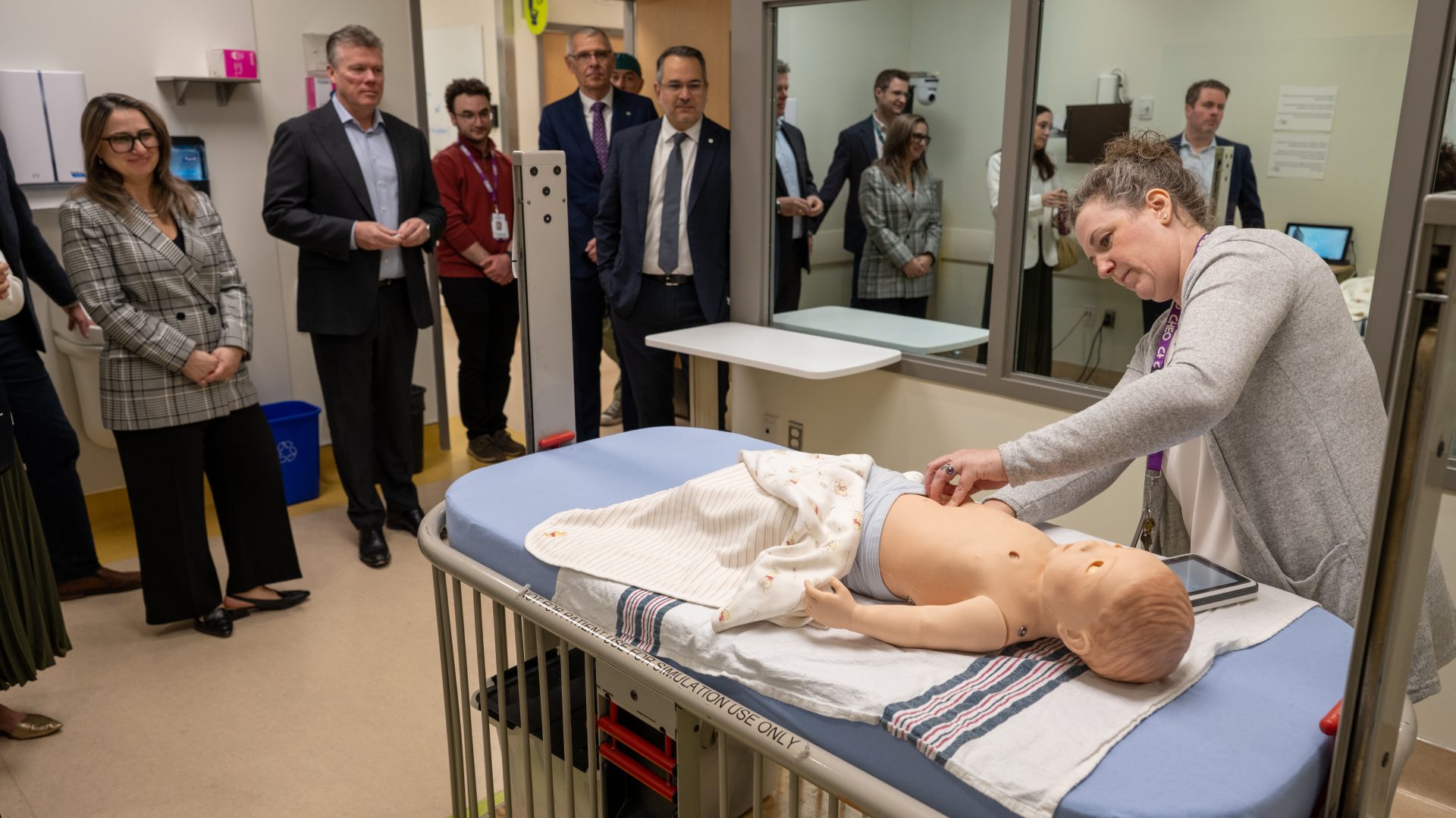

The Bank of Montreal (BMO) has committed to a transformational $2-million gift to CHEO, the Ottawa pediatric health centre that serves eastern and northern Ontario, western Quebec and Nunavut.
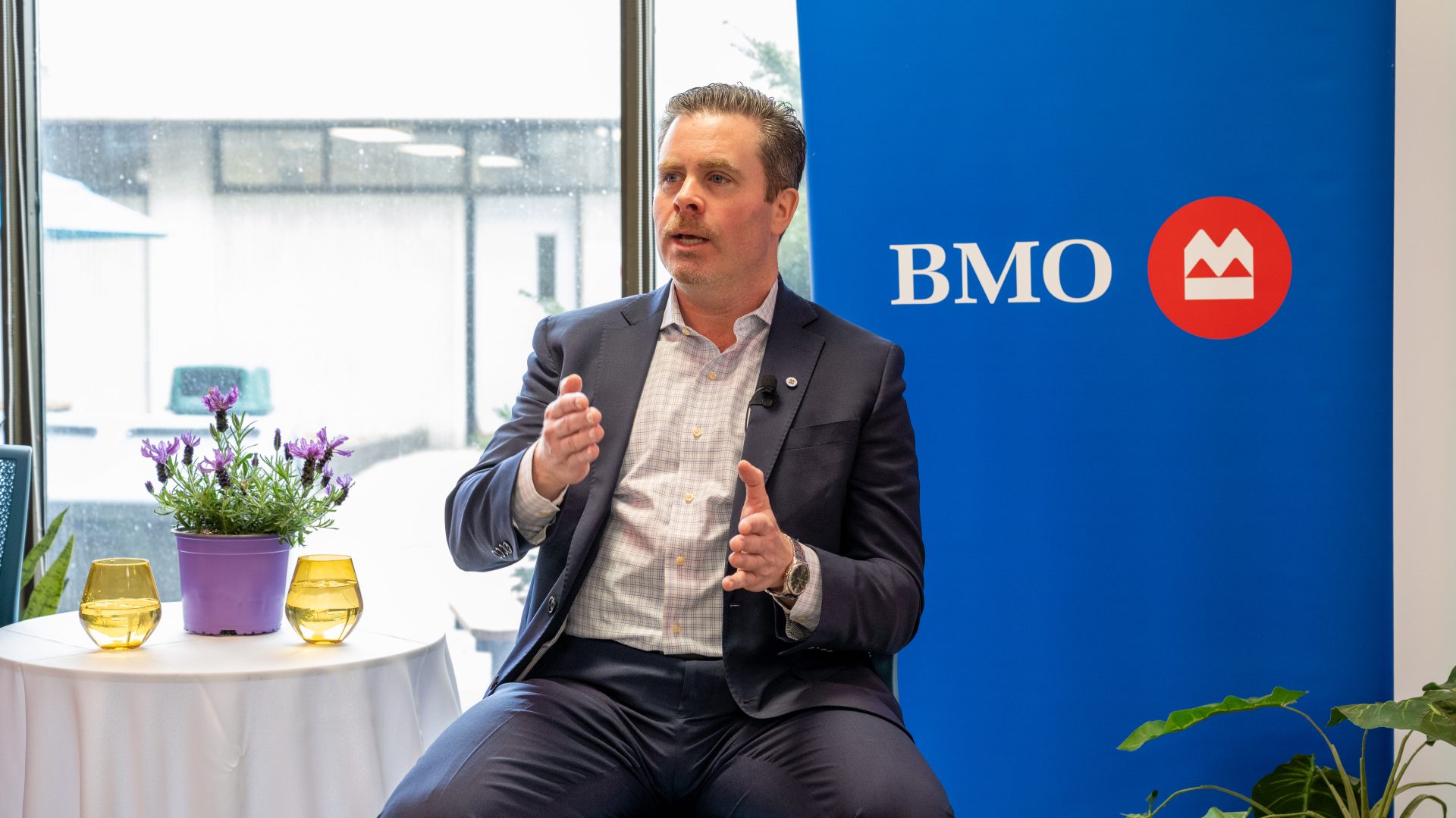
The gift from one of North America’s largest banks was announced at an Earth Day panel discussion on environmental responsibility and innovation in pediatric care at CHEO on April 22.
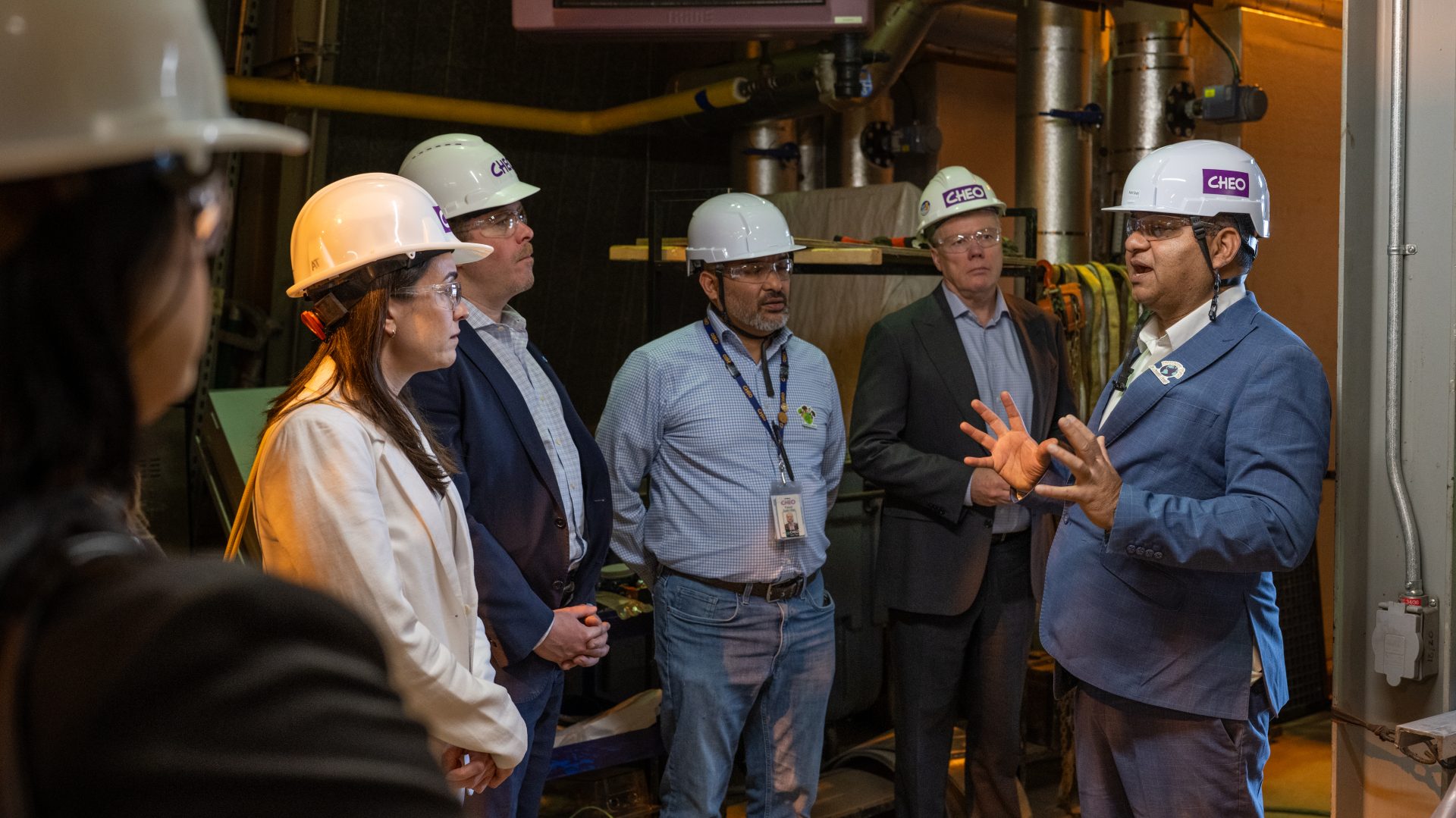
The funds will help finance multiple sustainability and energy-efficient initiatives for the CHEO campus, which opened in 1974, including construction of a state-of-the-art, six- storey, 220,000 square-foot Integrated Treatment Centre. They will also support the development of CHEO’s AI-enabled health-care emissions dashboard, which will automate and track hospital-wide greenhouse gas emissions.
“The impact of this gift will be felt for generations here at CHEO and beyond,” said CHEO Foundation President and CEO Steve Read. “It’s a partnership that will help us achieve our goals for children, youth, families, communities and the planet we all share.”
Michael Torrance, vice-president and chief sustainability officer with BMO, agreed. “CHEO is setting a powerful example for sustainable health care, and we’re honoured to support that leadership,” he added.
Youth anxious about climate threat
Read, who led the Earth Day panel, emphasized CHEO’s responsibility to ensure a healthy environment for the children and youth it serves. He said CHEO is a national leader in its sustainability initiatives, and he reiterated the hospital’s goal of achieving net-zero greenhouse gas emissions by 2047.
“Health care remains a significant contributor to global emissions, making climate leadership in the sector both urgent and essential,” Read said.
Dr. Vera Etches, president and CEO of CHEO; Dr. Richard Webster, scientific director of the Clinical Research Unit at the CHEO Research Institute; Siobhan Boon-Devlin, a CHEO Youth Forum member; and BMO’s Torrence participated in the discussion.
“The World Health Organization is very clear that climate change is the biggest threat to human health on our planet,” said Etches. “Children and youth are pointing to that and expecting us to take action.”
Webster, who also leads the Climate Care Lab at the CHEO Research Institute, noted that Canada needs to brace for even more extreme weather events, such as wildfires that damage air quality and disproportionately impact growing children. “We’ve seen this across the country as it has spread,” he said.
Increasing numbers of heat waves have also resulted in “cascades of physiological challenges” for children and youth, he said.
Moreover, as the climate warms, animals move north into new territory, bringing new infection and disease risks. “We’re seeing this with malaria and West Nile virus. And here at CHEO, over the past two decades we’ve definitely seen a shift (upwards) in Lyme disease,” added Webster.
He stressed that efforts to address the impact of climate change on children must also focus on socioeconomic inequality. For example, climate health issues are particularly challenging for those who live in substandard housing, which often makes people more vulnerable to extreme heat and air pollution.
Climate anxiety is having a profound impact on the mental health of children and youth, who are already struggling, Webster added.
CHEO’s sustainability efforts are heavily focused on becoming less resource intensive, said Etches, who cited reducing the amount of disposable materials, and extending the life of hospital equipment, as examples.
“It will save us money over time to have more efficiency, and that’s also where we see the benefit to patients, because if we’re not putting as much money into infrastructure, we can be putting those resources directly into patient care,” Etches stressed.
Standing shoulder-to-shoulder to fight for the future
Speaking as both a CHEO youth adviser and a teenager in today’s world, the future can sometimes appear very bleak, Boon-Devlin acknowledged.
“But this donation shows that we are not alone in fighting this. It gives us confidence that our voices and our health, and our future, are being considered,” she added.
CHEO’s mission is to improve the health and well-being of children and youth to help them live their best lives, Etches emphasized.
“They won’t be able to live their best lives if climate change is having a really negative impact on their health,” she said. “We know we can do something about it. So seeing that negative impact on health, and realizing we ourselves can be reducing the greenhouse gases we’re generating – that’s why we put it into our strategy.”