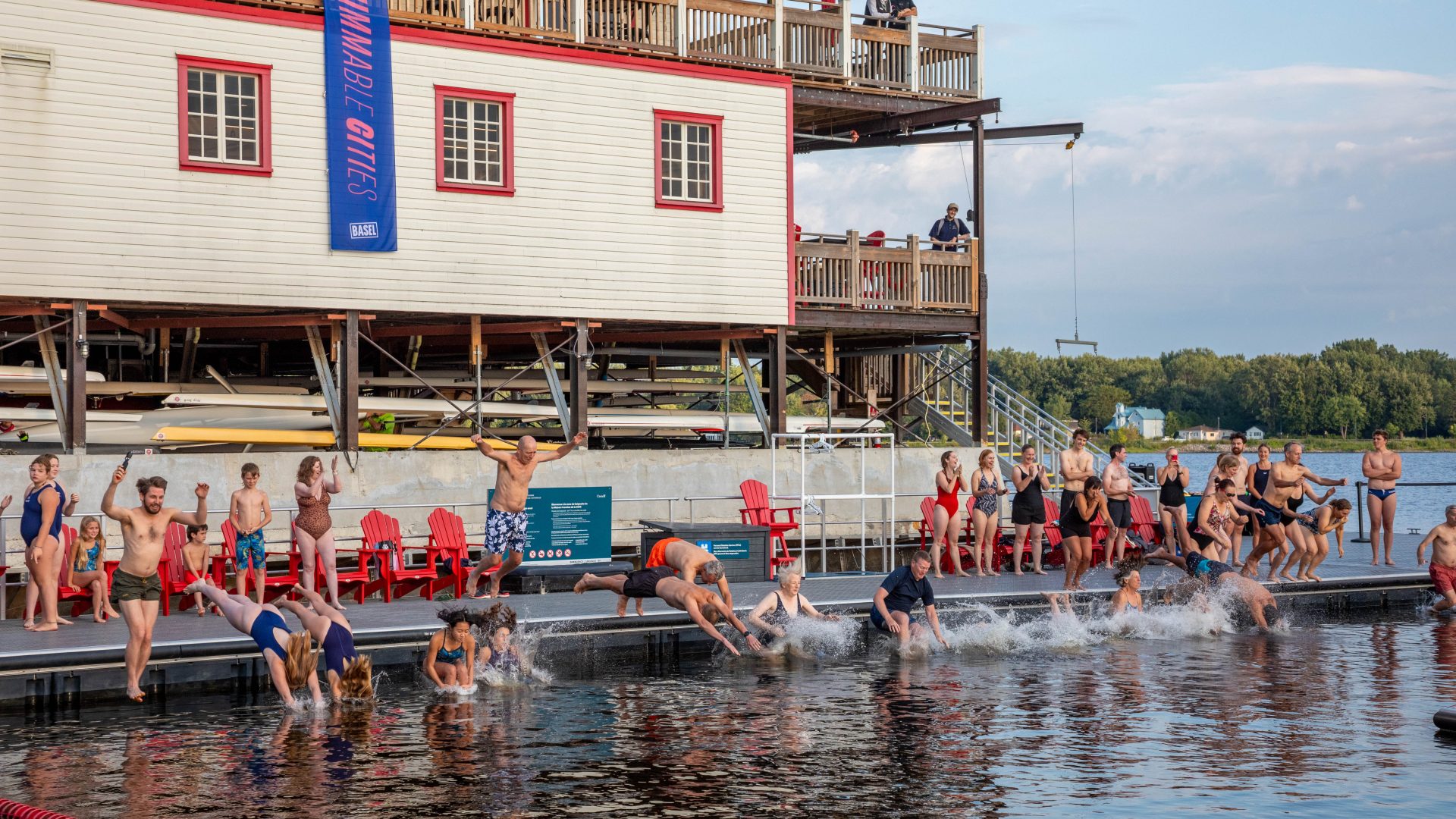
The co-founder of Swimmable Cities believes the National Capital Region has the potential to become a leading urban swimming destination in North America.
Already a Subscriber? Log in
Get Instant Access to This Article
Become an Ottawa Business Journal Insider and get immediate access to all of our Insider-only content and much more.
The most recent European event hosted by Swimmable Cities was in Basel, Switzerland, following its inaugural global summit in Rotterdam, Netherlands. Basel, which is divided by the Rhine River and has become world-renowned for urban swimming, served as an example of what cities such as Ottawa can achieve. “You walk out towards the river and from morning until evening you have people connecting with that river, swimming in that river,” said Sykes. “They’re swimming before work, swimming to work, swimming during their lunch breaks. They’re not athletes. There are people who do it for exercise, but it’s more of a lifestyle thing. If it’s hot, you can cool off. If you’ve had a stressful day, you can disconnect. Socially, it’s an amazing way to bring people together.” Swimmable Cities launched in 2024 in the lead-up to the Paris Olympics, when the clean-up of the Seine was making headlines just days before athletes were meant to compete in it. Though some urban waterways need that kind of investment to make them swimmable, Sykes said most efforts are much less complicated and much less expensive. “Your policy, your water quality and your infrastructure — these are the key considerations,” he said. “The primary cause of water quality issues are sewage, stormwater and industry.” In some cases, new technology for water monitoring, no-swim policies after rain and proper signage are all that’s needed to ensure safety. In inaccessible areas, cheap infrastructure like a maintained path, ladder or dock are enough to make a waterway swimmable. Ottawa has been making efforts in this vein, including the National Capital Commission’s launch of new recreational docks and its plan to build a floating sauna near the NCC River House. “There are already things happening,” said Sykes. “But based on what I’ve seen in cities around the world, there are more opportunities for tourism events, hospitality and waterfront developments that integrate and connect with swimmability. You’ve got political leadership. You’ve got the delivery power of institutions like the NCC. You’ve got tourism bodies like the ones we’re partnering with this summer. There are a lot of really good conditions that would make something special here possible.” Even for a city such as Ottawa, where waterways are frozen for half of the year, Sykes said improving swimmability is worthwhile, especially from a tourism perspective. Cities like Oslo, Copenhagen and Helsinki all experience similar weather conditions but have built global reputations as year-round destinations for urban swimming, he said. “In Oslo in the last 10 years, they’ve gone through a massive transformation where what was a city with interesting institutions around the waterfront but not the vibrancy or excitement or the brand, now has literally dozens of floating saunas in their harbour waterfront,” he said. “So now you’ve got music events, you’ve got cafes, you’ve got housing developments. This way of designing cities that are swimmable is an economic catalyst for all these other flow-on enterprises to be able to benefit.” He added that public-private partnerships that bring local businesses such as cafes and restaurants can add vibrancy and help establish swimming areas as destinations. To make the National Capital Region a leader in urban swimming, Sykes said the municipal government, tourism organizations and other stakeholders need to work together on a regional master plan to determine what kind of investment is needed to meet the increasing demand for swimmable urban areas. “It’s really, really important to emphasize that swimming itself should always be free and accessible for everyone,” he said. “The goal in the long term is that you just have swimmability built into the DNA of your city.”