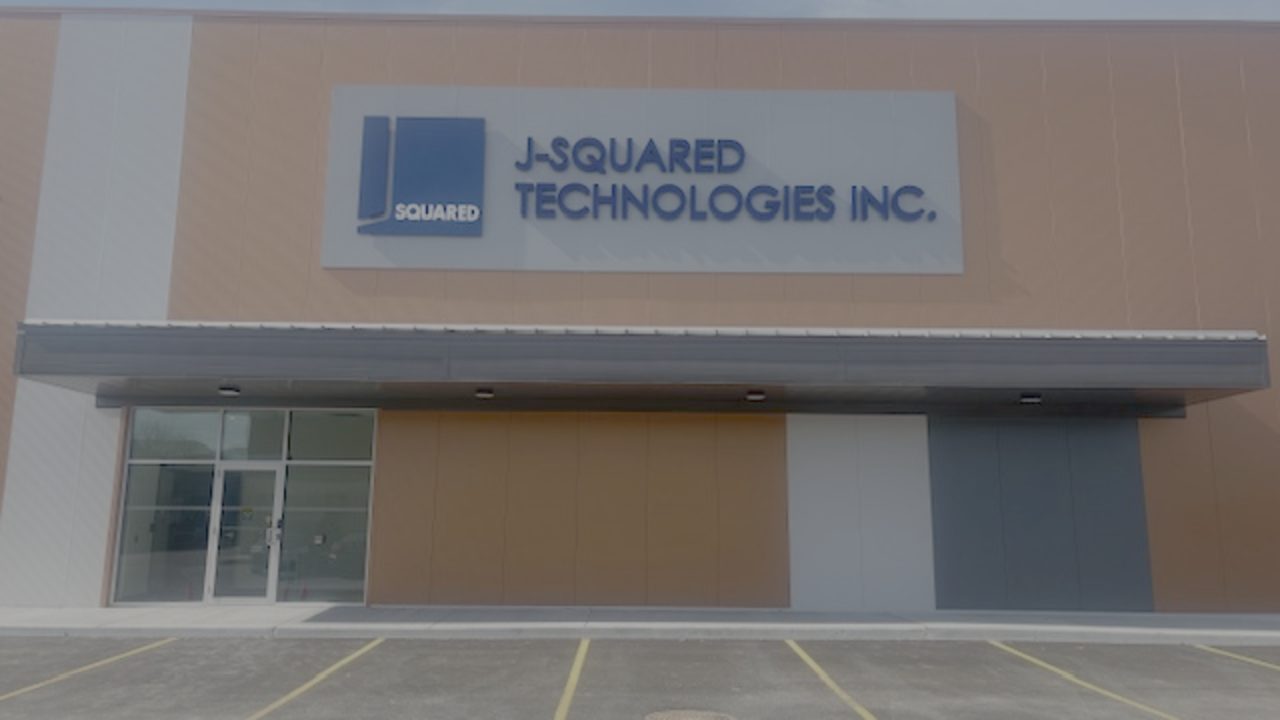
With defence and security suddenly the hottest industry in town, Kanata’s J-Squared Technologies is poised for what might be the best run in its decades-long history. A supplier of hardware and software to some of Canada’s largest defence procurement projects, including the navy’s new River-class destroyer ships, J-Squared is a business to watch as the […]
Get Instant Access to This Article
Become an Ottawa Business Journal Insider and get immediate access to all of our Insider-only content and much more.
With defence and security suddenly the hottest industry in town, Kanata’s J-Squared Technologies is poised for what might be the best run in its decades-long history.
A supplier of hardware and software to some of Canada’s largest defence procurement projects, including the navy’s new River-class destroyer ships, J-Squared is a business to watch as the federal government embarks on its biggest military spending binge in memory.
The company opened a 26,000-square-foot manufacturing and testing centre on Schneider Road Wednesday. The facility, which cost more than $1.5 million to fit up, will produce hardware to protect sensitive military equipment and be capable of simulating events such as nuclear electromagnetic pulse (EMP) blasts aimed at disabling electronic equipment on military vessels.
“It’s a pretty substantial investment,” says J-Squared founder and CEO Jeff Gibson, noting it will be the largest EMP test facility of its kind in the country.
Founded 36 years ago, J-Squared specializes in custom-made software, computer equipment and “ruggedized hardware” such as stainless steel cabinets designed to protect vital components like laptops and servers. It now has about 110 employees, and its customers include mining operations, the Canadian Armed Forces and defence equipment manufacturers.
The new facility at J-Squared’s Kanata campus is part of Gibson’s long-term plan to create a network of what he calls “innovation hubs” across the country.
In addition to its existing manufacturing and testing facilities in Ottawa, Toronto and Dartmouth, N.S., J-Squared plans to open another factory in eastern Ontario that will build bigger products such as drones, as well as facilities in Western Canada and the Arctic.
Much of the expansion push is in response to recent federal initiatives to bolster Canada's homegrown defence capacity.
As an example, Gibson said the new $6.6-billion Industrial Defence Strategy aimed at lessening Canada’s dependence on foreign-made military technology could mean a “lot of business” for companies like his. But he also expects competition for military procurement contracts to intensify as the defence gold rush attracts a wave of prospectors hoping to strike it rich.
“I think the challenge we will always have if you look at it big picture is you’ll have a lot of companies that will pivot and want to get in the defence space,” he says. “We would have a distinct advantage because we’ve been in that market space for eight-plus years.”
Indeed, if anyone knows what it’s like to benefit from a shift to defence customers, it’s Gibson.
When he started J-Squared in 1990, his idea was to sell and distribute high-end electronics. But as customer demands changed, the business morphed into a manufacturer of computer equipment and other hardware.
“As we were selling different products to a lot of companies in Canada back in, I don’t know, 2010, a lot of companies sort of said, ‘You’ve got all these different Lego building blocks. Can you put them together in a computer for me?’” Gibson recalls. “So that’s kind of how it evolved.”
The company soon became a go-to supplier for clients such as mining companies looking to ensure computers, sensors and other sensitive technology didn’t get damaged in treacherous terrain.
“The last thing you want in a high-vibration environment is components flying off (computer) boards, because then the boards aren’t going to work,” Gibson says.
“We’ve always typically been in very rugged applications – whether it’s mining (equipment) or whether it’s rail, things of that nature. And then we got into military.”
The stage for the firm’s transformation into a defence contractor was set in 2018 when J-Squared bought ESL Labs, a 5,000-square-foot test facility in Dartmouth. Gibson spent $10 million to upgrade the space, acquiring a new 30,000-square-foot building and installing the latest in military testing technology, including motion simulators and salt corrosion chambers that simulate harsh marine environments.
“Getting into the military space when we did was kind of an easy decision because we felt very comfortable our products would survive in that environment,” he explains.
By far the firm’s biggest military contract so far is the River-class destroyer project. J-Squared has been partnering with defence giants such as Lockheed Martin to provide cabinets, servers, computer boards, switches, communications hardware, software and other components for the new ships, and the company expects to start seeing income from that contract later this year.
Military customers still account for less than half of J-Squared’s revenues, but Gibson believes the defence sector could soon supply 80 per cent of the firm’s income. While revenues have been growing at a steady pace of five to 10 per cent annually in recent years, Gibson is anticipating growth of 20 per cent in 2026, with even better days to come.
The self-funded firm has made money for most of its existence, he notes, and Gibson’s strategy of investing much of those earnings back into the company appears to be paying off.
“We could have sat back and clipped coupons and been highly profitable, but we decided to up our costs and up our capabilities in manufacturing, engineering, everything really,” he says. “If we didn’t do that, we wouldn’t be in the position we’re in today, to be honest.”