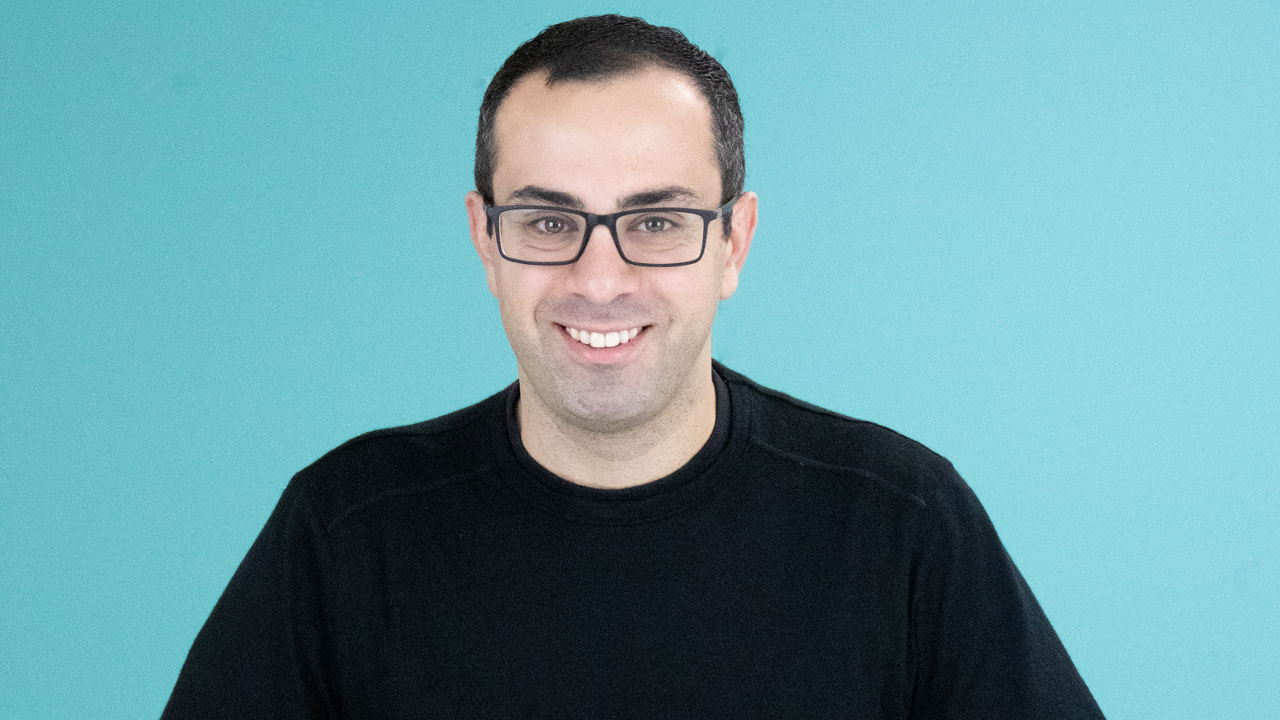
While his company’s newest product is aimed at making the trip through a drive-thru a little faster, Solink CEO Mike Matta is focused on a bigger journey. His Kanata-based firm is on the kind of roll most tech founders can only dream of. In the past three years, the number of locations where its platform […]
Already a Subscriber? Log in
Get Instant Access to This Article
Become an Ottawa Business Journal Insider and get immediate access to all of our Insider-only content and much more.
While his company’s newest product is aimed at making the trip through a drive-thru a little faster, Solink CEO Mike Matta is focused on a bigger journey.
His Kanata-based firm is on the kind of roll most tech founders can only dream of. In the past three years, the number of locations where its platform is used has more than doubled to upward of 35,000. Revenues, now in the tens of millions of dollars, are growing at an average clip of 40 per cent a year, and the company has eschewed a growth-at-all-cost mentality in favour of constantly trying to improve the unit economics that have it on “a path to profitability,” in Matta’s words.
Founded in 2009, Solink is a global leader in the fast-growing field of video surveillance software. Now at more than 400 employees globally, the firm specializes in cloud-based technology that uses artificial intelligence to help businesses such as restaurants, manufacturers and property managers quickly mine footage from digital security cameras and marry it with point-of-sale data to pinpoint specific events, such as when employees give out refunds or a coffee shop is running low on doughnuts.
Solink’s equipment is found in more than 60 countries. Major customers include Tim Hortons, burger chain Five Guys and clothing retailer Moose Knuckles.
In fact, quick service restaurants like Tim Hortons account for about a third of clients. So it makes sense that Matta is touting the merits of Solink’s newest offering: an extension of its platform designed to cut wait times and improve order accuracy at drive-thrus. It uses AI that analyzes security camera footage to anticipate bottlenecks and help kitchen staff catch service problems before they become patterns.
Drive-thrus often account for more than 70 per cent of a QSR’s revenues. One study cited by Solink estimates that every five-second delay can mean up to $9,500 in annual losses per store. Matta says that can easily lead to lost sales amounting to 10 per cent or more of annual revenues as frustrated customers take their business elsewhere.
To illustrate his point, he mentions a recent trip to the southern Ontario city of Brantford.
“It’s a hockey town and so there’s lots of Tim Hortons,” Matta says. “I was trying to go to a Tim Hortons and it was always backed up. Every time I saw a line that was two or three (cars) past the ordering menu, I was just like, ‘Aw, forget it, I’ll go to the next one.’ I think that’s the instinctual behaviour that many consumers have.”
Matta thinks the new product, Drive-Thru AI, will become yet another indispensable tool in a portfolio that’s made Solink software among the stickiest in tech – the company has a customer retention rate of almost 100 per cent.
But he also believes Solink is barely scratching the surface.
The firm’s software collects data from hundreds of thousands of cameras around the world, with the result being that it has access to a video bank Matta describes as 20 times larger than YouTube’s.
From Matta’s perspective, that means his company is sitting on a goldmine of information. While many customers use the software mainly to manage risk – by detecting fraud and theft, for example, or ensuring employees adhere to corporate procedures – Matta says a shift is underway.
“I believe that, over the next 10 years, that market is going to turn into not just managing risk, but managing all aspects of the physical world,” he explains. “We capture more video than any other firm globally. The opportunity for us to understand not just the risk, but all of the opportunity that lives inside of that data is tremendous. I think it’s going to get to a trillion-dollar market in the next 10 years.”
Currently, Matta says, Solink users are analyzing only about one per cent of all the camera footage they accumulate. The other 99 per cent, he explains, could unlock all kinds of efficiencies and new revenue streams because it can provide a “fully rounded view” of how a business operates every minute of every day, and of how employees spend their time.
It’s a market that extends beyond the security space, Matta says, and Solink is only just beginning to penetrate it.
“The ability for me to organize what I do and where I prioritize my time is more real than ever,” he says. “I think this is the opportunity to help enable that.”
Matta says that while some people may think AI is “scary,” it’s here to stay and can be a force for good, as long as it’s used properly.
“I think it will make your best people 10 times more impactful and productive,” he says. “I think it will make your worst people better. I think we’re in a world where everyone needs to embrace it and everyone needs to be in a place of, how do I enable it in the environment that I’m in?’”
Originally backed by billionaire tech entrepreneur Terry Matthews, Solink has raised more than $100 million in venture capital. Investors include Goldman Sachs Asset Management, OMERS Ventures and BDC IT Ventures.
When Solink announced its US$60-million series-C round almost three years ago, Matta suggested the next logical step would be for the company to go public, and he predicted the firm would undertake an initial public offering within two to four years.
Investors, too, seemed bullish on the prospect of an IPO for Solink. Laura Lenz, a partner in OMERS’ venture capital arm, told The Globe and Mail in July 2023 that the Kanata company was “one to watch” for a public offering “when and if that window opens.”
Today, Matta says that while he thinks an IPO could still be part of Solink’s future, it’s not top of mind as he navigates the path to a potential billion-dollar market opportunity.
“The IPO is a milestone event, but it is not THE event,” he says. “It is not the reason you go build a great company. You build a great company that can stand the test of time. An IPO is a moment in time in that journey. I think that desire to have that moment in time hasn’t changed. I just think the timelines have changed.
“You want to do it when it has the best outcome for the investors, for the team, for the customer base that’s trusting in us. We want to be prudent in how and when we do it, or even if we do it. The reality is the markets are changing pretty rapidly. The end goal of wanting to build a category-leading company that stands the test of time, that doesn’t change.”
Solink, he adds, is well on its way to getting there.
“I like to say that we are a global company that happens to be based in Ottawa,” Matta says. “We want to win not just in Canada or in Ottawa, we want to win on a global basis. I always say, ‘We either get first or we get last.’ Anything in between doesn’t really matter.”