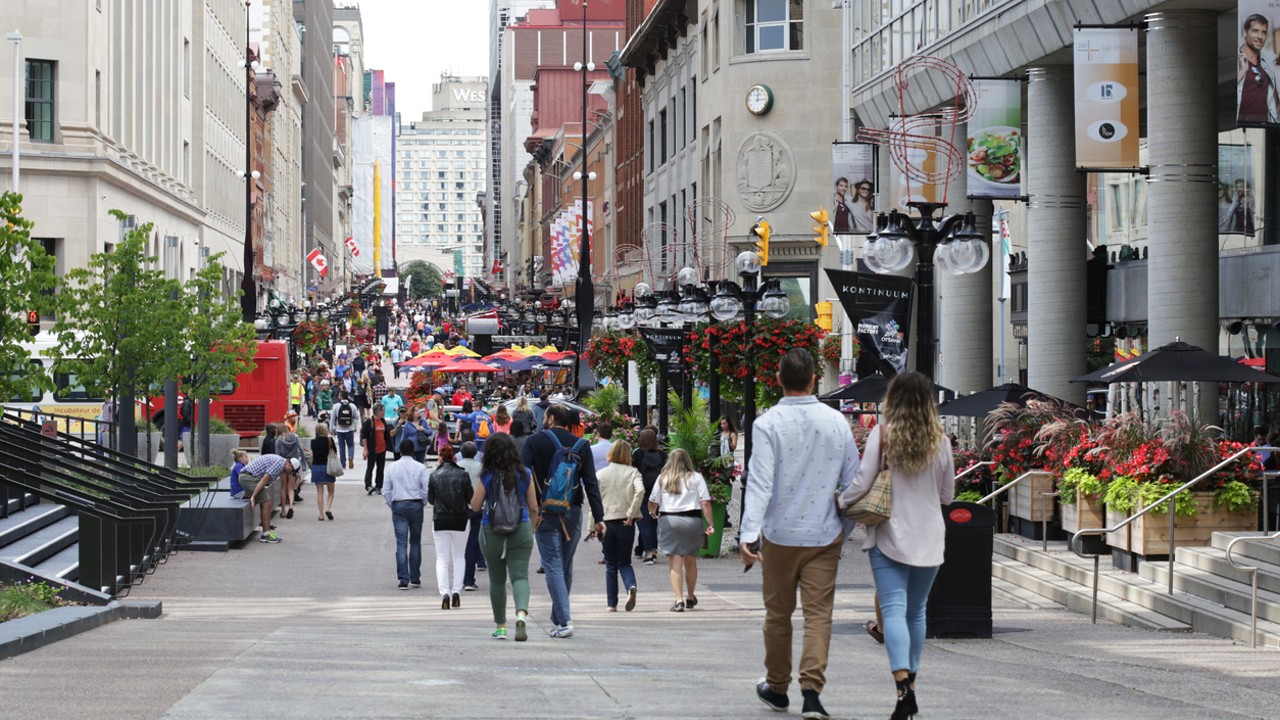
City staff have put forward a series of measures designed to advance downtown revitalization goals. The Downtown Revitalization Framework and Action Plan was approved by the finance and corporate services committee last week and will go to council next week. Measures include the redevelopment of municipal properties such as Bayview Yards and implementing incentive programs […]
Already a Subscriber? Log in
Get Instant Access to This Article
Become an Ottawa Business Journal Insider and get immediate access to all of our Insider-only content and much more.
City staff have put forward a series of measures designed to advance downtown revitalization goals.
The Downtown Revitalization Framework and Action Plan was approved by the finance and corporate services committee last week and will go to council next week. Measures include the redevelopment of municipal properties such as Bayview Yards and implementing incentive programs for office-to-residential conversion projects.
The measures, which are short-, medium- and long-term, fall into four categories: rebalance uses; diversify and strengthen Ottawa’s downtown economy; improve community safety and well-being; and transform places and spaces.
According to Sheilagh Doherty, director of economic development at the city, the framework builds on priorities established by council and is complementary to the Ottawa Board of Trade’s Downtown Ottawa Action Agenda, which was released in 2024 with the goal to revitalize the core by 2034.
“It’s really building on work that was already underway, but it does identify some gaps in some areas where we can go in the future … Some of the catalytic anchors in the board of trade’s plan … are ones that are under the city’s control,” Doherty told OBJ Tuesday. “For example, the revitalization of the ByWard Market is one of our projects and that was approved at council in March.”
Short-term measures will be funded by “existing funding and resources,” while funding for medium- to long-term projects would have to be considered by the next term of council, said Will McDonald, director of the city’s strategic projects office, in an email to OBJ.
“Short‑term actions in the framework aim to deliver visible improvements while preparing for longer‑term changes. These include early coordination on the redevelopment of underutilized public properties, accelerating office‑to‑residential conversion projects, expanding support for small businesses, and targeted public space and safety measures,” wrote McDonald.
The framework will help the city and its partners, including local BIAs, take a coordinated approach to revitalizing downtown Ottawa, he added.
“It’s about making downtown work better for the people who live there now, attracting new residents, employers and visitors. Rather than focusing on a single project, the framework brings together City-led initiatives which focus on improving day to day livability.”
If approved by council on April 22, the next step is implementing the short-term plans, Doherty said.
Here are five of the short-term plans that will be considered by council next week: