Ottawa’s downtown office vacancy rate dropped more than a full percentage point in the second quarter as deals picked up and two highrises were taken off the leasing market, Colliers said in its most recent market report. The vacancy rate of office buildings in the core fell to 12.4 per cent at the end of […]
Get Instant Access to This Article
Become an Ottawa Business Journal Insider and get immediate access to all of our Insider-only content and much more.
Ottawa’s downtown office vacancy rate dropped more than a full percentage point in the second quarter as deals picked up and two highrises were taken off the leasing market, Colliers said in its most recent market report.
The vacancy rate of office buildings in the core fell to 12.4 per cent at the end of June, down from 13.5 per cent in the first quarter, the real estate brokerage reported.
That’s still higher than the downtown vacancy rate of 11.4 per cent from a year earlier, as marquee office towers such as Constitution Square and Minto Place are looking to fill a spate of tenant departures that have driven the class-A vacancy rate up to 10.8 per cent, compared with 9.3 per cent in the second quarter of 2025.
Downtown office properties recorded 100,256 square feet of net absorption between April and June, Colliers said, with class-A buildings accounting for 71,000 square feet.
While new lease signings helped lower the vacancy rate, much of the decline stemmed from the removal of two lower-tier properties from the downtown office inventory.
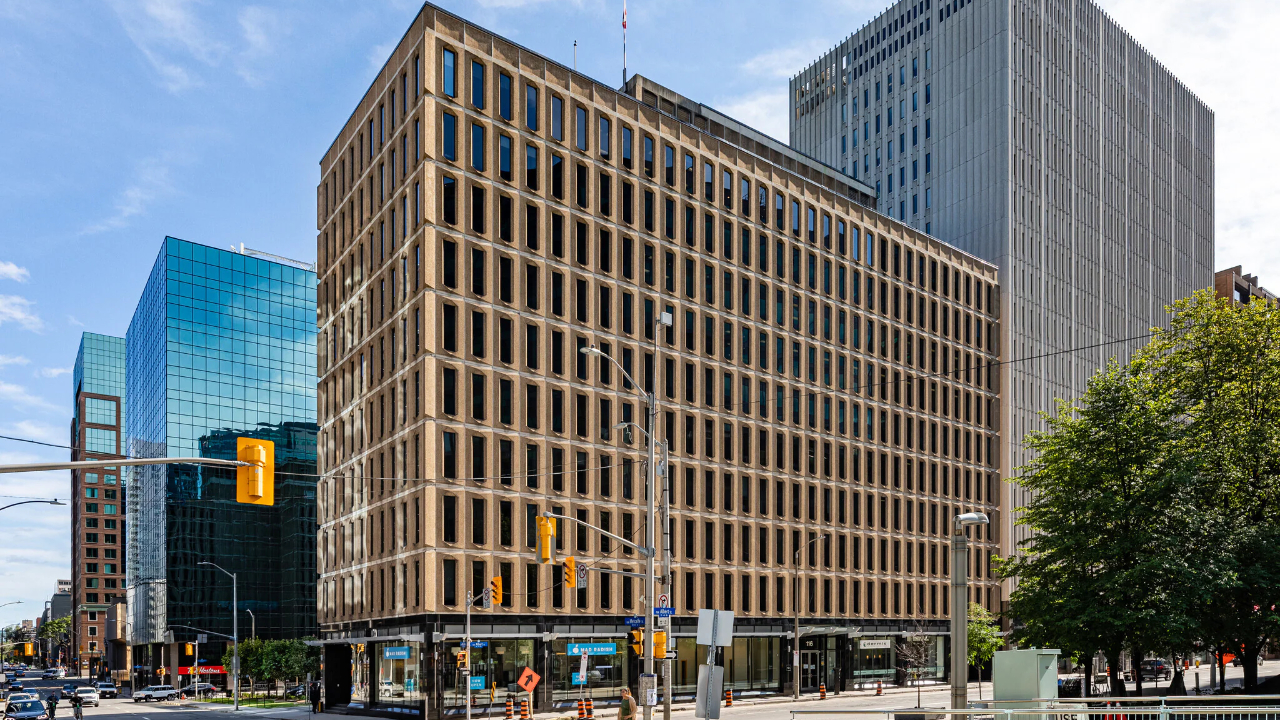
The buildings — a 16-storey, 89,000-square-foot tower at 85 Albert St. and a 10-storey, 97,000-square-foot highrise less than a block east at 116 Albert St. — are both owned by Metcalfe Realty.
Colliers said Metcalfe is looking to “reposition” both properties. Warren Wilkinson, Colliers’ senior managing director in Ottawa, said the removal of the two properties from the office inventory has created an “artificial tightening” of the class-B and C vacancy rates.
The downtown class-B vacancy rate fell to 15.8 per cent in the second quarter, down from 16.4 per cent in the previous quarter, while the class-C rate dropped to 17.4 per cent from 26.1 per cent.
Ottawa’s overall office vacancy rate ticked up slightly in the second quarter to 13.2 per cent, compared with 12.9 per cent at the end of March, Colliers said.
The rate rose largely because Colliers included two buildings in the city’s office inventory that it had previously removed because they had been slated for conversion to residential use.
Regional Group owns one of the properties — a seven-storey, 105,000-square-foot, class-A building at 495 Richmond Rd. that was previously occupied by the Canadian Institute for Health Information.
While Regional Group has submitted an application to the city to turn the building into a housing complex, a source told OBJ the company is still shopping the property to prospective office tenants and hasn’t committed to a conversion.
Former Telesat HQ back on leasing market
The other building — a four-storey, 230,000-square-foot property at 1601 Telesat Ct. that formerly served as the headquarters of satellite provider Telesat — was purchased by Gatineau-based developer Devcore in 2024 for $16.1 million.
At the time, Devcore said it planned to build three new rental towers of up to 32 storeys at the 10-acre site just south of Regional Road 174 near the Blair LRT station, and convert two or three floors in each of the existing office towers into loft-style studio apartments.
However, the firm shifted gears earlier this year, hiring brokerage firm Avison Young to find new office tenants for the building. Devcore CEO Jean-Pierre Poulin told OBJ in April the company hoped to secure an anchor tenant to occupy 50,000 to 75,000 square feet, and other users to take over the rest.
In an interview with OBJ earlier this month, Poulin said Telesat Court is drawing plenty of interest from potential occupants.
“We have a lot of irons in the fire for this,” he said. “Something good should happen. We’re talking with groups right now on a weekly basis.”
Shawn Hamilton, a principal at Proveras Commercial Realty, said the complex checks off multiple boxes for prospective tenants in both the public and private sectors, including abundant parking and proximity to light rail and a major highway.
In addition, he noted, the land is already zoned for residential use should Devcore ultimately decide to go that route.
“That was probably the smartest real estate purchase (in Ottawa) over the course of the last couple of years,” Hamilton said. “I would stay tuned and watch that space.”
Colliers’ latest report came out just a couple of weeks after Public Services and Procurement Canada, which manages much of the federal government’s real estate portfolio, said it was looking at leasing or buying more real estate in the National Capital Region as it tries to accommodate workers who are back in the office a minimum of four days a week.
Wilkinson said it’s no surprise that companies like Regional Group and Devcore are rethinking plans to convert office towers now that the federal government appears to be leaning toward expanding its real estate footprint after years of downsizing in the wake of COVID.
“There's a strategy behind bringing these properties back on to the (office leasing) market,” he said. “I don’t think it’s truly a lack of interest in residential conversions. I don’t think it’s costs associated with the conversions.
“I think it’s probably more to do with the fact that there’s a lot of rumbling within the city (about) the federal government (needing more office space). We could start seeing fed requirements or defence-related requirements influencing some of those larger opportunities. I think there's a strategy behind it, and I think time will tell.”
Meanwhile, tenants snapped up more than 100,000 square feet of space in Kanata last quarter, led by Robotics Centre’s decision to sublease about 70,000 square feet at 365 March Rd. for its new drone production facility.
That move helped push Kanata’s office availability rate — which combines vacant space actively being marketed and occupied spaces that are up for sublease — down nearly two full percentage points from the first quarter to 14.2 per cent.
Wilkinson said the federal government’s pledge to boost military spending over the next decade has triggered interest in office space from defence and security companies looking to set up shop or expand in the Kanata tech park.
“I can’t point to a tremendous amount of deals yet, but they’re coming,” he said.