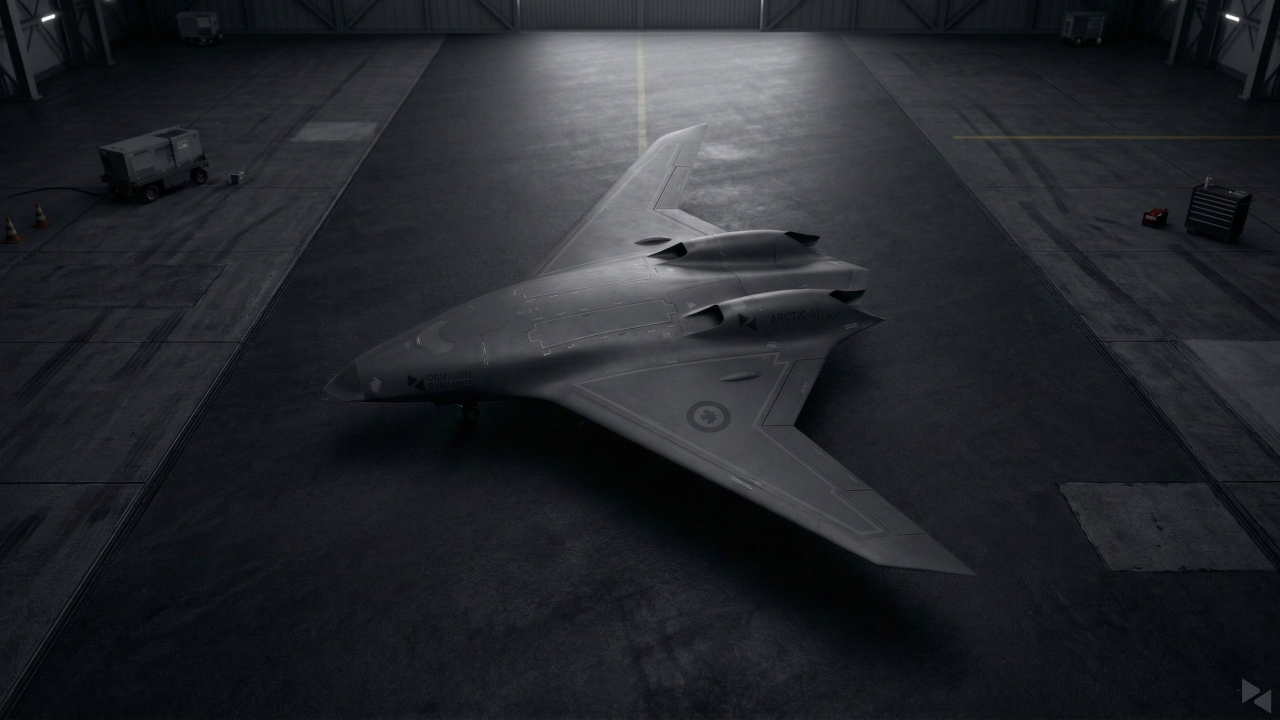
Ottawa’s Dominion Dynamics is joining forces with an Alberta company to develop artificial-intelligence technology that will teach cutting-edge drones to fly alongside F35s and other military aircraft. Dominion Dynamics said Wednesday it is partnering with Calgary-based Denvr to create the training platform, which the firms described as Canada’s first purpose-built “sovereign AI simulation environment” for […]
Get Instant Access to This Article
Become an Ottawa Business Journal Insider and get immediate access to all of our Insider-only content and much more.
Ottawa’s Dominion Dynamics is joining forces with an Alberta company to develop artificial-intelligence technology that will teach cutting-edge drones to fly alongside F35s and other military aircraft.
Dominion Dynamics said Wednesday it is partnering with Calgary-based Denvr to create the training platform, which the firms described as Canada’s first purpose-built “sovereign AI simulation environment” for next-generation unmanned aircraft.
The announcement comes after Dominion said earlier this month it will invest $50 million in a new program to build Canada’s first Autonomous Collaborative Platform (ACP) – drones that would patrol areas such as the Arctic and act as decoys for F-35 fighter jets and other aircraft such as surveillance planes in the event of an enemy attack.
“We believe Canada can be a world leader in building autonomous systems that operate in extreme environments,” Dominion Dynamics CEO Eliot Pence said in a news release.
“By partnering with Denvr, we will create a secure, Canadian-owned simulation environment to train and validate ACPs for the Canadian Armed Forces and our allied partners.”
Dominion will build the training system on Denvr’s Canada AI Platform, which is designed to handle classified information. Denvr’s platform is “powered by secure and stable energy and operates entirely within Canadian jurisdiction, eliminating exposure to foreign legislation,” the companies said in a news release.
“Dominion Dynamics is building something remarkable – an autonomous wingman capability, from the ground up, by Canadians, for Canada's security and for our NATO allies,” Denvr chief executive Geoff Gordon said in the release.
Dominion’s drones, which would have wingspans from about five to 15 metres, would travel into areas that are too dangerous for human pilots and execute manoeuvres that aren’t possible for manned aircraft, the company said in a recent news release.
The unmanned craft would also extend the military’s surveillance capabilities in vast regions such as the Canadian North, relay communications and fly ahead of jet fighters and other manned aircraft to “distract whatever defensive mechanisms the adversary has,” Pence told OBJ earlier this month.
Pence said the company plans to build “multiple different types of drones with some common parts” at its new 25,000-square-foot factory in Kanata, which is expected to be up and running by this summer. Dominion expects to triple its head count to more than 100 employees by the end of the year as the ACP program ramps up.
Launched last June, Dominion Dynamics has raised about $30 million so far. Its backers include Toronto-based Georgian Partners, Canada’s largest independent VC firm, and the British Columbia Investment Management Corp., one of the country’s largest pension funds.
Larus Technologies lands $8.3M contract with DND
An Ottawa company that has been developing AI tools for the military for nearly two decades has landed a new multimillion-dollar deal with the Department of National Defence.
Larus Technologies said Wednesday it has been awarded an $8.3-million contract from DND to create new AI and machine-learning tools that will analyze large, complex data sets with the goal of helping military leaders “act faster and more precisely” when planning tactical operations.
“Our goal is to empower analysts and commanders with the speed and precision required to stay ahead of evolving threats,” Larus chief technology officer Rami Abielmona said in a release.
“This program combines our advanced AI capabilities with the operational insight we've built through years of collaboration with the Department of National Defence, the Canadian Armed Forces, and leading defence contractors.”
Larus said the platform will crunch data from various sources, including sensors, maps and geospatial intelligence, “to build a comprehensive understanding of the battlespace.”
The system will identify patterns in troop movements and behaviours, suggest various courses of action based on “real-time intelligence and functional tactics” and use automated war-gaming simulations to evaluate outcomes, the company added.
Founded in 1995 by former Canadian Space Agency employee George DiNardo, Larus Technologies specializes in AI and machine learning platforms for the defence sector – primarily the Canadian Armed Forces, global defence contractors and other militaries.
Last September, Larus was awarded a three-year, $2.5-million contract from the Royal Canadian Navy to design customized tools that would sift through reams of positional data from vessels located near Canada’s coasts in an effort to detect unusual activity and pinpoint potential threats such as foreign ships entering Canadian waters.
The company, which had about 50 employees last fall, said then it planned to hire dozens of additional workers in the months ahead as its contract backlog continued to swell.
Gastops, German sub builder to launch centre of excellence
Gastops is teaming up with German shipbuilding giant TKMS in a bid to help manage the installation and maintenance of Canada’s next-generation submarines.
The Ottawa firm said earlier this month it will partner with TKMS to establish an Automation System In-Service Support (ASISS) Center of Excellence to support the Royal Canadian Navy's multibillion-dollar plan to replace its aging submarine fleet with as many as 12 new vessels.
ASISS would be responsible for managing the operation and maintenance of the cutting-edge subs’ automation and platform management system as well as the steering and driving control and autopilot systems throughout their life cycle, Gastops said in a news release.
“We are excited to leverage our rich history of supporting the (Royal Canadian Navy) in partnership with TKMS's world‑leading submarine technologies,” Gastops president and CEO Shaun Horning said in the release, adding the firm is “building a powerful ASISS capability that will provide serviceability and readiness to the Royal Canadian Navy for decades.”
TKMS (ThyssenKrupp Marine Systems) is one of two firms bidding to build Canada’s new submarines.
The company is competing against South Korea’s Hanwha Ocean to win the contract, which is expected to have a total price tag of more than $20 billion.
Founded in 1979, Gastops specializes in technology designed to keep engines running smoothly in everything from search-and-rescue helicopters to fighter jets.
The Gloucester-based business’s sensors detect and measure metallic contaminants in engine oil – a “blood test” of sorts that allows technicians to detect potential engine-damaging scenarios before they happen.