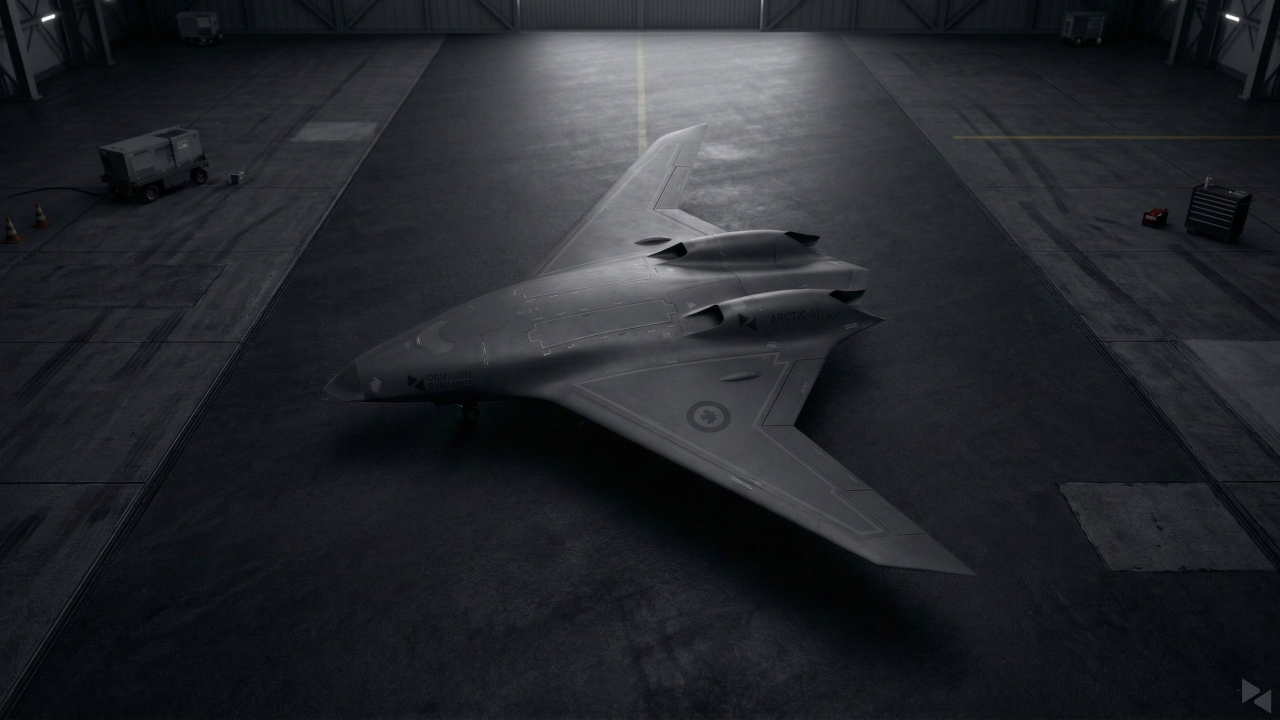
Dominion Dynamics wants to build Canada’s first Autonomous Collaborative Platform (ACP) – unmanned aircraft that would patrol areas such as the Arctic and act as decoys for F-35 fighter jets and other aircraft such as surveillance planes in the event of an enemy attack.
Get Instant Access to This Article
Become an Ottawa Business Journal Insider and get immediate access to all of our Insider-only content and much more.
An Ottawa firm that’s spending $50 million to develop next-generation drones says it plans to triple its head count to more than 100 people by the end of the year.
Dominion Dynamics wants to build Canada’s first Autonomous Collaborative Platform (ACP) – unmanned aircraft that would patrol areas such as the Arctic and act as decoys for F-35 fighter jets and other aircraft such as surveillance planes in the event of an enemy attack.
The drones, which would have wingspans from about five to 15 metres, would travel into areas that are too dangerous for human pilots and execute manoeuvres that aren't possible for manned aircraft, the company said in a recent news release.
The drones would also extend the military’s surveillance capabilities in vast regions such as the Canadian North, relay communications and fly ahead of jet fighters and other manned aircraft to “distract whatever defensive mechanisms the adversary has,” Dominion Dynamics founder Eliot Pence told OBJ this week.
Pence said the drones represent “sixth-generation” technology that expands the capabilities of today’s fighter jets, helicopters and other equipment by teaming manned aircraft with autonomous systems.
The U.S. and Europe have already launched similar initiatives, but Pence said Canada needs its own ACP that can withstand harsh weather conditions – for example, frigid temperatures in the Arctic – as well as travel long distances.
Canada has “an enormous land mass” and its military requires surveillance systems tailored to the country’s specific needs, he added.
“From an economic development and sovereignty perspective, we think there’s a real opportunity to leverage some of the Canadian supply chain that is otherwise in other foreign platforms for our own platform,” Pence explained.
Dominion Dynamics will act as a “systems integrator” for the new platform, he added. The company plans to build "multiple different types of drones with some common parts” at its new 25,000-square-foot factory in Kanata, which is expected to be up and running by this summer.
The drones would be assembled in a similar way to satellites, which typically feature a common “bus” or framework that is outfitted with different types of sensors, weapons and other technology depending on the situation, Pence explained.
The company plans to work with other Canadian defence-tech suppliers to ensure that at least 70-80 per cent of the ACP’s components are domestically sourced, he added.
“Really, what we’ve talking about here is Canadian-controlled and Canadian-owned companies working collaboratively together to provide the (Canadian Armed Forces) something that they have said that they want and need,” he said.
“We want to control the IP, we want to control where it gets deployed, how it gets deployed. That’s one of the core reasons why we're doing this.”
Dominion Dynamics is also developing tools that use AI and advanced software to simulate potential threats the drones could face. The company expects to start building a full-scale prototype of the ACP within the next 24 to 36 months.
Launched last June, Dominion Dynamics has raised about $30 million so far. Its backers include Toronto-based Georgian Partners, Canada’s largest independent VC firm, and the British Columbia Investment Management Corp., one of the country's largest pension funds.
Last October, Pence told OBJ his company was taking a “different approach to the market” by proactively identifying problems and solving them in the hope that customers will buy in, versus waiting for the defence establishment to come to it with requests for proposals.
The firm initially specialized in small devices similar to Apple AirTags that can be attached to cellphones and cameras. The sensors capture data such as videos and voice notes and send it to armed forces members at nearby bases, where software can then create a 3D map of rangers’ movements in real time.
The ACP project is far larger in scope – Pence said this week he figures it will cost “hundreds of millions of dollars” to build out a full-scale drone platform.
But he said the company has “plenty of access to capital,” adding it plans to raise more money by the end of the year to cover the $50-million price tag for developing the initial ACP.
While the company plans to focus initially on serving the Canadian military, Pence said the technology will be designed to work with aircraft from the U.S. and other NATO allies and could eventually be deployed around the world.
“There is a global market for this, so we intend to fully explore exports as well.”
The launch of the ACP program comes amid a wave of federal spending aimed at beefing up Canada’s ability to defend itself against foreign threats, particularly in the Arctic.
On Thursday, the Liberal government unveiled a $35-billion plan to modernize and expand military infrastructure in the Far North. The proposal includes upgrades to four forward-operating locations in the North to accommodate the air force’s new F-35 stealth fighters as well as the construction of new roads and hangars.