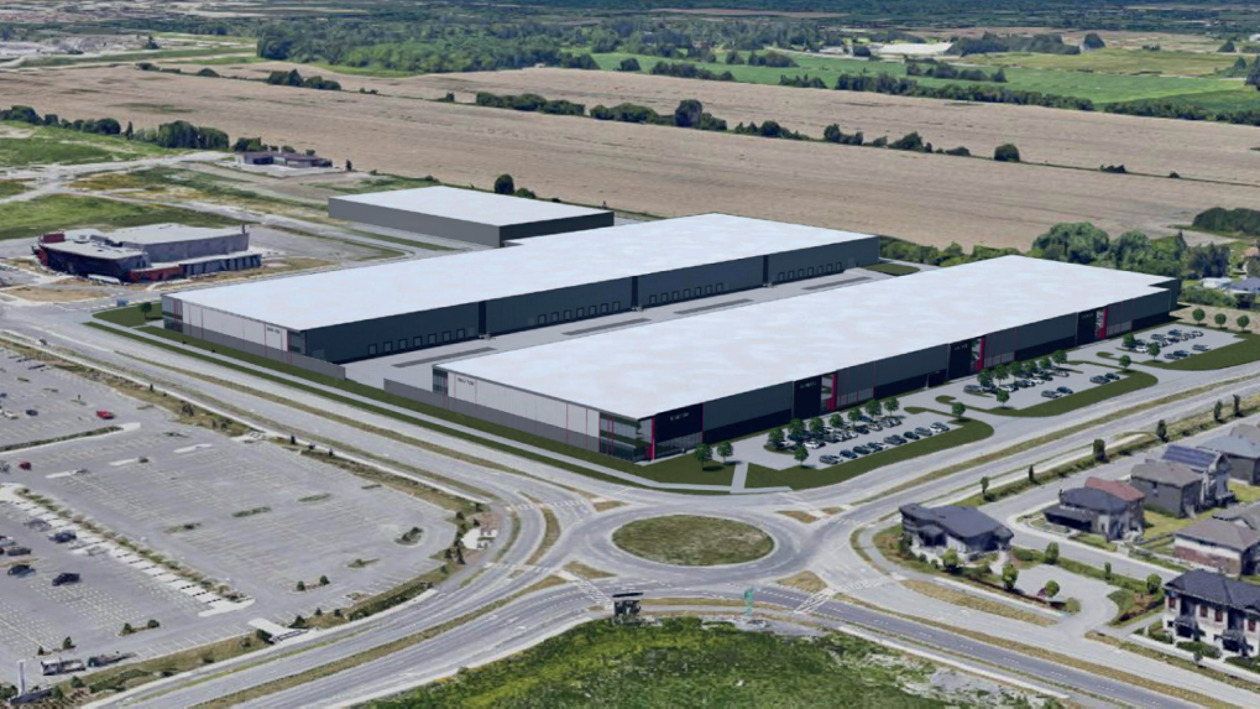
Ottawa’s industrial availability rate is expected to jump to 4.4 per cent by the end of 2024 from 2.6 per cent last year as new large-bay developments flood the market – but rents will also keep rising due to the ongoing scarcity of small-bay inventory, a new report from CBRE says. In its 2024 Canadian […]
Already a Subscriber? Log in
Get Instant Access to This Article
Become an Ottawa Business Journal Insider and get immediate access to all of our Insider-only content and much more.
Ottawa’s industrial availability rate is expected to jump to 4.4 per cent by the end of 2024 from 2.6 per cent last year as new large-bay developments flood the market – but rents will also keep rising due to the ongoing scarcity of small-bay inventory, a new report from CBRE says.
In its 2024 Canadian real estate outlook released last month, the brokerage says more than 700,000 square feet of new industrial space is expected to be ready for occupancy in the National Capital Region before the year is out.
Most of those are large-scale projects with 32- to 36-foot ceilings, such as Montreal-based Rosefellow’s two-building, 478,000-square-foot development on Huntmar Drive in Kanata, which is slated to be completed by late summer or early fall.
The project was built on spec, meaning none of it was pre-leased before shovels were put in the ground.
Colliers, which is marketing the development on Rosefellow’s behalf, is “fielding inquiries very regularly” but has yet to secure any tenants, said broker Lindsay Hockey.
“We’re working on a few (proposals) that hopefully will come together,” explained Hockey, a senior vice-president in the national brokerage firm’s Ottawa office. “We’re optimistic.”
Meanwhile, other new developments, such as Manulife’s two-building, 200,000-square-foot project on Bantree Street in the city’s south end, are still mostly vacant.
Real estate experts caution that it will take a while for all that new space to get filled. The result is Ottawa’s industrial sector has hit a period of net negative absorption – something it hasn’t experienced for an extended period since the region became a booming e-commerce distribution hub during the pandemic.
“The market is seeing lower pre-leasing numbers for developments being done on spec and will mean some delays for projects waiting for a tenant before kicking off,” CBRE said.
CBRE Ottawa managing director Louis Karam says the city is still a sought-after market for logistics companies even as online shopping growth has slowed from its pandemic peak of a couple of years ago.
“The question that I get a lot is, are we overbuilding?” Karam says. “In my opinion, I don’t think we are. I think it’s just going to take a little bit longer to absorb this new inventory, but in general it’s needed. It’s just going to take time. It will get absorbed.”
Despite the expected rise in overall available space, CBRE’s forecasters say the fundamentals of Ottawa’s industrial market “remain strong.”
The company predicts rents will continue to rise as more new inventory – which typically commands higher rents than existing space – hits the market. CBRE projects average asking net rents will reach $15.65 per square foot by the end of 2024, up from $15.44 last year and $13.63 in 2022.
Experts say small-bay users such as plumbers, HVAC firms and other trades providers are particularly feeling the pinch, since many of the city’s new projects, with their taller ceilings and higher rents, are literally and figuratively out of their reach.
Eric Whittington, a sales representative at Colliers’ Ottawa office who specializes in leasing industrial space, says many small-bay tenants are testing the open market, only to renew leases at their current buildings when they can’t find anything cheaper elsewhere.
“I think there’s just starting to be some realization in the market that these are the rates and they’re not going to be coming down,” he said.