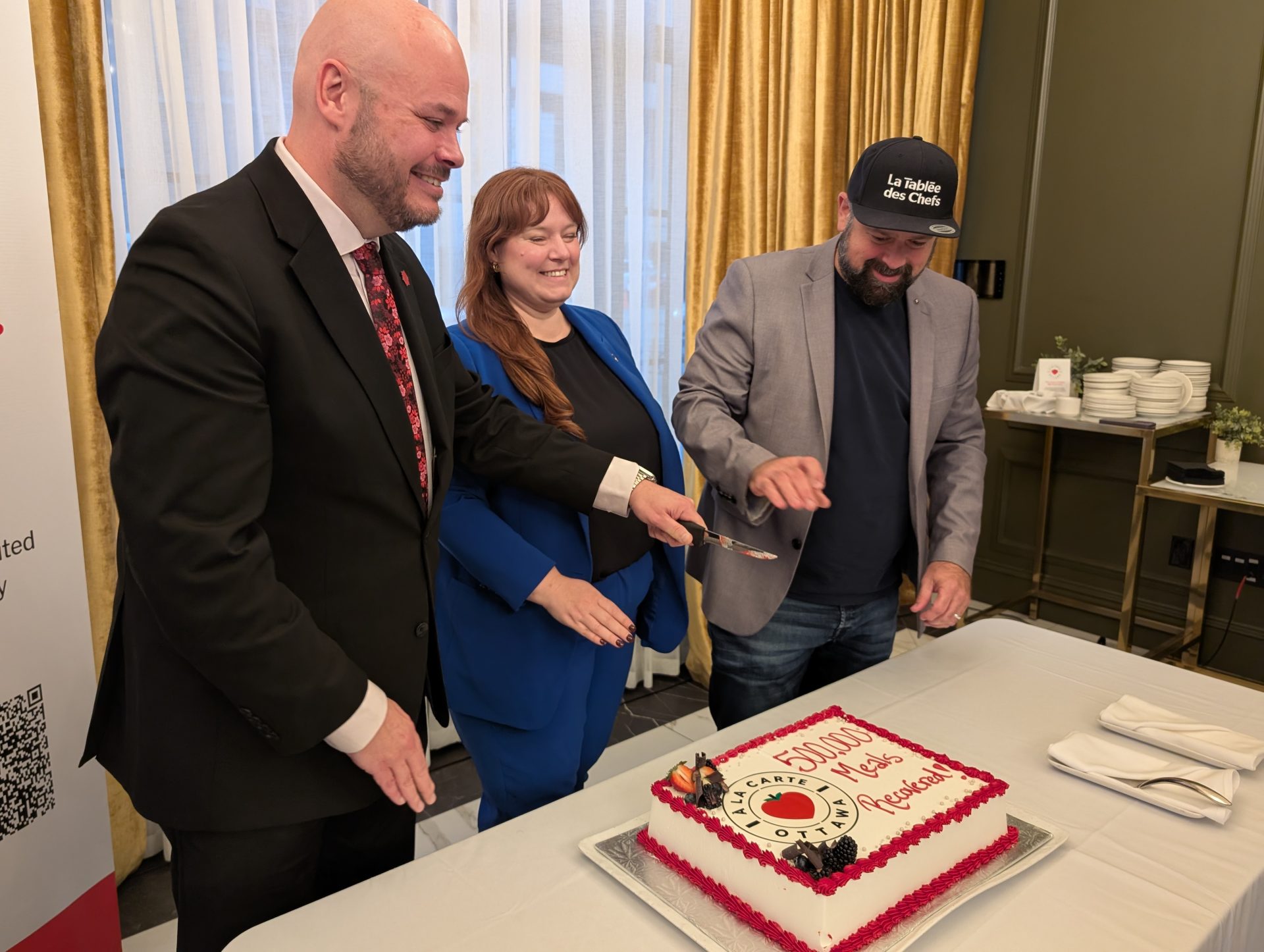
After redistributing 500,000 meals to those in need in two years, Ottawa Tourism and La Tablée des Chefs hope to expand their food recovery program to include all hospitality organizations across the city.
Get Instant Access to This Article
Become an Ottawa Business Journal Insider and get immediate access to all of our Insider-only content and much more.
After redistributing 500,000 meals to those in need in two years, Ottawa Tourism and La Tablée des Chefs hope to expand their food recovery program to include all hospitality organizations across the city.
At an event Thursday, the organizations marked the milestone of recovering half-a-million meals so far, and outlined their goal to bring more partners on board.
“The ambition is to get everybody who has excess food to be donating it,” said Jean-François Archambault, founder of La Tablée des Chefs. “I hope that this inspires all Canadian destinations to embrace a program like this, to have a global impact as an industry.”
Ottawa’s food recovery program, À la carte, was launched in 2024 with eight partners. Through it, surplus food from hotels, conference centres and other hospitality venues is sent to local food banks and shelters.
Twenty-three local hospitality organizations have now joined the program, which, in total, has diverted 150,000 kilograms of food from landfills and conserved 148 million litres of water.
According to Michael Crockatt, president and CEO of Ottawa Tourism, À la carte is the first destination-led food recovery program of its kind in Canada.
“It demonstrates what is possible when an entire industry comes together around a shared purpose,” said Crockatt. “I think most hospitality businesses in the community want to be able to redirect their food waste, but probably most of them don’t know how structured the system is. There are still more companies that we can convince to join.”
The Lord Elgin Hotel, where the event was held, is one of the partners. General manager Nancy Champagne said this is her second time working in a hotel with the food recovery program.
“When we first looked at it, we were like, oh no, we can’t do that, we’re a small team,” she said of joining the program at her previous hotel. “But it’s so easy. You get the food, it stays in the kitchen, and then you just have to transfer it into their containers and you freeze it. They come and pick it up. It’s seamless in that way.”
She understands why organizations might hesitate to join the program, but added that the process isn’t as difficult as it might seem.
“Although it looks like a big undertaking, it’s so easy,” she said. “I think what prevents people from doing it is the lack of knowing how it works and exactly how easy it is … It’s a little part we can play in helping people.”
Meighan Hartley, chief development officer at the Shepherds of Good Hope, said the support from the program has been especially important due to ongoing economic challenges and rising food costs.
“I believe there's enough food to feed everyone in the world. We just have to change the way we're doing it,” she said. “Although the individuals we're serving might not know the specific hotel or conference or event that that meal is coming from, they feel the generosity behind it.”
She added that meals are especially important as a gateway to bring other services to those in need.
“At Shepherds of Good Hope, we know one of the single most common ways for people to access our services is to start in our kitchen,” she said. “It’s programs like this that are showing not only our city but the nation what can happen when corporate, tourism and charitable sectors work together looking for practical solutions.”
La Tablée des Chefs will host the second Ottawa edition of La Grande Tablée later this month. The gala will feature five courses, each prepared by local chefs and culinary leaders, with funds raised going toward efforts to address food insecurity.
Derick Cotnam, owner and operator of program partner My Catering Group, is helping organize the event. Cotnam, whose company caters galas, conferences and the city’s national museums, said he has no regrets about being involved in the program.
“When we first saw the presentation (about the program), I was like, ‘We’ll join tomorrow,’” he told OBJ. “I think we’re the only company that had the autonomy to do that because we didn’t have to get levels of corporate approval. With La Tablée, we’re seeing the vans backing up daily sometimes. There’s so much food going over there. It’s pretty crazy how big of a difference it makes.”
Archambault said his ultimate goal is for food recovery to become a standard part of every kitchen’s daily routine.
“Food recovery should be part of a checklist in the kitchen,” he said. “We should be working together, identifying the food, assessing the food, making sure that that food comes back in the kitchen in the right state and then repurposing it. We need to be turnkey, because this is an industry that goes fast.”