Get Our Email Newsletter Local news about the companies, people and issues that impact business in Ottawa and beyond delivered to your email inbox.
The Rogers Centre Ottawa has hosted meetings, conferences and week-long conventions, but for the past several days the events centre has been put to an unusual use as a sporting facility. More specifically, a basketball practice facility. With the IWBF Wheelchair Basketball World Championships in town until Sept. 19, the venue’s nearly 58,000-square-foot Canada Hall […]
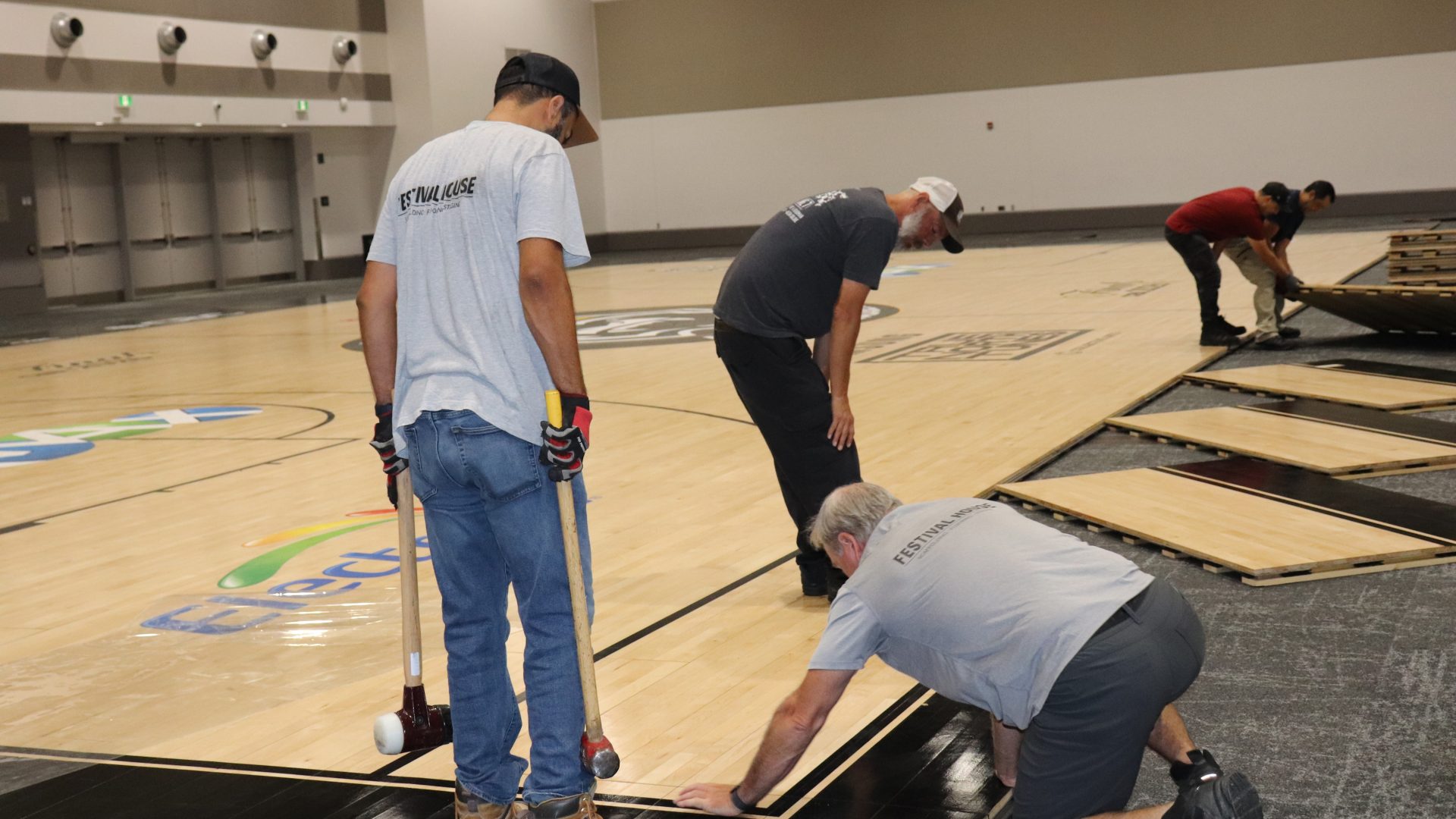
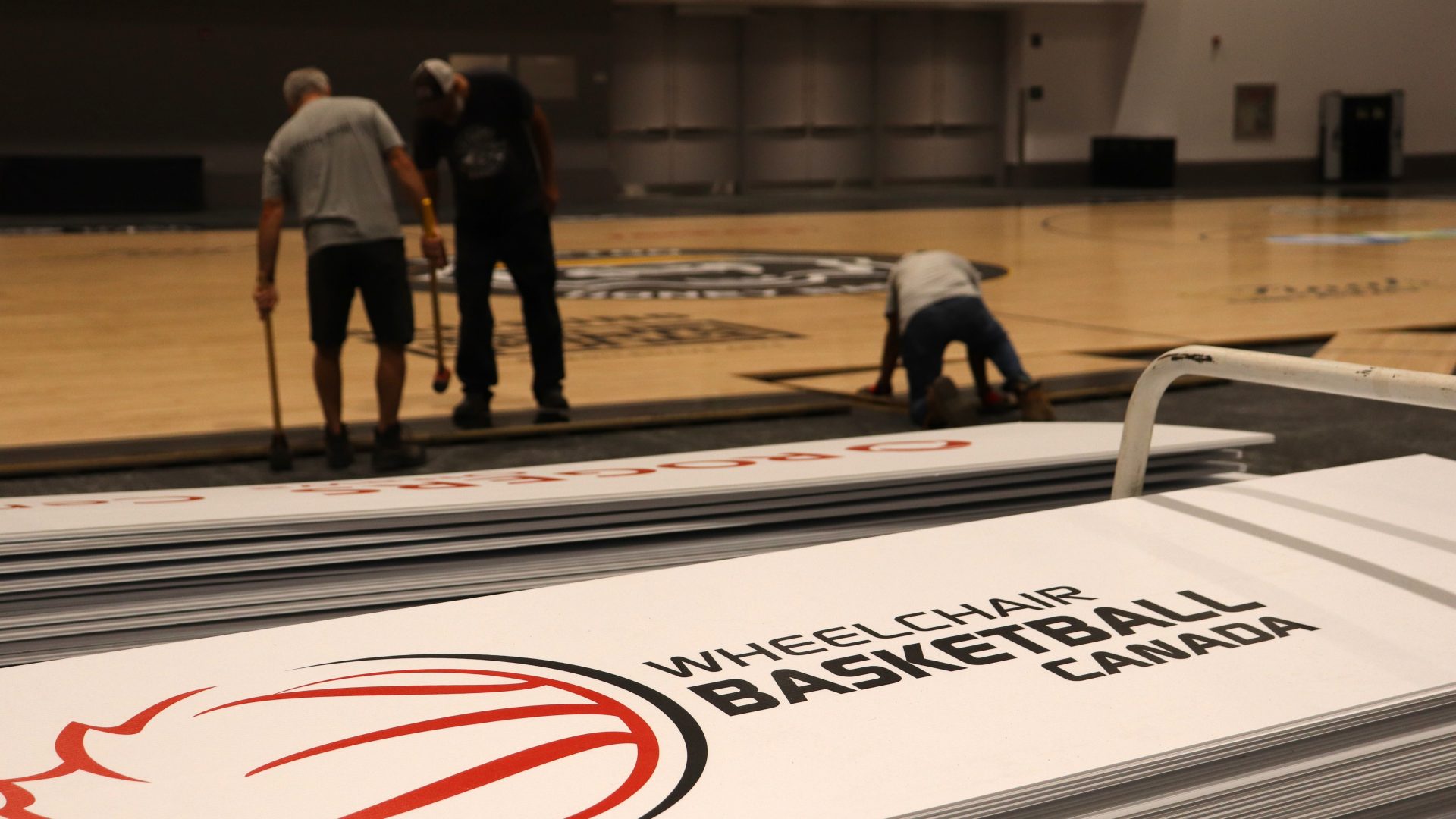
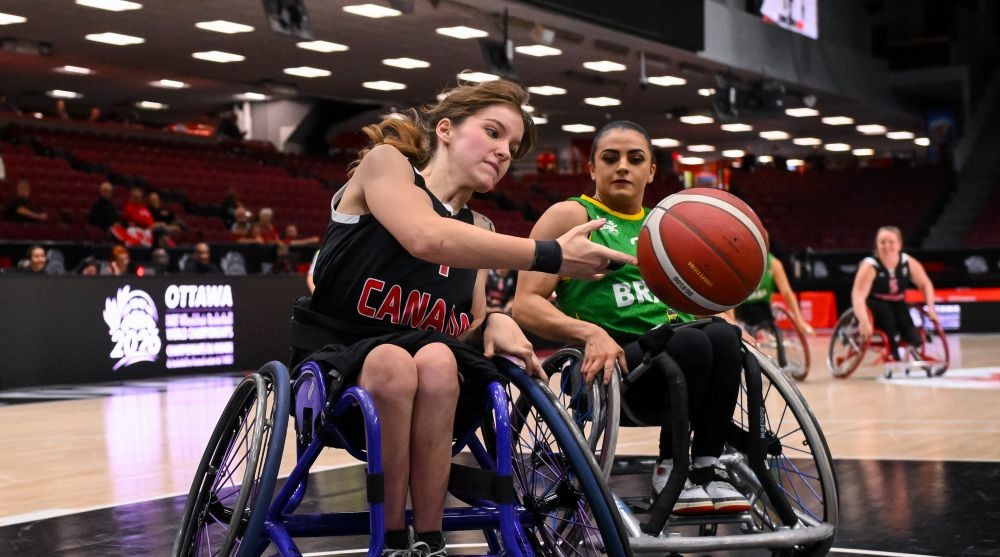
The Rogers Centre Ottawa has hosted meetings, conferences and week-long conventions, but for the past several days the events centre has been put to an unusual use as a sporting facility. More specifically, a basketball practice facility. With the IWBF Wheelchair Basketball World Championships in town until Sept. 19, the venue’s nearly 58,000-square-foot Canada Hall has been transformed. Currently, the third-floor hall houses four large courts where the athletes have been practising and preparing for matches since the event started on Sept. 9. Rogers Centre Ottawa is just one of dozens of local venues and businesses that have come together to make the event happen and to welcome the 336 athletes. Wendy Gittens, CEO of Wheelchair Basketball Canada, said the enthusiasm from the Ottawa community helped sell the location in the bidding process to secure the event. “We had put in two previous bids, one for the 2010 World Championships and one for the 2022 World Championships. So we learned a lot through both those processes,” she said. “But after we lost that bid for the 2022 one, we went back to the international federation because we had created all this momentum in Ottawa with the community and with our partners around hosting, and thought that we had created something pretty special here in Ottawa and didn't want to lose that.”Over 11 days, athletes from 28 men’s and women’s national teams are competing across 98 games, with more than 1,200 participants including staff, coaches and officials. The competition itself is taking place at Carleton University and TD Place, both of which made adjustments to get their venues ready and fully accessible for the athletes. "They have gone through some infrastructure upgrades, putting in ramps where needed, removing lips within the change rooms and shower areas, or putting a ramp in,” Gittens said. "Some of these changes are permanent. Once the event's gone and the athletes go home, these things will live on. So the community will benefit from it."At Rogers Centre Ottawa, vice-president of sales Carly Grace has been working with the Wheelchair Basketball Canada team to prepare for the event since 2023.“It is the largest international para-sport competition outside of the Paralympics,” Grace told OBJ. “The opportunity to put Ottawa on the world stage was immediately interesting and exciting for the whole city, not just the Rogers Centre. Our role in Ottawa is to generate economic impact. We’re realistically projecting $25 million in economic impact for the city.”“For us, we were built as an accessible venue,” she said. “It’s a great opportunity to be able to showcase to these athletes and to the world just how accessible we are and how easy it is for us to accommodate events.”One example of the venue’s built-in accessibility is its double-wide ramp to the second floor, which was designed to accommodate two wheelchairs travelling side-by-side.“If there are multiple people in the venue that are in wheelchairs, they can have a conversation while they're going up the ramp,” she said. “We've got elevator access to all floors, all of our washrooms are wheelchair accessible and all of our doors are automated with accessibility buttons. There really wasn't a lot that we needed to do leading up to this event in order to make the venue more accessible."Even so, she said every event has its logistical challenges, and this one was no exception. According to Grace, wheelchair basketball courts require a larger perimeter than a standard court to give the athletes extra room if they roll out of bounds. Not to mention needing enough room for the many athletes and staff to travel throughout the room without impediment. The original plan was to have three courts in Canada Hall and one on the second floor. Just days before the athletes were set to arrive, despite dozens of mockups and measurements, the team realized the court wouldn’t fit on the second floor and had to be located with the others in the hall instead.Crew members assemble basketball courts at the Rogers Centre Ottawa for the IWBF Wheelchair Basketball World Championships. Photo credit: Mia JensenTeam Canada's women's team competes against Brazil at the IWBF Wheelchair Basketball World Championships. Photo credit: Canadian Paralympic CommitteeThe second floor is instead being used for storage. In the venue’s loading dock, a maintenance technician space has been set up. “Like any other sport that involves wheels, things get damaged and things need to be repaired,” she said. Perhaps the venue's most significant advantage in this case is its proximity to The Westin Ottawa, where the athletes are staying. The hotel is right next door to the venue, but the true upside is not the location but the fully accessible physical connection between the two buildings that allows the athletes to travel between them barrier-free. The loading dock is also being used as a shuttle service pick-up and drop-off location for both the venue and the hotel, making access to transit easy. "Mobility is important, and they've had good ease of access both to entertainment and retail and restaurant options, as well as their practice facilities,” said Ross Meredith, general manager of The Westin Ottawa. "It's been an absolute win for both parties." At The Westin Ottawa, getting the hotel ready to accommodate hundreds of wheelchair users took a bit more work.According to Gittens, no hotel would have enough already accessible rooms for the number of athletes involved in the competition, so key changes needed to be made to a number of rooms to get them ready."That was actually very challenging because the accessibility lens that you have to look through when you're looking at venues and sites is you have to make sure that rooms and loading and getting in through doorways and all those sorts of things are accessible,” she said.Bathroom doors had to be swapped for sliding doors to ensure the athletes could close them without getting stuck. Doors had to be wide enough for the chairs to get through, and sinks and counters had to be the right height. "Wheelchair basketball has virtually taken over all of our hotel,” said Meredith. “They are our guests for a two- to three-week period. We feed them breakfast, lunch and dinner. We wake them up in the morning and we tuck them in at night."The Westin Ottawa wasn’t the only business making adjustments. In the lead-up to the event, the Glebe BIA recruited businesses around TD Place to ramp up their accessibility strategies both for the event and long-term. “We’re going to have athletes and other people in wheelchairs or with mobility issues coming to watch this event,” said Darrell Cox, executive director of the BIA, in August. “We wanted to make sure our members were aware of the event and also do an audit of what challenges (those with mobility issues) may have in getting into some of these stores. “One of the important things of the accessibility and visitor engagement strategy is that it isn’t just for the 11 days of the event, but it’s the legacy it provides.”In addition to completing the audit of each of the area’s member businesses, Cox said the BIA will provide businesses with an accessibility toolkit and StopGap ramps free of charge.“We’ve been providing (ramps) free of charge to some of these businesses to allow somebody with mobility issues or in a wheelchair to easily get into the store … It’s about having an accessibility readiness checklist. It talks about signage, entrance barriers, rearranging displays to create circulation spaces and … providing staff with accessibility awareness tips,” he said.The event is the latest example of how Ottawa is becoming a sporting destination, both in Canada and around the world.“It’s at least eight years in the making,” said Stephanie Seguin, vice-president of sales, business and major events for Ottawa Tourism, of the basketball championships. “I’ve been part of the team for the entire time and what a beautiful story of that long-term relationship.”The effects of the event, she said, will be long-lasting. “There are legacies left with events. A good example of legacy with wheelchair basketball coming up is the readiness that our community is showing up to make sure that we’re a more accessible destination,” she said. “It’s a beautiful enhancement to the city, by hosting an event like wheelchair basketball. Lansdowne hosted an event for all the people involved, but also businesses, and did training to make sure these athletes are welcome. The education piece alone is a great legacy left.”So far this year, the city has hosted nearly 40 sporting events, including tournaments and championships, generating $75 million in economic impact for the city.Earlier this summer, for the second year in a row, the city hosted Ironman Canada-Ottawa, bringing almost 3,000 athletes from 72 countries into the capital to compete in a 226-kilometre triathlon. The city will host the event for a third time next summer. While Ironman and the wheelchair basketball championship are this year’s marquee events, Ottawa has attracted other sports events, including Hyrox at the Cohere Centre and Nitro Circus at Ottawa Stadium.