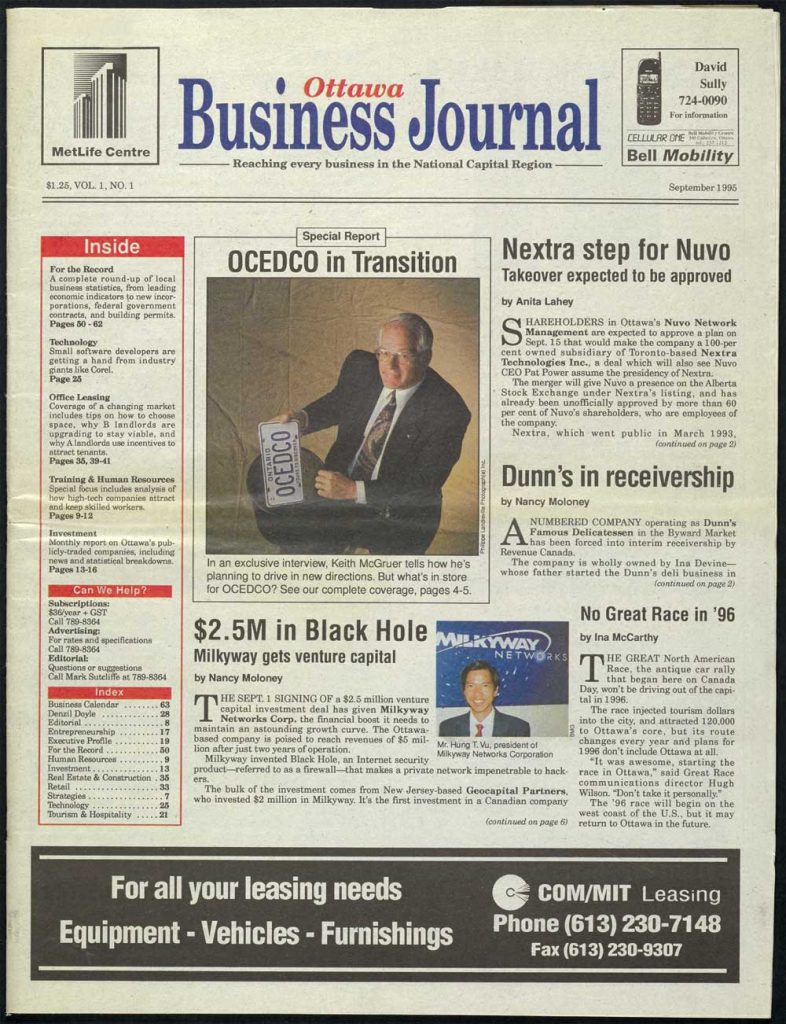
Telling the behind-the-scenes story of OBJ is risky for three reasons. First, it’s mostly undocumented, which is ironic, given OBJ’s role in telling thousands of local business stories. Second, as you will read, it’s a story with lots of protagonists and plenty of twists and turns. Third, my start at OBJ dates back more than a quarter-century, and my memory is a bit foggy. Despite all these risks, I feel compelled to at least share my version of the story as OBJ celebrates its 30th. Inevitably, I may inadvertently omit some names or misstate some facts.
Final point: this isn’t the story of the biggest scoop, the best issue, the greatest award winner or anything like that. It’s the story of OBJ as a media business that has endured an industry collapse, yet stubbornly remains strong and poised for future growth.
The early years
My journey at OBJ began at a Chinese restaurant at the corner of Bronson Avenue and Somerset Street, where I first met Mark Sutcliffe. It was mid-winter 1999. (Mark was a co-founder of OBJ in 1995 and held both the editor and publisher positions at the time.)
I was coming off my first entrepreneurial venture, a community newspaper in the east end of Ottawa. Founded in 1995 with my business partner Caroline Andrews and the generous support of local investors, that community newspaper was sold to Transcontinental Media, a Montreal-based media and printing company, around 1998. I spent about 12 months with Transcontinental and then started to look for bigger challenges.
After graduating from Carleton J-school in the early 1990s, I had a very defined career goal: to cover national politics on Parliament Hill, which I did briefly. I had all the prerequisite drive and skills, but I couldn’t overcome the economic realities of daily newspapers, which at the time were shedding staff, not hiring budding journalists.
Fortunately, another career path materialized. My experience launching and operating a weekly newspaper sparked a real passion for business, which seemed much more anchored in the real world compared to the ambiguity of national politics. With great advice from investors such as Gerry Dust, a well-known lawyer, and Andre Gagnon, an owner of the Mr. Gas empire, I started down an entrepreneurial path. The weekly newspaper won some big awards, but the business couldn’t support its cost structure, which forced the sale to Transcontinental. It was incredibly stressful, with investor cash calls and uncertainty about meeting payroll. I swore off any future entrepreneurial ventures, but I was still enamored by business.
Back at Yang Sheng restaurant with Mark, I sensed a big opportunity. After enjoying a meal together, Mark suggested we meet again, this time with David Luxton, majority owner of OBJ. I left the restaurant and cracked open my fortune cookie. It read: “Now is time for something new.”
A few days later, I met Mark and David in the boardroom of OBJ’s second floor office at 424 Catherine St. I have two vivid memories of that meeting. First, David painted this incredibly ambitious plan involving multiple websites, daily news broadcasts, large events and much more. Second, I remember Mark’s words to me. They were something like this: “You can make this job what you want. It really depends on you, it has no ceiling.” That was intriguing to me, the opportunity to scale a modern media company and pursue my interest in business. I enthusiastically accepted the job offer to become OBJ’s editor, initially focused on its weekly newspaper and some specialty magazines. (Mark was giving up the editor role to focus on growing the business.)
Those early days were challenging. I wasn’t new to publishing weekly newspapers, having sent hundreds of issues to press before I was 30 years old. However, this was a different niche (local business) and OBJ had a particular editorial approach, crafted by Mark.
When I think back on those first few months, I have mixed emotions: excitement and dread. The work weeks were tough. It was a tight five-day cycle. Four days of frantic work and then a big final push on Friday to send the paper to press. Fridays started around 9:00 am and often finished after 1:00 am. I faced that challenge with a small but mighty news team (mainly Christine Wong, Kate Chappell and later Julia Fields) and hardworking graphic designers, Brian McCambridge and James Bonifacio. (As an aside, there is nothing like running out of editorial copy around midnight and having four more pages to fill. Remember, there was not a treasure trove of local online content at the time. We only had access to what we wrote.)
The internet era
As mentioned, David had an incredibly ambitious picture of OBJ in the internet era. The implementers of OBJ’s digital strategy were J.D. Robbins and Trevor Boicey. From a technical point of view, I was on the periphery of OBJ’s first daily journalism website, but very involved in executing on the content strategy. Mark explained it like this: just like CFRA provided hourly news updates, OBJ would do the same on its website. Got it.
That might not sound like a disruptive idea these days, but let me set the local media context in 1999. The concept of digital first reporting was very new in Ottawa and beyond. (In fact, David and Mark earned a reputation as futurists, prodding print-centric U.S. business journal owners to enter the digital age.)
Layering a daily news operation on top of OBJ’s weekly newspaper and specialty publications (such as the Book of Lists) was a daunting task, but also a thrill.
Then David and Mark took things up a notch. This chapter at OBJ is far too complex to fully recount, so I’ll simply touch on the key points. Around 2000, as the dot-com bubble was growing with concepts such as “content is king,” OBJ merged with Ottawa-based publicly traded technology company, Newsys Solutions, co-founded by Mark Quigg. OBJ was core to the company’s dot-com strategy. What we learned in web development and editorial strategy in 1999 and 2000 would be implemented on a national scale. In March 2001, Newsys rebranded as InBusiness Solutions with Mark Sutcliffe taking the reins of InBusiness Media Network. With millions in cash and the “irrational exuberance” of the internet era, InBusiness created more than 50 local business portals that combined business news and business services. (Eventually, even BMO got involved.) What started as a small OBJ newsroom now included a couple dozen reporters producing local daily business news across Canada.
Meanwhile in Ottawa, the telecom boom was transforming the business landscape as billions in venture capital was invested in “business plans written on napkins.” OBJ blanketed Ottawa with business news, including a daily radio show on CFRA — giving broadcaster Rob Snow his start in business reporting — and a TV show on Rogers TV hosted by Scott Evans. OBJ played an important role in telling the tech boom story with reporters such as Derek Mellon, Brian Salisbury, Steve Ladurantaye, Leo Valiquette, Michael Hammond and others.
The bubble bursts
When the bubble burst, InBusiness felt the economic shock, its stock reduced to pennies on the TSX. As advertising revenues dried up, entire media brands at InBusiness Media were shuttered, including Silicon Valley North, the Toronto Business Journal and the Montreal Business Journal. The parent company had no choice but to find a buyer and exit the media business. Even in those turbulent economic times, OBJ had value as a business. Eventually, Transcontinental — yes, the same company that purchased my east-end community weekly — purchased OBJ for a couple million dollars. The 2002 acquisition was led by André Préfontaine at Transcontinental. It was roughly around this time when most OBJ and InBusiness leaders exited, including Mark, Donna Neil, Kerry Mitchell, Glenn McLeish and Adrian Spitzer. It also reacquainted me with my former business partner, Caroline Andrews, who was now leading Transcontinental’s local operations. In the next several months, I went from editor-in-chief of InBusiness Media to publisher of OBJ and then regional manager of Transcontinental’s Quebec and Ontario local media unit.
This was another new chapter for OBJ, moving from the dot-com frenzy at InBusiness to Transcontinental’s kaizen business philosophy. OBJ found itself inside a division with more than $100 million in annual revenue and hundreds of employees, meaning strict adherence to budgets and constant benchmarking, but also a media-savvy culture built on growth and digital innovation. Transcontinental provided a stable business structure for OBJ to mature, sustaining the brand and boosting my own business skills. OBJ remained committed to daily reporting, expanded its events and awards programs and launched several specialty magazines, including Ottawa At Home, eventually edited by Mary Taggart.
Transcontinental initially wanted to leverage OBJ to create a network of business journals across English Canada. It already owned Les Affaires, the business bible of Quebec, which was led by Pierre Marcoux. Ultimately, as I understand it, Transcontinental decided to focus on lifestyles, homes and women in its $600-million media empire. Business publications unfortunately took the back seat. Nevertheless, Transcontinental played a key role in OBJ’s success after the dot-com bubble burst. (Special shout-out to many seasoned media execs at Transcontinental, namely Marc Ouellette, Serge Lemieux, Pascale Fortin, Denis Hénault, and Jean Roy).
Another crisis in 2008
The global financial crisis in 2008 put an end to that stability. With home builders and auto manufacturers under duress, big advertising budgets evaporated. Combined with the “Craigslist effect” on newspaper classifieds and other hits to traditional advertising, the media industry was in full-blown crisis.
Transcontinental saw the writing on the wall for its printing and media business. All of that meant that OBJ and its ancillary publications were for sale again.
Marc Ouellette, who led Transcontinental Media, was given the task of selling many media titles, including OBJ and Ottawa At Home. Marc knew about my previous media venture in Ottawa’s east end and thought I might be a logical buyer. Discussions ensued for many months as a valuation and terms were defined. Meanwhile, I was scrambling trying to determine if I wanted to own a business again, and how any acquisition of OBJ would be financed. It was actually Marc that reconnected me with Mark Sutcliffe to organize an offer. (After leaving InBusiness in 2001, Mark teamed up with the aforementioned Donna Neil to establish Great River Media and launch the Kitchissippi Times.) All was going to plan with the bid until the founder of Transcontinental, Remi Marcoux, a towering figure in Quebec business, insisted on a higher price. Fortunately, OBJ was a devalued asset at the time and the price tag made sense. Mark and I contributed the funds and completed the purchase in August 2010. I joined Great River Media as its president. Mark was the big picture guy. Donna and I ran operations.
Click the images below for an OBJ slideshow
-
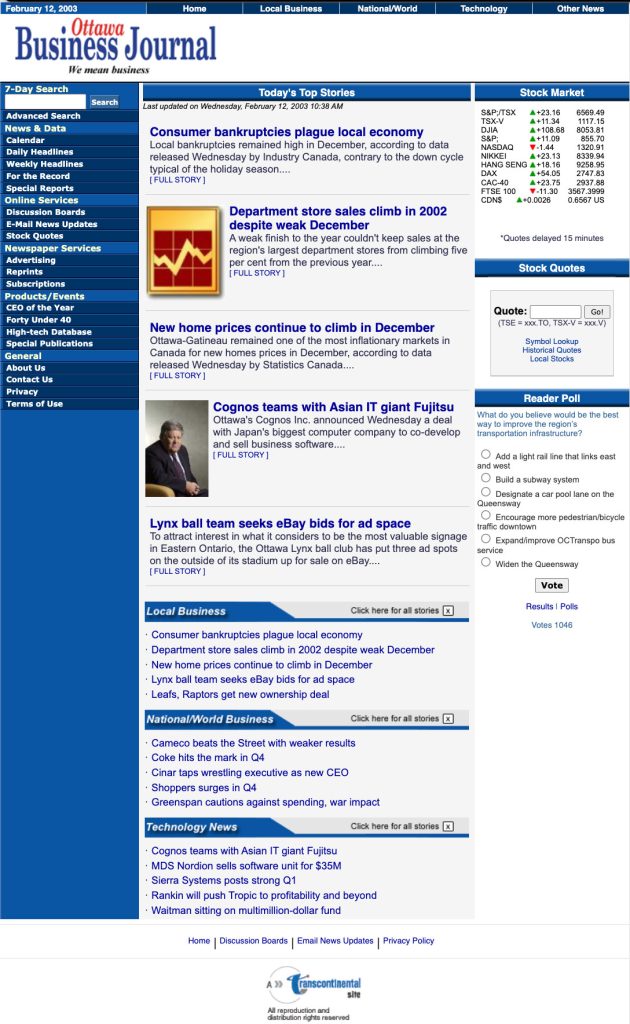 OBJ's website in 2003.
 -
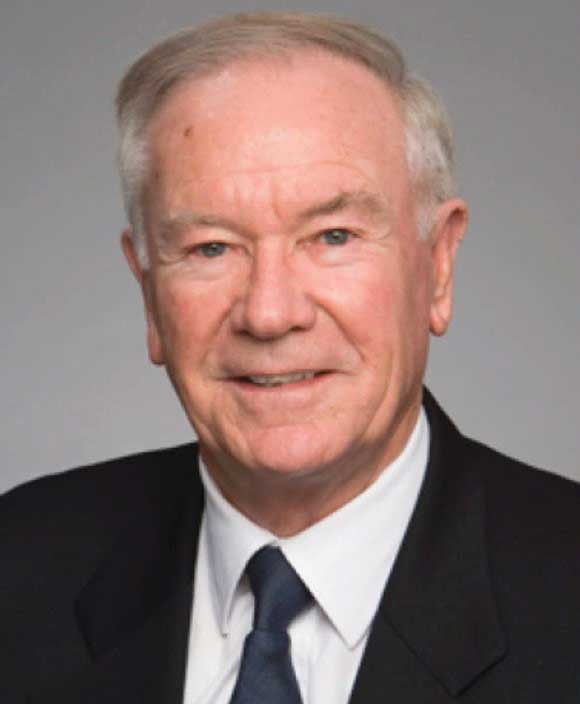 Rod Bryden was the first CEO of the Year recipient in 2000 while led WorldHeart Corp.
 -
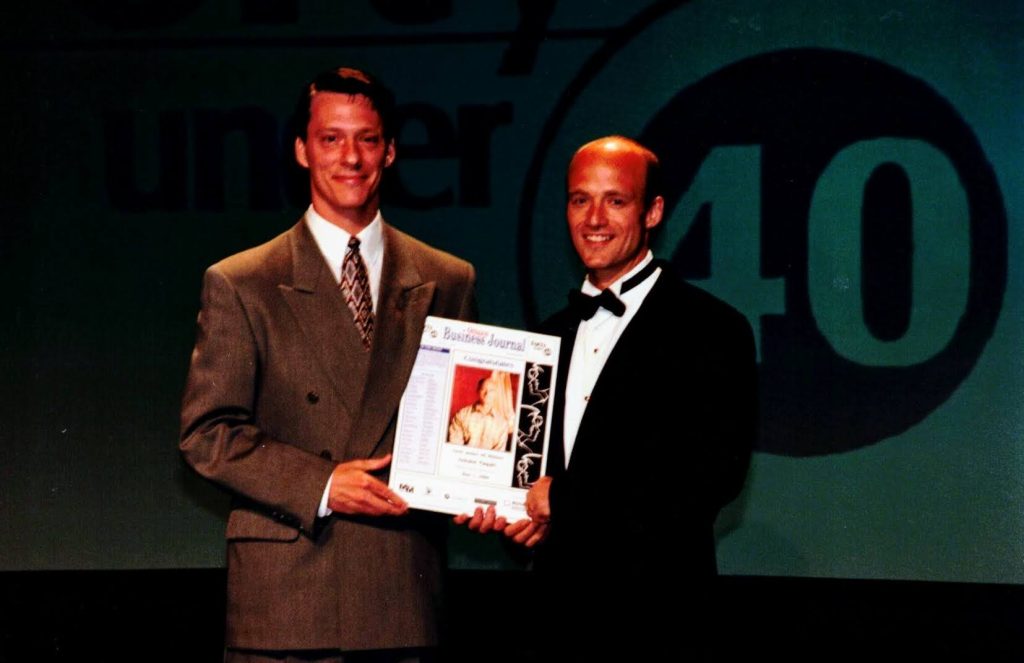 Tech superstar Antoine Paquin received Forty Under 40 recognition in 1999.
 -
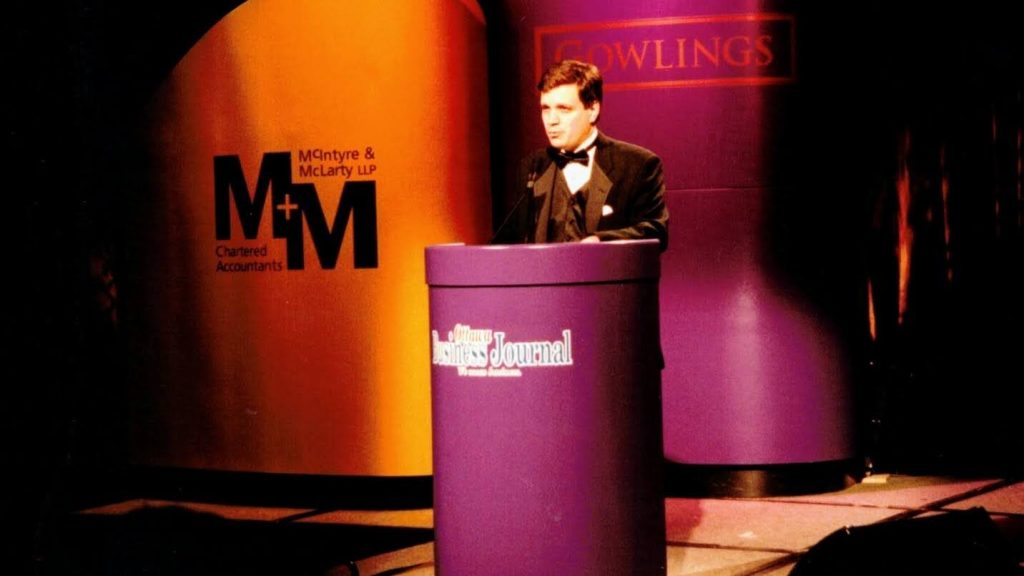 Mark Sutcliffe emcees the Forty Under 40 gala in 1999.
 -
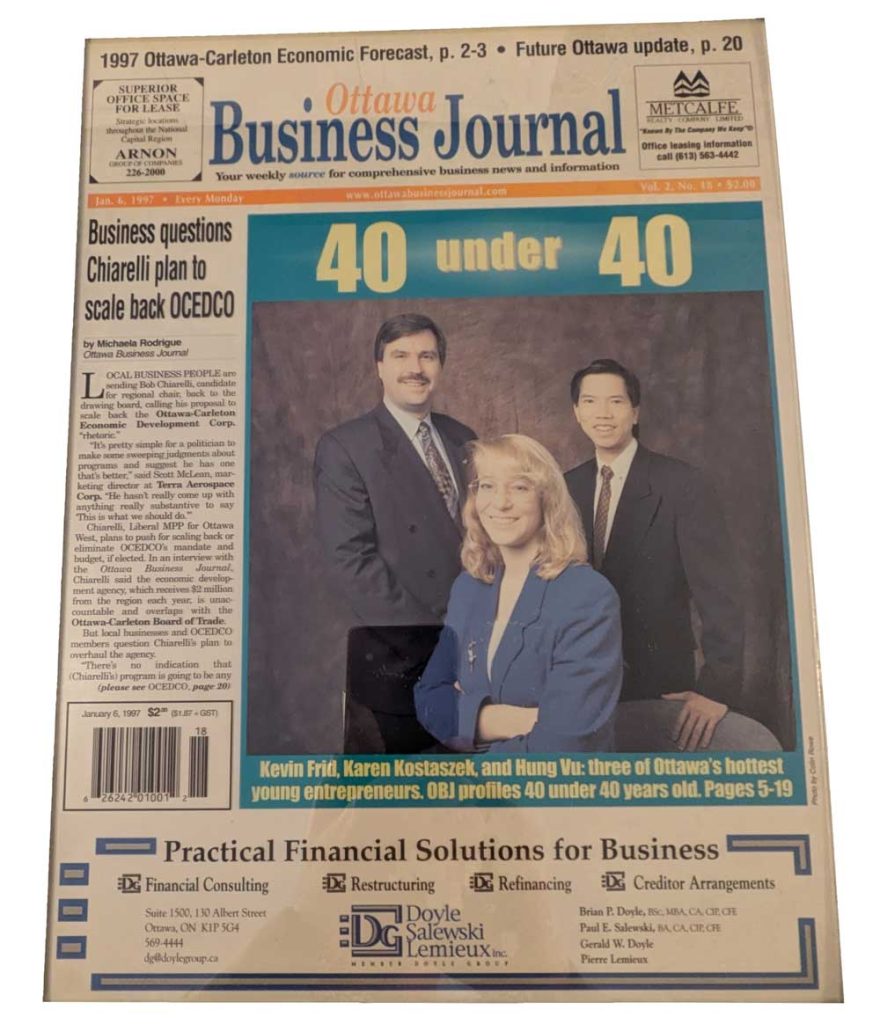 The first Forty Under 40 cover story in 1997.
 -
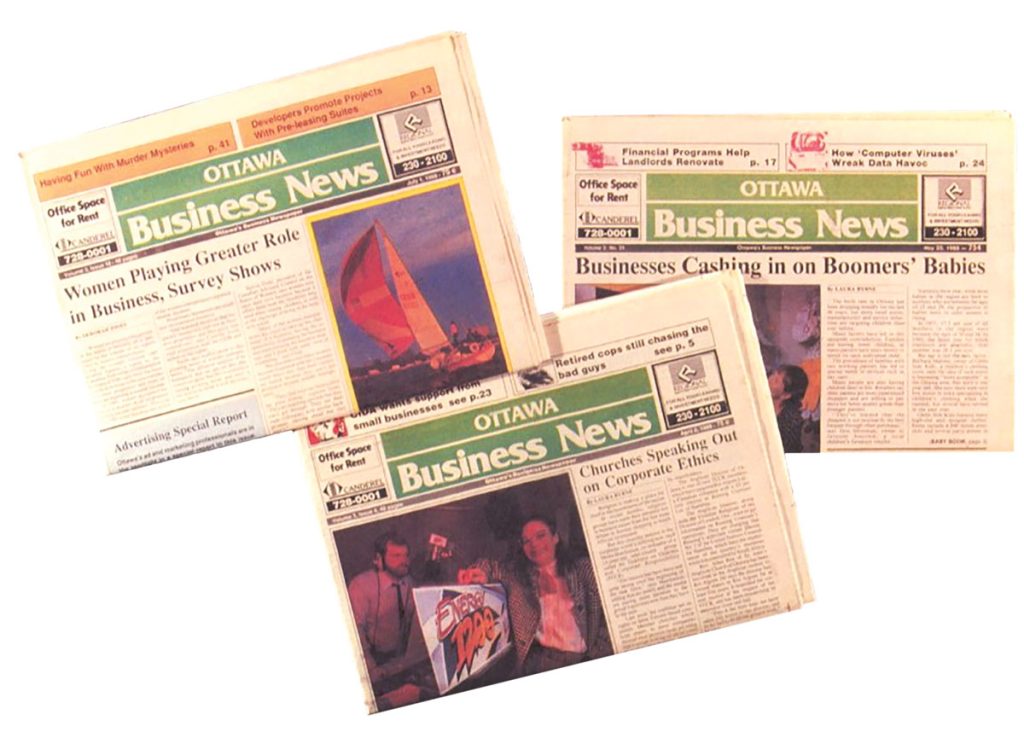 Before there was an OBJ, there was an Ottawa Business News, which was founded by celebrated local entrepreneur Bruce Firestone.
 -
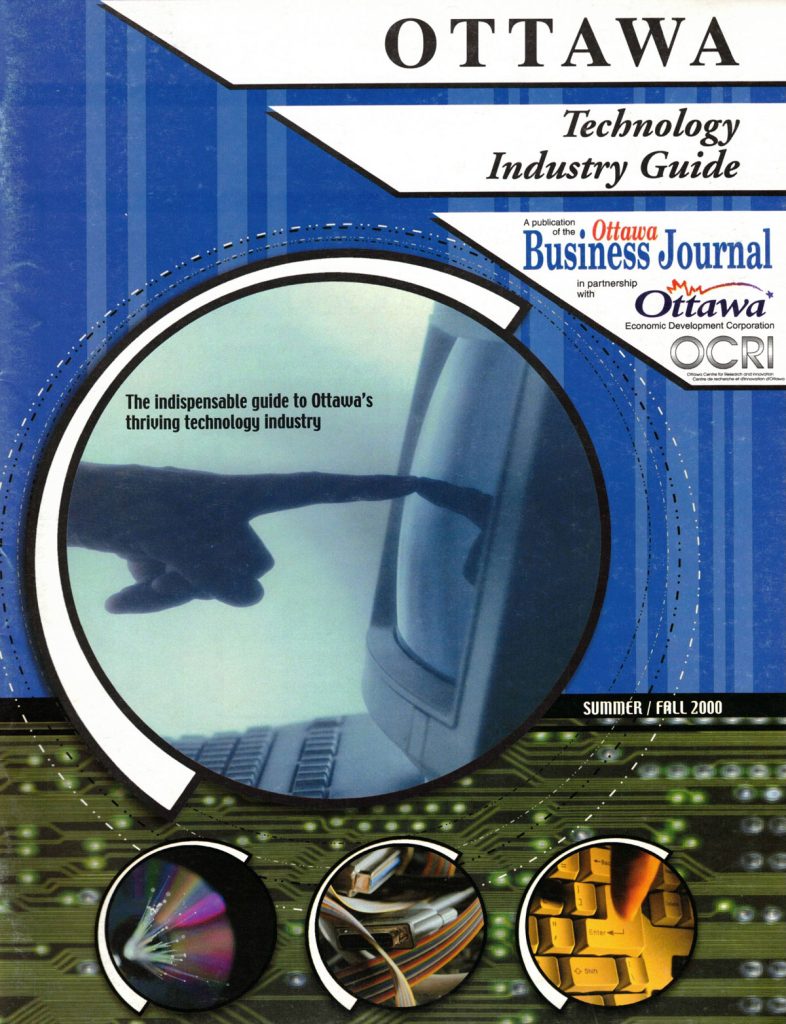 OBJ published the Technology Industry Guide in the late 1990s to document the explosive growth of the local tech sector.
OBJ is local again
Again, there are far too many details to outline in this post-acquisition chapter, but here is the gist of it. Under local ownership once again, Mark, Donna and I set out on a mission to create niche, vertically integrated media titles in business, homes, food and living, running, hockey, and parenting. There were a couple more acquisitions (namely Capital Parent and Centre Ice) and a foray into consumer events. There were many wins, but our team was still fighting against the continued shift away from print advertising. The company would make money on one title and lose it on the other. It was frustrating.
In 2013, I suffered a personal crisis that forever changed my family. Combined with mounting business pressures, all three Great River Media partners knew it was time for change. With the guidance of financial guru Bob Plamondon, we crafted a vision for a smaller company, mainly anchored around OBJ. (This meant abandoning some titles and selling others, namely Ottawa At Home, purchased by its editor, Mary Taggart. Thankfully, Kitchissippi Times, now 23 years old and thriving, remains part of Great River Media.)
Over the next couple of years, the plan worked. The company regained its financial footing. This refocus on OBJ also allowed me to reconnect with an association of independently owned business journals in the U.S. This incredibly collaborative association is a mastermind group for business journals, sharing success strategies and identifying important trends in media. With about 60 member publications, it blankets the U.S. from big markets like Chicago to smaller markets such as Worcester, Mass. (I should pause to thank Joe Zwiebel, Peter Stanton, Dan Meyer, Julio Melara and others for all the input and support over the years.)
Around this time, Mark, then volunteer chair of the Ottawa Chamber of Commerce, started to think about rationalizing the messy local business events scene.
The idea coincided with the transition of OCRI to Invest Ottawa, complete with a mandate to sharpen its focus, which meant producing fewer events. OBJ’s early partner was Erin Kelly, then president and CEO of the Ottawa Chamber of Commerce. Initial efforts included rethinking the Business Achievement Awards (now called the BOBs) and some breakfast series. By 2014, OBJ’s co-operation with the chamber of commerce evolved into a formal joint venture with the incorporation of Ottawa Business Events Inc., owned 50-50. That shared business continued to flourish under Ian Faris and now Sueling Ching.
One more financial crisis
Seasoned business leaders must wonder sometimes if they are like boats traversing on an ocean, always with an eye on the horizon for powerful storms. In 2020, all business leaders faced something no one could have reasonably spotted. The pandemic shuttered businesses, confounded supply chains and created unprecedented levels of economic turmoil. OBJ’s story isn’t very different from most private businesses in Ottawa. We initially had temporary layoffs, thankfully received public money to shore up finances and then made lots of difficult decisions.
One of those decisions, albeit less difficult thanks to terrific business partners, was the decision for Mark to exit the business. This mutual decision was made years earlier, but the pandemic pressed the fast-forward button on everything. Mark was simplifying his work life — eventually leaving multiple high-profile media jobs to mostly focus on coaching entrepreneurs — and I was still passionate about evolving OBJ, trying to realize its full potential. In spring 2021, Mark formally left OBJ, leaving me as the last partner in Great River Media. (Donna Neil had left a few years earlier.)
As a sole proprietor, I was reinvigorated and determined to make changes. During the pandemic, I came to understand that OBJ needed to reboot its business model. After years of digital disruption in all forms — AdWords to blogging to social media to podcasts — small independent publishers in the U.S. were finding sustainable business models. The need for OBJ to transform became more clear with Google News Initiative training, which I completed with OBJ editor Peter Kovessy. We couldn’t delay any longer. Using funds once dedicated to OBJ’s office lease, we had our warchest.
The agent of change, as it turned out, was a savvy and experienced consultant based in Colorado. Eric Shanfelt had already proven his worth with business journals in Milwaukee, Delaware, Baton Rouge and other U.S. markets.
In 2022, we started rebuilding OBJ’s tech stack from the ground up, tossing away all existing platforms and processes.
This was way bigger than a new website. It was a strategy to create tighter relationships with OBJ’s exclusive readers, double-down on premium local business journalism (a neverending battle) and launch a subscription program for the first time in a quarter-century. OBJ Insider was born. We recognized that many longtime readers might be unhappy at the prospect of paying to access local business news that had always been free. We needed to balance the subscription paywall and sustain traffic, a very tricky balancing act managed by OBJ editor Anne Howland. There were many risks, but the status quo posed a greater threat. After three years, the strategy continues to evolve, but we’re very satisfied.
This isn’t the end
At a high level, that is the business story behind OBJ. Of course, it’s written from my first-person perspective. Others might have different memories and different takes on OBJ’s three-decade long battle to survive and thrive.
My final words must go to all those whom I have not mentioned. More than 100 people have played a part in OBJ’s story and they are not forgotten here. Like any business, a few occupy leadership positions and get acknowledgement, but there is zero success without a talented and committed team of people striving to make an impact. They deserve full credit.
As OBJ moves into the next decade, that’s all any of us are (and were) trying to achieve. A positive impact on the city we know and love.
OBJ editors
- Mark Sutcliffe
- Brian Gallant
- Pauline Comeau
- Kevin Bell
- Christine Wong
- Michael Curran
- Steve Ladurantaye
- Anne Howland
- Leo Valiquette
- Jim Donnelly
- David Sali
- Peter Kovessy
- Anne Howland
OBJ sales leaders
- Glenn McLeish
- Adrian Spitzer
- Donna Neil
- Susan Blain
- Terry Tyo
- Don Mersereau
- Victoria Stewart
OBJ design directors
- Jeff England
- Patti Moran
- Tanya Connolly-Holmes
OBJ event leaders
- Monique (Trotter) Stone
- Kevin d’Entremont
- Krystal (Wallace) Walters
- Susan Blain
- Brittney Meagher (OBE)
OBJ finance leaders
- Stephen Berry
- Angela Lochtie-Crispim
- Irene Korablin
- Susan Ross
- Jackie Whalen
- Cheryl Schunk
OBJ memories throughout the years

Mark Sutcliffe, co-founder
Ottawa Business Journal
It always rankles me when media headlines refer to the federal government as “Ottawa.” Those who live here know that there is so much more to this city than Parliament Hill and the federal bureaucracy.
We’re proud to be the nation’s capital, and we’re grateful for the strong, steady employment of the federal public service and the investments in national institutions, museums and galleries. But despite the impressions of many Canadians, Ottawa is also home to a thriving, diverse and creative private sector. It is a city of entrepreneurs, innovators and world-leading companies.
The Ottawa Business Journal was created to tell the stories of Ottawa’s private-sector heroes and to support them in their journey. It was always more than just a newspaper: the goal was to be the gathering place for the business community, with a media platform, a roster of events and a package of tools that would help entrepreneurs grow their companies.
I had worked previously at the Ottawa Business News (founded by Bruce Firestone, the same visionary who launched the modern-day Ottawa Senators) and Ottawa Business Magazine, both of which made valiant efforts to report on local business activities, but were chronically underfunded and under-resourced.
When David Luxton and Steve Caron asked me in the summer of 1995 to join them in launching the new publication, with an ambitious vision and the investment required to support it, I was excited to have another opportunity to fully and comprehensively demonstrate to the world the scope and success of Ottawa’s private-sector economy.
Not everyone was a believer. There were many people who were skeptical of a newspaper devoted entirely to business in Ottawa. Was there really enough happening to warrant an entire media business devoted to its activities?
There was. Ottawa was on the verge of a technology boom, with world-leading telecom juggernauts such as Nortel and JDS Uniphase, dozens of startups and a growing cohort of legal, accounting and marketing companies supporting their growth. The tourism industry was expanding rapidly, drawing millions of visitors to historic shows at the National Gallery of Canada and other attractions.
We filled the pages of OBJ with their stories. We launched an events division and created the Forty Under 40 and the CEO of the Year awards. We purchased and created trade shows. In the late 1990s, I also teamed up with Jim Watson, in his first term as mayor, to create the Mayor’s Breakfast series. (I had no idea that, 25 years later, I’d become the mayor and host the event myself.)
We created spinoff publications that continue to be distributed today, including the Book of Lists. Long before Invest Ottawa became the repository of relevant data about the local economy, we set out to count and catalog every technology company in the city and publish a directory, the Technology Industry Guide.
We innovated and pioneered in broadcast and digital media. We launched a nightly radio show and a weekly television show about local business. And in the infancy of the digital age, we launched a website. We experimented with ideas like online classified ads, we bought dozens of domain names and we dove headfirst into the revolutionary and taxing concept of live online news coverage.
It was a different time, when many of the digital platforms and immediacy of information that we take for granted today had still not even been imagined. I have a vivid memory of Michael Curran, standing in the OBJ newsroom, telling me that a new search engine had been launched that was better than Yahoo. “It’s called Google,” he said.
It was a labour of love, but it was also a grind. In the early days of publishing a weekly newspaper, we sometimes worked all night to put out the latest issue. There were long days and nights preparing for some of the events. But it was more than a business; it was a mission. Our efforts were fuelled by a passionate belief that the local business community not only warranted, but deserved its own media platform. We were not just reporting on business, we were championing Ottawa’s private-sector economy.
In the early 2000s, we sought to expand outside Ottawa, launching similar regional business publications in Toronto and Montreal, and purchasing the technology newspaper Silicon Valley North. When the dot-com bubble burst, the project was halted and the media business was sold. But a few years later, I had the opportunity to reunite with Michael and Donna Neil to acquire OBJ and reaffirm the original, local vision.
Under Michael’s strong leadership today, OBJ has evolved even further (as necessitated by a rapidly changing media landscape). But that original mission persists. Today, more than ever, our city is so much more than federal Ottawa. We have a strong, innovative, passionate entrepreneurial spirit. And OBJ continues to capture, support, stimulate and drive the success of our entrepreneurs.

Donna Neil, partner
Great River Media
I haven’t been with OBJ for close to 12 years. My memories go back a ways. An early memory is sharing an office with Majella Lecours. I was new to the team in 1997. Both of us were account executives. Majella would just pick up the phone and start dialling, in efforts to make appointments and meet potential advertising clients. I was more hesitant. We shared a lot of laughs in that office and, as you might deduce, Majella was the better salesperson. Sadly, Majella passed away in 2023. She really brightened up those early days for me. I suspect she brightened everyone’s day.
I also remember several late nights in the production office. It was a very dedicated bunch to stay up working into the early morning to get the paper to the printer. It’s a common theme, I know, when people talk about hard work in the newspaper business. It’s so true. While I have memories of many events, one of the fundraising events that springs to mind is the Ottawa Dragon Boat Race Festival. OBJ entered a team. Boy, that hard paddling is physically challenging. Also very fun. In the larger picture, I have memories of the always agile OBJ evolving over time, endeavouring to be a step ahead of a rapidly changing media environment, with digital playing a bigger and bigger role. Challenging, but fun. I must say, too, that I often reflect on the good fortune I had to work with a trusted leadership team in Mike and Mark.
Glenn McLeish, director of sales
Ottawa Business Journal
I loved my time at OBJ. It was the height of the dot-com boom and everything was so positive. It felt like there was opportunity for OBJ everywhere. Pretty much every week we were creating a new magazine or special features in the paper or starting a new trade show. Best of all, we had such great teams: inside and outside sales, events, distribution and editorial. Mark was leading the way. It seemed we could take on any project with ease.
Christine Wong, editor
Ottawa Business Journal
In university, I hated anything to do with business. But I needed a job right after journalism school — and OBJ hired me. I learned everything at OBJ. I got to interview everyone from the mayor to cabinet ministers and top CEOs. The best training ground with the best people. The pulse of local business.
Steve Ladurantaye, editor
Ottawa Business Journal
In the early 2000s the editorial team was growing so quickly we’d have five writers in an office meant for one. Great for camaraderie and sharing ideas, terrible for choosing music.

Peter Kovessy, editor
Ottawa Business Journal
In the late 2000s, a review of redevelopment applications led me to walk Vanier with the local BIA director and write a feature on the real estate activity taking shape there. I was later uneasy to receive media recognition from the BIA — journalists aren’t cheerleaders — until they explained it recognized coverage that looked past stereotypes and was grounded in what was actually happening in the community. It underscored for me that Ottawa is made up of many distinct business communities, and that local journalism has both reach and responsibility.
Kate Chappell, reporter
Ottawa Business Journal
I joined the Ottawa Business Journal fresh out of school, hired by Mark Sutcliffe. I will never forget the editorial meeting when we were going over the previous week’s issue. Mark looked at my cover story and said: “This is the kind of writing we need.” This comment helped me to start believing in myself.
Lauren Byrne Paquet, reporter
Ottawa Business News
I was actually on staff before OBJ was OBJ! I was the first reporter hired back when it was Ottawa Business News. Bruce Firestone owned it. I started as a summer student in 1986, then joined as a full-time reporter in June 1987. It was quite the crazy circus then. I stayed until mid-1988 and by that time I had outlasted four managing editors and most of the sales staff!
One of the funniest stories involved a managing editor who didn’t show up for work one day. We finally heard from him two weeks later, when we received a postcard from Thunder Bay. Before joining OBN, he was a Great Lakes longshoreman. He got fed up at OBN and went back to his old job.