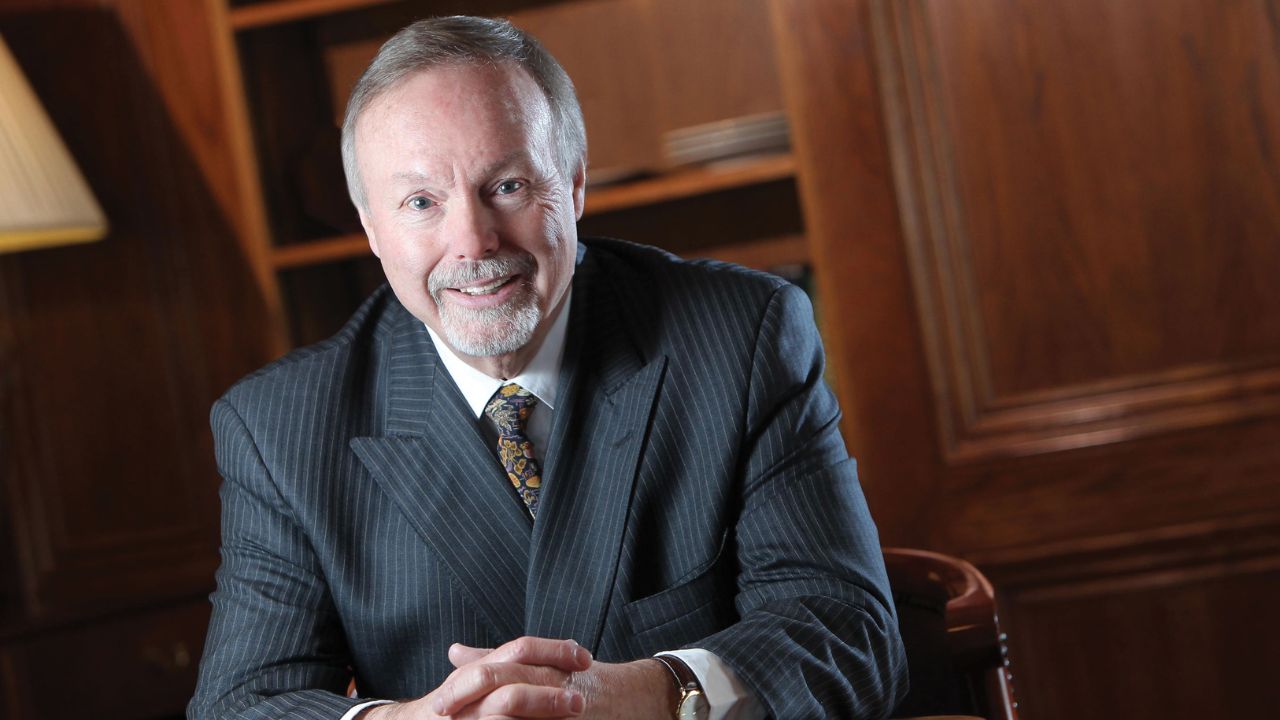
Techopia asked three technology sector leaders — each representing a different generation — to share their thoughts about the local sector’s past, present and future.
Get Instant Access to This Article
Become an Ottawa Business Journal Insider and get immediate access to all of our Insider-only content and much more.
Ottawa has a long and distinguished history in the business of technology. Techopia asked three technology sector leaders — each representing a different generation — to share their thoughts about the local sector’s past, present and future. These are edited transcripts of what they told Techopia late last year.
Kyle Braatz
CEO, Fullscript
Braatz was named CEO of the Year in 2022 by the Ottawa Business Journal and Ottawa Board of Trade. He is only the second recipient of the award under the age of 40. (The other was Tobias Lutke of Shopify.) Braatz has led his health-care software company to annual revenues exceeding US$600 million and grown the workforce to more than 900 employees.
THE PAST: ‘It was a different world’
“I think Ottawa’s tech history is still extremely relevant. It takes courage to start and build a tech company. When you look back in Ottawa’s tech history and see all that has been accomplished over the decades, it can inspire you. This inspiration can be a tipping point for future generations to pursue their tech goals. They can see that it has been done before.
“I think there’s a lot of advice and support that you can get from past leaders. Having a network of individuals that have been there, done that. They can share their wisdom and tell stories about challenges and adversity. Also, they can tell stories about the triumph of building from the ground up. All of those things can inspire the next generation of leaders in Ottawa.
“I should add this, though. Past leaders should also recognize what they achieved was in the past. It was a different world. The way they built things was completely different. The type of technology they used was completely different and the playbook of the past is not the playbook of the future.
“The best kind of leaders who have been there, done that are the ones that actually take the time to empathize with what someone’s going through today, what they’re building, and share the stories that are relevant.”
THE PRESENT: ‘We have great builders’
“Overall, I think the tech scene is really strong. There are some amazing companies being built in Ottawa. The best ones are product-oriented. They are building the best user experience. They’re not all smoke and mirrors and selling snake oil. They’re really going out and they’re building great products.
“That’s one of the things we have here in Ottawa. We have great builders. When I think about the current state, the entrepreneurs who are the most successful in the technology world right now are the ones that are just putting their heads down and building.
“At the same time, you do have to think about the support system around them in Ottawa. I think we can do better, from my perspective. Look at the funding paths in Ottawa. I don’t believe they’re the strongest. We could do better.
“One of the other challenges is that the best entrepreneurs — the ones who can make the biggest impact for less experienced entrepreneurs and CEOs — are the ones with their heads down building the next big thing.”
THE FUTURE: ‘The support network … needs strengthening’
“I think the support network that we have around young entrepreneurs needs strengthening. There are groups out there such as Fresh Founders that are working to make an impact. Groups like this really bring a more entrepreneurial perspective to these startups and growing tech companies. It’s important to have this, not only service providers. The next generation needs people who have been in the trenches. They’re maybe not getting the true education and help to really drive value.”
John Sicard
CEO, Kinaxis
Sicard is another CEO of the Year recipient, this time from 2020. He has worked at Kinaxis for almost 30 years, rising to CEO in 2016. He leads a supply chain management software company with a roster of clients that reads like a who’s who of global manufacturing, including Procter & Gamble, Unilever, Nissan, Ford, Lenovo and Honeywell. This made-in-Ottawa solution took off during the pandemic, with global companies desperate to bolster their supply chain management systems. With regards to his comments below, John is an avid drummer, a passionate supporter of live music and, along with other notable tech CEOs, helped save the Rainbow Bistro in the ByWard Market earlier in the pandemic.
THE PAST: ‘History must repeat itself’
“I think history matters a lot. I moved to Ottawa from Montreal in 1994 to join Kinaxis. At that time, I think Ottawa was known as Silicon Valley North. It was a tech giant in the country. Tech talent was everywhere. There was definitely a tech buzz about the place and there was a tremendous amount of innovation coming out of this city.
“This is why I think history is important. Ottawa knows what success in tech looks like. We know what it feels like, we know what it means to Canada. I might even say this is where history must repeat itself. I’m going to do everything I can anyway to secure that outcome.”
THE PRESENT: ‘Get louder about it’
“Well, I think we’re getting stronger. I really do. The evidence of successful technology companies, it’s omnipresent and it’s not just the large and often-mentioned Shopify. You’ve got many other notables. Nokia’s expansion is a big statement about this region. You’ve got Ross Video absolutely dominating in its space all over the world. You’ve got Solace. You’ve got Assent, which, combined with Kinaxis, is making Ottawa a supply chain technology hub.
“Speaking of hubs, we have Hub350, which opened its doors during the pandemic in Kanata North to serve hundreds of technology companies. So I feel like we’re starting to shed our perhaps timid nature and we’re getting more confident in our posture as a world-class technology centre. And, like I said, the evidence is mounting. There’s a tremendous amount of innovation coming from this region, perhaps as much or more than when I got here in 1994. We just have to get louder about it.”
THE FUTURE: ‘Magnetize the city’
“When I think about the future, the term collaboration really resonates. I believe in community-building. We are all living here in this wonderful community of Ottawa. It’s not just the technology leaders that should be working closer together to amplify what we’re doing here in this region. I think we have to find ways to magnetize the space that we’re all living in here.
“It takes many key ingredients, I would say, to make a great hub. And maybe technology innovation is like pasta, but pasta without sauce, well, it’s just pasta.
“We need to revitalize many of the attributes we once held strong. Maybe more collaboration with Mayor (Mark) Sutcliffe to bring a ‘Nashville-Austin musical feel’ to the city. It’s another way to magnetize the space above and beyond being a tech hub. Doing more to promote arts and entertainment and so on. Call it the way of life that we have here in Ottawa. That’s really going to become important. We can’t just look at this as being a tech hub. Let’s get the tech leaders together and figure out how to amplify what we’re doing. We have to collaborate with city leaders to magnetize the city.”
Terry Matthews
Founder and Chair, Wesley Clover International
Matthews is Ottawa’s famed serial tech investor. His impact on the technology industry in Ottawa is hard to summarize, in part because of the length of his career. Through his direct and indirect actions, he lays claim to founding more than 100 companies. A native of Wales, Matthews first visited Ottawa while on holidays in the 1970s. A friend arranged for a job interview. That interview resulted in an employment offer that tripled his salary. The rest, as they say, is history.
THE PAST: ‘We grew again and moved again’
“Mike Cowpland and I set up a little consulting company in 1972 called Advanced Devices Consultants. We started it with only $1,500. In June 1973, we changed the name to Mitel, which is the combination of Mike and Terry Ltd.
“Mike had finished a doctorate degree at Carleton University. His doctorate was all about active filters using op-amps. Op-amps were a big integrated circuit hit in the early 1970s. We used his R&D work to develop a new telephony tone receiver. So the product developed by Mike and me used op-amps for filters and we made a product that was only a single circuit card, much smaller than the products from the other companies.
“That really fired up Mitel in Canada. I rented a little space at 39 Leacock Way, just a little space. Then, as the company grew, we moved to what today is a big food store. Then we grew again and moved again.
“But imagine $1,500 to start a company up with Mike Cowpland. Ten years later, that company went public. It brought in many new investors. Every dollar turned to two and a half million.
“In 1982-83, Mitel had 40 million shares and those were priced at US$60 a share. I’ll leave it to you to multiply that, but it’s more than $2 billion.”
THE PRESENT: ‘It’s the interaction that makes Ottawa work’
“We have, within the city of Ottawa, a next-generation technology community. We’ve got all kinds of interconnectivity with the community, with Carleton University, Ottawa University, Algonquin College. The L-Spark Accelerator is very active. Then there’s the KNBA. You’ve got Michael Tremblay and company at Invest Ottawa, they do incredible work.
“So it’s the interaction that makes Ottawa work. Whether that’s QNX BlackBerry, Calian, Kinaxis, Nokia, Ericsson, Ciena and Mitel. Then there’s GaN Systems. I mean, good God, have you seen how many semiconductors there are in automobiles? A lot of those chips come with GaN Systems. Then there’s the world of David Ross of Ross Video. And ProntoForms, automating the world of forms around the world. It has one hell of a large client list.”
THE FUTURE: ‘I’m very pleased with all that is happening’
“I like looking at waves and there are many waves coming. If you look at your PC, then you’re likely dealing with Microsoft. The world of Azure, this is the world of cloud computing. Look at the statistics. A few years ago, the world of Microsoft Teams was almost nothing and then it grew to 10 million users and everybody was impressed. Here we are coming into 2023, they could soon have 350 million regular users. How does this relate to Ottawa? I started a company called Martello. It helps with higher uptime connectivity for Microsoft Teams users.
“In Ottawa, what have we got? Let’s look at the back-haul optical networks, which are growing at a hell of a rate. The biggest lab for Ericsson, one of the biggest vendors in the world of networks, is here. Nokia. Ciena. They’re all in Ottawa. Then you look at the world of semiconductors. We have CMC.
“So how do I feel about the future? Are you kidding? The companies that I listed. Plus, DND, the federal government and IRAP (Industrial Research Assistance Program). I’ve done business around the world and IRAP is one of the best programs that I’ve seen.
“There’s another wave called 5G. Ottawa has CENGEN (Canada’s Centre of Excellence in Next Generation Networks). And Telus just put a 5G innovation network in Kanata North. I’m very pleased with all that is happening.”
Check out Techopia - EY Insights here.