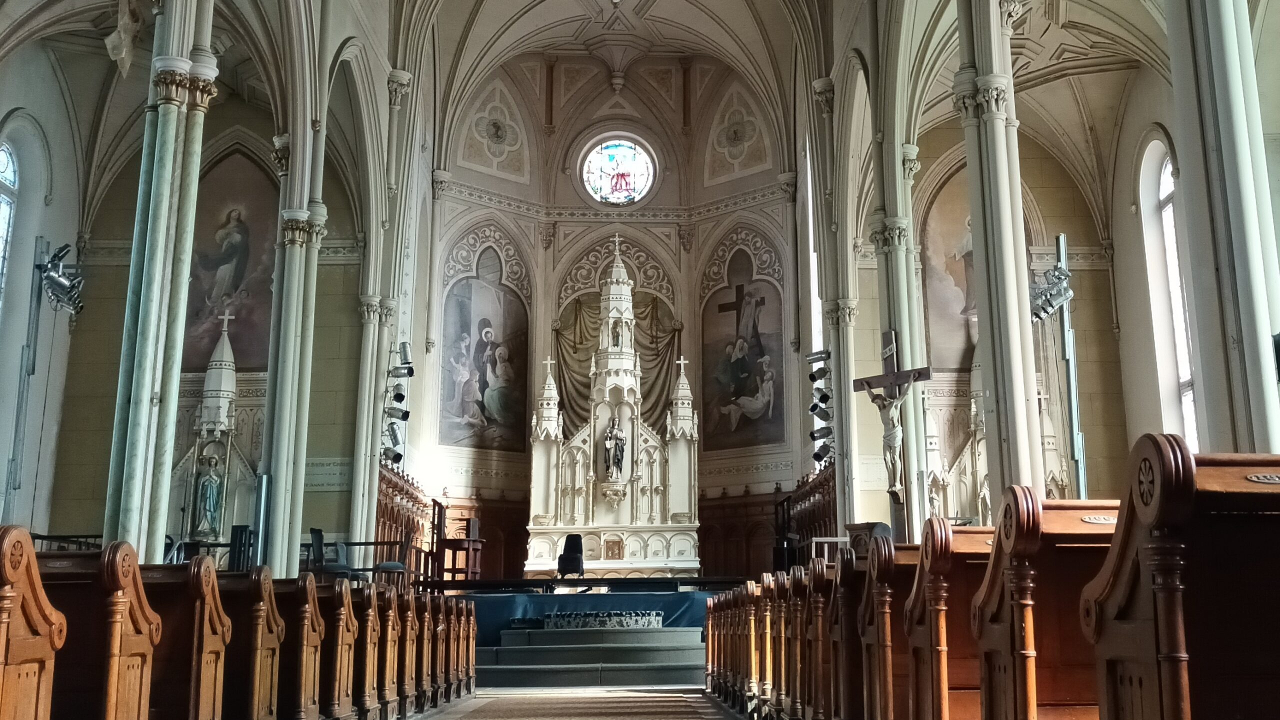
In an application filed last month, St. Brigid’s Centre for the Arts says it needs to raise more revenue to fund work that would address what it calls the building’s “growing heritage infrastructure deficit.”
Already a Subscriber? Log in
Get Instant Access to This Article
Become an Ottawa Business Journal Insider and get immediate access to all of our Insider-only content and much more.
The owners of a historic deconsecrated church in Lowertown are seeking the city’s approval to remove the 135-year-old heritage building’s pews and turn the ground floor into a meeting and events space.
In an application filed last month, St. Brigid’s Centre for the Arts says it needs to raise more revenue to fund work that would address what it calls the building’s “growing heritage infrastructure deficit.”
The building’s owners say they want to remove the pews in the former worship area and transform it into a “flexible events space” with a capacity of up to 500 people. They argue that repurposing the venue would offer “an opportunity to somewhat increase revenue by meeting the market demand for an iconic, distinctive, flexible, usable space for social events, weddings, exhibitions, performances, conferences and corporate gatherings.”
Patrick McDonald, who owns the property at 310 St. Patrick St. near the ByWard Market with three other partners, did not respond to requests for comment on Monday.
Originally constructed in 1889-90, St. Brigid’s was designated a heritage site under the Ontario Heritage Act in 1981. The distinctive limestone building served as a Catholic church until 2006, when it was deconsecrated and shut down due to rising repair costs and a shrinking congregation.
The Archdiocese of Ottawa sold the building the following year to a group of private investors, who formed St. Brigid’s Centre for the Arts. The organization has managed the former church ever since.
Since then, parts of the building have been used for public and private events such as plays, concerts and corporate gatherings. The basement has been converted into a small concert hall, pub and commercial kitchen, while a removable stage has been installed on the south end of the ground floor.
In 2022, St. Brigid’s owners agreed to sell the property to a group called The United People of Canada (TUPC).
However, the deal fell through after the controversial organization linked to that year’s “Freedom Convoy” allegedly failed to make deposits totalling $100,000 and provide proof of $5 million in liability insurance. TUPC went to court in a bid to regain control of the church, but the Court of Appeal for Ontario turned down the group’s appeal last December.
Now, its owners say the aging structure requires a laundry list of repairs and upgrades to remain viable.
According to the application filed with the city on Sept. 15, an architectural and engineering report commissioned by the city last year estimated it would cost more than $18 million over the next decade to address the “urgent, short term, medium-term and long-term actions needed to conserve the building’s deteriorating heritage infrastructure.”