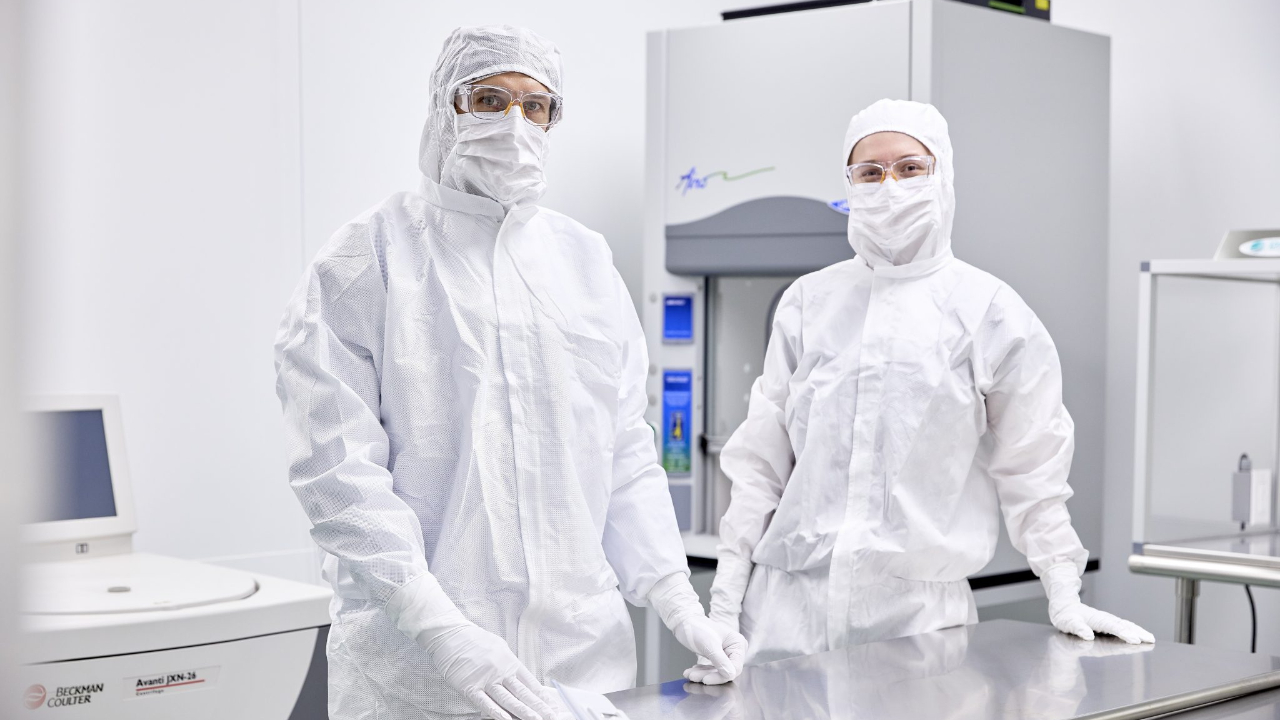
Spiderwort Biotechnologies announced this week it has received the green light from Health Canada to start testing its plant-based product aimed at preventing wrinkles and correcting skin deformations.
Already a Subscriber? Log in
Get Instant Access to This Article
Become an Ottawa Business Journal Insider and get immediate access to all of our Insider-only content and much more.
An Ottawa biotech company best-known for technology that can regenerate spinal cord tissue is poised to conduct human clinical trials on an all-natural alternative to Botox and is looking to raise tens of millions of dollars to finance its research.
Spiderwort Biotechnologies announced this week it has received the green light from Health Canada to start testing its plant-based product aimed at preventing wrinkles and correcting skin deformations.
Spiderwort’s invention, dubbed CelluJuve, is a gel that can be injected into the skin much like cosmetic botulinum toxin, commonly known as Botox, and other legacy wrinkle-reducing products such as Juvederm and Restylane.
But those products can also cause potential harmful side effects that aren’t an issue with CelluJuve, the company says.
For example, Botox uses a substance derived from bacteria to block nerve signals to muscles in the face, which prevents the muscles from moving and stops wrinkles from developing. In rare cases, it can lead to a serious illness called iatrogenic botulism if it’s administered improperly.
By contrast, Spiderwort’s dermal filler is made from cellulose, an organic compound that helps give fruits and other plants their shape. Co-founder and CEO Dr. Charles Cuerrier says the chemical-free product is safer, targets wrinkles and other skin deformations with more precision and lasts longer than Botox and the like, which typically need to be re-injected every six to 12 months to be effective.
“It’s always been the same (cosmetic) products for a million years now,” Cuerrier says. “The industry is really looking for a new technology, and we think we (have) that new product.”
The cellulose found in the new product comes from the flesh of apples – specifically McIntoshes, a fruit Canada made famous. In basic terms, Cuerrier says, cellulose consists of “long chains of sugar,” and the sugary strands that make up the white insides of McIntosh apples just happen to have the ideal shape and dimensions to help keep human skin wrinkle-free.
“That was important for us – a Canadian company using McIntosh apples,” he adds with a grin.
Initially, Spiderwort plans to use the high-tech gel to target nasolabial folds – natural creases in the skin better known as “smile lines” or “laugh lines” that run from the sides of the nose to the corners of the mouth. Eventually, testing will be expanded to other parts of the face such as the cheeks and jawbones.
Cuerrier says researchers still aren’t sure exactly how long CelluJuve will protect against wrinkles. But he’s confident his firm’s next-generation dermal filler has the potential to take a hefty chunk out of the global market for Botox, which some marketing firms forecast could be worth more than US$20 billion by the early 2030s.
“We don’t need chemicals. It’s natural,” he explains. “How the body will react to (CelluJuve) is really one of the things that we are looking to better understand.”