With new retail construction at a virtual standstill in recent years as escalating costs and rising interest rates kept developers on the sidelines, the supply of available quality space has all but dried up, CBRE said in its recent Canada retail rent survey.
Get Instant Access to This Article
Become an Ottawa Business Journal Insider and get immediate access to all of our Insider-only content and much more.
Ottawa’s retail space crunch has created enough pent-up demand to fill new plazas like one planned for Barrhaven “10 times over,” a prominent commercial real estate broker says – even as the industry keeps a wary eye on a potential trade war with the United States that could disrupt the economy.
“There’s still little to no (retail) vacancy in Ottawa,” Candice Lerner-Fry, head of the retail leasing division at the local office of Marcus & Millichap, told OBJ in a recent interview.
“There’s still an appetite for retailers to expand, especially in new builds. Any new projects that are being announced, there’s a huge amount of interest.”
With new retail construction at a virtual standstill in recent years as escalating costs and rising interest rates kept developers on the sidelines, the supply of available quality space has all but dried up, CBRE said in its recent Canada retail rent survey.
The real estate firm said landlords are “often in receipt of multiple offers” when vacancies emerge.
CBRE is projecting rents at properties such as retail “power centres” and commercial space in mixed-use developments to keep rising in 2025 to the range of $45-$55 per square foot. Rents in mainstreet retail hubs such as the ByWard Market and Bank Street in the Glebe are also expected to soar past $50 per square foot, the firm added.
“Covenant of tenants remain key, but speed of deal and terms are decision drivers for landlords in the current market,” the report says.
Lerner-Fry says projects in Ottawa’s fast-growing suburbs – such as Choice Properties REIT’s new 70,000-square-foot pharmacy-anchored retail plaza on Cambrian Road in Barrhaven south that’s expected to be ready for occupancy in 2026 – can’t get done fast enough.
“We have (enough) retailers to lease it 10 times over,” said the veteran broker, whose firm is handling the leasing for the Barrhaven project. “We’re way behind residential growth.”
Skyrocketing demand for rental housing has prompted many developers to shift gears from pure retail projects to mixed use, multi-residential towers that allow for more leasable space on the same footprint, Lerner-Fry explained.
“If you can (choose to) build a 20-storey residential tower versus a one-storey grocery store, a lot of the developers are choosing the higher-density projects,” she said. “In a perfect world, you need new houses, and then you need a bit of industrial and then you need some retail. That’s not the trend we’re seeing. We’re seeing a huge amount of residential, very few new industrial and retail properties.”
Even when new developments do include a commercial component, it doesn’t always suit retailers’ needs, she added.
For example, she said restaurants usually require specialized HVAC systems, but builders might not take that into account when constructing a retail space.
“A lot of developers are still not getting retail experts to help them design the ground floor (commercial component), so sometimes it’s hard for retailers to wrap their heads around what is being built,” Lerner-Fry said. “A lot of times it’s not being built with a retailer in mind or (taking into account) what is required. It’s not as desirable as pure retail development.”
The result is that retail space is at more of a premium than ever, she added.
“There’s not enough retail being built for the amount of residential being built,” Lerner-Fry said. “There are developments where landlords were going pure retail and now they’re redesigning to put highrise residential with a little bit of retail. That’s not sufficient for the amount of growth Ottawa is seeing.”
'Positive activity' in downtown core
Marcus & Millichap is also marketing a 21,000-square-foot space on the corner of Merivale Road and Hunt Club Road that was formerly occupied by Upper Room Furniture, which closed its stores in Ottawa last year.
“The amount of interest we’re getting on that is ridiculous,” Lerner-Fry said. “There’s nothing available.”
While the suburbs remain a red-hot retail market, brokers say Ottawa’s core is also poised for a renaissance thanks to projects like Live Nation’s new music venue, which is slated to open in the former Chapters bookstore on Rideau Street at the end of the year.
“Urban spaces, they’ll pause, but they never stand still for very long,” said Kevin Houlahan, a sales representative with Colliers who specializes in retail properties.
“We’ve seen that in the Market with the closing of Blue Cactus. There’s somebody moving in behind. The core will continue to be a place people want to go – some to live, some to work, some to do both.
“The downtown core is shifting from the traditional office district to a more dynamic, experience-driven community. I think consumer spending is going to come back a little bit as inflation stabilizes and interest rates come down. People want those experiences.”
Jamie Boyce, a senior vice-president in CBRE’s Ottawa office who also specializes in retail leasing, agrees the Market is showing signs of a retail revival.
“We’re seeing positive activity in the ByWard Market, which we haven’t seen in quite some time,” he said.
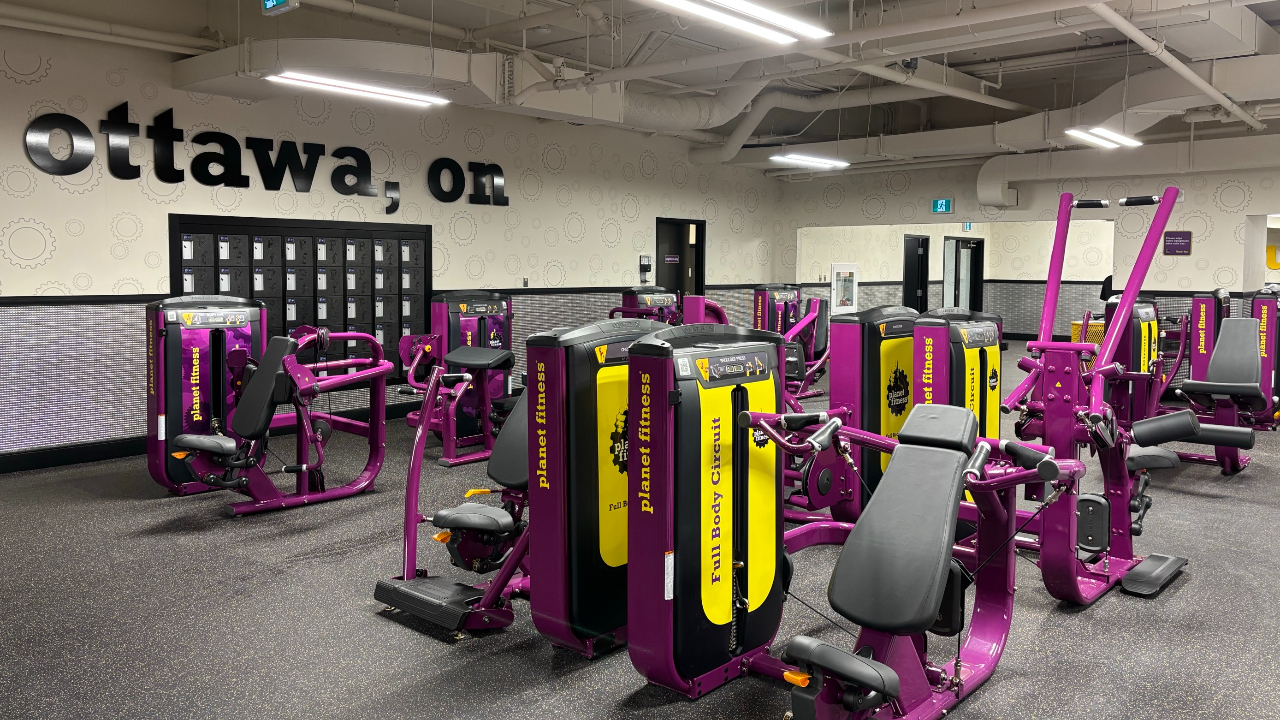
Lerner-Fry said the recent opening of the new Planet Fitness location in the Sun Life Centre suggests there’s a growing appetite for lifestyle and “experiential” businesses to take a fresh look at the core as downtown revitalization efforts gain traction.
“I think we’re going to see retailers … taking the leap and opening up downtown,” she said.
Still, while demand for retail space continues to rise, brokers say a potential trade war with the U.S. could throw a wrench into the works.
“I think we’re going to have to see what happens in the next 30 days and what businesses it affects,” Lerner-Fry said last week, referring to U.S. President Donald Trump’s decision to hold off on imposing widespread tariffs on Canadian industries until at least next month. “It’s an interesting time to be alive. There's a lot of what-ifs right now.”
Boyce agreed.
“I don’t believe the (economic) fundamentals have changed, but the macro economy is definitely changing. Who knows what’s ultimately going to happen with these tariffs after this 30-day reprieve has come and gone?”