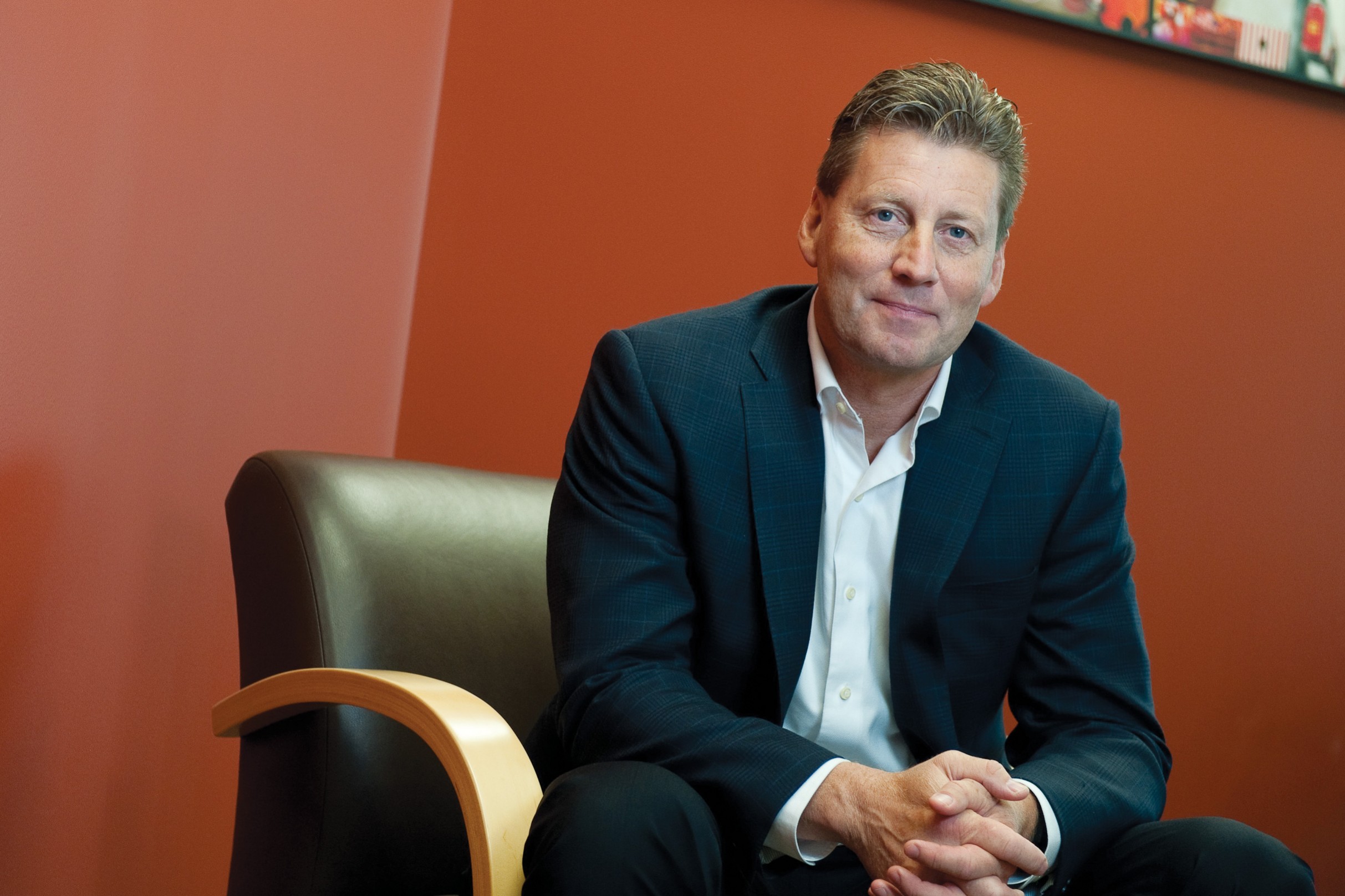
In his more than 20 years with Ottawa software company March Networks, Peter Strom has learned how to keep calm in the face of a crisis.
Get Instant Access to This Article
Become an Ottawa Business Journal Insider and get immediate access to all of our Insider-only content and much more.
In his more than 20 years with Ottawa software company March Networks, Peter Strom has learned how to keep calm in the face of a crisis.
As president and CEO of the company since 2003, Strom has worked with leading banks, retailers and companies across the world to help them strengthen their risk management, security and loss prevention abilities. He was previously based in California, where he was president and CEO of video security company Gyyr Inc.
Through his work as an executive – as well as an adviser and angel investor for SaaS startups – he said he’s learned a thing or two about what it takes to navigate unexpected challenges and turn them into new opportunities.
In this instalment of Top of Mind in Tech, Strom offers advice for companies navigating tariffs, adopting AI while managing security concerns, and why the public and private sectors alike should be promoting Canada’s brand on the world stage.
This transcript has been edited for length and clarity.
Why global companies are better prepared to manage tariffs
PS: The tariff is kind of top of mind for everybody now and I think it's probably because it’s the first time a lot of people in Canada have had this kind of thing thrown at them. I think from our perspective, because we've been operating globally for so long, we constantly have new challenges thrown at the company, new regulations. We have new certifications that countries come up with, just out of the blue, that we have to adapt to.
From our perspective, the business model we've built really is based around being able to adjust very quickly. Being nimble, being flexible. Most people probably aren't aware of them, but things like the U.S. passing the NDAA (National Defense Authorization Act), which essentially forced us to change our supply chain. There were some other areas where it impacted our product as well. We had to go back and do product redesign. So we've met challenges head on over the years and built that ability into our business.
The importance of expanding into international markets
PS: The number one recommendation is don't panic. Sit back, re-examine your business, look at the actual direct impact and the perceived impact of some of these changes. Then you go back and you take a deep breath and go, okay, what can we do to mitigate this? We've run into crisis after crisis over and over again. With this tariff situation right now, I wouldn't recommend anybody go out and completely change their strategy or supply chain. It's an evolving situation. It could change tomorrow. Could change in 90 days.
I'll say something controversial. We should be thanking the U.S. or for what they've done because it is a bit of a wake-up call. I think for Canadian companies in general, we've enjoyed complete access to the market for the longest time and that's been wonderful, but also made us complacent to a certain degree. If you're relying on that one market only for your strategy, I think you're going to be in trouble. We identified that a long time ago, that we needed to go international. Today, we do business in over seven countries.
But you can't go in with a shotgun approach. You need to go in with a sniper. There are a lot of good large markets out there and what you need to figure out is, what's the product market fit you have there? And you'll probably realize that your products, with maybe a little bit of modification, can probably fit very nicely into places like the U.K., places like France, places like Australia. You can go build those markets overseas, but it takes time. It means you’ve got to get on planes. It means you’ve got to go do some research. We need to, as Canadian companies, become much more export-oriented. We're a small market ourselves but we have so much going for us in terms of talent and resources. There's absolutely no reason why Canada should not be successful being an export nation.
Evaluating AI risk as a cybersecurity company
PS: We will always look at new technologies. And we look both from an internal perspective – how do we automate as much as possible to run our business more efficiently? And with some of the tools available today, we can really start to analyze not just our revenues, but also our pipeline and the activity going on in the marketplace. Using automation for that kind of analysis is really important. Then there's the other areas where you can improve customer experience, through the use of things like chatbots, allowing customers to be able to log on and ask any questions they want.
You're always introducing new risks when you're bringing on technology. But I think from our perspective, we view cybersecurity as a couple of things. Number one, data security is really critical for us, because we process a lot of data from very important customers. We have all the certifications that we need to make sure that we're following today's regulations. And you can imagine our customers being some of the financial institutions. They want extremely robust cybersecurity standards. We go through third-party audits all the time to evaluate whether we are meeting the regulations. We take that in a serious manner. Every employee in the company has to go through a certification and training program on cyber-awareness. We really do everything we possibly can.
Using AI for business intelligence applications
PS: We're really embracing the world of AI in our product lineup and it's really significantly impacting our product capabilities. We have been focused on transforming this company away from traditional video surveillance into business intelligence. What we can do today with computer vision and generative AI is analyze anything that happens in the video that we capture. We turn all that into data.
Increasingly, we're finding that our larger enterprise customers are looking at leveraging their video surveillance systems for actual business intelligence applications that have nothing to do with security whatsoever. That includes things like understanding customer traffic patterns, understanding who's buying whose product, understanding things like queue lines, looking at POS data and looking at conversion rates for customers. It’s a whole set of different applications, beyond traditional security, that's all coming from the video system. And our focus is really being at the front of that and being the world leader as the market turns more into AI video.
I'm still shocked. Sometimes when we run the system, we realize that you can really just give an audio command and say, find me every time somebody walks into this area of the store and then picks up a product. You can automatically parse through millions of videos and find those. It's quite remarkable. So just imagine, you're a chief marketing officer at a big retailer and let’s say you own 3,000 stores. The fact that you can do a quick search to find out, did the store put out this point of sale display? I want to make sure it's on the right-hand side. I can very quickly go through all 3,000 stores and find out who didn't put the display in the right area. Why is it in the back corner? How has that impacted sales? It is pretty remarkable what you can do.
Promoting the ‘Canada’ brand
PS: There's a theme that came out yesterday, which is a recommendation for anybody: we need to start promoting the brand “Canada.” As U.S. firms disconnect from the rest of the world, this can be a huge opportunity for the Canada brand to come in and very effectively replace American companies in some of these areas. At the end of the day, people love Canada. People respect Canada. We're generally known as being easy to do business with. We're respectful. We follow contracts and the rule of law and that gets a lot of respect around the world. So I think, if anything – and this goes out to everybody in the private sector and the government sector – let's go promote the brand Canada. It does carry a lot of weight around the world.