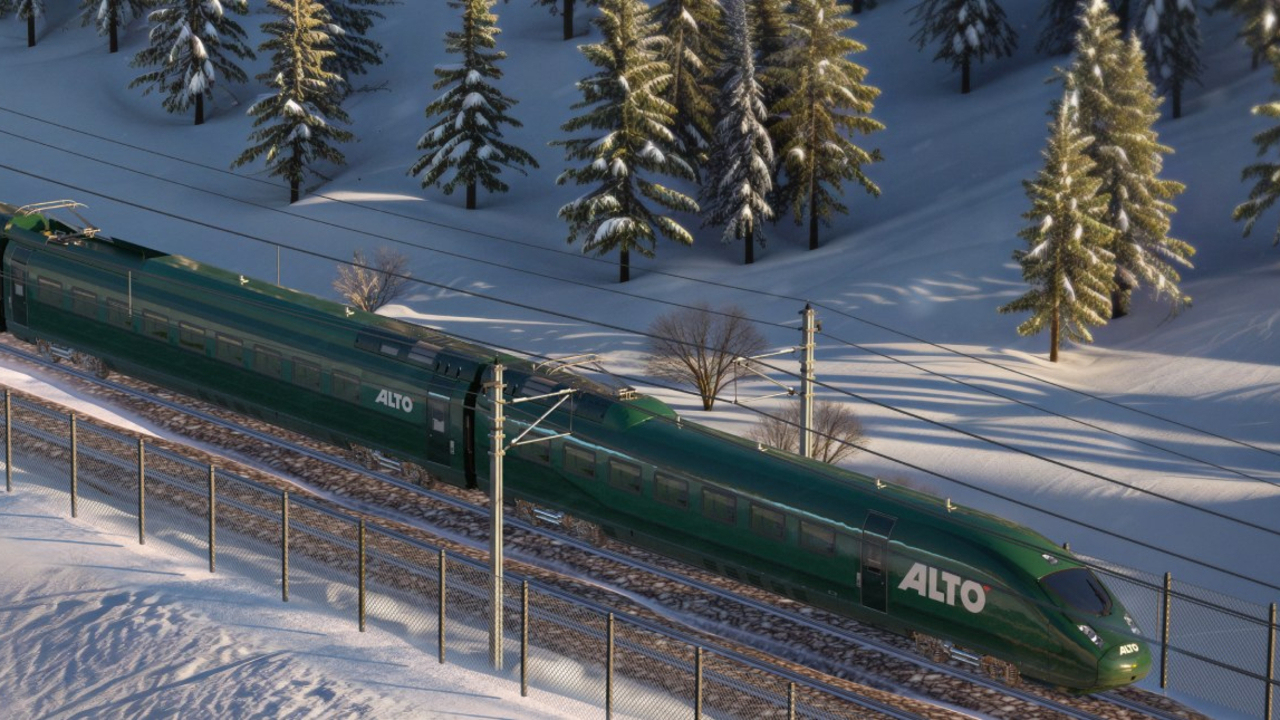
An Ottawa-based professional has started a national campaign to support the construction of Canada’s first high-speed rail line with the message: “Canada has waited long enough. Build Alto.”
David Bellerive is senior officer of finances at the University of Ottawa and has been a train enthusiast and advocate for Canadian passenger rail and infrastructure for years. Since 2021, he’s been a contributor and editor at Rail Fans Canada, a website that documents and examines public rail projects across the country.
Now, with talks around the proposed Alto high-speed rail project heating up, Bellerive is getting directly involved. On Monday, he launched an independent national campaign called Go Alto, which he says is designed to highlight public support for the project.
“Our goal is to make the support visible,” he told OBJ. “We feel that the big issue right now is that it’s easy for people to say that they support it, but I don’t think they feel there’s a clear way for them to express that support.”

Bellerive issued a news release Monday, pointing out that, “… high-speed rail in Canada is not a new or experimental idea: the Québec–Toronto corridor has been studied for decades. The needs are known. So are the limits of the current network. Every year of delay extends the costs of the status quo: lost time, congestion, limited options, stalled productivity, and missed opportunities.”
Alto, the Crown corporation behind the project, is proposing a high-speed rail line from Quebec City to Toronto, with stops in Peterborough, Ottawa, Montreal, Laval and Trois-Rivières. The cost is expected to be between $60 billion and $90 billion.
While there are concerns around the project, especially regarding impacts on agricultural land and property owners, Bellerive said it is popular across political lines and demographic groups. He cited a recent poll by Manitoba-based Probe Research that found that 61 per cent of respondents were in favour of the project, while 19 per cent opposed it.
Ottawa’s business community is among the project’s supporters. Last September, officials at Ottawa Tourism, Invest Ottawa and the Ottawa Board of Trade wrote a letter to Martin Imbleau, president and CEO of Alto, arguing that, “For Ottawa, the Alto project represents a once-in-a-generation opportunity. High-speed rail will place Canada’s capital on the same level as other G7 capitals that have long benefited from modern high-speed rail networks, ensuring that Ottawa is a globally competitive, accessible, and attractive destination for visitors, talent, and investment.”
At a business event in January, Imbleau said the project would be a “generational investment in Canada’s economic future,” adding that it is expected to deliver a one-time, $25-billion impact on the country’s GDP.
Imbleau urged businesses in the National Capital Region to get involved. “Imagine the talent and opportunities that Ottawa will be connected to. So instead of having three different localities, it becomes one big economic region. But before that, we need to build it.”
According to Bellerive, regions elsewhere in the world connected by high-speed rail have seen benefits for business due to quick and easy connections to other major markets.
“If you look at the economic cases around high-speed rail around the world, it creates a network that brings people together, but also it brings networks together,” he said. “That means more people coming into the city, but it also means easier ways for Ottawa companies and businesses to attract talent from other cities … There’s already a lot of real estate in Ottawa, and we also have some very competitive industries. We have the public sector, but we also have the Kanata technology park and other institutions.”
As the project is developed, Bellerive said he doesn’t want to see the diversity of support ignored. At the crux of his advocacy, he said, is a concern that Canadians have waited too long for a project that he believes will have significant positive impacts on the country.
“We’ve had proposals every decade for the last 50 or 60 years and, at this point, we’re still in the same place,” he said. “It’s a massive project, but we are not the first to do it. Imagine being able to go to Montreal for a meeting and being back home before lunch. That is how transformative this is … Our position is that the time of inaction should end now.”
Bellerive said supporters can add their name to the campaign to make their support public. The campaign will also share information and updates about the project, while also providing campaign materials and tools so people can advocate and show their support publicly.