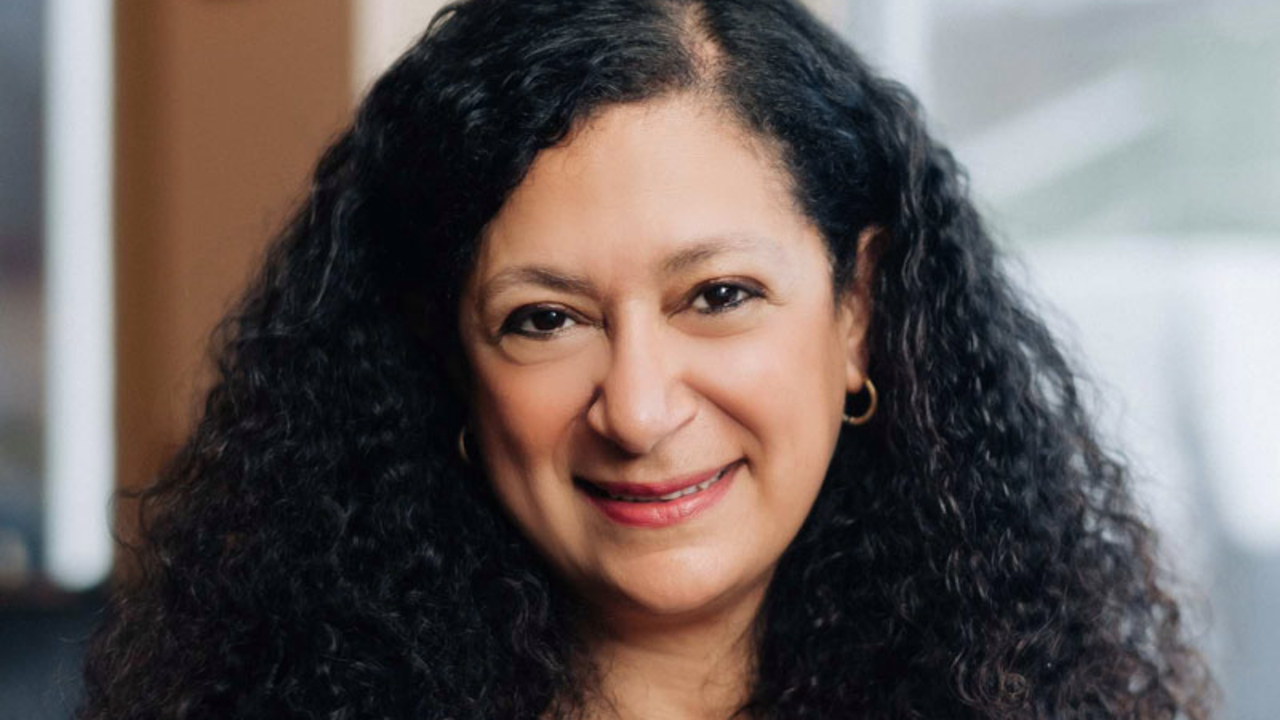
Ottawa-based producer Hoda Elatawi is adapting to changes in the screen industry by continuing to tell the stories that are important to her, including a new digital-first children’s docuseries.
In 2023, Elatawi, senior producer and CEO of GAPC Entertainment, received funding from the Canada Media Fund to produce children’s content. Among the projects she wanted to pursue was I Love Being Me, a “kid-ified docuseries” celebrating and normalizing the differences children may have.
“The series is really taking a look at a slice of life, where we hang out with the kids and their families. These are kids who may be seen or have felt as other,” Elatawi told OBJ.
In each episode, an Ottawa-area child brings viewers into a day in his or her life to normalize different abilities, cultures, families and life experiences. The series includes the stories of children who are taller or shorter than classmates, wear a hijab or live with cerebral palsy, for example.
But even with the funding, Elatawi had to put the project on the back burner while the rest of the financing was sorted out. “It just took a while to build up the financing, as we produced kids’ shows and I was producing a documentary. We’re hoping to raise money to do a second season, because there are so many other families and kids we’d love to profile.”
In recent years, content on streaming platforms such as Netflix, Hulu and YouTube has edged out traditional TV shows. Producers like Elatawi have been trying to adapt to the times.
That’s why the 12-episode series, which launches July 11, will be on the MarbleKids channel on YouTube. Elatawi said the shift to producing content for streaming platforms is complex. Still, she felt compelled to tell this story.
“Typically, when we have a project and we’re pitching it, whether it’s to a broadcaster or a (streaming) platform, they will launch it digitally. So for us it didn’t matter. It was just about finding a home for this series to land, because we felt like it was that important,” Elatawi said.
“We’re living in times where differences have been brought back and not as good things. Five years ago, inclusivity and diversity were things that we were seeing … Now it feels like we’re walking back from that, so I felt it important to make this series.”
Having been in the screen industry for more than 25 years, Elatawi said it’s been difficult to navigate the changes that have come with the shift to streaming platforms.
“Making that transition is a challenge, unless you’re able to get your foot in the door with some of the larger streamers, which isn’t an easy thing to do,” she said.
One such challenge is sorting out how the revenue model will change with the times.
“How do we monetize it? Because with kids’ content, there’s no advertising. How do we finance shows that are made for YouTube?” she said, adding that producers who land deals with streaming platforms such as Netflix and Amazon Prime don’t have to navigate as much uncertainty.
For I Love Being Me, Elatawi said her team is relying on money made through deals with distributors as the main source of revenue. “For us, where we will see revenue is through distribution. We will have Blue Ant Media, which is our distributor to distribute the series globally, and we’ll have an educational distributor, McIntyre Media, who will distribute (the series) into the educational markets in Canada. In terms of generating revenue off of YouTube, that remains to be seen.
“There’s such a sea of content out there, (so) to achieve discoverability is a challenge, so whether we see revenue that way, I’m not betting on it,” she told OBJ.
Elatawi said she’s been working on audience development to get the word out about the series. “For I Love Being Me, we have a whole team that’s working on getting the word out to create additional content to connect with communities that would find interest in this kind of content.”
Still, Elatawi said it’s a difficult time to be in the screen industry, especially producing kids’ content.
“I don’t know what the simple answer is. We’re all sort of muddling our way through. Right now, at least in Canada, public broadcasters are really the ones that seem to be supporting the creation of kids’ content and budgets are shrinking. The demand on those dollars is huge.”
And although she hasn’t experienced it firsthand, Elatawi said she imagines the squeeze will be felt throughout the screen industry, including by the businesses that support it.
“When we are creating content, even if it’s for a digital platform, we’re still using crews. We weren’t using a catering service, but we were supporting local businesses to feed our teams. I don’t know if (other businesses) are being hugely affected yet, but I think they will be as the dollars shrink,” she said.
Despite the shifting landscape, Elatawi feels Ottawa-based productions have an advantage.
“Being in Ottawa allows us to be a little bit more cost-effective. Our teams are smaller, although they’re highly skilled. If we were filming in Toronto, Vancouver or Montreal, I think the cost would be much, much higher.
“And, having grown up and spent most of my life in Ottawa, Ottawa exemplifies the kind of diversity that I wanted to see in the series. I knew we could find what we were looking for here that could be representative of a more national level. It doesn’t feel Ottawa-centric,” she said, adding that Ottawa’s big-city-small-town feel meant that her company is able to more easily establish connections with local families and other producers.
Elatwai said that other producers navigating the same challenges should stay focused on their inspiration for making content and not be afraid to seek partners.
“Something I say to myself when things are feeling really hard is, ‘Do I still love making content? Do I still love telling stories?’ You have to have a passion for telling your stories and trust that you will find a platform to tell that story. Those places are just harder to find.
“And what we’ve been doing as a company that’s a little bit different is that we’re actively looking for collaborations with other like-minded producers. For example, we are co-developing a preschool animated series with an animation studio out of Vancouver for CBC Kids. The circumstances just made sense for us to partner on this series. You don’t have to do it all by yourself. Find a partner that will … share in the joys and the labours.”