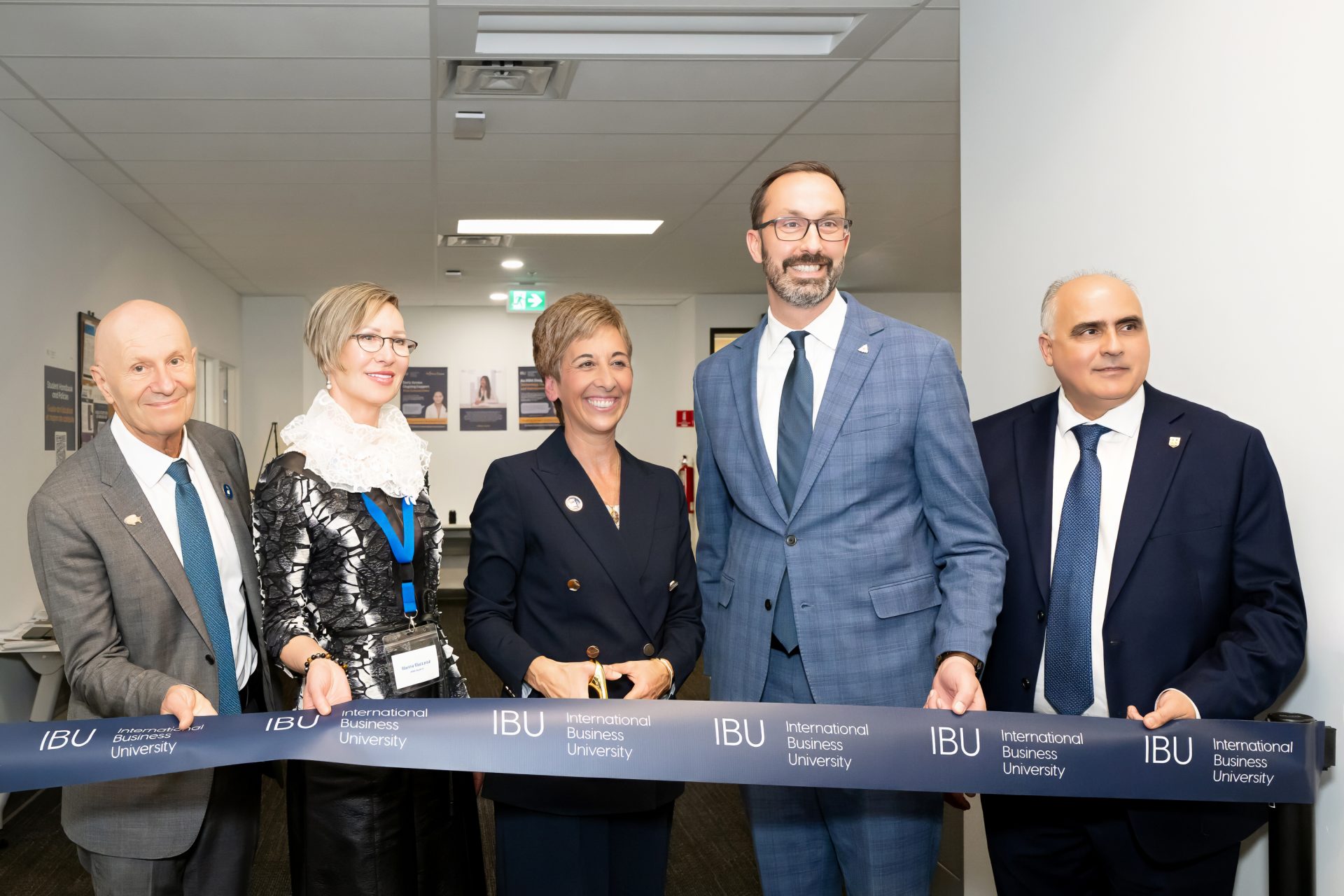
Amid financial pressures, societal shifts and changing industry requirements, the past few years have forced Ottawa’s business schools to reinvent themselves to respond to new market demands.
Already a Subscriber? Log in
Get Instant Access to This Article
Become an Ottawa Business Journal Insider and get immediate access to all of our Insider-only content and much more.
Experiential learning as key to success in business
Of the three Ottawa business schools — Sprott, Telfer and IBU — Telfer is sticking closest to the traditional graduate education model. According to Brutus, business schools typically focus on four core competencies, or the “four Cs,” as he calls them: communication, critical thinking, creativity and collaboration. It’s these skills that are needed by leaders across all disciplines and sectors, he said. But to develop those skills, Brutus said students should be learning in-person but also getting out of the classroom. “We need to grow these competencies and we have one or two years for the master’s programs,” he said. “How we maximize class time with that learner to develop those competencies is with experiential learning: learning by doing. You don’t learn critical thinking necessarily by reading a book. The way you develop the skillset is by practising in an environment that is as close to the real world as possible.” While the core of the program remains the same, Brutus said adjustments over the past few years have been made with growth in mind. “We’re not reinventing the wheel here,” he said. “(Experiential learning) is nothing new. Co-op is nothing new. However, we needed to find a way to scale. This type of hands-on learning is easy with two or three students, but we want to do it with 5,000 students. The system we’re building now, we’re doing it at scale.” In addition to its MBA program, Telfer offers a variety of specialized graduate programs, including a master of health administration and a master of science in management. It also offers two executive master's programs, in health administration and business administration. Brutus said these programs target mid- to senior-level professionals, allowing them to learn and apply leadership skills through hands-on classroom experience. For graduate students across the board, he said the feedback loop of in-person learning is essential. “You present in front of a live audience with little time to prepare with a real audience that is going to ask you tough questions,” said Brutus. “It’s going to be tough. It may be uncomfortable. You may fail, you may bomb. And then what? Then you debrief and reflect. You’re trying it out in a live setting, putting yourself in a vulnerable state in a learning environment, so it’s safe. You get out there and you don’t need to be afraid to fail.” Though adjustments have been made over the years, driven in large part by the pandemic and technological changes like artificial intelligence, Brutus said it’s important to keep up the habits that have made Telfer’s graduates successful. The biggest change, he said, has been the students themselves, who are more reticent to in-person learning. “The learner oftentimes doesn’t know they want it; they’re almost afraid of it,” he said. “Especially the new, contemporary learner who’s been through the pandemic, whose social development is different from the learner of 20 years ago. That learner is more apprehensive, so you need to meet him or her where they are.” Despite initial skepticism, Brutus said most of the school’s younger students have embraced the experiential learning model. “Once they touch it and they get the feedback, they get out there, they see it’s not the end of the world,” he said. “It’s just a matter of getting them to the first day, that first experience. Maybe not right away, but at the end of their first year, they’re like, this is great. They buy into it pretty quickly.”Virtual learning taps into underserved markets
Carleton University’s Sprott School of Business has been watching students’ needs change over the past few years, a trend compounded by the pandemic. Fraser, an associate professor and director of the school’s MBA programs, told OBJ that more students are looking for programs that fit around their work and family lives. As a result, the school has shifted its programming. “At the graduate level, sometimes continuing education can be a lot more challenging for people,” Fraser said. “The traditional model where students attend school full-time with no other obligations doesn’t really reflect the reality of most people who want or need graduate education. So we felt that the institutions that are going to adapt successfully are the ones that meet people where they are.” The changes started prior to the pandemic, when the school launched its Professional MBA in 2019. According to Fraser, the program was designed for students with significant work experience, offering more flexibility than a typical MBA. Fraser describes the format as “highly condensed,” with students attending two full days of classes on Fridays and Saturdays twice a month for 16 months. “Our classes are very small, around 30 students,” he said. “The network is super-important. It’s not the traditional lecture and test. It’s a very different way of thinking about education. And it’s really drawing out the different expertise from everyone in the room.” A few years later, Sprott launched its fully online MBA program, which offers similar flexibility but can be completed anywhere in the country. “We’ve been seeing super-strong interest across Canada,” Fraser said. “The majority of our students are from the GTA, but we also see a lot of students from communities that may not have a local university. They might be in a small community somewhere, and they tell us, ‘If it wasn’t for this online MBA, there’s no way I’d be able to do education.’ So we’re really proud that we’re able to open up that accessibility.” In the three years since the program launched, Fraser said more than 1,000 students have started it, with the first cohort graduating this year. The success led Sprott to move away from its traditional weekday program starting this fall. “We won’t be taking applications into our original program,” he said. “We are shifting to that Professional MBA format as our flagship in-person option, alongside the online MBA.” Plus, Fraser said the school is rethinking the undergraduate level and working with partners to introduce specialized courses in response to employer needs. “I think the universities that will thrive through this period of disruption are those willing to ask those hard questions about who they’re serving and why they’re serving those people,” he said. “We’ve built programs that are removing structural barriers that have historically kept working adults and families out of graduate education. And the strong and growing interest we’re seeing from across Canada tells us that approach is working on the graduate side, and on the undergraduate side, we’re diving in.”Specialized, tailored courses created quickly