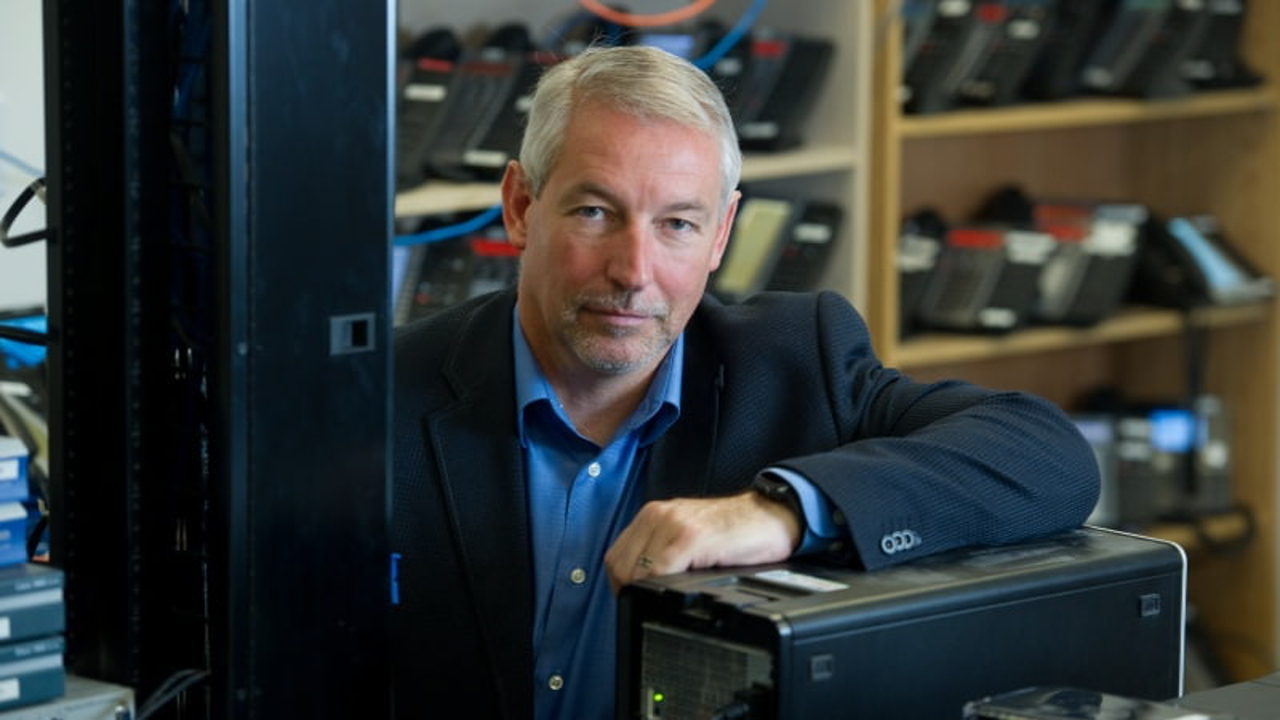
When John Proctor left Kanata’s Martello Technologies in late 2023 after six years as CEO, he did something the head of a fast-growing software company doesn’t usually have the luxury of even contemplating: he relaxed a bit. “It was time for a break,” says Proctor, 57, who guided the wireless network troubleshooting firm through a […]
Get Instant Access to This Article
Become an Ottawa Business Journal Insider and get immediate access to all of our Insider-only content and much more.
When John Proctor left Kanata’s Martello Technologies in late 2023 after six years as CEO, he did something the head of a fast-growing software company doesn’t usually have the luxury of even contemplating: he relaxed a bit.
“It was time for a break,” says Proctor, 57, who guided the wireless network troubleshooting firm through a series of dramatic events that included an initial public offering on the TSX Venture Exchange in 2018, the COVID-19 pandemic and a major round of cost-cutting in 2022.
Jobless for the first time in decades, the former Canadian and British Armed Forces veteran took a breath and tapped into his “usual network” of friends in the tech community for a little advice on what to do next.
The best nugget of wisdom came from Jim Roche, the president and CEO of management consulting firm Stratford Group, who asked Proctor if he could remember the last time he went an entire summer without working.
“I said, ‘Probably when I was 17,’” Proctor says with a chuckle. “(He said), ‘Well, take the summer off and then figure out what you want to do.’”
A civil engineer by profession, Proctor left the military in 2010 after serving more than two decades as an intelligence officer. He soon carved out a niche as an expert in the fast-rising field of cybersecurity, spending six years as the head of IT consulting firm CGI Canada’s global cyber practice before joining Martello.
So it’s probably no surprise that after kicking the tires on a few opportunities, he’s back helping clients figure out how to one-up the bad guys in cyberspace.
Last month, Proctor joined professional services firm PricewaterhouseCoopers Canada as a partner in its Ottawa office, where he’ll play a leading role in expanding PwC’s 20-person local cyber, privacy and financial crimes practice.
After years of heading a relatively small organization like Martello – which employed fewer than 100 people when he left, as opposed to PwC’s current head count of more than 7,500 in Canada alone – Proctor says he’s glad to be back with a “big company.”
“I want the team. I still play soccer here in town, and I like team sports. That kind of got me going.”
'Collaborative environment'
He also got a dose of encouragement from a presenter at an Institute of Corporate Directors course he took at the University of Ottawa last October. The presenter happened to mention she was about to start a new job at PwC, and later raved to Proctor about how comfortable the organization made her feel.
“This is a very collaborative environment, and that’s what I was looking for,” he explains.
Proctor says that while a lot of people still probably think of PwC as an accounting firm, it provides a wide range of professional services.
Its cyber and financial services group now numbers about 350 people across the country, offering everything from fully managed cyber services to advice for clients seeking the best bang for their buck from cybersecurity software.
Still, it’s trying to grab land in a crowded field.
Cybersurity has become one of the biggest buzz words in tech, with spending on detection and prevention of cyberattacks reaching $11 billion in 2023, according to Statistics Canada, up from $9.7 billion in 2021.
As the industry has ballooned, competition has heated up. But Proctor says he thinks PwC – which also has expertise in fields such generative AI that he believes are particularly vulnerable to threats – is well-positioned to become a global cybersecurity leader.
“It is a very rich, vibrant market,” he says. “There’s space to grow. Everybody’s short of cyber resources. Nobody’s saying, ‘Thank goodness. I’ve got so many cyber people I don’t know what to do with them.’
“In the cyber world, we are not at peace. Every bad actor – criminal organization, state actor, it doesn’t matter – the cyber environment is rife with destabilization.”
Proctor also says he’s looking forward to having the power of a global firm behind him.
“It’s tough being the CEO of a really small company, because you spend the first 15 minutes of a half-hour meeting explaining who you are and what you do,” he explains. “Nobody is going to do that when you walk in with the PwC laptop and say, ‘Hi, I’d like to talk to you about cybersecurity.’ It’s a trusted, known brand.”
Proctor sees opportunities to expand the firm’s local client base in both the public and private sectors. He believes his experiences as a former CEO and a current member of several corporate boards will serve him well in his new role as a cyber evangelist.
“Technology isn’t always the answer – sometimes it’s organization, sometimes it’s your approach, sometimes it’s a style, sometimes it’s an adjustment in leadership. All of those things I have learned,” he says.
“To put your nose in, you have to know what questions you have to ask to get there. I’ve learned all those lessons; I’ve come away with all those bruises and scars, and I’m able to bring those to bear.”