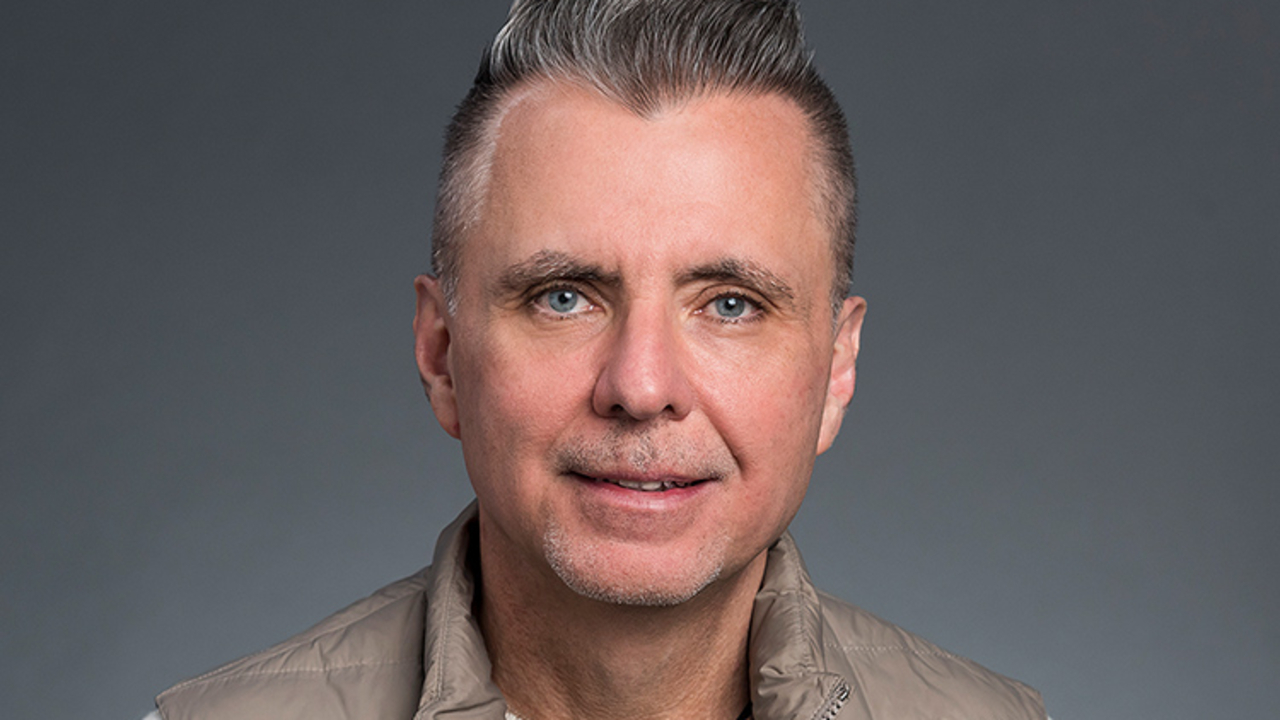
As a driving force behind two successful Ottawa-based tech firms, Mark Scott is a keen observer of the National Capital Region’s tech ecosystem. Though he now calls Toronto home, Scott remains one of Ottawa tech’s biggest cheerleaders. Two companies he helped launch during his time in the region — remote IT monitoring and management software […]
Already a Subscriber? Log in
Get Instant Access to This Article
Become an Ottawa Business Journal Insider and get immediate access to all of our Insider-only content and much more.
As a driving force behind two successful Ottawa-based tech firms, Mark Scott is a keen observer of the National Capital Region’s tech ecosystem.
Though he now calls Toronto home, Scott remains one of Ottawa tech’s biggest cheerleaders.
Two companies he helped launch during his time in the region — remote IT monitoring and management software firm N-Able and managed services provider TUC, which later became Fully Managed — were sold for a total of more than $250 million. Today, Scott keeps a close eye on the local tech industry in his role as a general partner at Top Down Ventures, a fund he founded in 2024 with former Fully Managed executives Joel Abramson and Chris Day that focuses on scaling early-stage software companies in the managed IT services space.
Over the past two years, the firm has invested in 13 companies. Top Down recently closed its first Founders Fund valued at US$28 million, beating its US$25-million target, and the firm is actively pursuing investments in markets across Canada, the U.S. and other countries.
Scott recently chatted with OBJ reporter David Sali about Top Down, where he sees the firm’s biggest opportunities and what makes Ottawa a hotbed of technology. The following transcript has been edited for length and clarity.
OBJ: Why did you form Top Down Ventures with Joel and Chris?
MS: We obviously have a lot of experience in building and scaling companies from scratch as founders. I'm a (chartered accountant) and (a chartered professional accountant), so it's not that I guess I know enough about technology to be dangerous, but my approach, whether it was from N-Able or Fully Managed, was definitely, ‘Let's solve a business problem first and leverage technology to be able to execute on it.’ So we looked and said, ‘Okay, there's nobody (funding those types of businesses).’ And I think it's a missing thing, not just in this industry, but I think it's a big missing thing, frankly, in the Canadian (venture capital) ecosystem where you don't have a lot of real operators — people that have actually sat in those CEO shoes, bootstrapped the company and built it.
It's a pretty big pond now, managed services. It's a $600-billion global industry, so the idea is really to put together an institutional fund that invests in early-stage software companies that are geared to the managed IT services space.
A lot of the traditional way of (funding startups) is you take a horizontal approach. So you invest in all kinds of different companies. We can see that with Terry Matthews and (his investment firm) Celtic House, organizations like that, where they invest in a lot of different categories. We're laser-focused on early stage (ventures), a million (dollars in) recurring revenue or so, (that are) a couple of years old typically. Our idea is we write a cheque for $1 million to $3 million US to those, and in some cases have other investors involved as well, and help the organization scale to that next phase.
OBJ: Like a lot of emerging tech companies these days, several of the startups in your current portfolio are very AI-focused. Where do you see the biggest opportunities for companies in the managed services industry to leverage AI?
MS: In regards to managed services, there probably isn't a better use case for AI than the service automation — taking human labour out of doing some of the simplest things, like taking an inbound help desk call from somebody that has issues with their technology, to more advanced stuff with security, penetration testing, vulnerability assessments, those sorts of things. So, you can go from some of the simplest use cases around AI to very advanced stuff, where you can start to leverage what the hackers leverage, which is some of the autonomous tools that are out there for AI. So that's one use case — investing in software companies that help (managed service providers) deliver their services more effectively, efficiently and profitably, and that's a massive (market).
The other is what we coined as managed AI. These are companies that we've invested in that could be doing things like AI readiness and optimization assessments, looking at cleaning data for AI governance, and obviously the integration piece to implement whatever it is that you're trying to solve with the business workflow. The gravy is monthly recurring revenue to ongoing managed services and support.
If you look at the global market, there are 90,000 MSPs globally. There are 400 million small and medium-sized businesses. When they start to really say, okay, let's adopt (AI) as an organization, they’re going to look for an outsourced (managed services) provider to be able to do that.
OBJ: How has your background in managed services helped you make inroads in the funding business?
MS: Seventy per cent of our limited partners come from the managed services space. They're exited founders. So that gave us probably a little bit of an advantage over just being three guys out of an investment bank who are going into an industry where nobody knows them.
The next thing is obviously the portfolio companies. We get a lot of inbound (inquiries). Most companies want to work with us because of our reputation in the industry. And then the third thing that's probably most important is we have the relationships with all the largest vendors, the private-equity firms that are the buyers of the technology and the investments that we go into. So I think that's what kind of makes our firm a little bit unique.
OBJ: Do you have any Ottawa companies in your portfolio?
MS: Not right now, but we're definitely looking at a couple. There are a lot of good Canadian companies in managed services. We have a couple in Vancouver (where Abramson is based). The founder of Zofiq (a Top Down portfolio company headquartered in Toronto) is an Ottawa guy (Lee Silverstone). Definitely (we are) always keeping an eye on what's out there. We have companies in Australia, we have a company in the U.K. We're looking at a company based in Montreal right now. So we go where the best technology is that fits with our model.
OBJ: But you do keep a close eye on the Ottawa ecosystem?
MS: Absolutely. A company that we had (in the portfolio) last year, (digital analytics platform) Produce8, we started it a couple of years ago, and we had people from Ottawa. It was really headquartered in Ottawa and Vancouver. So we definitely keep an eye on all (regions) and being from Ottawa, it's pretty easy to keep (my finger) on the pulse there for sure.
I'm a huge fan of Canada. I think we have some incredible companies. In Toronto, obviously you see what companies like Cohere have done, they're just an incredible company. (There are) some really good venture capital firms (in Canada) too, like Inovia Capital. So, I've gotten to know the Canadian money business a little over the last couple of years. We're still the new kid on the block, but I think we're definitely seeing this move to, ‘Let's build and develop companies in Canada.’ If I look at Ottawa and if I look across the board coast to coast, there's a lot of really good software companies and talent — let alone AI was actually created here basically.
I think you're gonna see better days ahead five years down the road. It's not going to happen overnight by any stretch. I think Invest Ottawa, they do a great job as well. (President and CEO) Sonya (Shorey), she's out there really doing a great job promoting Ottawa as a great place to build a business, and it is. I mean, it's (cheaper than) living in Toronto, and it's a safer city as well. There's a lot of great talent there, and great universities.
OBJ: Where do you think Canada fits when it comes to the future of AI?
MS: We're in a knowledge economy. So, should we necessarily be building pipelines all over the place? You kind of see this world of AI and the data centre build-out, the pipe and the (computing power) that needs to be built for it. Where better than … the northern parts of pretty much every province (to do it)? It’s cold, so you don't need (as much) heating. We talk about being an energy superpower. We should be an AI superpower. I think we can do it on the IP side, but also on the data centre (side). Why shouldn’t Bell and Telus and Rogers just repurpose all of their data centres to sovereign AI centres? Why can't we have sovereign AI data centres for all the countries that don't have the energy and don't have the space and don't have the climate?