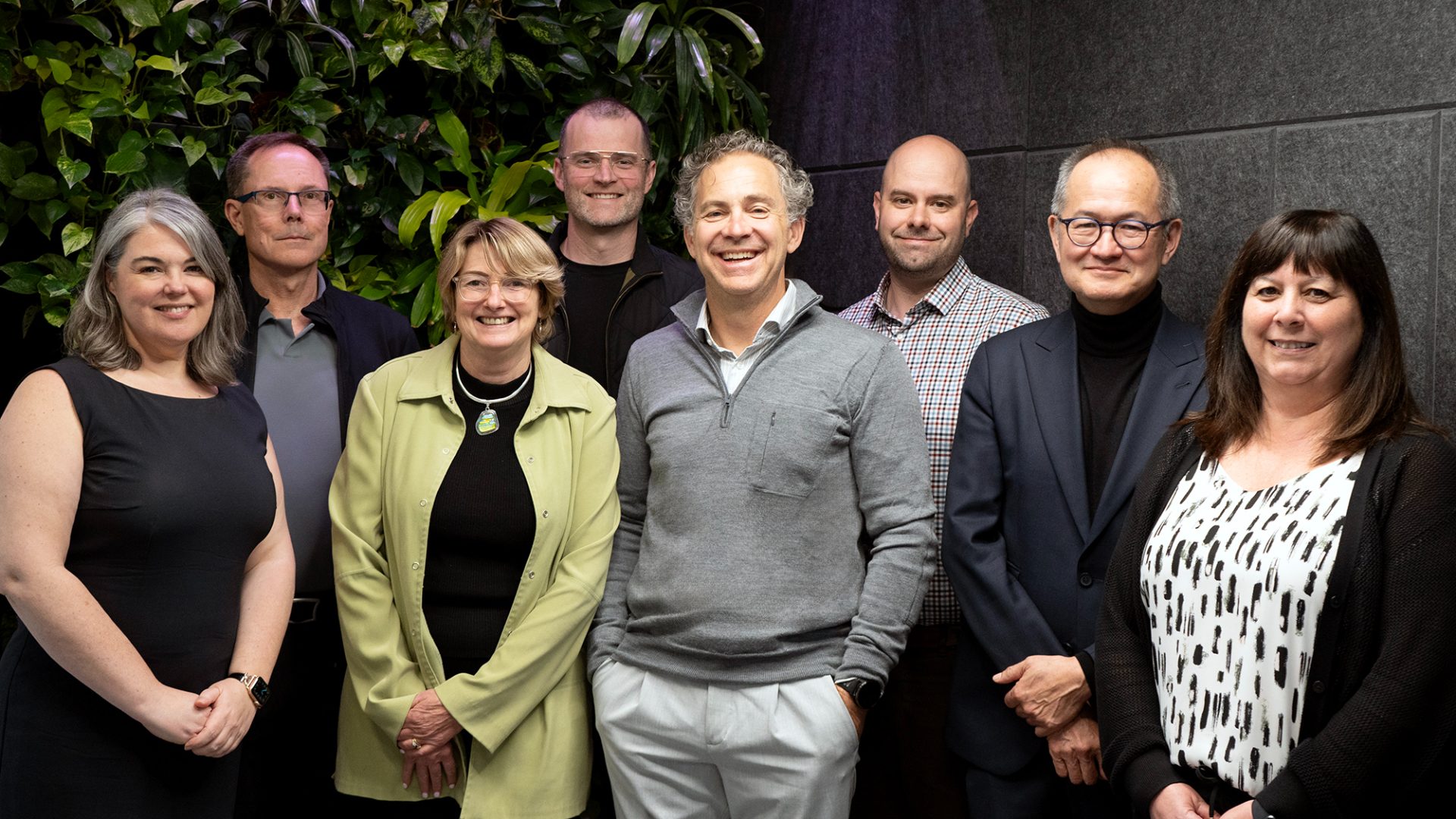
With smaller architecture firms often unable to compete for big-ticket contracts, one local firm is joining forces with a longtime partner to gain a competitive edge over multinational companies.
Already a Subscriber? Log in
Get Instant Access to This Article
Become an Ottawa Business Journal Insider and get immediate access to all of our Insider-only content and much more.
With smaller architecture firms often unable to compete for big-ticket contracts, one local firm is joining forces with a longtime partner to gain a competitive edge over multinational companies.
It’s a trend that could become more common in the profession as projects become larger and more complex, industry watchers say.
For nearly two decades, Ottawa-based Watson MacEwen Teramura Architects (WMTA) has worked with mcCallumSather, which was founded in Hamilton and now operates an office in the capital.
Earlier this month, the two firms announced a formal strategic partnership that will allow them to share expertise and pursue larger, more complex projects.
“Now it’s at a point where, in order to be competitive, we need to have a little more robustness,” Drew Hauser, architect and board chair at mcCallumSather, told OBJ.
“It used to be that a large project was $100 million and now a large project is a billion dollars. It’s like, holy smokes. And with the complexity, many of them don’t have a precedent. The Canadian government, in some cases, might really feel they have to look abroad.”
Large U.S. firms tend to dominate the Canadian architecture landscape, winning more major contracts over Canadian SMEs, said Allan Teramura, architect and partner at WMTA.
“The largest firms in Canada at the moment are all based in the United States,” he said. “It wasn’t an invasion of architects coming across the border, it was them acquiring local firms, for the most part. But the reality is that the profits and the knowledge and the credentials and the experience end up going to a firm that has its head office somewhere in the States.”
McCallumSather, a 30‑year‑old firm founded on sustainable design with in‑house mechanical engineering, has a national portfolio that includes mass timber, affordable housing and lab facility projects.
WMTA, meanwhile, has prioritized projects that require specialized expertise for the public sector, heritage and research facilities. It has also broken into the defence sector, where its security credentials have been a major asset.
The firms first worked together on a municipal water quality lab in Hamilton, said Hauser, and the relationship developed from there.
“We were starting to win some government work but, in all honesty, everything that we were winning, we'd be like, ‘Hi Allan, hi (partner Rick MacEwen), what do we do? How do we do this?’” said Hauser. “They were very helpful in helping us navigate that. Now with that alignment, it just allows us to be much more effective.”
The formalized partnership gives each firm a partial ownership stake in the other, allowing them to share knowledge and expertise more easily. For the time being, the firms will continue operating under their own names.
“I guess we’re trying to form a kind of resistance, to build a homegrown entity that can compete with these huge firms that have thousands of employees,” said Teramura. “That’s part of the strategy, I think, in surviving in this market.”