
As an editor on hit television franchises including Survivor, The Amazing Race and The Bachelor, Tracy Bacenas has spent her career crafting compelling stories for millions of viewers. But in 2023, the two-time Emmy-nominee found herself at the centre of a story she never expected: a diagnosis of a rare and life-threatening bone cancer.
Tracy’s unique experience is a powerful example of how cutting-edge innovation, specialized expertise and investment in technology are transforming healthcare – and why it’s critical to have access close to home.
Shocking news of a rare bone cancer
After years working in Los Angeles, Tracy moved to Ottawa with her Canadian husband and built a life raising their twin sons while continuing her television career remotely. Active and healthy, she balanced her demanding production schedule with long walks, running and family activities.
When persistent hip pain began affecting her mobility, she initially assumed it was related to other health issues. An X-ray revealed something far more serious.
“I saw the words ‘chondrosarcoma can’t be ruled out’ in the report and immediately knew something was wrong,” she recalls.
Further testing at The Ottawa Hospital confirmed the diagnosis. Tracy had a rare, malignant tumour in her pelvis, extending into her hip joint.
According to Dr. Joel Werier, head of The Ottawa Hospital’s Sarcoma Program and an orthopaedic oncologist, the cancer required a highly complex solution.
“The tumour needed to be completely removed,” he explains. “The challenge was that removing it meant taking a significant portion of the pelvis and the hip joint with it.”
Historically, surgeries of this nature often left patients with significant mobility limitations, which was a devastating prospect for Tracy. However, thanks to medical advancements, The Ottawa Hospital was able to offer her a solution – a customized 3D pelvic implant.
Medical innovation: a made-to-order pelvis
Using advanced CT scans, MRIs and specialized planning software, surgeons designed a 3D implant tailored specifically to Tracy’s anatomy. The prosthesis would replace the precise section of pelvis removed during surgery and restore the hip joint.
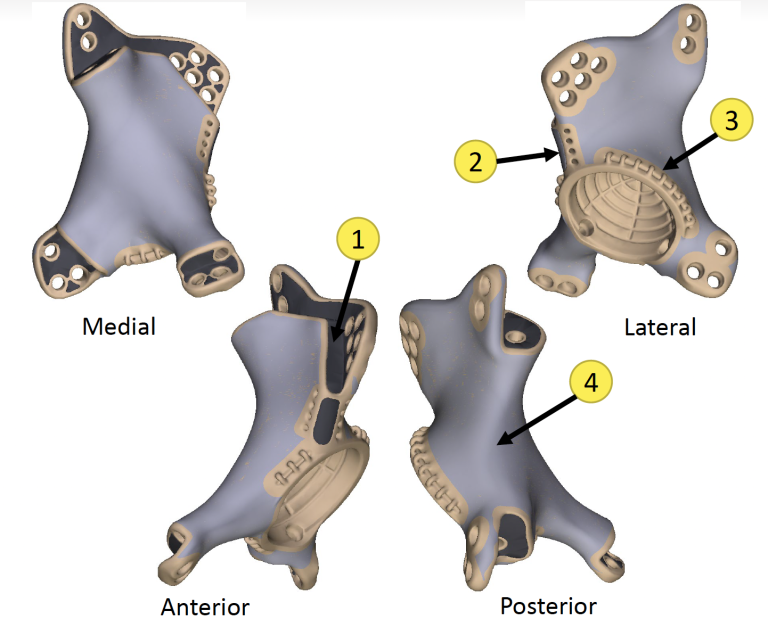
“This is a huge advancement,” says Dr. Werier. “It’s a very powerful technology.”
The implant itself represents a remarkable convergence of medicine and technological innovation. Constructed from a porous metal, the implant was designed to allow Tracy’s own bone to integrate with it over time. The device was also silver-coated to help reduce the risk of infection, one of the major challenges associated with this type of complex orthopedic reconstruction.
In February of 2024, a multidisciplinary team undertook Tracy’s 16-hour surgery. After completely removing the tumour, surgeons implanted her new 3D pelvis – and it was a success.
“The guides created during the design process help ensure the implant fits exactly as planned,” says Dr. Werier. “In Tracy’s case, the fit was perfect.”
Despite U.S. connection, the best care was in Ottawa
While the technology itself is remarkable, Tracy’s story also highlights another critical issue: access.
As an American who spent much of her life in the U.S., she knows all too well what her treatment journey could have looked like south of the border. Pursuing specialized cancer care and custom implant reconstruction in the U.S. could have involved a significant financial burden, complicated insurance challenges, and potentially lengthy periods away from her family.
She consulted experts on both sides of the border and beyond and was advised to stay right here at home. Instead of a Plan B, she received world-class care in her own community.
“I’m so thankful this happened while I was living in Ottawa,” says Tracy. “When I was diagnosed, I reached out to my contacts and was told I was in the best place possible. If I had needed to travel to another major centre or back to the U.S., it would have bankrupted me.”
‘We’re only beginning to see what’s possible’
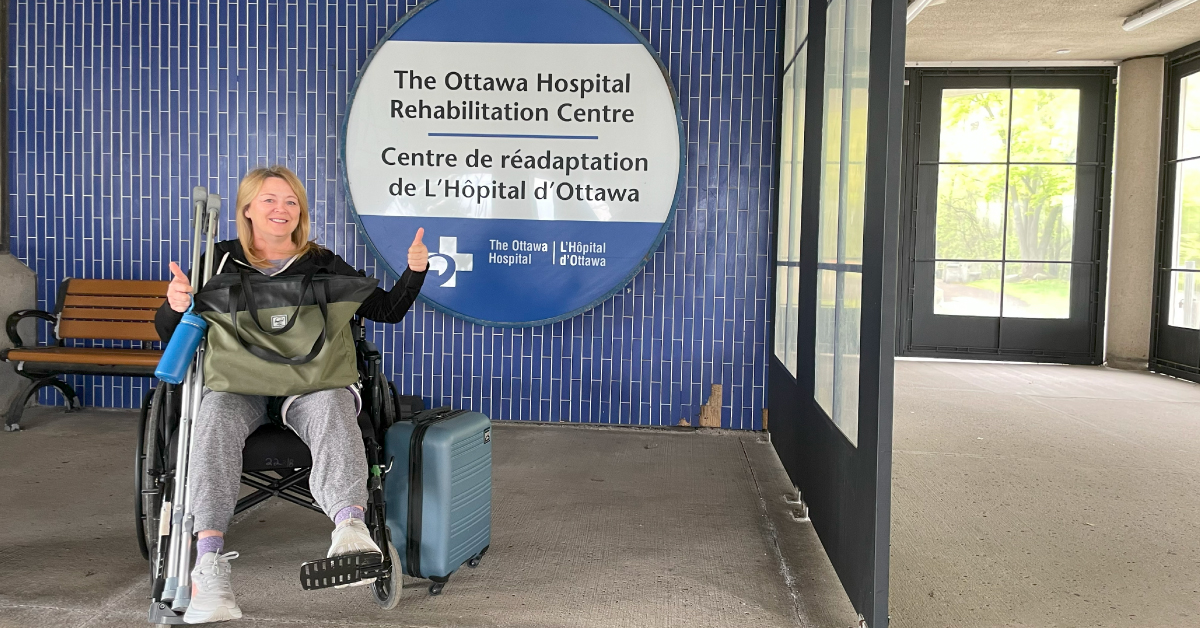
Following surgery, Tracy spent six weeks in hospital before moving to The Ottawa Hospital Rehabilitation Centre. There, an interdisciplinary team helped her regain mobility and independence.
The recovery was challenging, but the results have been transformative. Tracy progressed from relying almost entirely on a wheelchair to walking with crutches, and she continues to improve through physiotherapy and swimming. Now, she can walk short distances completely unassisted.
Today, Tracy has returned to the work she loves, editing some of the most popular television productions and teaching in Algonquin College’s film program. Regular follow-up scans continue to show positive results, and she remains focused on her recovery.
For someone whose career has been built around storytelling, Tracy’s experience delivers a compelling message about the future of healthcare.
Her outcome was made possible not only by skilled clinicians, but by the integration of advanced imaging, surgical planning, materials science and the latest technology. Together, they created a personalized solution for a highly complex cancer – one that allowed her to stay close to her family and continue building the life and career she loves.
For Dr. Werier, that’s exactly why these innovations matter.
“This technology gives patients opportunities that simply didn’t exist before,” he says. “And we’re only beginning to see what’s possible.”