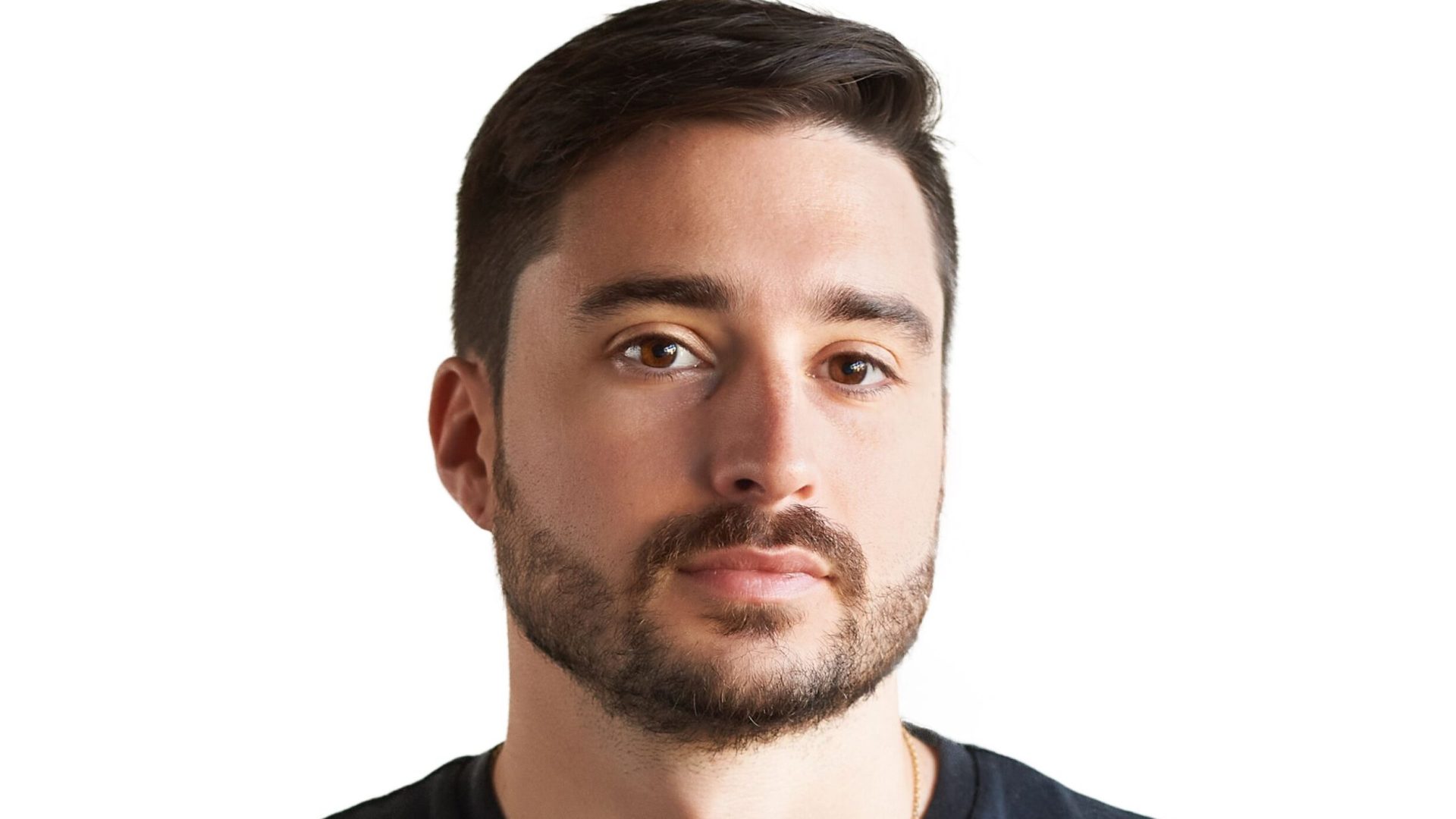
When Pablo Srugo started out as an entrepreneur, B2B SaaS was all anyone could talk about. Now, as a venture capitalist, he said that model is becoming obsolete as artificial intelligence changes the game.
Get Instant Access to This Article
Become an Ottawa Business Journal Insider and get immediate access to all of our Insider-only content and much more.
When Pablo Srugo started out as an entrepreneur, B2B SaaS was all anyone could talk about. Now, as a venture capitalist, he said that model is becoming obsolete as artificial intelligence changes the game.
Srugo hit the scene in 2012, when he launched his first startup, a tech-enabled marketplace called MyTutor. A few years later, he co-launched Gymtrack, a company in the wearable fitness tracker space, where he learned what it takes to get VC backing.
When he left in 2017 with the idea to start something new, he was instead pulled into the VC world and has been there ever since. For almost eight years, Srugo has been with Ottawa-based VC firm Mistral Venture Partners, where he is now a partner. The firm focuses on seed-stage software companies.
According to Srugo, the introduction of AI has changed the game for startup founders, but not enough of them are making the mindset changes needed to keep up.
In this instalment of Top of Mind in Tech, Srugo discusses what VCs look for in a startup, how Ottawa is keeping up with the competition, and why the B2B SaaS model is falling out of favour as AI takes over.
This transcript has been edited for length and clarity.
You’ve experienced both sides of the coin: being the person trying to get the investment from a VC and now being the VC yourself. What stands out to you about being on the other side as someone who started as an entrepreneur?
There are so many things that you learn. Every year, you learn something new. At a high level, there are two things that I’ve really come to focus on: the team and the value proposition. Especially where we invest, pre-seed and seed, those really early stages. Those are the things that are pretty definitive.
The team, obviously, is the thing that you’re betting on at the core, and hopefully that doesn’t change. Especially with co-founders, you really don’t want that to change. It’s almost the only constant, and it really is that driver, ultimately, of execution. The team (is made up of) the people who execute the operation. If you get that wrong, it’s almost impossible to make something happen.
The second thing that is critical is the value proposition. A lot of what we’ve been focusing on are people solving a No. 1 or No. 2 priority problem for their customer, whoever and whatever that is. That will give them that market pull and the velocity they need to build a venture scale business. You can build a business solving a No. 5 or 6 priority problem, but it’s unlikely to be a venture business. Things just don’t move fast enough.
You started in the VC space around 2018 and a lot has happened since then, including the pandemic and now trade tensions. What’s different about being a venture capitalist now versus when you started?
The biggest change, honestly, is everything that’s happening with GenAI (generative artificial intelligence) and the reality is that venture capital is perfectly suited for these kinds of disruptive tech shifts.
When I joined in 2018, the last wave was really mobile, social and cloud. Cloud started in 2008 or so and a lot of B2B SaaS companies were born in the early 2010s, and certainly all of the biggest mobile companies were born between 2008 and 2012. That’s the window. The point I’m making is that by the time I started investing, we were at the tail-end of B2B SaaS. At that point, a lot of the opportunities that were low-hanging fruit were all gone and the leftovers are in the niches and crevices. You really had to hunt down into a specific vertical and sub-segment to find something that nobody had really tapped into yet.
Post-GenAI, that has changed dramatically. This new tech shift has created and unlocked so many opportunities to add insane levels of value, that all of a sudden there are so many ways to create value that will lead to the market pull that then becomes product market fit. The biggest question these days is actually around competition. Can you execute faster than everybody else? The idea, many times, is a no-brainer. So the question is, who’s going to actually win that market and win that market faster than everybody else?
As someone in the Ottawa market, how would you say Ottawa entrepreneurs are doing in this space in terms of their competitiveness?
I love Ottawa and having been in Toronto and Montreal, I feel like Ottawa punches above its weight. The reality is, Ottawa is a smaller city. It’s a smaller market. There’s going to be less density of capital, less density of entrepreneurs, and unless the city can (multiply) its population size, you really can’t do anything about that. But what I’ve always found is that the quality of founders here, the determination and the focus, is honestly a lot higher. There’s a lot of noise in a lot of other markets.
When I was starting, it was harder to get a lot of the institutional startup knowledge without going to (global VC fund) 500 Startups, without going to (Y Combinator), without going to the Bay Area. There’s still a lot of value, to be clear, in those things today, but a lot of that knowledge — even just the spread of the internet since then means there’s so much more content now. There’s so much information. So for the founders who are all-in and hyper-focused, they can certainly compete head-to-head.
I’ve spoken to many founders who come not from New York or not from Silicon Valley about what it’s like when they move to those places. On the one hand, they do feel differences in terms of excitement and speed, but the other thing that becomes clear is that there is no difference in talent. It actually turns out, if you’re a hard-working, determined, smart founder operating at the edge and you go in, you’ll find that these are your peers. There is nothing special or different there about the people. We have everything that we need (in Ottawa) to build the next Shopify here. And there are many companies that are on that track.
You work primarily with software companies. Is there any particular challenge or trend that you have your eye on right now?
I think a lot of founders are still stuck in the B2B SaaS mindset. There’s this new emerging category coming out called AI-enabled services. You think accounting, law, finance, maybe even cybersecurity. (Traditionally), founders build tech and tech only, then sell that tech as a product, a tool. But ultimately, to get the value out, the customer has got to go and use the thing. A lot of founders are still sticking in that old mindset of building the product and putting it in customers’ hands and customers will find out how to get value from it.
Some new founders, if we take law as an example, are rebuilding a law firm, but it’s AI-first. So all of a sudden, the cost is way less, the timing is way faster and all these sorts of things improve as a result of that. There’s another company that’s rebuilding the managed service provider space, which is effectively outsourced cybersecurity. They’re building an AI-first MSP that does all the work for you. It can scale faster, it can deliver faster and it can do more with less.
That’s a whole new space that is very different from B2B SaaS. It allows companies to grow a lot faster because they deliver the entire outcome instead of just the tool. But I think many founders are still not seeing this. They prefer the 90 per cent gross margins that B2B SaaS and selling AI as a product offers. But they might miss out on the exceptional speed that delivering full outcomes as a service offers.