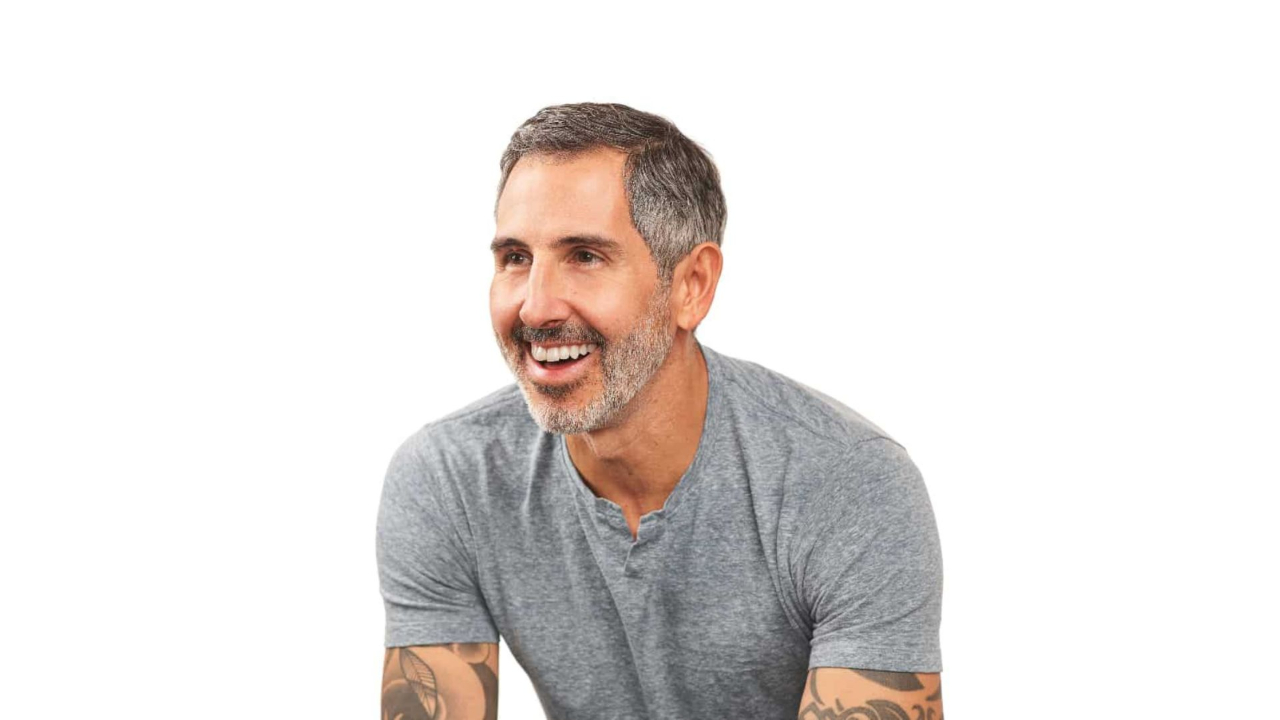
Abdirahman Qalinle spent three days staring at a software bug that just wouldn’t quit: his fashion AI platform kept trapping users in an endless onboard loop. “There were times where I just went to sleep,” he recalls. “I’d give up for like three days.” Then he’d take a cold shower, wake himself up and get […]
Get Instant Access to This Article
Become an Ottawa Business Journal Insider and get immediate access to all of our Insider-only content and much more.
Abdirahman Qalinle spent three days staring at a software bug that just wouldn’t quit: his fashion AI platform kept trapping users in an endless onboard loop.
“There were times where I just went to sleep,” he recalls. “I’d give up for like three days.”
Then he’d take a cold shower, wake himself up and get back to it. “I’m not getting paid for it, nothing. I’m putting money into it. But it was rewarding seeing something that I’ve created.”
Now, four months into building Fitzstyles, Qalinle works alone. He has no co-founder, no employees and no funding. He has incorporated the business, taught himself to build the entire platform and, most recently, moved everything to the cloud. Just a few days ago, he uploaded the AI component. Brands in Europe and America are talking to him. He has people in Dubai ready to launch.
Qalinle is just one example of how Ottawa has quietly become Canada’s capital for solo tech founders. Local entrepreneurs are building companies in fashion, AI, space-tech, gaming, web platforms and event technology, without the teams that many venture capitalists prefer. In fact, their success challenges the orthodoxy about what it takes to build a startup. Data shows solo founders survive longer and generate higher revenue per employee than co-founded teams, according to Equidam, yet they receive only 17 per cent of VC funding, despite representing nearly 40 per cent of all startups, according to a Carta Report on Private Markets.
The solo grind
Qalinle studied cybersecurity at Willis College for two years. That’s where he learned about servers, networks and security from the ground up. He started experimenting to see what he could build back in August, after his fiancée travelled overseas and couldn’t find any clothes she liked.
“She was texting me back and forth for hours,” he says. “I was here in Ottawa on my computer looking up local clothing stores and texting her directions and I thought, surely there’s an easier way to do this.”
And so he started building Fitzstyles. “At first it was just to see what I can do and see where it goes,” he says. “And then, after a bit, when it was just coming together, the ideas just kept evolving.”
The platform he’s building combines buying and selling fashion with AI recommendations. But it’s not easy. He says every step forward takes hours of troubleshooting. Authentication loops, the checkout system, return policies, profile interfaces and even financial tokenization all require his unpaid labour.
“Everything that I built and designed, getting it to work, was always an extra three hours of trying to figure it out,” he says. He had to pivot his entire approach three weeks into the build, which set him back another month. Now, he works on the brand interface, the user interface and the machine learning simultaneously.
He already knows exactly where he’s heading. “By the time I decided this could be a commercial thing, I knew where this is going to be 10 years from now. I know the type of organization it’s going to be, the type of company, the type of collaborations we can have.”
He plans to keep the headquarters in Ottawa. He’s looking for mentorship and plans to connect with Invest Ottawa’s network at some point.
Breaking records alone
Rob Imbeault co-founded Ottawa’s Assent Compliance, which became Assent, one of Canada’s tech unicorns. This time, he’s building Backboard, and doing it solo. The AI memory company achieved 90.1 per cent accuracy on LoCoMo, the recognized benchmark for measuring long-term contextual memory in AI models. That’s the highest score ever recorded, making Ottawa home to the best memory system in AI anywhere in the world.
“It began as a small idea,” Imbeault says. “I can only sit on a beach for so long and I’m a builder at heart.” The project soon snowballed. “We ended up finding something important, an unsolved problem. We thought to ourselves, everyone else is doing it wrong. So let’s do it our way and we ended up being the best in the world.”
Imbeault says the biggest challenge to being a solo founder is having no one to bounce ideas off of. At Assent, he could message his co-founders anytime.
“Everyone holds you accountable,” he explains. “I was the guy who had to build faster and others handled sales and leads. That pressure helped.”
He admits he’s not completely alone, thanks to his experience with Assent. “I have five unicorn founder friends and I can text them and be like, is this it?” He’s now working with Queen’s University to run additional benchmarks and expects to break his own record soon.
Imbeault plans to bring on a co-founder focused on sales within months. He’s also preparing to announce institutional funding from four Canadian VCs.
“I haven’t really had a great experience with Canadian VCs, but this past couple of months I’ve met some excellent ones,” he says. Invest Ottawa celebrated the launch of Backboard in 2024 and VCs started showing interest.
Turning pain into business
Anya Geerts spent three months organizing her friend’s bachelorette party. Even though she was on maternity leave, she spent every free moment planning the event. The chosen venue had beautiful pictures online. The patio looked amazing. But when the party of women arrived, having not been out in three years because of COVID and babies, the venue seated them on floor cushions.
“We were sitting on the floor with short skirts and high heels,” Geerts remembers. “It was really, really awkward.”
They asked to move inside, but there was only one room available where a German techno DJ was blasting house music. Most of the guests left and the experience prompted Geerts to begin researching the entire industry. She found many people had experienced similar issues, especially since restaurants and hotels didn’t have a system for tracking details and everything was being done through email. She realized there was a problem on both sides.
And so Geerts founded Paloma, an event booking app to help venues and planners manage bookings from start to finish. Beta customers reported booking increases of 75 per cent. Geerts landed the first four customers through warm introductions and the rest with cold calling. She also walked into venues and talked to people. At a conference in the U.S., she walked up to a hospitality celebrity.
“My knees were banging together,” she laughs. “He said his organization had this exact same problem and thanks to that we onboarded a fairly prestigious restaurant in the U.S. within the first two weeks of exiting beta.”
Geerts credits Ottawa’s unique tech ecosystem with her success.
“People are so generous with their time and their knowledge,” she says. She eventually brought on a co-founder, her husband, when things got too technical.
The hardest part to give up
Matt Holland founded Field Effect alone in 2020 after nearly a decade as co-founder of Linchpin Labs, where he and another co-founder didn’t always see eye-to-eye.
“That has a trickle-down effect to everybody else in the company, if mom and dad aren’t getting along,” he says. “The biggest advantage of being a solo founder is it gives me the ability to set the direction and drive the direction without debate. Once it’s decided, it’s much easier to implement.”
Field Effect remained 100 per cent bootstrapped until reaching approximately $20 million in revenue. The company grew 75 per cent year over year. Holland raised $34.5 million in 2022 and the company now employs 175 people.
Operations was the hardest role for Holland to delegate.
“As a founder, there’s certain cultural expectations or operating values that you think are important,” he says. “Attempting to delegate that a couple of times and it not working out definitely made that the most difficult thing.”
Everything changed when he found the right chief operating officer two years ago.
“It’s freed up a lot of time for me,” he says. “It’s been liberating having someone I trust to run operations. It’s changed my day-to-day and it’s been fantastic.”
Asked whether people should get co-founders, Holland is blunt. “If you’re looking to start a company and if you feel like you need co-founders, I would probably question whether you should even start a company.
“Most days are terrible and not fun and there are a lot of sleepless nights,” he explains. “If you can’t look inward and consider the journey to be likely a lonely one and a challenging one, then you probably shouldn’t start a company.”
The data tell a different story
The number of solo-founded startups has more than doubled from 17 per cent of all new startups a decade ago to 35 per cent in 2024, according to Carta’s Founder Ownership Report. Yet venture capitalists strongly prefer founding teams — 80 per cent of VC funding goes to multi-founder companies.
But VCs may have it backwards. Research from Equidam’s H1 2025 Startup Valuation Delta report shows that 42 per cent of companies with $1 million or more in annual revenue are solo-founded. That makes solo founders the largest segment among profitable companies.
Academic research backs this up. Jason Greenberg of NYU Stern and Ethan Mollick of Wharton analyzed 3,526 Kickstarter-funded businesses. They found solo founders are 54 per cent less likely to dissolve or suspend their business than three-person teams, and 41 per cent less likely than two-person teams.
Ottawa exemplifies this paradox. The city scores poorly for access to capital, according to Invest Ottawa, despite having the highest concentration of tech workers in North America.
Ottawa’s proven track record
Ewan Reid founded Mission Control Space Services alone in 2015. The space-tech company now operates an 8,200-square-foot facility with laboratories and a lunar terrain simulator. Mission Control became the first organization in the world to deploy deep-learning AI in lunar orbit and works with NASA, the Canadian Space Agency and Dubai’s space program.
Craig Fitzpatrick founded PageCloud solo. The web platform company raised more than $11 million, including seed funding from Shopify CEO Tobi Lutke.
Nate Beachman built the mobile game Orna as a solo passion project in 2018. A Reddit post went viral and the location-based RPG took off. Beachman quit his day job and formalized Northern Forge Studios in 2021. The game has nearly two million downloads.
One reason that Ottawa stands out as a solo-founder hub is the cost of living. Ottawa’s benchmark home price sits at $626,200, compared to Toronto’s $1,009,400, according to Invest Ottawa. Developer salaries are lower as well, meaning annual savings in Ottawa versus Toronto total $60,000 to $90,000 when accounting for salaries, office space and housing.
These statistics aren’t why solo founders like Abdirahman Qalinle are staying in Ottawa, however. “I was born here, this is my home,” he says.
He has the checkout system for Fitzstyles almost done and the brand interface is nearly complete. The AI just went live.
“Right now, it’s going to be the reactive stage for a bit, but I want it to be predictive,” he explains, the passion for his project clear in his voice. “To anticipate what you want to buy. You just say, ‘Hey, I’ve got this going on’ and it’s already got your measurements, everything, it knows what you look good in.
“It’s my obligation,” he says. “Nobody’s doing it and it’s a niche angle from which we can corner the market. Nobody’s doing it like this.”
Ottawa continues to produce world-class founders like Qalinle, Imbeault, Geerts and Holland. None of them conforms to the Silicon Valley team-building orthodoxy. The city’s combination of deep tech talent, lower costs and culture of celebrating bootstrap founders creates conditions uniquely suited for entrepreneurs building alone. Whether they’re debugging endless loops at 2 a.m., setting world records with AI or hassling celebrity event planners at conferences, Ottawa’s solo founders are proving you don’t need a co-founder to build something big.