Ottawa Senators customizing fan experiences to boost attendance in new season

0

Letting fans and corporate groups customize their experiences at Ottawa Senators games is the latest pitch Sens management is making to attract bigger crowds to the Canadian Tire Centre this season, according to a recent panel event with the team’s front office.

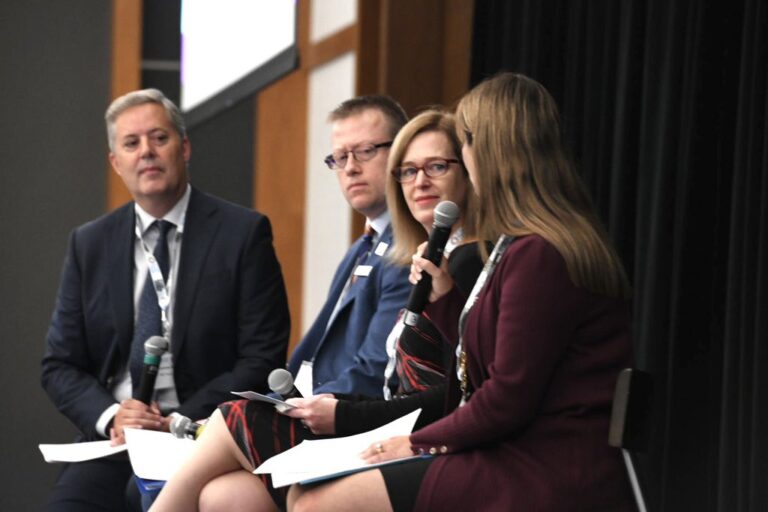
The latest edition of the Ottawa Board of Trade and Ottawa Business Journal’s Local Breakfast Series saw Ottawa Senators general manager Pierre Dorion, former defenceman Chris Phillips, chief revenue officer Mark Bonneau and Danielle Robinson, the president and CEO of the Ottawa Senators Foundation, speak to a group of local business leaders and community members at the Kanata Golf and Country Club on Tuesday.

Attendance has been a struggle for the Sens in recent seasons, hitting a 22-year low in 2018-19. At the Local Breakfast Series, the organization’s reps touted plans to improve the local club’s marketing game through customization and brand awareness during what’s being called a “transitional year.”

Dorion had one ask for the panel’s attendees as the team looks to bounce back from its last-place finish in the previous season: “patience.”

According to Bonneau, the organization is “focused on creating (an) all-inclusive experience between networking, culinary and dining out,” and has been working on this initiative for the last five years with the implementation of Club Bell, the Brookstreet Lounge and the Hard Rock Club and through this year’s partnership with The Royal Oak.

“It’s a one-stop shop (in terms of the event, food and connecting with others) when you buy your ticket, so it really is about transforming the business community and the customers’ experience at the Canadian Tire Centre,” Bonneau said. “It’s really about creating customized content and living inside the social ecosystem that we have.”

Bonneau

Bonneau gave the example of the “Omni Pass,” which allows fans and businesses to have different seats and suites depending on their goals, such as business development, employee rewards, team-building, networking and client appreciation.

“Essentially you create your program with us. Our marketing and sales teams are really not selling a commodity … there’s a lot more about customization and flexibility,” Bonneau said.

On the Foundation side, Robinson said there are a few new projects in the works, including extending the usual 50/50 draws beyond just game crowds.

Ottawa Senators customizing fan experiences to boost attendance in new season

0

Letting fans and corporate groups customize their experiences at Ottawa Senators games is the latest pitch Sens management is making to attract bigger crowds to the Canadian Tire Centre this season, according to a recent panel event with the team’s front office.

The latest edition of the Ottawa Board of Trade and Ottawa Business Journal’s Local Breakfast Series saw Ottawa Senators general manager Pierre Dorion, former defenceman Chris Phillips, chief revenue officer Mark Bonneau and Danielle Robinson, the president and CEO of the Ottawa Senators Foundation, speak to a group of local business leaders and community members at the Kanata Golf and Country Club on Tuesday.

Attendance has been a struggle for the Sens in recent seasons, hitting a 22-year low in 2018-19. At the Local Breakfast Series, the organization’s reps touted plans to improve the local club’s marketing game through customization and brand awareness during what’s being called a “transitional year.”

Dorion had one ask for the panel’s attendees as the team looks to bounce back from its last-place finish in the previous season: “patience.”

According to Bonneau, the organization is “focused on creating (an) all-inclusive experience between networking, culinary and dining out,” and has been working on this initiative for the last five years with the implementation of Club Bell, the Brookstreet Lounge and the Hard Rock Club and through this year’s partnership with The Royal Oak.

“It’s a one-stop shop (in terms of the event, food and connecting with others) when you buy your ticket, so it really is about transforming the business community and the customers’ experience at the Canadian Tire Centre,” Bonneau said. “It’s really about creating customized content and living inside the social ecosystem that we have.”

Bonneau

Bonneau gave the example of the “Omni Pass,” which allows fans and businesses to have different seats and suites depending on their goals, such as business development, employee rewards, team-building, networking and client appreciation.

“Essentially you create your program with us. Our marketing and sales teams are really not selling a commodity … there’s a lot more about customization and flexibility,” Bonneau said.

On the Foundation side, Robinson said there are a few new projects in the works, including extending the usual 50/50 draws beyond just game crowds.

Engage your employees if you want to keep them, inaugural Ottawa Talent Summit hears

0

With unemployment in the National Capital Region near a record low and competition for skilled labour more fierce than ever in many sectors, employers need to find ways to create a “bigger sense of belonging” among workers, an Ottawa HR expert says. 

Finding the right people in a tight talent market is a major challenge for many companies, says James Baker, the co-founder and CEO of Ottawa-based executive search firm Keynote Group. Employers need to be “present in the eyes of the candidate market,” he said, by clearly communicating what they are about, what they stand for and what it is like to work for them. 

“Organizations are responsible for ensuring that the right messages are getting out there and they are controlling the narrative, to a certain degree, so that they are being properly understood by potential candidates or employees,” Baker explained at the inaugural Ottawa Talent Summit, an event hosted by the Ottawa Board of Trade and the Ottawa Business Journal at Kanata’s Brookstreet Hotel on Sept. 23 and 24.

That requires a concerted effort that goes beyond just posting job openings and instead convinces potential new hires that they will have a clear sense of mission at a new employer, he added.

“It is important for HR professionals, recruitment professionals to always consider the marketing and the communication of the values and the purpose of an organization,” Baker said. “It’s not about a one-time instance of posting a job and waiting for somebody to apply. It’s an ongoing, potentially, marketing challenge you’re taking on.

“Getting the right people in, so that they’re engaged and (they’ve) bought into your purpose and your vision, becomes crucial because there’s that bigger sense of belonging.”

Executive coach Craig Dowden, author of the book Do Good to Lead Well: The Science and Practice of Positive Leadership, echoed that sentiment.

“Everyone talks about the war for top talent and how do we recruit the best and the brightest,” he said in an interview with OBJ. “(Workers) are looking for an organization with a purpose and they are looking for an organization with a clear and powerful ‘why.’ And they want to be there not just to do a job. It’s really to get behind a movement, if you will. And people are looking for how to tap into their talents, be at their best, and leaders are essential around that.”

Representatives from a range of industries joined together at the two-day event to discuss a common interest: how to recruit and retain the best employees and make sure the National Capital Region keeps pace in the global race for top-notch talent. 

‘Important first step’

Baker said the event shows that the region’s business leaders are taking the issue seriously.

“It was the first time that we really managed to get all those people around the table, in one room for a discussion,” said Baker, who co-chairs the Ottawa Board of Trade’s talent committee and was a keynote speaker on Sept. 24. 

“So, I think that’s an important first step because we know from the Business Growth Survey that talent is a fundamental concern, a fundamental priority for every organization in the city. So that for me was the key objective and the upside, on top of that, is that there was a lot of good information that we shared.”

The event kicked off on Sept. 23 with the 13th annual Employees’ Choice Awards, which recognize businesses with the best results in an employee engagement survey conducted by The Ottawa Business Journal and the Board of Trade. 

For the first time, the top 10 recipients were ranked, with security technology firm Solink coming in at No. 1. It’s the third year in a row that Solink has been named an ECA recipient. 

Following Solink were Rewind, Alphabet Creative, InGenius Software, GGFL, NewFound Recruiting, Brookstreet Hotel and The Marshes Golf Club, BriteSky Technologies, Syntronic Research and Development Canada and Mindwire Systems. 

Dowden, who presented a keynote address during the summit’s opening night, said he was familiar with some of the award-winning companies and their work. 

“I think what was really interesting about each of the award winners is how they really had something above and beyond their individual bottom line, like this is almost like a family, this is a mission that we pursue,” he explained. “And I think that’s so important because sometimes we can lose that in the pace of work.”

Baker said he hopes the event motivates different industries and organizations in Ottawa-Gatineau to come together more often to discuss pressing issues facing the region’s employers. 

“For us, the next step is to not make this just a one-time event,” he said. “There should be ongoing conversations about how we can work collectively to get more people to consider Ottawa home ​– the place they work, the place they live, the place that they play as well.”

Op-ed: Our path to the Capital Pride parade

0

This Sunday, we are marching. Together with more than 125 of my colleagues, we are marching in support of the LGBTQ2+ communities in Canada, in Ottawa and at Export Development Canada.

It might seem like a small gesture, but taking part in this weekend’s Capital Pride Festival parade represents the apex of an ambitious year that’s seen diversity and inclusion reach new heights at one of the National Capital Region’s largest employers.

Our path to the pride parade has taken four years to travel and, like many similar journeys, our momentum was stop-and-start. At every point along the way, we’ve learned a lot about how an organization can become one that’s truly open and welcoming to the LGBTQ2+ community.

The first step along this path was in 2015 when EDC created a committee to help address four pillars of equity – women, Indigenous people, those with disabilities and visible minorities. 

At the time, there was very limited dialogue in our offices around issues related to diversity and inclusion. If nothing else, this move at least signaled an understanding within the organization of the importance of issues facing minorities and traditionally underrepresented people.

Still, a small group of employees – myself included – were experiencing gaps specifically affecting the LGBTQ2+ community. It was safe to assume there were people inside the building who didn’t feel comfortable and safe bringing their whole selves to work. 

Support from the ground up

That’s when members of the LGBTQ2+ community and our allies decided to launch a grassroots resource group.

Because of the limited dialogue, we really didn’t have much visibility on the experiences of the people we wanted to reach. But our objective was clear: provide LGBTQ2+ employees a safe environment where each is free to express their thoughts, values, opinions and identity without any fear.

During the nascent years of the resource group, members were sometimes told being gay “isn’t a big deal,” or asked whether the organization really “needs this.” All I could think of was how difficult those questions and statements could be for someone who was feeling vulnerable. 

Personally, my experience coming out as LGBTQ2+ was full of anguish and dread. Although I felt an overwhelming feeling of welcoming when I eventually did come out to my EDC colleagues during my first year here, there was undoubtedly room to make the process leading up to it easier. 

So, the resource group set about building and maintaining an environment where every member of the community, regardless of their status, could feel as welcome and safe as I did after coming out. Part of that work included promoting visibility to really make diversity, inclusion and LGBTQ2+ topics something everyone could talk about. Realistically, no one will know whether there are problems and what those problems are, if no one’s talking.

We also reviewed the organization’s human resource policies early on and successfully lobbied to have them updated to include protection against discrimination and harassment based on gender identity and sexuality.

Our resources were limited, but we did what we could, sharing our stories through internal blogs and talks to employees in the hopes of letting anyone who felt they had to hide, lie or conform know they had an outlet and support network. 

To further bridge our relatively small group with the wider EDC community, we hosted a 5 à 7 social for all employees in 2016. Later that year, we flew a pride flag throughout Capital Pride Week.

There was no question we were gaining visibility, but it wasn’t enough.

Buy-in from leadership

Despite our intentions, we didn’t feel our group was reaching everyone we wanted; any momentum we experienced after launching had waned. When we went back to the drawing board to understand how to move the dial more on LGBTQ2+ topics, we realized we needed more uptake from corporate leaders, particularly those at the very top. 

We needed them with pitch in with their voices and their actions. 

So, starting last year, the resource group began actively engaging the more senior people at the organization. Having a grassroots group was fundamental to our success, but the reality is, to make real changes you need support, resources, champions and influencers. 

I have to say, proudly, it didn’t take much convincing and our milestones are quickly piling up. 

That 5 à 7 is now an annual event, and it’s also become tradition to raise the pride flag outside our headquarters on Slater Street during Pride Week. Both offer clear reminders to everyone walking into EDC that they’re entering a safe and welcoming place, where all forms of sexual and gender expression are embraced. 

Last year, we started giving a short presentation every month to new hires, letting them know about EDC’s approach to diversity and inclusion and, importantly, letting LGBTQ2+ employees know about available resources and supports.

This year, we opened gender inclusive bathrooms with private showers and changing areas, and are close to publishing a learning module geared toward building awareness and outlining the knowledge necessary to promote a safe and open environment for EDC’s LGBTQ2+ community (something we hope will be replicated for broader diversity and inclusion projects).

What we’ve learned while travelling this path for four years is, yes, it takes a village. But not a homogenous group of villagers. In order to make a difference – to make a workplace truly open and inclusive – we needed people from all walks of life. 

The grassroots group of LGBTQ2+ employees took those difficult first steps. With support from a wider group of employees, our gait increased and we reached milestones faster. Now, with explicit encouragement and action from the most senior levels of the corporation, it feels like we’re at a gallop. 

Combining the bottom-up and top-down approaches has led us here, to a day where more than 125 employees – including the five core standing members of our LGBTQ2+ steering committee and three senior executives – get to march in Ottawa’s Pride parade. 

We get to be an example to other employers in Ottawa, showing that the more visible a corporation is in its belief about equal rights for everybody, the more inclusive they become. Because being inclusive of our diversities will have positive impacts in perpetuity.

Andrea Gardella is a senior economist at Export Development Canada and is a member of the steering committee of their LGBTQ2+ Resource Group.


Businesses bet on Vanier’s future as Montreal Road revitalization breaks ground

0

As the $50-million overhaul of Montreal Road gets underway, business leaders are looking ahead at how the major revitalization project can attract new businesses, shoppers and residents to Vanier.

With work scheduled to break ground in May, the four-year project running between North River Road and St. Laurent Boulevard includes new sewer and water lines, as well as unsightly hydro lines being buried below ground.

Most of the above-ground work will start next year and include the road being reduced from four lanes to three as well as the addition of bike lanes, larger sidewalks, public art, new community spaces and parks.

The head of the Vanier BIA says she hopes the dramatic facelift will prompt more entrepreneurs and business owners to consider making Montreal Road their home, diversifying the street’s retail offerings.

“The kinds of businesses that we currently see on Montreal Road aren’t exactly the mix we are hoping for – meaning that they are not the typical stores you would see on a traditional main street,” said Nathalie Carrier, executive director for the Vanier BIA. “There is no butcher, no baker, no candlestick maker. We are hoping that the changes will bring about new developments and certainly new businesses.”

For more than a decade, Vanier’s business leaders have worked to promote the neighbourhood’s affordable land prices, short distance to downtown and diverse population. Despite these efforts, Vanier has so far failed to see a wave of gentrification that’s reshaped other inner-city Ottawa neighbourhoods such as Hintonburg.

However, some local businesses are making long-term investments in the community with the belief that Vanier’s time has come.

In 2015, The Regional Group – an Ottawa-based property developer and manager – purchased and then revitalized a five-storey, 45,000-square-foot office building at 214 Montreal Rd., several blocks east of the Vanier Parkway.

“We saw Vanier’s proximity to downtown and knew it was only a matter of time before it was rejuvenated,” said Bernie Myers, senior vice-president of real property at The Regional Group.

While he concedes that four years of construction can be a long time for merchants and other businesses, Myers said he expects the project to pay long-term dividends.

“The city is wise enough to not just say they are going to put up a few planters and change the lights and call it renovated,” he said. “They are doing it right … having a great streetscape that will be more attractive to retailers and shops, and (creating) a more attractive community for people to live in.”

Some of Montreal Road’s current merchants echo those sentiments.

While Finnegan’s Pub owner Drew Dobson said he predicts that he will lose around 15 per cent of business during the revitalization project, he’s hopeful that his patrons will quickly return once work wraps up.

“Vanier is going to grow and prosper and you are going to see a positive outcome,” he said. “(The Montreal Road revitalization) is going to increase economic activity and it is going to clean the neighbourhood up.”

Ottawa’s Fastest Growing Companies: NewFound Recruiting eyes public sector expansion

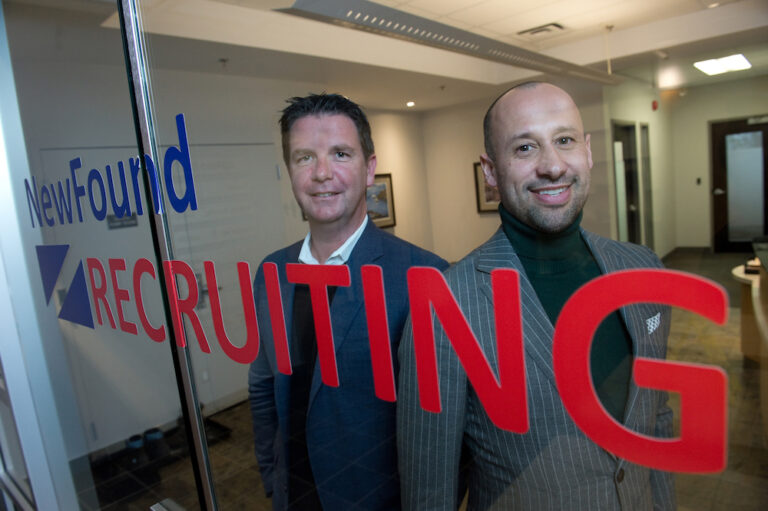
What do you do when you are told to find 180 qualified consultants in a month? That’s exactly the situation that Ottawa placement firm NewFound Recruiting faced last August.

According to company managing partner Steve Stanley, the key is to stay calm and have a plan.

“We had a number of on-site meetings and sat down as a team to organize our plan of action,” he says. “We understand how frequent communication and having a clear plan contribute to problem management and the successful execution of projects.”

Needless to say, the client’s needs were met, and it was hardly the first time NewFound had demonstrated its ability to tackle high-pressure situations. Finding the right placement for job-seekers comes down to working with their strengths, and NewFound turns that approach inward to harness the potential of its own employees.

“Each staff member leans on their strengths to allow us to succeed as a team,” Stanley explains. “We have an internal committee designated to develop strategy and solve issues both proactively and as they arise. They lean on more than 30 years of combined experience in the industry.”

The company ​– which was named one of OBJ’s fastest-growing companies in 2014 as well ​– has achieved impressive growth since its inception in 2011 to become one of Ottawa’s leading staffing firms.

NewFound Recruiting

Year founded: 2011

Local headcount: 22

Three-year revenue growth: 109.39%

2019 ranking: #9

Specializing in information technology, finance and administration for small and large organizations, NewFound recognizes the need to branch out and diversify its client pool. Comfortable with its foothold in the private sector, the company has its sights set on tapping into the region’s largest employer.

“We are now focusing on growing our government division,” Stanley says, adding the firm has placed more than 250 consultants involved in multimillion-dollar public-sector projects over the past six months.

Ottawa’s Fastest Growing Companies: ‘Scrappy’ Snappa changing graphic design

Good graphic design can help elevate a business to new heights ​– but it’s not always easy to create, even when the talent or inspiration is there.

Frustrated with the lack of effective tools to create such game-changing graphics, Christopher Gimmer set out to come up with his own. The result is Snappa, an online graphic design tool producer that has landed on this year’s list of OBJ’s fastest-growing companies.

“While I was creating content at our previous startup, I experienced several pain points when it came to creating visuals,” says Gimmer, who also co-founded local startups BootstrapBay and StockSnap.

He stumbled over problems such as unreliable freelancers, unco-operative graphic design tool interfaces and even things as trivial as gaining the usage rights for stock images found online. All are things that could hamper the creative process and subsequently stifle business growth, and all, Gimmer believed, are problems that could be solved with a single product.

He launched Snappa in 2015 as an “online graphic design tool for non-designers.” The venture took root very quickly. His motivation to solve a problem rather than simply create an alternative resonated with many other creative marketers and entrepreneurs who had been dealing with the same problems Snappa had set out to fix.

Today, Snappa services more than 100,000 monthly users, and more than 15 million images and designs have been created using the tool. Gimmer credits his success to a handful of core values, scrappiness being at the top of the list.

Snappa

Year founded: 2015

Local headcount: Four

Three-year revenue growth: 214.34%

2019 ranking: #7

“Since we’re a bootstrapped startup, we’ve had to be very scrappy to get to where we are,” he explains. “Everyone on our team is extremely resourceful and we always try to be creative when solving problems rather than throwing money at it.”

That approach is integral to why Snappa works, especially considering the company is run by a team of just four people, including Gimmer himself. In keeping with the firm’s theme of simplifying and streamlining the graphics process, his team tries not to micromanage each other and relies on its creativity and resilience to overcome obstacles.

“We don’t overcomplicate things,” Gimmer says. “We bake simplicity into our product, our marketing and the way we run our company.”

That approach appears to be working. Over the past two years, the company has added a number of product features to the service, introduced new subscription options and expanded the scope of products its software can handle.

Even though Snappa’s baseline functionality is free, more than 5,000 customers have purchased subscriptions to take advantage of the expanded features. As the service grows and offers more options to users, Gimmer says it won’t lose touch with its original goals.

“From the very beginning, we have focused on making Snappa super-fast and incredibly easy to use,” he says. “Our customers love the fact that they can spend less time making graphics and more time growing their business.”

Ottawa’s Fastest Growing Companies: Envolta’s cloud-first accounting approach on the money

For David DiNardo, the sky’s the limit.

The dynamic founder and owner of local cloud accounting company Envolta sees the reach of cloud technology as an ever-expanding frontier and is eager to keep exploring it.

“There’s no limit. Because of the cloud, we can do anything remotely,” DiNardo says. “We are going after businesses in other cities.”

Named to Hubdoc’s Top 50 North American Cloud Accountants list in 2018 in addition to earning a spot on OBJ’s fastest-growing companies list two years in a row, DiNardo’s firm is poised to remain on the forefront of technology-driven accounting, and not just in Ottawa. Envolta’s current focus lies in servicing small to medium-sized businesses across Canada.

“We are building a marketing and social media campaign to reach those markets,” DiNardo says, explaining that the medium of cloud technology allows it to provide accounting services and expertise to any business in Canada ​– services and expertise he believes sets his company apart from its competitors.

“All other accountants work more with CRA compliance, while we focus on that plus the advisory service we provide to help business owners actually understand their numbers,” he explains. “Our main focus is automating, eliminating administrative costs, making everything electronic to streamline the process and be able to provide this advisory work.”

Envolta

Year founded: 2014

Local headcount: 35

Three-year revenue growth: 400%

2019 ranking: #3

DiNardo, who owns the company outright, says staying ahead of the technology curve is key to thriving in a competitive industry.

“This is all very new to the market,” he notes. “We are really the pioneers with this new software, so the main challenge right now is that nobody is doing what we’re doing. As the leaders, we are developing our own processes.”

Envolta, which currently has 35 employees, recently added to its ranks through the acquisition of fellow Ottawa firm Picco Accounting. DiNardo is not putting an upper limit on the firm’s growth potential.

“We value tech-savvy accountants. We’ve been hiring a lot recently, and are looking to hire more all the time.”

DiNardo emphasizes the importance of finding the right people for the job and working with them to build a strong team. He says its team-first culture is one of the pillars of Envolta’s success – an ethic he says was born out of his years playing soccer at St. Bonaventure University, an NCAA Division I school in western New York.

“I always valued leadership, and I knew the importance of building a team,” he says. “Two minds are better than one, and a team is better than an individual.”

OBJ and the Ottawa Board of Trade will host a cocktail celebration for the 2019 Fastest Growing Companies on Thursday, May 23. For more info, please click here.

Op-ed: The role of Ottawa businesses in weathering the climate change storm

0

Last October, the UN Intergovernmental Panel on Climate Change issued a dire warning: Climate change could trigger “unprecedented” changes to life on this planet by the year 2030. Disasters such as droughts and flooding could lead to hundreds of thousands of deaths, the panel said.

Clearly, we can no longer ignore the impact of climate change on the environment.

Now, you might ask: What can I possibly do as the owner of a small or medium-sized business to make a truly meaningful difference in curbing the effects of climate change? 

Quite simply, a lot.

According to the Canada Revenue Agency, small and medium-sized enterprises make up nearly 98 per cent of all businesses in this country, employing two-thirds of Canada’s workforce.

The people behind these businesses fight every day to keep their companies relevant as we prepare for the economy of tomorrow. In doing so, they develop the knowledge, skills and talents necessary to combat climate change in an efficient way.

For too long, our key policy-makers have focused on broad strategies to curb greenhouse gas emissions at the expense of practical solutions. It’s time for all of us in this country to roll up our sleeves and do what we can as individuals – and individual businesses – to fight the devastating long-term effects of climate change.

Everyone, especially those in small businesses, can make a huge difference. We no longer have the luxury of time to argue if we can afford it. We are out of time to debate who should lead the way.

I am writing this as a representative of OpenConcept Consulting, a digital agency that has been delivering digital products in the Ottawa market for 20 years. 

Our company is a member of Carbon 613, a network of community organizations working to set targets to reduce carbon dioxide emissions. As a member of Carbon 613, each year we provide data on our usage of utilities such as hydro and natural gas and our air travel information. 

A Carbon 613 membership provides access to a carbon accounting tool that helps us measure our impact on the environment. Our belief is that by measuring that impact, we are already starting to change our mindset and behaviours.

As a member of Carbon 613, every year we have to measure our impact, buy offsets and set goals for reducing our carbon imprint for the following year. There are times when we end up performing activities that contribute to climate change – one relatable example is air travel. We measure our air travel impact with help from Carbon 613 in a shared document listing our flights, distance and number of people who travel. 

Once we know our air travel carbon footprint, we buy Canadian-based offsets through Less, a Bullfrog company. This money goes back into Canadian projects that are reducing our carbon footprint as a country. Less maintains that “offsetting is an imperfect solution to the complex issue of climate change” and is only offered as a last resort. 

OpenConcept is also part of a network of businesses looking to measure their social, environmental and cultural impact and find ways to enhance it. This network is known as the Certified Benefit Corporation community. 

By no means are we a perfect organization, doing all the right things for the environment 100 per cent of the time. We are human beings, and each day we make human mistakes. But through organizations such as Carbon 613 and the B-Corp network, we are making a sincere effort to be a force for positive change.

I am not proposing that we as small business entrepreneurs need to be perfect, but I am suggesting we need to strive for it. If we all start believing we have a role to play in reducing climate change, then this mindset is the fuel for taking action. 

The impact of climate change on our future lives is too big, too urgent and too relevant for us to ignore. At this stage, it is much bigger than each individual, each business and (dare I say it) each government. Only if we work together, using our collective energy and expertise, can we do something that will change this trend within the next decade. 

As Margaret Mead said: “Never doubt that a small group of thoughtful, committed citizens can change the world; indeed, it’s the only thing that ever has.”

Shalini Nagrani is the general manager of OpenConcept Consulting and a part-time student pursuing her master’s degree in psychology. 

Tech demos lead Ottawa firms’ talent blitz at Discover TechNATA

0

Ottawa’s talent-hungry tech sector gathered once again for this year’s Discover TechNATA event on Tuesday morning, with a sizeable turnout for Ottawa’s biggest technology expo and career fair.

The annual event, which this year opened with the Women in Communications and Technology’s Breaking Barriers panel on diversity and inclusion, presents companies in Ottawa with arguably their best chance to sample local talent and scoop up qualified employees who are just entering the market or perhaps just looking for a chance.

More than 80 companies representing the Kanata North Technology Park and Ottawa organizations from further afield vied for the attention of some 2,500 attendees, many of whom were at Discover TechNATA with the explicit goal of networking and finding future job opportunities, as evidenced by the stacks of resumes piled on most booths by the end of the day.

So, how do you stand out and attract fresh blood for your brand? Every exhibitor had their own unique way of achieving it, but there was no shortage of fun and unusual tactics in play.

technata

‘Candy bribes’

“Lots of booths with candy bribes!” quipped Veronica Farmer, the director of operations at the Kanata North Business Association. Indeed, a number of exhibitors – such as Fidus Systems and Entrust Datacard – offered various snacks, refreshments and swag-bags to prospective talent.

You.i TV – which has run a booth at Discover TechNATA every year since the event’s inception in 2016 – had a popcorn machine running and handed out flashy reusable water containers.

”We are in growth mode right now,” said Solink business development specialist Anthony Moussignac in between taking down job candidates’ contact info on a tablet and offering them donuts from a country fair-style booth. “There’s a ton of talent in this city. The thing we want to do here at TechNATA is to acquire a little bit more of it … We want to bring people who are here and who have learned here, to learn from them.”

Solink

Tech demos

Fourteen companies demoed their new offerings on Discover TechNATA’s floor and competed against one another for the title of Serious Tech Lives Here Coolest Tech Demo. Solink won the competition with its AI-powered video software product, which integrates point-of-sale systems with security cameras to capture analytics for customers in the retail and restaurant industries.

GBatteries showcased a new charging protocol technology. Its demo featured an over-the-counter battery pack upgraded with this technology, which in just roughly 10  minutes charged a power tool that normally takes more than an hour to fully charge.

“Our mission as a company is to accelerate the global mass-adoption of electric vehicles,” said GBatteries co-founder and chief commercial officer Tim Sherstyuk. He explained that the company’s technology also improves overall battery life.

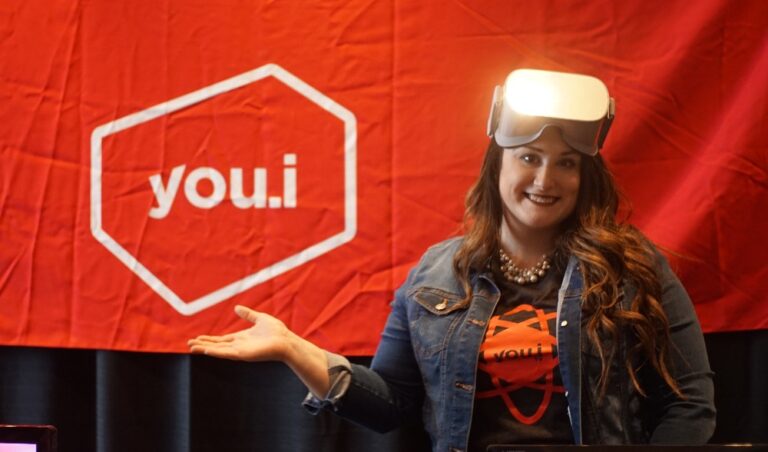
Over at You.i TV’s table event-goers were encouraged to don VR sets to road-test their app, which You.i TV talent advisor Kylie Hurst described as “a virtual living room.”

“You’re watching your show, and you can actually interact with the ads, which are posters on the wall.”

The demos were not solely there just to wow and entertain. They presented tangible examples for prospective employees interested in the exhibit companies.

As Hurst explained, You.i’s demo showcased the React Native technology that its future software developers would need to be familiar with. CGI’s demo – an interactive robot capable of analyzing human emotions using photos – outlined its own appetite for cybernetics specialists and AI developers.

If the exciting tech on display in Canada’s largest research park wasn’t enough to entice prospective talent about a career in local tech – well, there’s always a pile of swag and sweets to fall back on.