Ottawa’s industrial real estate market is experiencing a “push and pull” as increased defence spending fuels new demand while economic uncertainty is still dampening activity, brokers say. The nation’s capital is one of the tightest industrial leasing markets in Canada, with an availability rate of 4.2 per cent in the third quarter, CBRE said last […]
Get Instant Access to This Article
Become an Ottawa Business Journal Insider and get immediate access to all of our Insider-only content and much more.
Ottawa’s industrial real estate market is experiencing a “push and pull” as increased defence spending fuels new demand while economic uncertainty is still dampening activity, brokers say.
The nation’s capital is one of the tightest industrial leasing markets in Canada, with an availability rate of 4.2 per cent in the third quarter, CBRE said last week. That’s third-lowest among the 11 major cities the brokerage surveys, behind Winnipeg at 3.1 per cent and Calgary at 3.6 per cent.
Still, the availability rate of industrial space — which factors in both empty space and real estate that will soon hit the market — has nearly doubled in the past three years as new supply has been added to the city’s inventory and users look to cut expenses by downsizing or staying where they are.
Steve Piercey, a senior vice-president at CBRE’s Ottawa office who specializes in brokering industrial deals, says he’s still bullish on the long-term future of the city’s industrial sector.
With federal defence spending set to rise from the current $75 billion annually to more than $95 billion by 2030, companies are touring potential sites for factories, R&D facilities and warehouses in the National Capital Region as demand for military technology is poised to soar.
Piercey said landlords are seeing “everything from multinationals and nationals to local startups” kicking the tires on any large property that has space for lease.
But despite all the touring, no major contracts have been finalized yet.
“What we’re seeing right now is kind of a contrasting situation,” Piercey said. “We’re seeing some user groups that have delayed decisions because of what’s happening on tariffs, et cetera, and then we’re seeing a very robust level of activity coming in from the defence spending.”
Matt Shackell, vice-president of Ottawa-based brokerage Lennard Commercial Realty, said he’s also “seeing a lot more activity” from users in the defence industry that are thinking about entering the Ottawa market or expanding their footprint in the region.
At the same time, he said the industrial leasing market remains “challenging” as potential tenants weigh the pros and cons of taking on additional real estate costs in a shaky economy.
“A lot of groups are still very hesitant to make offers on things right now,” Shackell said. “It’s not like it used to be. We’re busy, but we’re busy doing deals that normally took two to three months (that are now) taking six to eight months. There are still deals getting done. It’s just taking much more time.”
Geopolitical uncertainty and the trade turmoil with the U.S. are “throwing things (out of) whack,” he added.
“It’s very, very frustrating, to say the least. There’s so much business that could get done, and we’re so far from getting it done simply because of the shock that everybody is in.”
Space shortage looming?
Still, some experts predict that as defence manufacturing and R&D ramps up in coming months, users will get off the sidelines and snap up most of Ottawa’s remaining larger blocks of space.
In a report last week, Colliers said demand from defence, aerospace and other tech firms “could further pressure large-block supply,” adding that, unless developers start launching new speculative projects, “Ottawa could soon face a shortage of 50,000+ square foot options.”
Piercey said only a handful of such spaces are currently available for rent in the city, and he expects some of those to be off the market before the year is out.
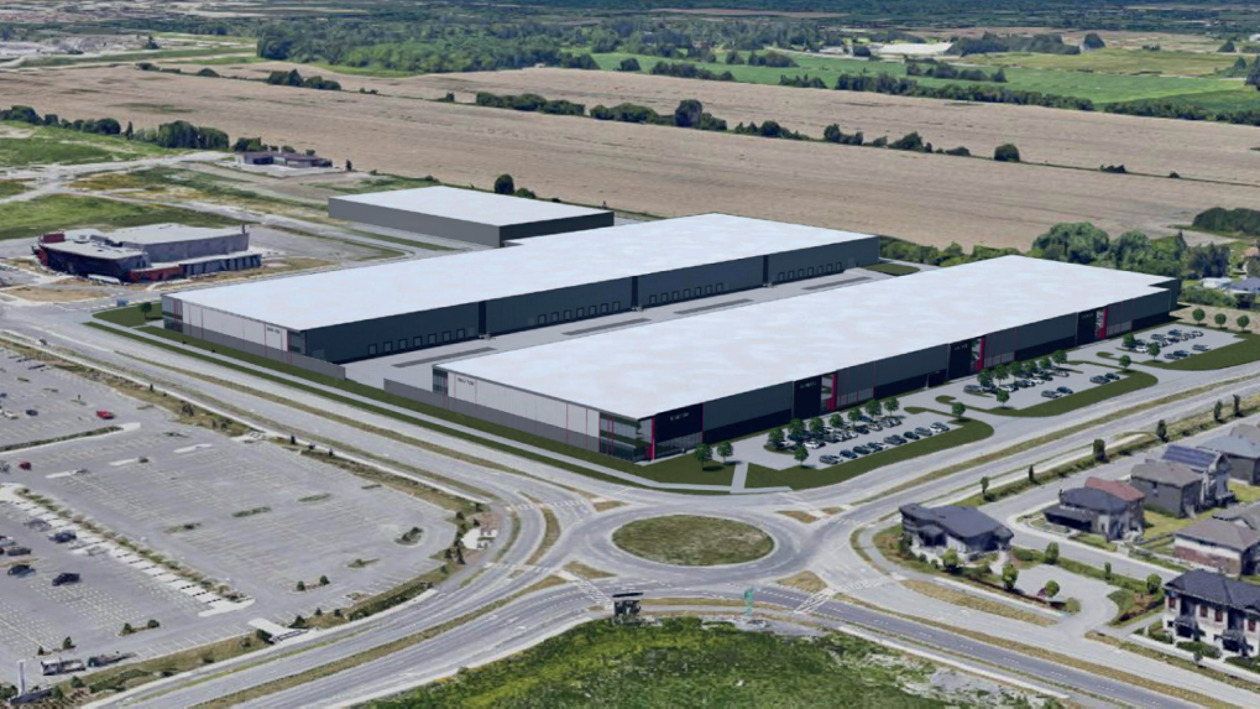
One of those unoccupied properties is a 230,000-square-foot building on Huntmar Drive in Kanata, just north of the Tanger Outlets mall.
One of two buildings at the site constructed by Montreal-based Rosefellow a couple of years ago, it has drawn plenty of interest from potential occupants in a variety of industries, said Piercey, whose firm is handling the leasing.
“I suspect there will definitely be some deals announced in that building this year for sure,” he told OBJ Tuesday. “I do expect between now and Christmas to start seeing deals completed, especially in the defence sector.”
While about 3.2 million square feet of industrial space is now under construction in the Ottawa area, more than 95 per cent of it is already spoken for, Colliers said. Amazon accounts for most of that leasing, with the e-commerce giant preparing to occupy a new 3.1-million-square-foot distribution centre in Barrhaven that’s expected to be completed in the fourth quarter of 2027.
Few builders besides Rosefellow have been willing to launch new industrial projects in recent years without tenants already lined up. But Piercey said that could change if the city’s large-bay supply dries up.
“If two or three deals get done, we will really have no large space supply left,” he explained. “If that comes to fruition and developers see that happening, I think they would certainly look at (building) on spec at that point.”
Firms such as Avenue 31 and CanFirst Capital Management, which both have large chunks of land zoned and ready for new development in Ottawa’s south end, could spring into action if the demand is there, Piercey added.
“I think there are some bigger users from outside of Ottawa that have been looking at the city. If any one of those deals comes to fruition, it could help kick off those buildings.”
But Shackell isn’t convinced a building boom is just around the corner.
Rents have risen as much as 50 per cent in the past five years, while taxes and other operating costs have also soared, leaving many tenants struggling to make ends meet, he explained.
Pile on the trade war, and it’s easy to see why many tenants are downsizing or simply staying put and renewing leases where they are, Shackell explained.
“Groups simply don’t want to be spending money and taking more space when there’s so much uncertainty with tariffs,” he said. “Keep in mind a lot of these industrial users are getting a lot of their product from the U.S. The overall cost of doing business is sickeningly high right now.”
Bigger deals will eventually get done, he added, but when is anybody’s guess.
“I think we’re well into 2027, 2028 before we get any real certainty. I hate to be the bearer of bad news, but I don’t have confidence in what’s going on in the U.S. How long is it going to take before there is clarity? It’s a waiting game right now, unfortunately.”