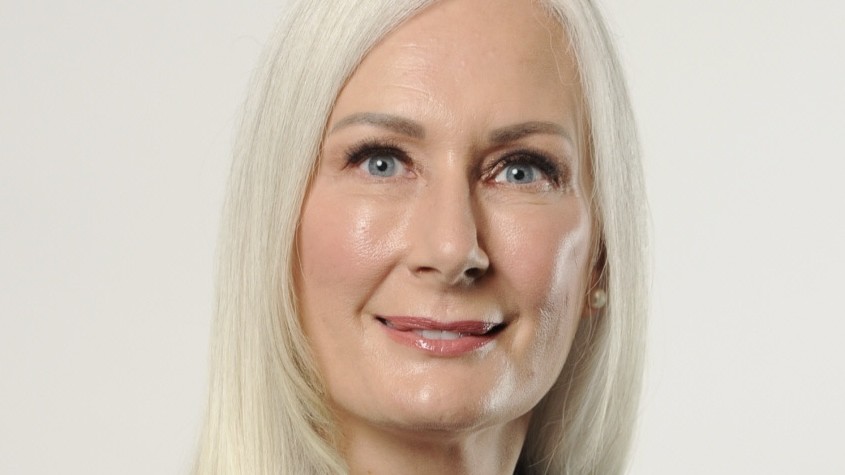
The president of the Ottawa Real Estate Board says that uncertainty is the biggest factor at play in a housing market where conditions can be completely different from one community to the next.
Get Instant Access to This Article
Become an Ottawa Business Journal Insider and get immediate access to all of our Insider-only content and much more.
The president of the Ottawa Real Estate Board says that uncertainty is the biggest factor at play in a housing market where conditions can be completely different from one community to the next.
In a conversation with OBJ, Tami Eades discussed the factors shaping the current housing market and how government policy has impacted the sector.
This transcript has been edited for length and clarity.
What’s one thing that you’ve been thinking about a lot lately?
“I think the issue that we keep coming back to is uncertainty and how differently it’s being felt across the market. Buyers are having a little more choice. Borrowing costs and economic conditions are still shaping the confidence issue. Sellers cannot assume that every neighbourhood or property is moving in the same way.
“That being said, we still have lots of real opportunities. There are things like artificial intelligence that are making the industry more efficient. Governments have introduced some measures that can lower costs and unlock some supply. The test with that is whether these tools can reasonably give housing policies enough time and consistency to produce actual homes, not just announcements.”
What are the trends you’ve been seeing?
“We're looking mostly at things like interest rates. The Bank of Canada held its policy rate at 2.25 per cent in September. They've also identified increased inflation risks from energy prices and international trade pressures. Then we have how that really affects the average household. The Canada Mortgage and Housing Corp. found that 35 per cent of surveyed borrowers who renewed (their mortgage) are experiencing some increased financial pressures, with those payments rising by an average of about $375 a month, which is significant. So higher carrying costs can reduce discretionary spending, delaying or forcing a purchase or a sale and pushing families into decisions that are financially driven that may not meet their current or long-term needs.
“In September, our sales essentially held steady from August, but we had a particularly huge increase in our new listings. They actually jumped by 38 per cent, bringing it to just under 3,000 listings. So we've got a lot of new active listings that are on the market right now. And the other big piece of that is our sales-to-new-listings ratio that fell to 34.5 per cent. So, in plain language, that is roughly three homes that came onto the market for every one that sold. That really is pointing a little more clearly to conditions favouring a buyer.”
There’s hesitation from the buyer’s side, even though it feels like it should be a buyer’s market. What’s your view on that?
“That definitely goes back to uncertainty, but there's really not one lever that we can really point to. Who knows what triggers people to be able to buy or not buy? It comes down to so many different things.
“It could even be some of these purpose-built rentals that we have on the market that are bright and new. For somebody who can’t get into a condo market, they’re sitting in the wings in these really great purpose-built rentals that have condo finishes. They don’t have to take a mortgage stress test to get into that market.
“Another trend that we just picked out really has to do with the new home sales. What we track specifically relates mostly to resale. However, the Greater Ottawa Home Builders’ Association actually reported 464 new home sales in August, which happens to be 55 per cent higher than the year earlier. So their year-to-date is up approximately 50 per cent. This increase coincides explicitly with the new HST relief that the government has put out on new homes. Now we cannot say that that is specifically why that's happening, but it's an interesting fact that HST relief came in and, all of a sudden, new home construction is taking off by over 50 per cent year over year.”
How have realtors had to adjust to keep up with these trends?
“Ottawa right now is not one market that's moving at one speed. There's property type, neighbourhood, price point. Everything is determining the experience for the buyers and the sellers. A single family home in the suburbs at this point and an apartment downtown are experiencing two very different markets. Our single-family homes, for example, are holding up. They're really the engine behind us. I think almost 75 per cent of our sales are the single-family homes that are in the suburbs, particularly the west end. Condominiums are under considerably more pressure. Those sales were down almost 25 per cent from last September and our inventory rose to 7.3 months, with a benchmark price falling 6.1 per cent. So that's a big change for the condo market here for sure.
“Definitely, just about everything has changed and the realtors are changing, whether we’re working with a buyer or with a seller. Certainly our sellers have to position their properties a lot more eloquently. Everything matters when you’re selling right now, particularly with this new jump in inventory.
“It’s almost like musical chairs, where you have a set number of people in a room and then all of a sudden at the last second somebody just dumps an extra 100 chairs in the middle of the room. So it’s the same amount of buyers, but then there are all these extra chairs around. For the chair that you’re going to pick to sit on, you have a lot more choice. But if you’re the chair, you have a lot more competition to get people to sit on you. There’s less rush to get onto the chair.”
You mentioned AI. What are some of the use cases for AI that you're either implementing or looking at for the future?
“Every second conversation seems to be about AI, but from a realtor's lens I would say AI is really reducing administrative work: organizing information, supporting analysis, improving some of our routine communications that we have, which in turn will give realtors more time for listening, advising and negotiating, especially for the buyers and sellers. It can help summarize some of the information, define some unfamiliar terms and processes and visualize furniture placement or renovations of properties, things like that.
“However, we know with AI there are some challenges and certainly risks that include inaccurate or fabricated information, misleading images or renderings, biases and privacy breaches — especially for sellers. It can create an over-reliance on tools that lack context. Innovations that we are using have to be secure and authorized. We don’t want to compromise our systems, information or consumer trust. And we know, of course, that our realtors remain accountable for the accuracy of their work and the advice that they’re providing.
“For buyers and sellers, they need to be aware of the limitations of AI as well. It doesn’t substitute for professional services from a realtor or lawyers, home inspectors or others who are typically involved in a transaction. Someone said to me once: ‘AI has never walked down your street.’”
Any other issues top of mind?
“Our governments have really introduced a lot of meaningful measures, but housing policy really needs to reflect the time required to plan, finance, approve and actually build the homes. These short windows may help some buyers immediately, without providing the certainty needed to create a sustained supply. OREB welcomed the combined federal-provincial removal of the HST. However, that one-year window is a bit of a challenge because housing projects and purchasing decisions operate on multi-year timelines.”