Get Our Email Newsletter Local news about the companies, people and issues that impact business in Ottawa and beyond delivered to your email inbox.
Singing lessons. A three-kilometre swim in open water. A 23-day drive to Canada’s North in a vintage sports car. These are the things that Ottawa’s Andrew Penny, president of Kingsford Consulting, has undertaken in the past few years to prove to himself that he can do things that make him uncomfortable. “I try to do […]
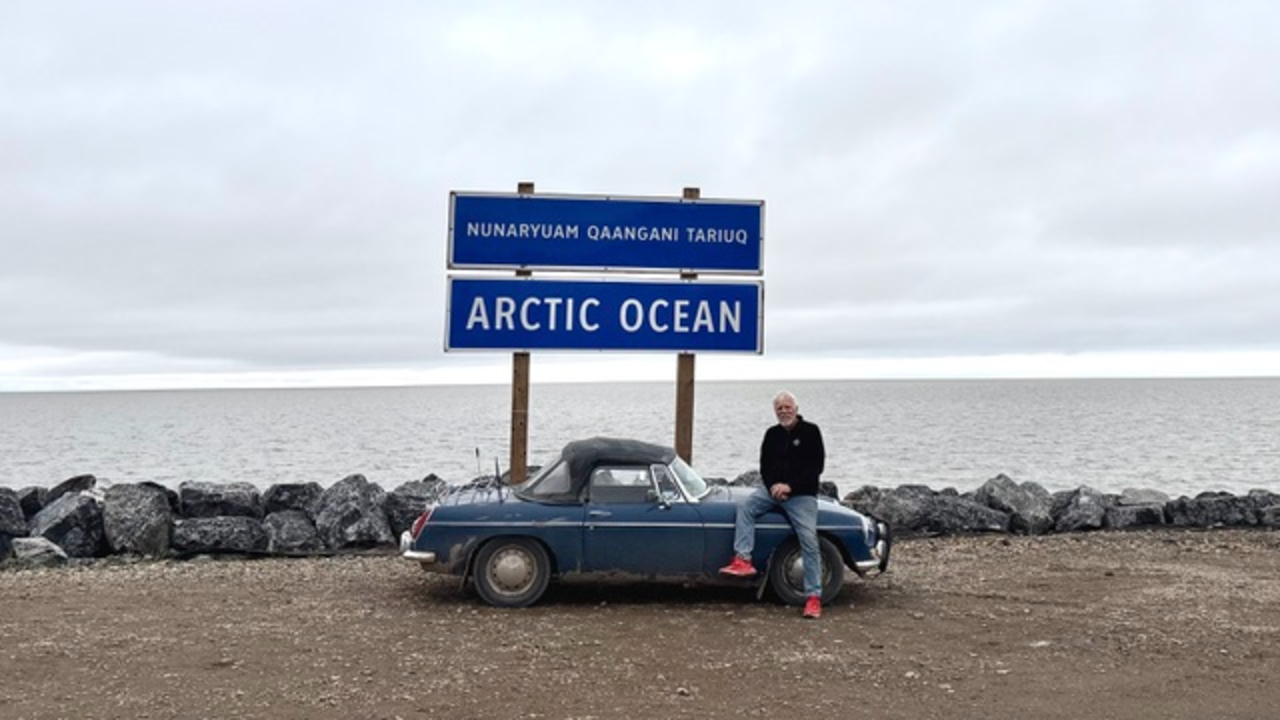
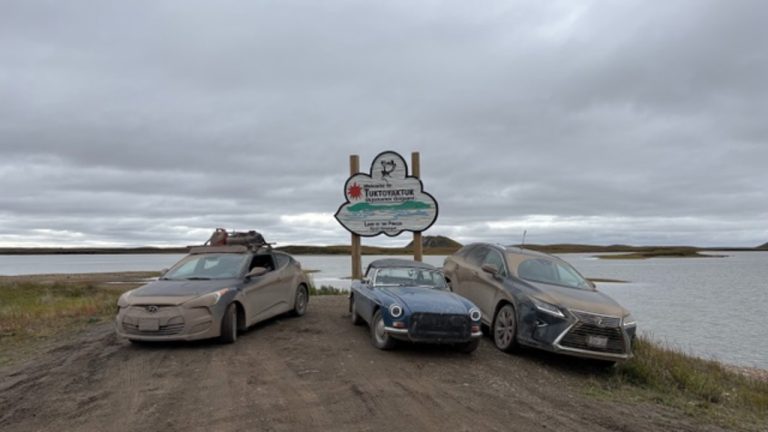
Singing lessons. A three-kilometre swim in open water. A 23-day drive to Canada’s North in a vintage sports car. These are the things that Ottawa’s Andrew Penny, president of Kingsford Consulting, has undertaken in the past few years to prove to himself that he can do things that make him uncomfortable. “I try to do something every year that scares me a bit (and) puts me in an uncomfortable feeling because, if you get that uncomfortable feeling, that’s where you learn, that’s where you grow or how you get hurt,” he said. In the past, Penny has taken singing lessons with the goal of performing in a recital and did the “Bring on the Bay” swim near Britannia Bay in Nepean. “I’d never swum three kilometres in open water before. You jump in, you go and you see what happens. It’s perseverance,” he said. And so when he was thinking about this year’s challenge, Penny said he was inspired to explore Canada, especially given the current trade tensions with the U.S. “I’d been to Yellowknife before, but I hadn’t really been far North. I really wanted to see that part of Canada. I’ve seen everything else in Canada, but I hadn’t been there, but how do I get there?”It was then that he got the idea to drive from Calabogie to Tuktoyaktuk, a remote hamlet in the Northwest Territories widely known as “Tuk,” and back in about three weeks. Oh, and Penny was going to drive a 1968 MGB, a two-seater British sports car, to do it. “A couple of years ago, I drove the car out to Victoria and back on paved roads. It was a long drive and it was fine. But this one was going to be a little more challenging because the last 1,000 kilometres of the drive are on a dirt road north of Dawson City,” he said.Although Penny had decided to go it alone, two of his sons who also live in the National Capital Region decided to join him for the entirety of the journey, while his third son planned to join him in Whitehorse. And so, on Aug. 18, Penny and his two sons were prepped and ready to go: Penny at the wheel of the MGB, one son driving an RV, and the other son driving Penny’s usual car. But, about 30 minutes down the road from his house, Penny’s MGB died. “We messed around with it and it started up again. Away we went and another half an hour later, it died again. Then it happened a third time. So we went back to base, which is our house in Calabogie, and messed around with it overnight,” Penny said.To add insult to injury, the RV lost a ball joint and was unable to make the trip to Tuk. “We were all sitting around thinking, ‘Gosh, the cars aren’t working’ … People had to come to terms with the change. We had to mourn the fact that, if we go, it’s going to be different,” he said.Ultimately, they decided that his son would leave the RV behind and take his car to Tuk instead. As for the MGB, Penny said his solution was to bypass “some of the circuits with alligator clips.”With the journey barely started, Penny said he’d already learned a valuable lesson. “It’s about knowing when to force a decision and when to just let it sit for a while. When you’re two or more people making decisions, it’s not about command or control; it’s consensus.“When you have a setback, don’t try to solve it right away. Put it on the table. Poke at it. The wound is still fresh, the disappointment is still fresh, so you need to let that settle before you can start working towards a solution. Every business has this issue. You try something, it doesn’t work, so you try something else. We had about five reasons to abort the trip at the beginning but we just kept trying.”Once the trio really got going, issues persisted, but Penny said locals in every town were nice enough to lend a helping hand. Their road trip took them from Calabogie to Tuk by going through the Prairies and then up to the Northern territories, passing through cities such as Sudbury, Thunder Bay, Winnipeg, Saskatoon, Edmonton, Grand Prairie, Dawson Creek, Fort Nelson, Watson Lake, Whitehorse, Dawson City, Eagle Plains, Inuvik and, finally, Tuktoyaktuk.The most hair-raising part of the trip came when the paved roads were in the rearview mirror, Penny said. “We headed down the Dempster Highway, which I thought was gravel, but it’s more of a dirt road. As we go down the road, it starts raining quite steadily and the road turns to mud with potholes and gullies. It’s a real frontier road. “There are no guardrails, so if you slip off the side, it’s at least a 10-foot drop, if not 100 feet into the bush and you’re gone.”Once the group reached Tuk, Penny said it was a euphoric yet anti-climactic feeling. “We were like, ‘My gosh, we’re here!’ but then you get a photograph under a sign that says Arctic Ocean, you get a sticker for your car, and then you realize it’s not about the destination. It was all about the journey: what we saw, what we did, what we accomplished and what we overcame,” he said. Penny's MGB and his sons' cars in Tuk. Photo supplied.It’s an age-old sentiment, but Penny said that businesses could use the refresher. “A lot of companies are focused on a mission, on a destination. ‘We’ll be the dominant supplier. We’re going to launch this new product in 18 months. We’re going to break into the European market.’ They have milestones, but they don’t focus on the journey. “I’ve coached and worked with companies (for whom) getting to the destination is all they care about, whereas the companies (that) care more about the journey seem to do better because their people are engaged. They’re enjoying the growth.”Another thought he had when he reached Tuk was that the trip was only half over. “The whole trip was a little bit like climbing Mt. Everest. Everybody talks about getting to the summit, but nobody talks about coming back down again. We made it to the summit, but the trip isn’t over. We need to complete the trip,” Penny said. And complete the trip they did. It took 23 days by driving more than 17,000 kilometres round-trip. When asked what the experience taught him about himself, Penny quipped, “That I can sit in a car for 23 days,” but added it taught him about problem-solving, perseverance and collaboration.He added that experiencing the outdoors in a new part of Canada made him reflect on the fact that people should unplug more. “A lot of people disappear into the digital world, whether it’s AI or social media or whatever else. We’re losing our ability to connect and problem-solve in the physical world … The (trip) I did with my three sons a couple of weeks ago – that’s real world.”Overall, Penny said he’s proud of accomplishing another challenge, and encourages other business leaders to be introspective and take on similar challenges.“Whether it’s a marathon, a walking trip, writing a book, performing on-stage or joining a salsa band, find something that puts you out there. When you’ve found it, socialize it with your peers and commit to it … You lock the doors behind you and have to go forward.”Looking ahead to next year, Penny said he might endeavour another big roadtrip, perhaps to Hudson’s Bay or the Maritimes. He might also consider taking on something in the performing arts or “finally writing that book.”“I think the longer you live, the more time sort of slips by and unless you put milestones on that journey, you’ll wake up and ask, ‘What did I do in the last 10, 20, 40 years of my life?’ I think doing exceptional things gives your life depth and context. “On the more practical side, the more you put yourself into uncomfortable situations, the more you grow, the more you learn. The moment you stop learning, you start dying. When you’re 18, life is uncomfortable every day. But by the time you’re middle-aged or older, you’ve got it all figured out. You’ve got your cosy routine. You know exactly what temperature your coffee should be. But something that challenges you mentally and physically is powerful and keeps you awake, alert and interested. Plus, it makes a great cocktail party conversation.”