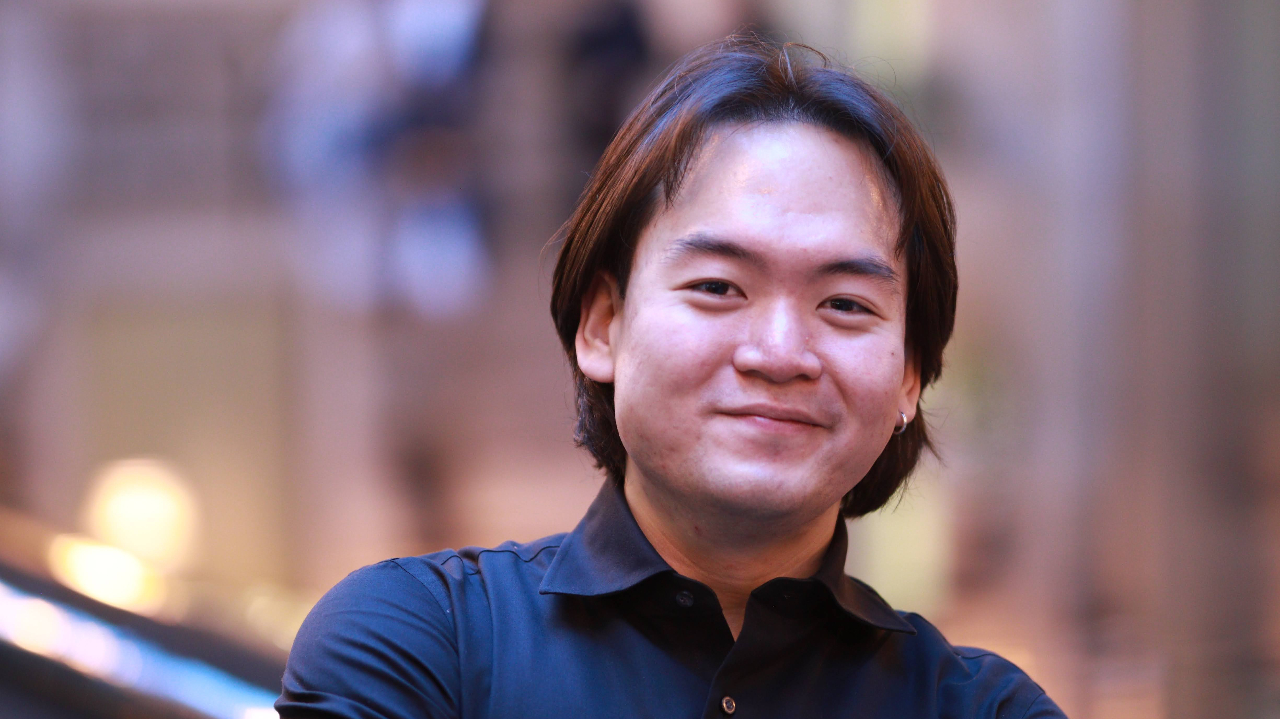
An outgoing and sociable guy, Louis Yoon says he spends more time outside the house than the average person. Still, he wasn’t able to find a date in 2023. “I feel like when you have difficulty finding someone to date, the first piece of advice people give you is, ‘You should go out more.’ There’s […]
Already a Subscriber? Log in
Get Instant Access to This Article
Become an Ottawa Business Journal Insider and get immediate access to all of our Insider-only content and much more.
An outgoing and sociable guy, Louis Yoon says he spends more time outside the house than the average person. Still, he wasn’t able to find a date in 2023.
“I feel like when you have difficulty finding someone to date, the first piece of advice people give you is, ‘You should go out more.’ There’s no way I can go out more than I already am,” he told OBJ.
So he did what any young person would do: he tried his luck on dating apps.
But after spending some time swiping and liking on Tinder, Hinge and Bumble, he found he was nowhere nearer to meeting someone who wanted to form a meaningful relationship and he was left disappointed by the experience, which he described as disrespectful and transactional.
“I think as a dating app user, you go through these different phases. You start off with the hope that you’re going to find the love of your life. Then you have the doubt that this may not be working. Then you enter a state of despair and then hate,” he said.
And so Yoon started to research how others viewed dating apps. He saw that many felt the same way he did.
He vividly remembers meeting with his friend Edward Kan at Pub Italia on Preston Street on Jan. 11, 2024. It was the first time they spoke about creating The Penguin App.
Named for the Arctic animal known to mate long-term, Yoon said he doesn’t view The Penguin App as a traditional dating app.
“It’s an app built for single people, but we’re trying to make it more community-based. It’s an app that everyone can use, (one) that focuses on safety. It’s a product, but we’re also hoping it sort of creates a cultural revolution in terms of how people should act. Dating apps have been built to bring out the worst in people, causing behaviours like ghosting or just being more superficial or transactional,” he said.
With The Penguin App, there are two streams: “looking for love” and “matchmaker.” For those looking for love, Yoon said it’s business as usual, with users creating a profile detailing their interests and what they’re looking for in a partner. Users match with one person at a time, allowing them the time to form a genuine connection, Yoon said. While a user is chatting on the app, the platform will prompt questions to keep the conversation flowing. It’s only after the matched users have chatted for a bit that they see each other’s photos.
“At the end of the day, chemistry is built face-to-face, so that we try to push people in that direction,” he said of the app encouraging matches to schedule a first date.
For those looking to be a matchmaker, Yoon said he and Kan were trying to make dating more community-oriented. He added that dating should be like going to a networking event, with someone to introduce you to others.
“It’s sort of like a social app, where you’re adding people you know to set them up on dates. This is inspired from my own heritage. My background is Korean and Korea has one of the most successful dating cultures … One of the reasons for that is because they have a culture of giving back. If I’m looking for a relationship, my friends and family will introduce me to someone,” he explained.
At the heart of the app’s ethos are its community guidelines encouraging users to interact with honesty, treat each other with respect and avoid ghosting.
After their initial meeting to discuss The Penguin App, Kan and Yoon went through a year of trial and error, as neither had any experience in business, coding, marketing or any of the other skills needed.
Yoon said that the bulk of 2024 was spent learning and gathering resources from Invest Ottawa’s Flex program. Then, the pair spent most of last year building the product, going through multiple iterations before finding something they were prepared to launch publicly.
Things started to get off the ground this past April, when Yoon and Kan visited Ottawa’s university campuses looking for feedback. The app is now in its early stages, Yoon said, with about 150 users. Still, it’s struggling with a “cold start problem,” he added.
“It doesn’t work until we have a lot of people (on the app). But a lot of people won’t join unless there are already lots of people on the app. We’ve been doing some guerilla marketing, where we’ve been approaching strangers to try out the app and give us feedback,” he said, adding that they’re also reaching out to local businesses and content creators to expand their marketing reach.
A bootstrapped “pre-revenue” venture, Yoon said The Penguin App will explore pre-seed funding this summer.
“The problem with dating apps is that they have a retention problem. The more they succeed at what they do, the more they lose their user base … But because we’re creating an app that’s not just meant for single people, this presents an opportunity for us to think about long-term monetization strategies,” he said.
Plus, Yoon said they’re exploring other revenue streams such as merchandising and paid events to prevent ghosting.
“We have this cute mascot of a penguin (with which) we think we can go down the merchandising route to make plushies. But what’s really important to us is that, once you get funding, there’s a certain quota that needs to be met and the way you make profits could go against your original mission. So we’re trying to find ways to contribute to the experience while (making money).
“One of the ideas that we’re playing around with is (having people) put down a dollar or two when they schedule a first date. We’re making money, but it’s also a safety feature. In event planning, it’s commonly known that if you charge a ticket price, people are more likely to attend,” he explained.
Yoon said that his research has shown that traditional swipe-style dating apps are falling out of favour with users and investors, causing major players such as Bumble and Hinge to shake up their products.
In late March, Hinge announced it was investing $1 million toward social groups in London, New York and Los Angeles in a bid to attract generation Z singles looking for in-person connections. And in May, Bumble announced it was phasing out its swiping feature and replacing it with AI-driven matchmaking.
“I think a lot of these big apps realize that they’re in real danger,” Yoon said. “There are a few startups in the U.S. that are trying out some new ideas to fix these problems and there’s been a lot of investor interest. I think people know that the trends are shifting.”
Canada hasn’t seen a homegrown dating platform since Plenty of Fish entered the market in 2003, Yoon added, leading him to believe that now is the perfect time to launch The Penguin App.
Being from Ottawa, Yoon said the capital has the advantage of being a big city, but feeling like a small town.
“It’s easy for something to become a part of the culture here. Another thing is that we have a very big young professional community here, working in government … I think it’s that demographic that struggles the most with finding a partner,” he said.
With 150 users on the app today, Yoon said he aims to have 1,000 by the end of the summer, with the hope that a larger user base will allow him to secure additional funding and hire a bigger team.
Ultimately, the goal is to dethrone Tinder, Hinge and Bumble as Ottawa’s most-used dating app.
“The long-term goal is to create a platform that would be able to help build a healthier dating culture. It’s an ambitious goal but we have a lot of plans on how we can promote not just treating people better before the first date but after as well, helping them act in more respectful ways. It’s not just an app where people meet. It’s an app that helps people treat each other better.”