
Ottawa International Airport (YOW) has long played a distinctive role in the National Capital Region (NCR), evolving alongside the area it serves.
From its beginnings in the 1920s as Hunt Club Field, YOW has grown into critical infrastructure supporting government, business, diplomacy, and international connectivity. Its function has never been limited to passenger travel alone – the airport has become an integral part of how the capital region operates, connects, and competes.
Indeed, as Ottawa-Gatineau’s economic and institutional landscape has matured, so too has the airport’s strategic importance.
A longstanding relationship with Canada’s defence community
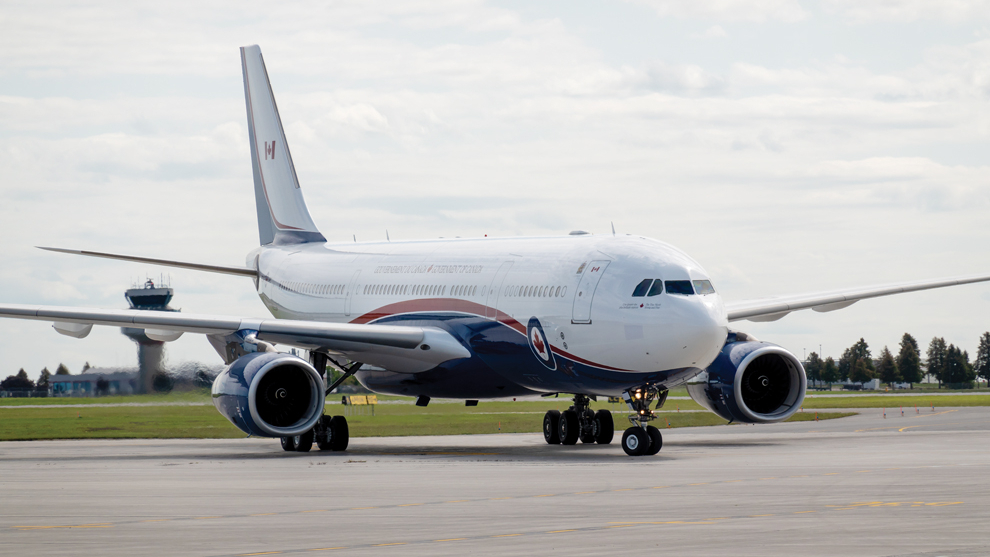
Part of that evolution includes a longstanding relationship with Canada’s defence community. YOW already supports Department of National Defence (DND) activities, reflecting the unique demands of a G7 capital city where civilian, governmental, and military functions naturally intersect.
The airport’s infrastructure, operational capabilities, and location provide a practical environment for non-weapons-related military aviation activities that differ from those conducted at air force bases. Collaboration between civilian airport authorities and defence operations is not new – it is an established and functional reality at YOW.
What is new, however, is the scale of opportunity ahead.
“As a critical hub connecting the world to Canada’s capital, YOW is uniquely positioned to support expanded DND operations,” says Joel Tkach, vice-president of business development and marketing at the Ottawa International Airport Authority. “We have approximately 90 acres of airside land available for development, offering a rare opportunity to build facilities aligned with modern requirements.
“Additional non-airside parcels are also ready to support a wide range of operational needs.”
This land could accommodate a range of functions, including personnel and cargo operations, research and development, communications and logistics planning, aircraft maintenance, repair and overhaul (MRO), as well as broader logistics activities. In a national environment where suitable aviation-ready space is increasingly constrained, this represents a significant and timely opportunity.
Leveraging the ability to expand and strengthen its presence at YOW would enable DND to benefit from efficiencies and operational advantages inherent to dual-use airports. A dedicated, self-contained military footprint, thoughtfully separated from civilian passenger areas, minimizes conflicts, simplifies security considerations, and enables both civilian and defence operations to optimally function.
According to Tkach, “YOW has the physical capacity to support such an arrangement without disrupting passenger growth or commercial development.”
Aligning with the region’s inherent strengths
Beyond infrastructure, the opportunity aligns with Ottawa-Gatineau’s broader strengths. The NCR offers a concentration of talent, research capacity, livability, and institutional connectivity unmatched elsewhere in Canada.
Aviation, defence, and innovation increasingly intersect, and the local ecosystem – anchored by government, academia, and technology sectors – makes it a natural hub for these activities.
Expanded DND use of Ottawa International Airport would address operational needs and reinforce the region’s position within Canada’s evolving defence and security landscape. In many ways, the pieces already fit: The land, infrastructure, and ecosystem are already in place to fully realize that potential.
This article first appeared in the Executive Report on Defence and Security in the April Magazine. That publication is available in it’s digital format below: