With its distinctive glass cupolas and brick facade against a tree-lined escarpment, Place d’Orleans could be a postcard for the traditional mall. But these days it may also be a bellwether, at the forefront of what could be seen as a retail transformation. Alex Avery is the CEO of Primaris REIT, which owns Place d’Orleans […]
Get Instant Access to This Article
Become an Ottawa Business Journal Insider and get immediate access to all of our Insider-only content and much more.
With its distinctive glass cupolas and brick facade against a tree-lined escarpment, Place d'Orleans could be a postcard for the traditional mall. But these days it may also be a bellwether, at the forefront of what could be seen as a retail transformation.
Alex Avery is the CEO of Primaris REIT, which owns Place d'Orleans along with 26 other Canadian malls. He says the departure of Hudson’s Bay from Place d'Orleans and the soon-to-be-opened LRT extension have created an opportunity for multi-residential mixed-use developments in the area.
"Often HBC leases included areas of a shopping centre where building anything was restricted and they were called 'no-build' clauses,” he told OBJ. “But they also often had a minimum required parking ratio or a specific area that they reserved for their own parking. Of course … new tenants coming in to replace HBC will have other site requirements, but very few would be as restrictive as what HBC had in place.”
That means that the closure of Hudson's Bay locations has unlocked development opportunities that were contractually frozen until now. With those restrictions lifted, Avery says Place d'Orleans is among approximately 400 acres of land across the country with intensification potential and for which Primaris REIT will be seeking development partners this year.
"It's a great high-income suburb of Ottawa with excellent access to downtown through this new light rail system. And we think it can be affordable as well," Avery said.
And so, with malls potentially becoming part of larger development opportunities and less of a destination in themselves, what survives, what fades and what finds new life? In Ottawa, this shift in the retail landscape is playing out in three ways: suburban intensification, experiential transformation, and community-driven downtown revival.
Malls as mixed-use hubs
Potential intensification at Place d'Orleans fits into a wider pattern of mixed-use development centring around malls across the city, where retail is supported by a built-in population and access to transit.
The numbers tell the story. Near the St. Laurent LRT station, a six-tower development was approved in August of last year, with approximately 1,770 units and new park space around Coventry and Belfast roads. Also last year, Morguard filed a proposal for 500 Coventry Rd., with phase 1 alone delivering 309 units. At Bayshore, Ferguslea has proposed building a highrise with twin towers of 37 and 40 storeys respectively, while a proposal for a 30-storey rental building with roughly 330 units near the Pinecrest LRT station was filed by Brigil in late 2022.
Call it densification by design. Ottawa's Official Plan champions transit-oriented development and 15-minute neighbourhoods. Areas designated as mixed-use centres, such as St. Laurent, are earmarked for a mix of housing and retail. A plan approved in January 2026 for the Pinecrest and Queensview LRT stations promises the same. As does the draft Orleans Corridor Secondary Plan, in study phase since 2019.
Ian Lee, associate professor with Carleton’s Sprott School of Business, admits the departure of HBC and the arrival of the LRT system have created unique opportunities around malls, but notes the trend predates current planning language.
"Densification of the ‘burbs is merely accelerating what was already happening for decades," he said, noting that people have always wanted to live where they shop and shop where they live, a fact demonstrated in years of traffic studies.
Shopping as an experience
The demolition of Westgate Shopping Centre, Ottawa's first enclosed mall, may mark the end of an era, but does not suggest the end of shopping malls altogether, rather a revolution. A 2022 report by Deloitte Canada warned that post-pandemic malls faced a turning point due to the normalization of e-commerce and a drop in foot traffic that pre-dated lockdowns. Successful malls, the report said, would emphasize the shopping experience, integrate online technology and reinvent themselves as multi-purpose destinations.
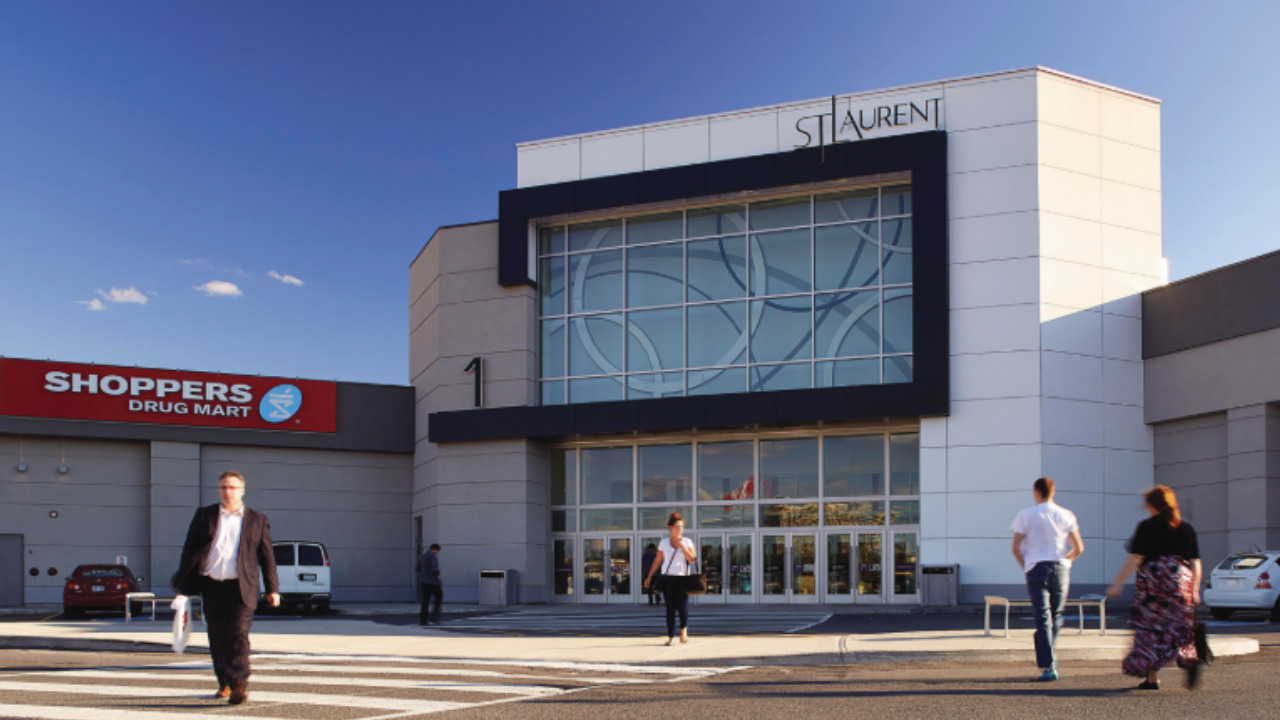
There are several examples in Ottawa. St. Laurent Shopping Centre recently modernized its retail mix with the addition of in-demand brands like Sephora and H&M, as well as a new Bikini Village and La Vie En Rose flagship store. In a news release announcing the moves last year, general manager Amy Rozario described the changes as creating "an energetic destination for the Ottawa community as well as offering a variety of experiences" that go "beyond retail."
This approach is evident elsewhere. Two amusement facilities are proposed in or adjacent to malls in Kanata. An application filed with the city indicates that FunHaven will launch a second location within Hazeldean Mall, while a new Sunny Foodmart and indoor amusement park have been announced not far from Tanger Outlets. And retail analysts have suggested that gyms and fitness centres, pickleball courts, arcades or other entertainment venues would make sense for some former HBC locations.
"The retail bricks-and-mortar have to do more than just offering the same stuff on the shelf that you can buy from e-commerce," said Lee. "Retailing is going to become more, shall we say, entertaining. It's going to engage the consumers a lot more and we're starting to see that."
The story downtown
The forces reshaping suburban malls—e-commerce, falling foot traffic, demand for unique experiences—are hitting downtown cores even harder. But downtown Ottawa is fighting back with a weapon malls can't match: hyper-local loyalty.
A series of colourful, free-to-use public event spaces established on under-used street corners in Ottawa's core may seem a simple urban beautification project, but represent the downtown answer to the same challenge: create destinations where shopping is an experience, not just a transaction.
Uncommon Spaces, a pilot project spearheaded by the Centretown BIA that ran from June to October 2025, invited community members to host events and activities at one of three under-used street corners along Bank Street.
Centretown BIA executive director SabriNa Lemay told OBJ that response from businesses was "very positive," despite initial reluctance.
"We heard from a lot of our businesses that there was an increase in sales and there was a positive feeling downtown—the spaces didn't get vandalized like it was feared—which also contributed to what I think was a wellness piece in terms of the mental health that we see on the street as well."
Following the pilot's success, Uncommon Spaces will return and expand this summer.
The approach extends beyond physical spaces. Ottawa small businesses had an “elbows-up” moment in the spring of 2025 when downtown BIAs launched a "buy local" campaign in response to U.S. tariffs. Brand ambassadors wandered neighbourhoods and rewarded loyal shoppers with $100 gift cards to be redeemed in local shops.
"You can't just remain silent in moments like that," Lemay commented to OBJ. "We chose to collaborate and come together because those businesses are our downtown. Shopping local is so important. Don't forget about the small businesses here that still need your support."
It was an initiative that met the cultural moment. At the time, a national survey commissioned by Interac Inc. found that eight in 10 Canadians were actively seeking Canadian-made products, particularly from small businesses in their community, and nearly as many viewed local businesses as "more important" than online retailers.
Lemay says small businesses know the value of community investment and placemaking better than most.
"It's our small businesses that make our city great," she told OBJ. "When you're walking down the street and you see banners and you see things looking nice and converted, this is the businesses that are paying for this to happen within their area—and that shows the commitment they have to bringing retail downtown, revitalizing the area and economic development."
The need for reinvention
Ottawa's post-mall reality is more about reinvention than disappearance. While malls such as Westgate and Lincoln Fields have closed, their fates point to the challenges facing older, smaller properties without easy transit access. Hazeldean's vacancy rate jumped to 50 per cent when Target departed Canada in early 2015, but the addition of a GoodLife Fitness and T&T Supermarket, not to mention a potential FunHaven location, suggests struggling properties can find new purpose.
What remains is adapting. According to Lee, e-commerce will continue to make inroads, becoming as much as 20 per cent of total retail spending, up from 10 per cent today, but will likely never fully replace the experience of in-person shopping.