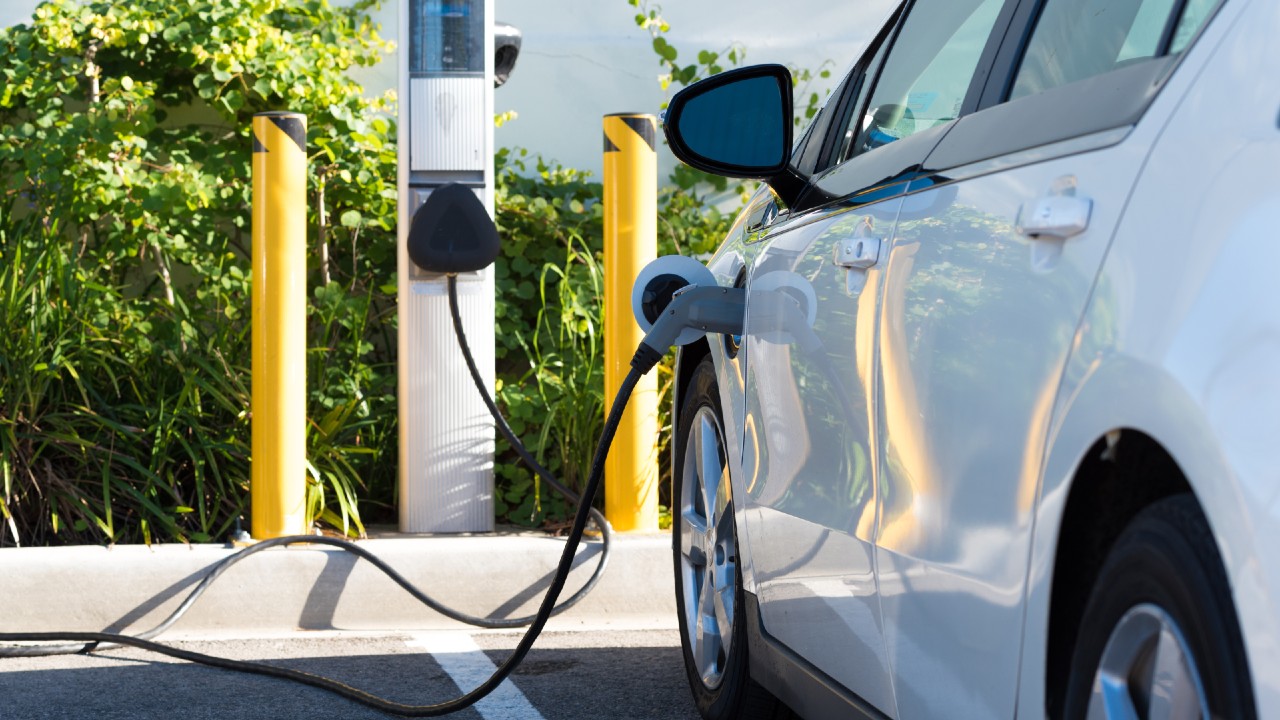
In what many see as a slumping market for electric vehicles, Ottawa’s Tonya Bruin is experiencing slow but steady growth in the demand for EV-charging infrastructure.
Get Instant Access to This Article
Become an Ottawa Business Journal Insider and get immediate access to all of our Insider-only content and much more.
In what many see as a slumping market for electric vehicles, Ottawa’s Tonya Bruin is experiencing slow but steady demand for EV-charging infrastructure.
Bruin is the CEO of To Do Done, which started as a handyman company in 2015 before shifting to renovations.
Prior to joining the world of construction, Bruin spent nearly 20 years working in the federal government on environmental policy. In 2022, when she wanted to expand To Do Done’s electrical offerings, she decided to start Evolta Electrics as its own company, offering both standard electrician services and specialized services such as EV charger installation.
“I had a real passion for environmental protection and I felt that the shift towards EV charging and LED lighting is something that’s coming in the future,” she said. “Nobody really specialized in that in the city, so I thought maybe I could get ahead of the curve on that.”
Evolta installs residential EV chargers outside customers’ homes or in their garages, as well as commercial chargers, including fast-charging options for drivers on long roadtrips.
While the company has found success, Bruin said the market can be unpredictable.
“When I started, there was a lot of excitement,” she said. “I could see that there was obviously a market for it and there were obviously a lot of government promises about there being no more gas-powered vehicle sales by 2035, which is really not that far off. At that point, maybe less than five per cent of cars were EVs. If you think about it, that’s a phenomenal shift and we need infrastructure for that.”
The federal government is searching for ways to support the country's EV market. Earlier this week, Prime Minister Justin Trudeau announced that Canada will impose a 100-per-cent tariff on imports of Chinese-made electric vehicles, following the example of the U.S. and European Union. The change will go into effect Oct. 1.
The goal is to allow Canada's nascent EV industry to compete at home, in North America and globally. However, the tariff would effectively double the price of imported vehicles, with most of the tax passed on to consumers.
This comes as economic factors have already slowed EV sales in Canada and caused some companies to rethink their strategies.
Last month, global materials technology and recycling group Umicore announced it was putting the construction of its new EV plant planned near Kingston on hold, citing increasing uncertainty in the market.
Spokesperson Caroline Jacobs told OBJ at the time that the EV market had “worsened,” impacting the company’s battery materials business, adding that customer demand projections for the firm’s battery materials “have steeply declined recently.”
According to Bruin, the higher price tag for most EVs has deterred some consumers, while higher interest rates and other cost of living concerns have put people off big purchases in general.
But on the charging front, Bruin said business is relatively steady, as efforts to build up EV infrastructure continue.
“We did see a really strong growth in sales (at the beginning),” she said. “And that’s pretty much levelled off. We’re not seeing this huge amount of people coming on board with buying new EVs.”
Bruin said demand is coming more from commercial clients, rather than new EV owners, who want to install charging stations in their parking lots to draw in customers with EVs.
And with interest rates declining, she expects to see renewed interest in electric vehicles from consumers looking to replace their old cars.
“There are a lot of different factors, but if the government holds to their promise of no more gas-powered vehicles sold in Canada, eventually we’re all going to have to switch,” she said.
Ottawa construction industry diversifying
Bruin started To Do Done nearly a decade ago as a handyman company, in response to a need she saw in the local market.
“The reason why I started is I was a homeowner, I had young kids, my husband and I aren’t particularly handy, and we always felt there was so much to be done around the house,” she said. “We just couldn’t find people. The customer service aspect of contracting in general was very much lacking.”
So her idea was to start a company that employs a variety of specialized contractors and handle all the administrative tasks for them.
The company has since shifted away from the “handyman” moniker and evolved into a full-scale renovations business.
It’s a model that's found success, even through the pandemic, allowing her to expand and create Evolta Electrics. This year, Bruin is a finalist for the Business Woman of the Year awards, while To Do Done has been nominated for three Greater Ottawa Home Builders’ Association awards, including Renovator of the Year.
In recent years, women have been breaking into the construction industry in a big way. In the past year alone, two new groups have popped up in Ottawa to help women connect and network with each other.
According to Bruin, only four per cent of trades workers in Ontario are women. Diversity has been a key pillar for her company, employing contractors and other employees of all genders.
“A lot of folks on my team have told me that they just feel like the diversity really contributes to this unique, supportive culture,” she said. “We don’t have that kind of machismo culture that a lot of construction companies have. People of any gender can feel comfortable working with each other within this team.”
She added that the expertise of women and other marginalized groups is increasingly recognized within the field.
“I depend on my team’s expertise,” she said. “I’ll listen to them and they also feel comfortable letting me do what I do. We really just support each other. It’s just mutual respect.”