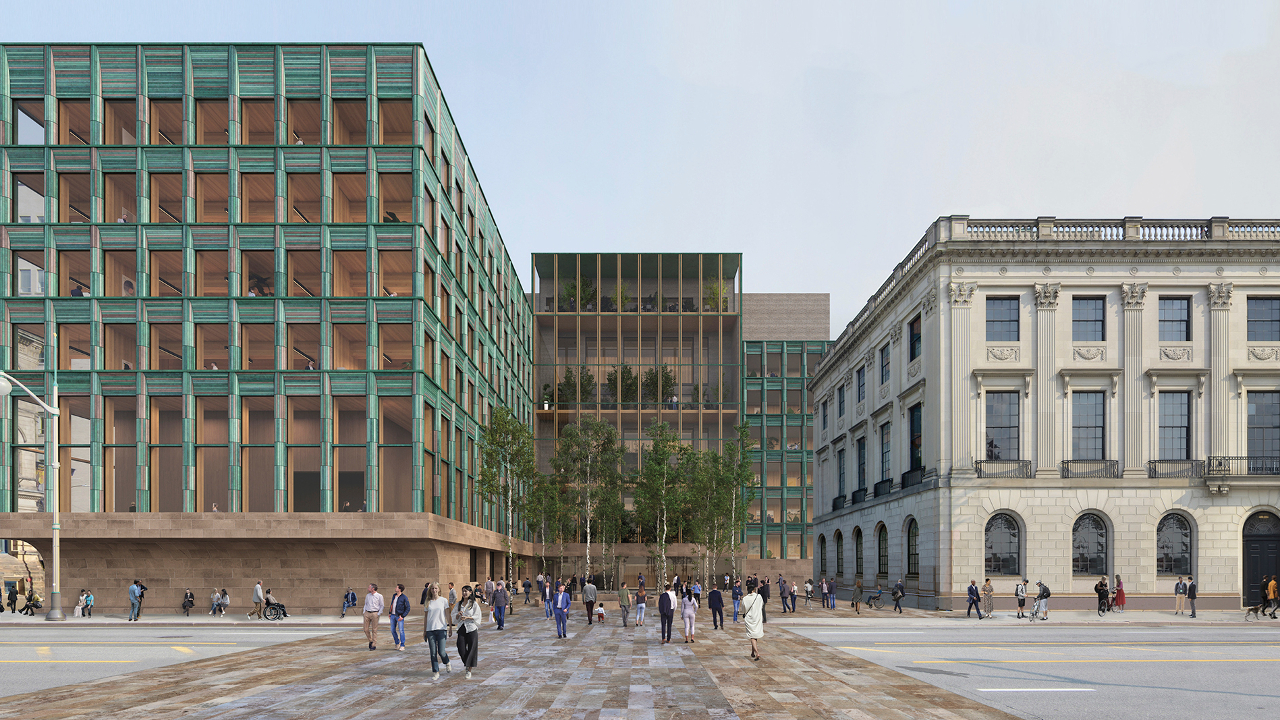
In an email to OBJ this week, PSPC called the Block 2 redevelopment project “a “key part” of the federal government’s efforts “to restore and modernize” the Parliamentary Precinct.
Already a Subscriber? Log in
Get Instant Access to This Article
Become an Ottawa Business Journal Insider and get immediate access to all of our Insider-only content and much more.
The federal government plans to start work later this year on a project to restore and modernize a prominent collection of historic buildings near Parliament Hill.
Public Services and Procurement Canada says construction work on the block facing Parliament Hill bounded by Wellington, Sparks, Metcalfe and O’Connor streets – known as “Block 2” – is expected to begin this fall.
In an email to OBJ this week, PSPC called the Block 2 redevelopment project “a “key part” of the federal government’s efforts “to restore and modernize” the Parliamentary Precinct.
“The project will transform a mix of aging buildings and vacant lots into an innovative complex to meet the needs of a modern Parliament today and into the future,” a department spokesperson said.
The two-and-a-half-acre site includes 11 buildings – several of which are designated heritage buildings – as well as two parcels of vacant land. The feds say the redesigned buildings will provide space for the Senate, the House of Commons and the Library of Parliament and will also include renovated retail space on the Sparks Street Mall.
The PSPC spokesperson said the department and its partners are still finalizing the project’s budget and scope, “as well as design, pre-construction and investigation activities, with construction work expected to start in fall of 2024.”
The entire redevelopment is expected to take nearly a decade to complete.
It’s the latest step in a process that began several years ago when PSPC invited architecture firms to enter a design competition for the project. The department said the work will include “a combination of new build components, restoration and refit while preserving the heritage character of the historic streets.”
A total of 12 firms qualified to bid on the project, including several locally based companies. In May 2022, a joint bid from Toronto’s Zeidler Architecture and U.K. firm David Chipperfield Architects was named the winner of the competition.
The firms were awarded an architectural and engineering contract for the project last May. In January, PSPC announced that Montreal-based construction firm Pomerleau would manage the first phase of the redevelopment.
Two of the 11 buildings on the block will be dedicated to an Indigenous people’s space and are not part of the design competition.
The nine buildings involved in the project are:
- Union Bank Building, 128 Wellington St.
- Victoria Building, 140 Wellington St.
- Valour Building, 151 Sparks St.
- Bank of Nova Scotia building, 125 Sparks St.
- Fisher Building, 115 Sparks St.
- Bate Building, 109 Sparks St.
- Birks Building, 107 Sparks St.
- Canada’s Four Corners building, 93 Sparks St.
- Marshall Building, 14 Metcalfe St.