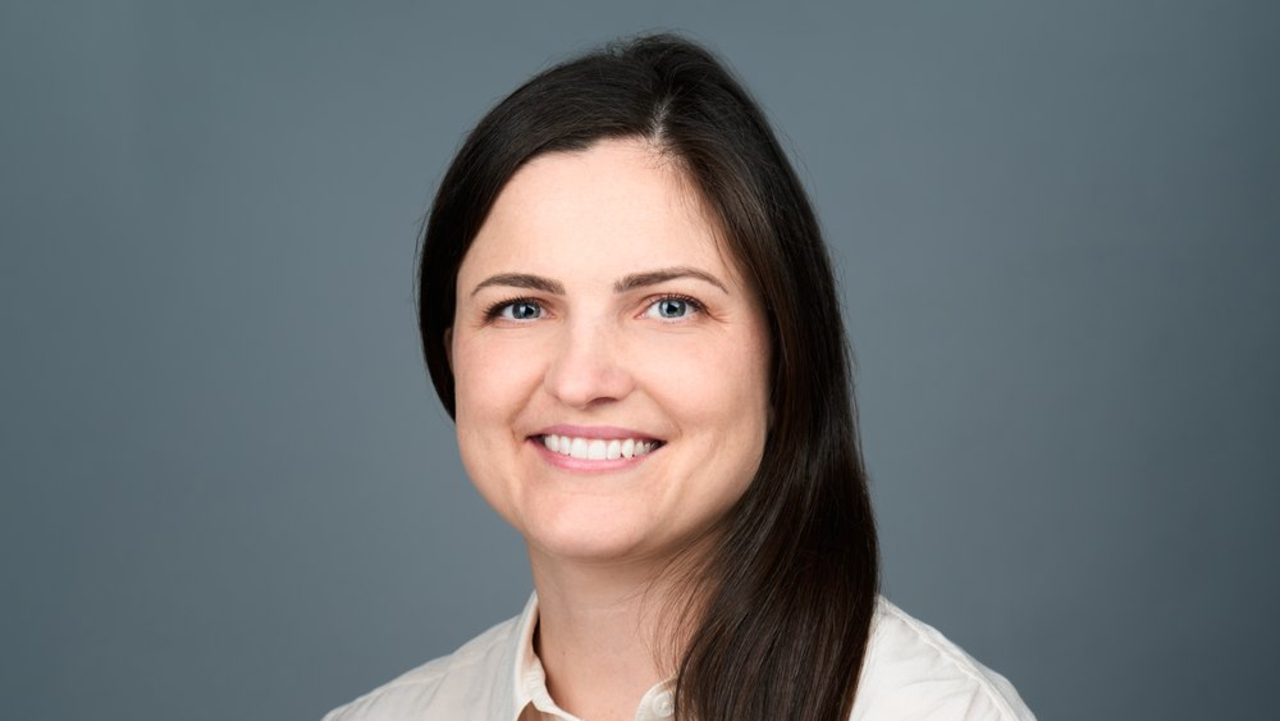
From collaborating with Ottawa Bluesfest and the world juniors hockey championships, to winning “founder of the year” at last year’s Bootstrap Awards, Whimble founder Emma Brown has had a number of early-stage wins since starting the company in 2021. Now, she is taking her care-tech platform to Toronto this October. Whimble is a platform that […]
From collaborating with Ottawa Bluesfest and the world juniors hockey championships, to winning “founder of the year” at last year’s Bootstrap Awards, Whimble founder Emma Brown has had a number of early-stage wins since starting the company in 2021. Now, she is taking her care-tech platform to Toronto this October.
Whimble is a platform that connects people with disabilities to personal care attendants. Clients can request one-on-one services or connect with on-site attendants at events to help with essential tasks such as eating and drinking as well as going to the washroom.
Having a brother living with a physical disability, Brown built Whimble with the understanding of how stressful a lack of personal needs services can get for people with disabilities and their families.
In this installment of Top of Mind in Tech, Brown speaks about her plans to scale Whimble, the role that artificial intelligence will play in Whimble’s future and how she’s pushed past adversity to build a successful business.
This transcript has been edited for length and clarity.
Whimble’s Toronto expansion
“We’re at a point where we’ve tested out the possibility of a business like Whimble, but now we want to see if it’s scalable. Our expansion is to bring our services to the people of Toronto but it’s also a chance for us to build a repeatable playbook to help us scale across our Canadian cities and internationally. We’ve already had users from Toronto and we’ve had a lot of inbound leads from event organizers in the Greater Toronto area. It felt like a natural fit where we can also take advantage of the fact that it’s the same regulatory environment as in Ottawa so it minimizes the complexity a little bit.
Our resourcing for the Toronto expansion is a bit of a three-pronged approach. We have our internal staff that manages operations and client onboarding. We also have a supply pool of contractors, the people actually providing the care, and our goal is to have 25 vetted personal care attendants by Oct. 1. We’re also building a roster of local experts and talent, like we’ve just hired a digital marketing agency in Toronto. We’re working with PR and setting up meetings with Toronto-based content creators to help connect us to the community.”
Expansion funding and room for improvement in early-stage tech funding
“Whimble is very fortunate to have a very committed angel investor who believes in our mission. He’s lived through what we’re trying to solve and that organization will back us through our Toronto pilot and, ideally, when we’re ready to raise a seed round in 2026. The other benefit for us is that we bring in real revenue from our on-demand and event services.
But I will say that there is a serious lack of this type of early-stage funding available, whether through non-dilutive or dilutive funding. I worry that there are other companies who could be scaling like this who just don’t have access to that proof-of-concept funding. There’s significant room for improvement. I’d love to see more support in Ottawa and elsewhere for funding those early-stage projects. I also wish the federal government was a bit more of a reasonable innovation partner, but that might be a different article.”
Ottawa’s support for Whimble
“We’ve had great support from Invest Ottawa. That’s definitely been a key part of our journey. What’s been great about Ottawa is we’ve also had support from the non-tech organizations as well. There are so many groups like Ottawa Tourism, the Rogers Centre Ottawa, Bluesfest, Capital Pride and others, who have been incredibly open to innovation and eager to support leaders in accessibility and inclusion.”
Worries around scaling while keeping the same level of care
“The constant second-guessing of this phase of growth keeps me up at night. Are we making the right decisions? Are we moving too fast or too slow? Over the past two and a half years that we’ve been live in Ottawa, we’ve been very manual. I knew every client’s life story. So now to be shifting into a new phase of growth and scale, we start to get into a more product-driven phase where we’re a little bit further removed from the individuals that use our platform. I worry about maintaining the magic of the early days that made us grow so quickly. Through AI and different tools, we’re trying to replicate that magic in a scalable and sustainable way while making the transition as seamless as possible for our users.”
AI’s role in an accessible, human-centred company
“I’ve been in ‘watching mode’ around AI and just trying to learn what’s out there. The other layer of complication, beyond the human-centred aspect of Whimble, is the accessibility aspect of AI. For one of our users that has a speech impairment, voice agents are not accessible to them. If a new AI tool has not been tested for adaptive technologies, it’s not accessible to all of our customers. AI is moving so quickly that accessibility isn’t always being built in from the beginning. We also have to wrestle with the data privacy layer of what we do. Any tool we use has to comply with data privacy regulations and Personal Health Information Protection Act (PHIPA) rules.
We’re still operating on a low-code platform, so we do have some automations in place, but our goal is to go full-tilt into mobile app development by the end of this year. That’ll be when AI really comes into play in terms of what pieces of that process we can automate.”
Challenges as a female tech founder and leading a company focused on accessibility
“I don’t know if I’ve figured it out yet. Invest Ottawa is great, compared to when I was at Toronto Tech Week a few weeks ago. I was at a ‘women in AI’ session and there was an all-male panel, which I don’t think would fly at Invest Ottawa or some of our other local tech hubs. In my own experience, Ottawa seems to be more equitable, gender-wise. However, I was still a new mom two years ago and I couldn’t find a private space to breastfeed that weren't stinky bathrooms in many of the tech spaces in Ottawa. I have experienced challenges that most of my male counterparts will never experience. On the flip side, as a female, I’ve felt judged by other moms who took a full year off and had the benefits available to them to be able to stay home with their babies. When you’re an entrepreneur, you don’t have that luxury.
The extra layer of difficulty to being a female tech founder is being a founder of a company in the accessibility space. I always feel underestimated. I think most investors and advisors we speak with think of Whimble as a cute, niche charity project. They don’t appreciate the commercial viability of what we’re doing. We have a total addressable market of a billion dollars in Canada alone and our solution can scale internationally if I can make all the right decisions over the next few years.”
Up next for Whimble
“If all goes well and the stars align, we’re going to be in Toronto permanently and then starting to look for our third city, which will possibly be Vancouver in 2026. Once we’ve got that experience under our belts, that’s when we’re going to start figuring out our strategy for international expansion. It makes sense to start looking at the United States at that point while making sure we still have good coverage in Canada. We have also been to Los Angeles recently to pitch to the 2028 Olympics and Paralympics host cities and venues and are working on bringing our services to southern California for the Games as part of our international expansion strategy.
Hopefully, we’ll keep getting pulled to new destinations but the ultimate vision for Whimble is to be a universally available marketplace just like Uber, Airbnb and TaskRabbit.”