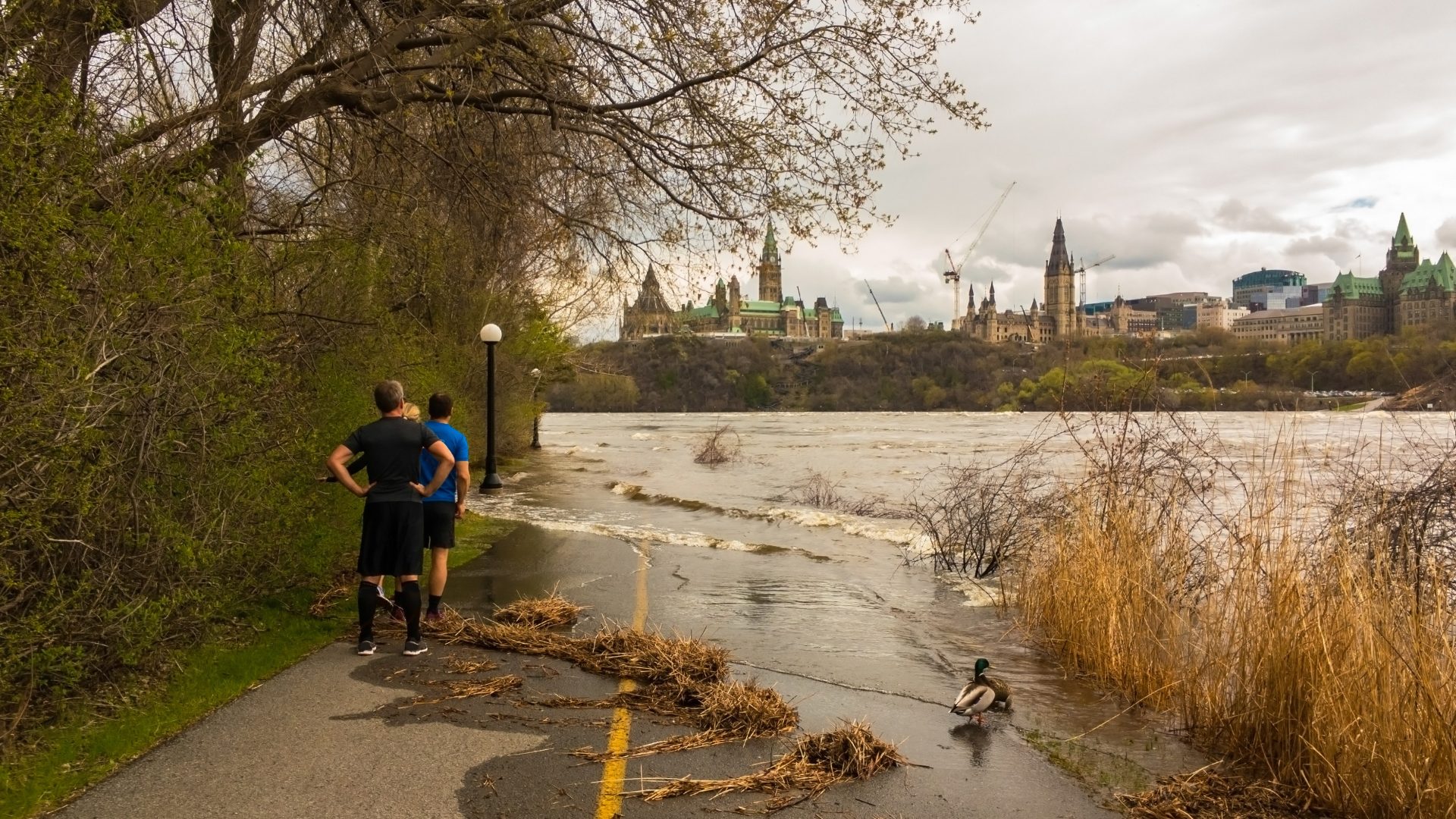
Climate change is the top concern for tourism operators across the country, one local risk management expert says, and Ottawa businesses are not immune.
Get Instant Access to This Article
Become an Ottawa Business Journal Insider and get immediate access to all of our Insider-only content and much more.
Climate change is the top concern for tourism operators across the country, one local risk management expert says, and Ottawa businesses are not immune.
“From a travel standpoint, it’s the No. 1 worry in our risk management world,” Jeff Jackson said in an interview with OBJ. “It is fundamentally changing the base assumptions that we’ve built our businesses around.”
Jackson, who is based in Pembroke, hosted a workshop at this week’s Tourism Industry Association of Canada’s 2025 Tourism Congress, which was held in Gatineau. While his session focused on how organizations can respond to crises such as cyber-threats, he said the tourism operators in attendance were concerned about one issue: climate change.
Compared to regions of the country that are prone to large-scale destruction and disruption from wildfires, earthquakes and hurricanes, Jackson said Ottawa is “in a fairly desirable spot” and is less vulnerable to widespread power outages and road closures.
However, the past few seasons have shown that the city’s tourism operators are exposed to increasing unpredictability, he said. The issue is especially clear in winter, he said, when warmer temperatures prevent traditional winter activities, including skating on the Rideau Canal, from happening.
“We’ve got these assumptions that in the summer it’s going to be warm and the winter is going to be cold,” Jackson said. “We have assumptions about how stable (those conditions) will be. And now we can’t assume those things anymore. And that’s scary, to the extent that it’s difficult to plan when you can’t assume what the next season’s weather will be.”
Ottawa is also seeing more severe weather events year-round, including heavy thunderstorms, tornadoes and flooding. While none of these issues is new to the city, the unpredictability and severity should raise alarm bells.
“We’ve always had, for example, spring floods or freezing rain; those things happen and have always happened in the Ottawa Valley,” Jackson said. “But what is changing is the frequency. They’re happening close together now. The variability in severe weather is totally up in the air.”
Also at issue in Ottawa is air quality, a result of increasing wildfire activity in neighbouring areas, he said.
Identify the risks and make a plan
According to Jackson, preparation starts with identifying assumptions, such as clear roads and airports operating as normal to customers having access to credit cards and being able to visit a business in person.
For some tourism operators, many of those assumptions were turned on their head during the pandemic.
“The big thing was that COVID was 100 per cent externally exposed,” he said. “I could be the best business manager in the world and I still got hammered over COVID.”
The same lack of control applies to severe weather and air quality. Jackson said businesses need to know what inputs are required to keep things going in a worst-case scenario.
“What does it take for you to run your thing? It doesn’t really matter what your business is. You need to make your business go and we need to start by protecting those things.”
Solutions will look different for every business, but Jackson said the key is to seek out vulnerabilities and devise plans that can be executed if something goes wrong.
“The point is, what happens if we can’t open our doors?” he said. “It doesn’t matter why we can’t open our doors. Maybe it’s a government mandate around COVID or a strike. Maybe it’s some other problem. We don’t need to foresee the future. We just need to identify the vulnerabilities and build around those things.”
When it comes to climate change, doing the work to prepare can’t be avoided any longer.
“My pushback is that climate change is not a crisis; climate change is the way it is now,” he said. “We need to come up with a plan to deal with the way it is now. Calling it a crisis implies that it’s going to be over, but it’s not going the other direction. We’re always going to have more storms, more heat, more humidity, worse air quality. Our base-level assumptions have changed and our inputs have to change, too.”
As communities respond to more and more climate crises, he said tourism operators are well-positioned to strengthen the city-wide response. In fact, when it comes to emergency response at the community level, he said the tourism industry is well-resourced but under-utilized. So far, he said, British Columbia is the only province re-evaluating its emergency management infrastructure to ensure municipalities update their plans to integrate tourism operators.
Cities like Ottawa, he said, could improve their crisis management plans by working more closely with the tourism sector.
“Tourism providers have access to resources nobody else does,” he said. “We have beds. We have commercial kitchens. We have stored food that we could feed emergency workers or anybody else. We have vehicles and trained staff to drive those vehicles. We have resources at our disposal that we could contribute to our communities and we’re not leveraged right now. We’re more than citizens. We have an economic interest and we have expertise and resources to actually help out.”