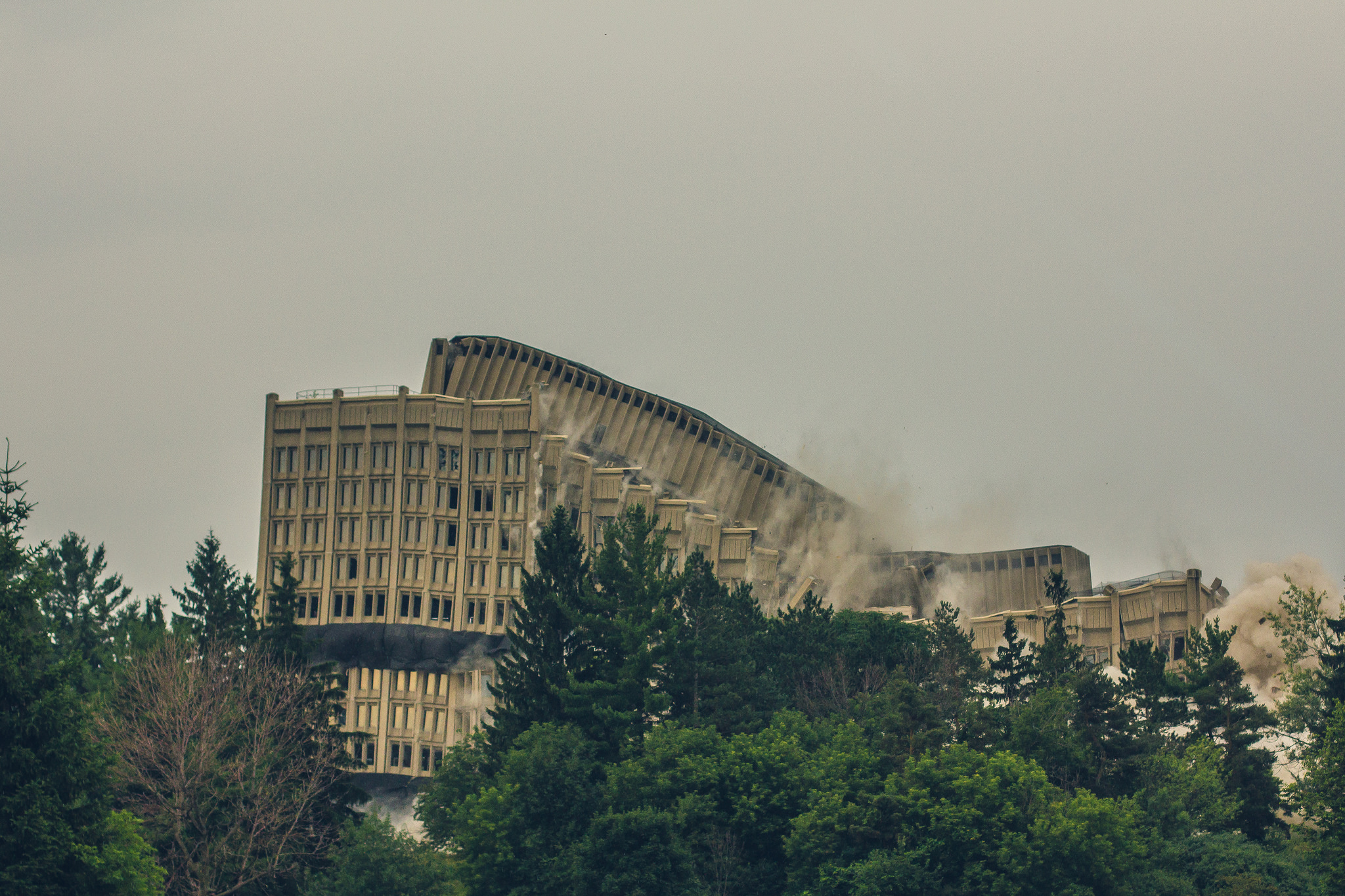

The price to clean up the former Sir John Carling Building lands for a new Ottawa Hospital appears to be higher than previously known, according to a report commissioned by the federal government.
The site was a compromise local politicians worked out, after the Liberal government cancelled a proposal to place the hospital on the experimental farm and the Ottawa Hospital rejected the NCC’s recommendation to build at Tunney’s Pasture.
After the Sir John Carling site was announced, it was revealed the property was contaminated with phenols, stemming from the implosion of the former 11-storey building.
The imploded building’s concrete was crushed and left onsite, but contaminants from the rubble leaked and were carried into Dow’s Lake.
A white residue seen leaking into the lake spurred an environmental cleanup order, which Public Services and Procurement Canada has completed. But the underlying contamination remains.
Earlier this year, the government released figures estimating the cost of removing the contaminated rubble at between $8.3 and $8.6 million, with an additional $2.8 million for ground-water monitoring.
But, according to a report that was among documents Metro obtained through an access-to-information request, the environmental-consulting firm Stantec studied the site and estimated that the work would cost roughly $12.1 million, not including the water monitoring.
The report also said that Stantec found higher than acceptable measures of several other contaminants, all within the demolished building’s footprint.
“Stantec also identified exceedances of the applicable guidelines for metals and inorganics in the groundwater and PHC’s (petroleum hydrocarbons), VOC’s (volatile organic compounds) and metals and inorganics in soil.”
The report identifies other, cheaper cleanup options, including capping the grounds with clay or treating the contamination onsite.
PSPC has previously said that it wasn’t yet known who would have to pay for the site cleanup, but a department memo that Metro obtained indicates the federal government is on the hook.
“Any additional costs, over and above the normal costs for site preparation as part of a development related to the contamination at the former SJCB, including the cafeteria would be funded by PSPC.”
– This story originally appeared in Metro News.