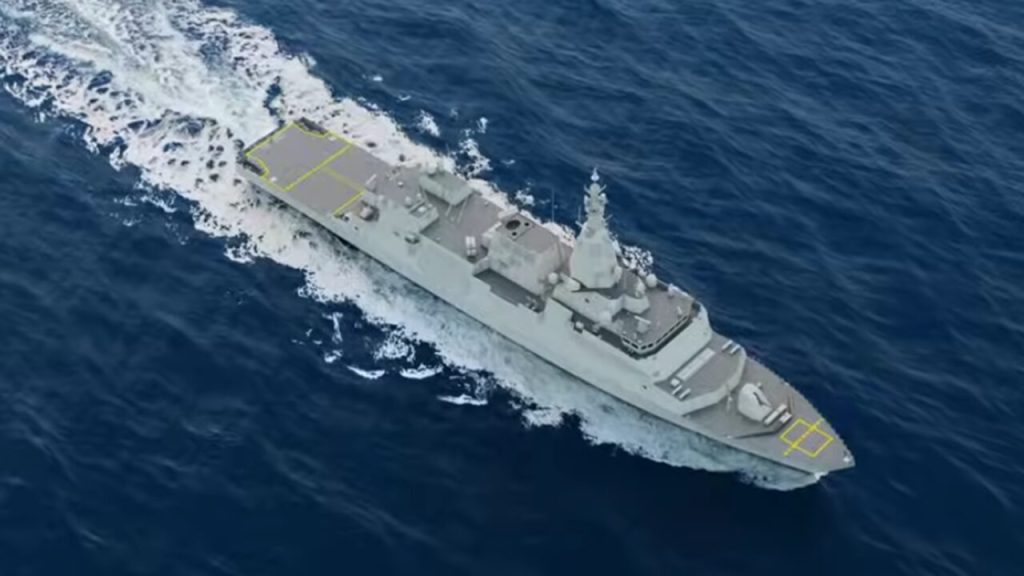
SEA Canada business development manager Dudley Malster said the new site will house a mix of offices and manufacturing space where the company will produce torpedo launcher systems and decoy launchers for the next-generation River-class destroyers that will replace the Royal Canadian Navy’s aging fleet of Iroquois- and Halifax-class warships beginning in the early 2030s.
Already an Insider? Log in
Get Instant Access to This Article
Become an Ottawa Business Journal Insider and get immediate access to all of our Insider-only content and much more.
- Critical Ottawa business news and analysis updated daily.
- Immediate access to all Insider-only content on our website.
- 4 issues per year of the Ottawa Business Journal magazine.
- Special bonus issues like the Ottawa Book of Lists.
- Discounted registration for OBJ’s in-person events.

A British defence technology company has opened a state-of-the-art manufacturing plant in Stittsville to meet what it expects to be surging demand for torpedo launching systems and other cutting-edge products as Canada ramps up defence spending.
The Canadian subsidiary of U.K.-based defence and maritime systems company SEA officially opened the new 15,500-square-foot facility on Hazeldean Road on Monday.
SEA Canada business development manager Dudley Malster said the new site will house a mix of offices and manufacturing space where the company will produce torpedo launcher systems and decoy launchers for the next-generation River-class destroyers that will replace the Royal Canadian Navy’s aging fleet of Iroquois- and Halifax-class warships beginning in the early 2030s.
Malster said the facility, which is located in a former print shop that required “significant renovations,” will also be used to repair and overhaul navy equipment and provide engineering services to third-party defence industry partners.
SEA Canada, which now has about a dozen workers in Ottawa, eventually expects to employ more than 50 people at the new site. In a release Monday, SEA Canada said the Hazeldean Road facility represents a “significant step forward” for the company as it looks to beef up its presence in Canada in response to a spate of defence spending that includes programs such as the National Shipbuilding Procurement Strategy.
In addition to buying new warships, the Royal Canadian Navy is also seeking to obtain a new fleet of continental defence corvettes by the mid-2030s – ships that will be smaller than frigates and will replace the current Kingston-class coastal defence vessels that are nearing the end of their lifespans. That procurement project is expected to follow the federal government’s search for a new fleet of submarines.
Meanwhile, the River-class ships are designed for use on the front lines of battle, with highly sophisticated air defence and anti-submarine warfare capabilities. Malster said that’s where SEA Canada will shine as it taps into the new Stittsville plant’s advanced production technologies and systems.
“We’re probably a couple of years away from hitting 50 (employees), but then if the sun shines and hay is made, that figure can be reached very quickly with the right contracts and projects,” he said. “We want to continue to progress as far and as big as we can to support Canadian defence.”
SEA Canada’s expansion into the National Capital Region is the latest signal that the Ottawa area is growing in prominence as a defence and security hub.
SEA set up its first Canadian office in Pointe-Claire, Que., in 2014 to perform repairs and overhauls on the Royal Canadian Navy’s Victoria-class submarines. But the company eventually felt it needed to establish a foothold in the nation’s capital to be closer to the Department of National Defence headquarters and become part of what Malster called Ottawa’s “growing and vibrant” network of defence and security companies.
Malster said the campaigns to replace the navy’s aging warships, submarines and corvettes represented “significant opportunities” for SEA Canada.
“Canadian maritime defence is on a real climb at the moment,” he said, adding the growing pipeline of shipbuilding projects “really gives hope that there is an awful lot of work coming down the line, and we want to be part of it with our exceptional capabilities in the maritime arena.”
Malster said the Canadian defence tech industry is riding a wave of momentum in the wake of the federal government’s pledge to boost defence spending by tens of billions of dollars annually in a bid to hit a target of investing five per cent of Canada’s gross domestic product in defence by 2035.
“No contract is good enough until it’s signed, and the money needs to be released by (the Treasury Board), but the intent of Canadian defence is absolutely there,” he said. “It does give me hope as a defence company that there is opportunity and that it will come to fruition.”