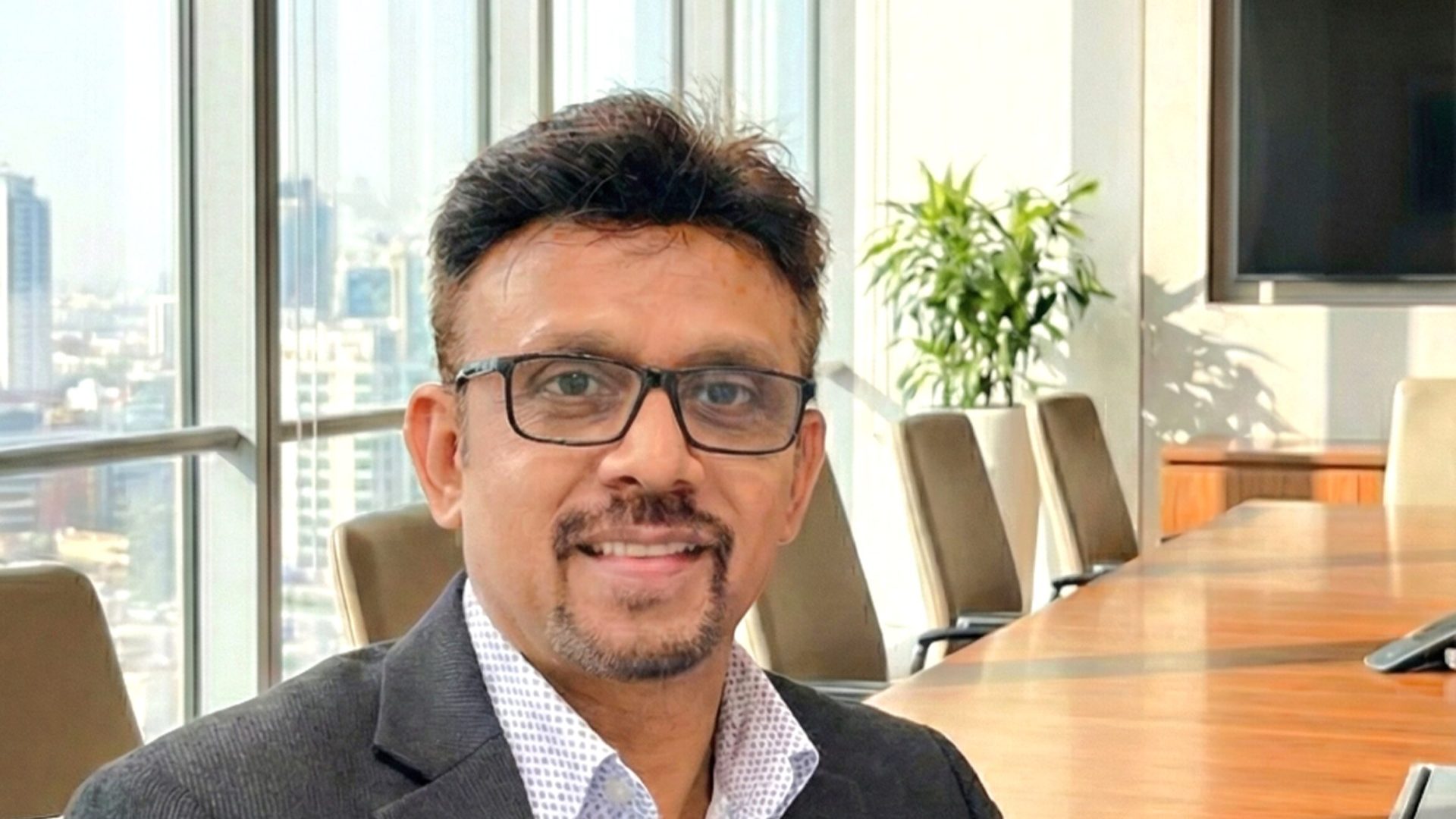
When Naleem Badurdeen arrived in Ottawa from Sri Lanka two decades ago, he ran into the same wall that greets thousands of skilled immigrants every year: either prove your experience or remain unemployed.
Already a Subscriber? Log in
Get Instant Access to This Article
Become an Ottawa Business Journal Insider and get immediate access to all of our Insider-only content and much more.
When Naleem Badurdeen arrived in Ottawa from Sri Lanka two decades ago, he ran into the same wall that greets thousands of skilled immigrants every year: either prove your experience or remain unemployed.
He had qualifications and a track record, but no way to verify any of it for a Canadian employer.
“The first thing (you’re asked) is, you have Canadian experience, right?” Badurdeen told OBJ. “And how do you validate your experience if you don’t?”
As he moved into consulting work, the problem took a different shape: he had to go back to the same references and ask them to vouch for him every time he switched contracts. Those references had to spend 15-20 minutes each time, answering the same questions.
When Badurdeen started his own business and began recruiting, he started seeing things from the employer’s side.
“These people, they come with tons of experience,” he explained. “But the thing is, there is no way we can really validate that. The easy way is to say, ‘Sorry, you don’t have any Canadian experience,’ because it’s too costly and too difficult to get references from overseas.”
Twenty years later, his wife started working at an immigration settlement organization in Ottawa. She came home with the same stories of qualified professionals arriving from around the world, unable to land their first job because they couldn’t prove their credentials locally.
“Twenty years back, I had this problem,” Badurdeen said. “Twenty years later still, this problem still exists.”
His research told him it wasn’t just a Canadian issue. Between five and seven million professionals relocate internationally every year around the world, and every one of them faces the same verification gap, he said.
To address the problem, Badurdeen built Emprofy, a platform that lets job candidates pre-collect, verify and securely reuse their professional credentials in a single shareable link. Badurdeen calls it a career passport. It’s a portable, verified bundle of references, employment records and academic credentials that a candidate can share with any prospective employer.
The platform launched two years ago as a reference-checking tool. Now, Badurdeen and his team have built a library of more than 4,000 role-specific questions modelled on the STAR methodology, a structured interview format that asks for specific examples of past behaviour. The key insight was timing.
“If I’m to get a reference from you, what is the best time to get it?” Badurdeen explained. “Is it the moment I’m leaving your company, or coming back to ask for it after two years? It’s the moment I’m leaving, right?”
Emprofy prompts candidates to collect references from supervisors and colleagues while they still have fresh memories. References answer through the platform using multiple choice, open-ended question formats. They can also dictate answers by voice.
Candidates cannot see what their references wrote. Instead, the system analyzes the responses and generates an employability score that indicates whether a reference is worth sharing. When a candidate sends references to a prospective employer, the employer gets the full picture.
“All five references are gonna be compiled together in one report,” Badurdeen said. “What are my strengths? What are my weaknesses, the good and the bad? If there are any red flags in there, and (if) there is any bias in there, all of this is analyzed.”
The platform expanded beyond references after conversations with recruiters and immigration settlement organizations revealed broader verification pain points, from companies that disappeared during COVID-19 to employment records lost in corporate acquisitions. Now Emprofy lets candidates collect and store verified employment records and academic records alongside their references.
Badurdeen said AI has made the verification problem more urgent. Recruiters now face a flood of polished resumes that may bear little resemblance to reality.
“Every resume is cooked by AI,” he said. “Every resume looks so beautiful, perfectly aligned with the job description.”
He recounted a story a recruiter shared with him. The recruiter found a strong candidate, ran him through several rounds of interviews, then in the third interview the candidate was asked technical questions. The candidate admitted he had studied the subject in university, but never actually worked with it on the job. AI had written the resume to match the job posting.
“After two weeks of back and forth with this guy, they had to drop it,” Badurdeen said. “It was a waste of time and money.”
Emprofy runs on the Microsoft Azure Confidential Ledger (ACL) blockchain. The platform complies with GDPR, CCPA and PIPEDA regulations. When an original authority verifies a document, the platform encrypts it using blockchain.
“Nobody can touch it after that,” Badurdeen said. “It’s a sealed document. Every individual has full control over who can see their documents and for how long.”
The platform also runs a fraud detection layer. It tracks IP addresses, timing patterns and the age of email domains to catch candidates who try to author their own references. Emprofy has blocked more than 30,000 free email domains so far, Badurdeen said. If someone creates a fake company email to submit a self-written reference, the system flags it as suspicious for the employer without tipping off the candidate.
Emprofy has applied for a patent on the technology, which Badurdeen described as a first globally. “It’s a space nobody has really touched.”
A software engineer by trade and a serial entrepreneur at heart, Badurdeen sold his first company in 2008. He returned to Sri Lanka in 2016 to care for his parents and took an unexpected detour: he assumed responsibility for his family’s furniture factory.
“I combined my engineering knowledge and software knowledge into a new tool, a new workspace,” he said. He took courses in woodworking at Algonquin College’s international campus and paired that craft with his technical background to build a CNC-equipped operation. “Within three years, I became one of the best companies in Sri Lanka.”
Then bombings tore through the country and Badurdeen and his wife decided it was not safe to stay there. They returned to Ottawa.
That’s when he started building Emprofy with his own money and support from friends. The company now has more than 150 early adopters and is piloting with several organizations, including users in Canada, India and the Philippines. Badurdeen is seeking his first external funding round.
He credits Ottawa’s tech ecosystem with helping the company grow. Two University of Ottawa professors advise Emprofy on policy and security. Invest Ottawa has provided guidance and programming.
“I would say it’s a blessing,” Badurdeen said of the ecosystem around him. “To have these people, to have Invest Ottawa, having my back is really helpful.”
French-language support is coming this year, and Badurdeen plans to add 20 more languages within three years. The company is also pursuing SOC 2 certification and has begun early integration talks with applicant tracking systems, including BambooHR and Workday.
He sees the career passport reaching beyond hiring. He wants candidates to share verified credentials directly with embassies for visa applications and with credential assessment services like World Education Services.
He also wants to embed the system in universities, so professors can issue endorsements to graduating students at scale. This would give new graduates a verified foundation before they enter the job market.
For now, the platform offers candidates a free tier for basic reference collection. A one-time payment of $29 unlocks the full lifetime passport. Employers pay a subscription fee.
Badurdeen said the one-time candidate fee is deliberate. “We want this to become one of the new models in the world,” he said. “Because it has so much benefit for everybody.”
He plans to stay in Ottawa and build from here, no matter how large Emprofy becomes.