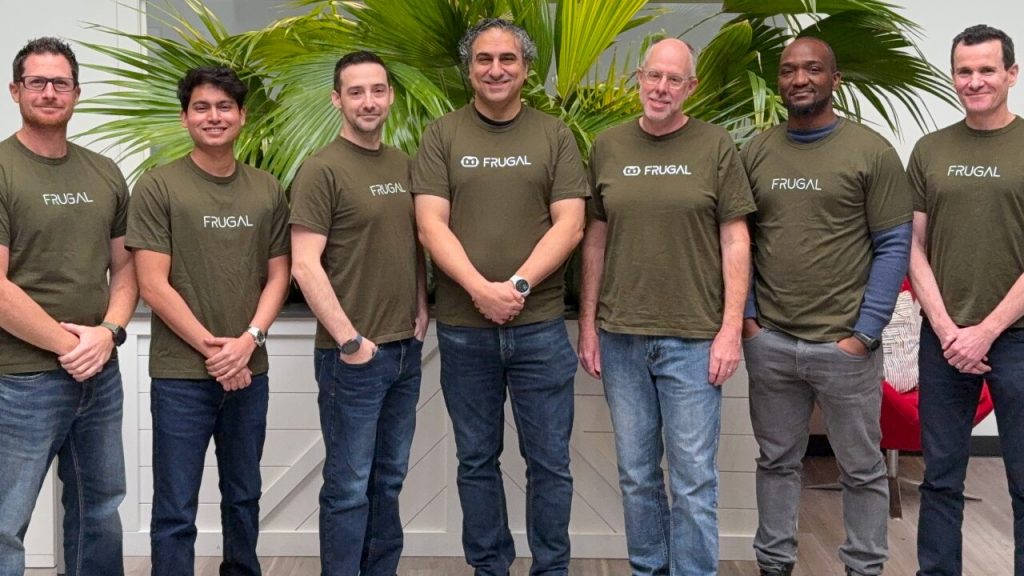
Frugal AI was founded in May by serial entrepreneurs Mike Weider, Craig Conboy and Rob Calendino.
Already an Insider? Log in
Get Instant Access to This Article
Become an Ottawa Business Journal Insider and get immediate access to all of our Insider-only content and much more.
- Critical Ottawa business news and analysis updated daily.
- Immediate access to all Insider-only content on our website.
- 4 issues per year of the Ottawa Business Journal magazine.
- Special bonus issues like the Ottawa Book of Lists.
- Discounted registration for OBJ’s in-person events.
A new Ottawa startup that uses AI to help make software applications more efficient has landed millions of dollars in seed funding as it prepares to take its product to market next year.
Frugal AI was founded in May by serial entrepreneurs Mike Weider, Craig Conboy and Rob Calendino. The fledgling firm announced Wednesday it has secured a US$5 million seed round led by Toronto’s Whitecap Venture Partners, with participation from Ottawa-based VC Mistral Venture Partners, as well as the founders of Snyk and CloudCheckr.
Now at seven employees, Frugal has developed an AI-powered platform that looks for “inefficient code patterns” in software applications and helps pinpoint areas where developers can eliminate or rewrite redundant lines of code.
Many software companies are now spending upwards of $1 million a year to host their applications in the cloud on platforms such as Amazon Web Services, Weider explains.
But in many cases, he says, developers don’t know how much the countless lines of code that make up each application are really costing them. Frugal’s AI helps “untangle the cost mess” by giving developers a detailed breakdown of how much it costs to store each segment of a software application.
The platform then scours the apps to find inefficiencies in how the code has been written and provides fixes aimed at streamlining the applications, along with an analysis of how much the changes will save in storage costs.
Weider said Frugal’s founders hatched the idea after hearing tech leaders complain about how much they were paying managed service providers to store their software apps in the cloud. In many cases, he says, that monthly cloud storage bill can amount to as much as 10 per cent of a company’s revenues or more.
“These bills were incredibly painful for them,” Weider explains, adding that AI has “turbocharged our ability to write new code… and those applications also use cloud resources to host them. We saw this as kind of an unsustainable problem.”
Developers often don’t have a clear idea of how much it will actually cost to store applications until they’re already in production, he adds, and by then it’s too late because they’re preoccupied with dealing with customers or they’ve moved on to other projects.
“No one ever gets the chance to go back and fix things,” Weider says. “It’s a pain point that every single technology company is very, very familiar with.”
He says his research suggests the average firm could reduce its annual bill by as much as 20 per cent by rewriting software code to make applications more efficient.
“This is really significant money that we’re potentially helping them to save.”
Software makers traditionally haven’t given the issue of cloud storage costs much thought, he says. Meanwhile, he adds, most current cost tools focus on telling customers which apps are being used and which ones aren’t, not whether the apps are actually well-designed.
“In the age of AI and how modern cloud has evolved, that needs to change. We need to build cost controls into the development process.”
Frugal is now testing its subscription-based platform with about 10 customers and plans to add more in the coming weeks. The firm hopes to release the product commercially in the first quarter of 2026.
Weider, whose resume includes launching three previous tech ventures, has spent most of the past few years helping other founders while serving on the boards of Invest Ottawa and fast-growing software firm Noibu.
But he says Frugal has reignited his passion for building his own business.
“I thought I was done with the startup game, but I really got pulled back in from the excitement of the opportunities now in this sort of post-AI world that didn’t exist before. I’m having a lot of fun getting back into the startup grind.”