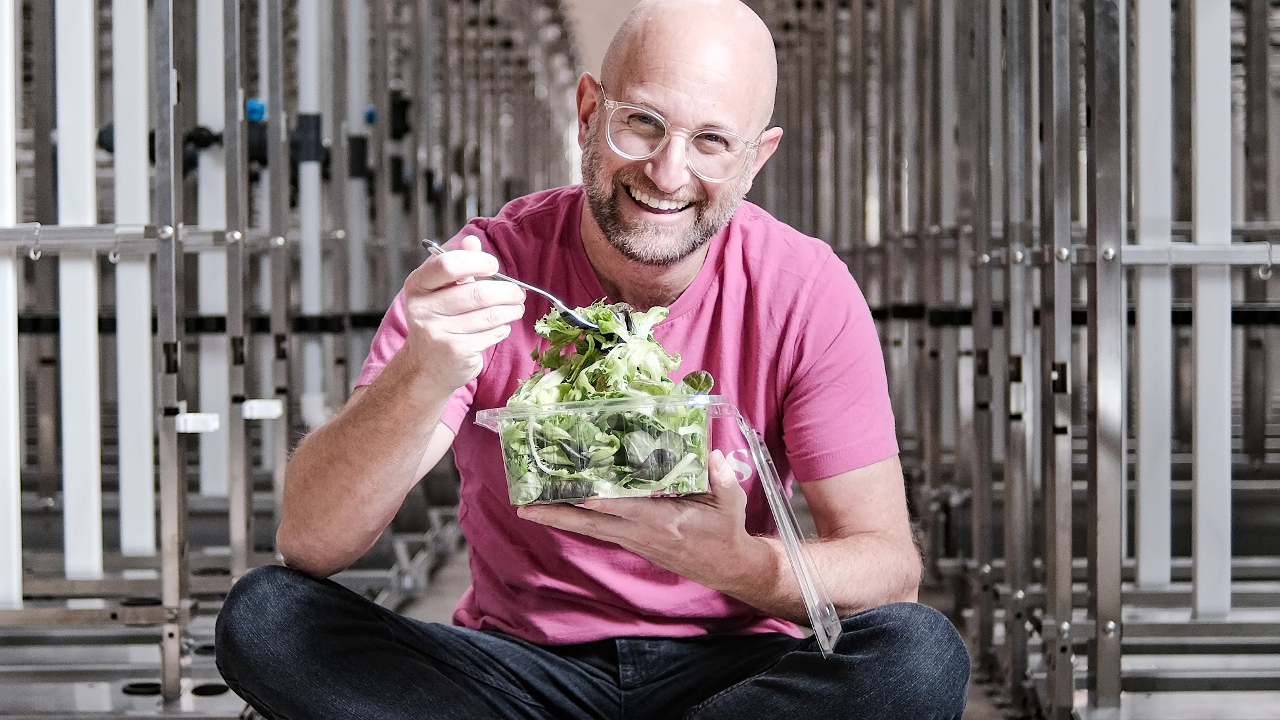
Fieldless Farms, which has raised more than $20 million in venture capital, was acquired last month by vertical agriculture pioneer Elevate Farms. Financial terms of the deal were not disclosed.
Get Instant Access to This Article
Become an Ottawa Business Journal Insider and get immediate access to all of our Insider-only content and much more.
An Ottawa-based indoor farming enterprise that aimed to make Canadian consumers less dependent on foreign-grown produce is now owned by a Toronto-based company.
Fieldless Farms, which has raised more than $20 million in venture capital, was acquired last month by vertical agriculture pioneer Elevate Farms. Financial terms of the deal were not disclosed.
Founded in 2019, Fieldless quickly attracted millions of dollars in seed funding for its hydroponically grown, pesticide-free products, which now include lettuce, kale, spinach, basil and mushrooms.
The firm, whose produce can be found in dozens of Farm Boy, Real Canadian Superstore and No Frills stores across Ontario, operates a 60,000-square-foot indoor growing facility in Cornwall. Last year, the company launched a crowdfunding campaign with a goal of raising $1.1 million to help boost its capacity and push further into the Ontario and Quebec markets.
Fieldless is now a wholly owned subsidiary of Elevate, which specializes in leafy greens and claims its autonomous farming technology uses 98 per cent less water than traditional growing methods.
Fieldless CEO Jon Lomow said the acquisition comes at a “pivotal moment for Canada’s food ecosystem,” which is under pressure as prices at the grocery checkout counter continue to rise faster than the rate of inflation.
“With shifting global trade policies and new U.S. tariffs disrupting Canadian food imports and demand, investing in local production has never been more important,” Lomow said in a news release. “Together, Elevate and Fieldless are securing a stronger, more resilient domestic food supply while creating a more robust offering for Canadian innovation to enter international markets.”
Telesat, South Korean firm team up on defence projects
Telesat is strengthening its ties with a South Korean defence and aerospace industry giant as it looks to capitalize on a surge in defence spending among western nations.
The Ottawa-based satellite equipment provider says it’s teaming up with Seoul-based Hanwha Group to develop new technology and build components such as user terminals for Telesat’s next-generation low-Earth-orbit satellite (LEO) constellation that’s expected to launch next year.
Telesat is banking on its US$3.5-billion satellite network, dubbed Lightspeed, to give it a foothold in the fast-growing LEO market as demand for lower-latency, high-speed internet service skyrockets.
“This collaboration brings together complementary resources and expertise to deliver next‑generation, sovereign LEO communications capabilities for Canada, South Korea, and our allied partners,” Telesat president and CEO Dan Goldberg said in a release.
“The secure, high‑performance Telesat Lightspeed architecture – paired with Hanwha’s advanced systems expertise – positions us to support critical defence missions and national priorities with unmatched reliability.”
While the Ottawa-based firm says it’s seeing plenty of interest from industries such as airlines and cruise ship providers that want to provide passengers with better connectivity in remote locations, it’s also hoping to make a splash with customers in the defence sector.
To that end, Telesat says it will work together with Hanwha – a growing contributor to South Korea’s defence industry with products such as space launch vehicles and satellite observation services – to create “next-generation, sovereign satellite connectivity solutions” as well as user terminals that will be compatible with Lightspeed.
In addition, Hanwha says it intends to make Lightspeed services a “significant component” of its bid to replace the Royal Canadian Navy’s aging fleet of Victoria-class submarines. The South Korean conglomerate is one of two suppliers that have been shortlisted to produce up to 12 submarines that will patrol the Atlantic, Pacific and Arctic oceans.
Hanwha says it will also look to use Telesat Lightspeed services on its weapon systems as a “means of exploring potential business collaboration opportunities” between the two companies.
Microsoft pours praise on Ottawa-based concrete sensor maker Giatec
An Ottawa firm is cementing its reputation as a cleantech industry trailblazer with a shout-out from one of the world’s biggest and best-known tech companies.
Giatec Scientific, which specializes in software that uses artificial intelligence to calculate the right blend of cement and other additives in concrete mixtures, is featured in a new story on Microsoft’s website that touts Giatec’s use of the tech giant’s AI and Internet of Things tools to develop its groundbreaking platform.
Founded in 2010, Giatec says its technology, which features cutting-edge sensors that measure the quality and consistency of concrete throughout the entire construction process, helps builders cut material costs and reduce greenhouse gas emissions – a huge potential boon for the environment, considering the concrete industry accounts for about eight per cent of all global carbon dioxide emissions.
In the story, Microsoft says concrete producers have traditionally relied on “manual processes and intuition” to come up with the right mix of materials to make concrete sturdy and durable.
“Giatec saw an opportunity to close that gap with smarter solutions, starting with data – advancing sustainability and safety across the lifecycle of concrete,” the company added.
Giatec’s platform uses Microsoft’s Azure suite of AI products to collect and analyze real-time data from sensors embedded in concrete. The Ottawa company says its technology has eliminated 2.5 million tons of carbon emissions, helped contractors save up to $10,000 per pour and increased concrete producers’ profit margins by 50 to 100 per cent.
“Giatec’s AI‑powered platform shows that progress on sustainability and business performance can go hand in hand,” Kathleen Mitford, corporate vice-president of global industry marketing for Microsoft, said in a release.
“Built on Microsoft Azure, it helps turn real‑time data into smarter decisions that reduce waste, lower emissions, and improve operational efficiency – enabling the concrete industry to build more responsibly at global scale.”
Founded in 2010, Giatec brought in revenues of less than $20 million in 2024 but expects that number to hit $100 million before the decade is out, CEO Pouria Ghods told Techopia in an October 2024 interview.
“We think we have a great opportunity to reach that $100-million mark within five years,” Ghods said. “It depends how lucky we are.”
Fintech startup Pluvo hits the mark with global accelerator
An Ottawa-born fintech startup has landed a coveted spot in a global program that’s looking to give young software businesses a foothold in new international markets.
Pluvo announced last week it has been chosen to take part in the Andreessen Horowitz (a16z) speedrun cohort, a 12-week program that connects founders with mentors and industry leaders to refine startups’ product strategies and accelerate their go-to-market plans.
Founded in Ottawa in 2024, Pluvo specializes in an AI-powered platform that uses real-time data to help clients with financial planning, scenario modelling and strategic forecasting.
Headquartered on Richmond Road, the firm also has a growing office in San Francisco. Pluvo, the only local startup accepted into a16z, says it hopes being part of the accelerator will supercharge its product development efforts as it ramps up hiring and looks to beef up its presence south of the border.
“Establishing a U.S. entity was an important step for our growth,” co-founder Vanessa Galarneau said in a release. “Our customers and partners are increasingly U.S.-based, and our go-to-market reflects that.”