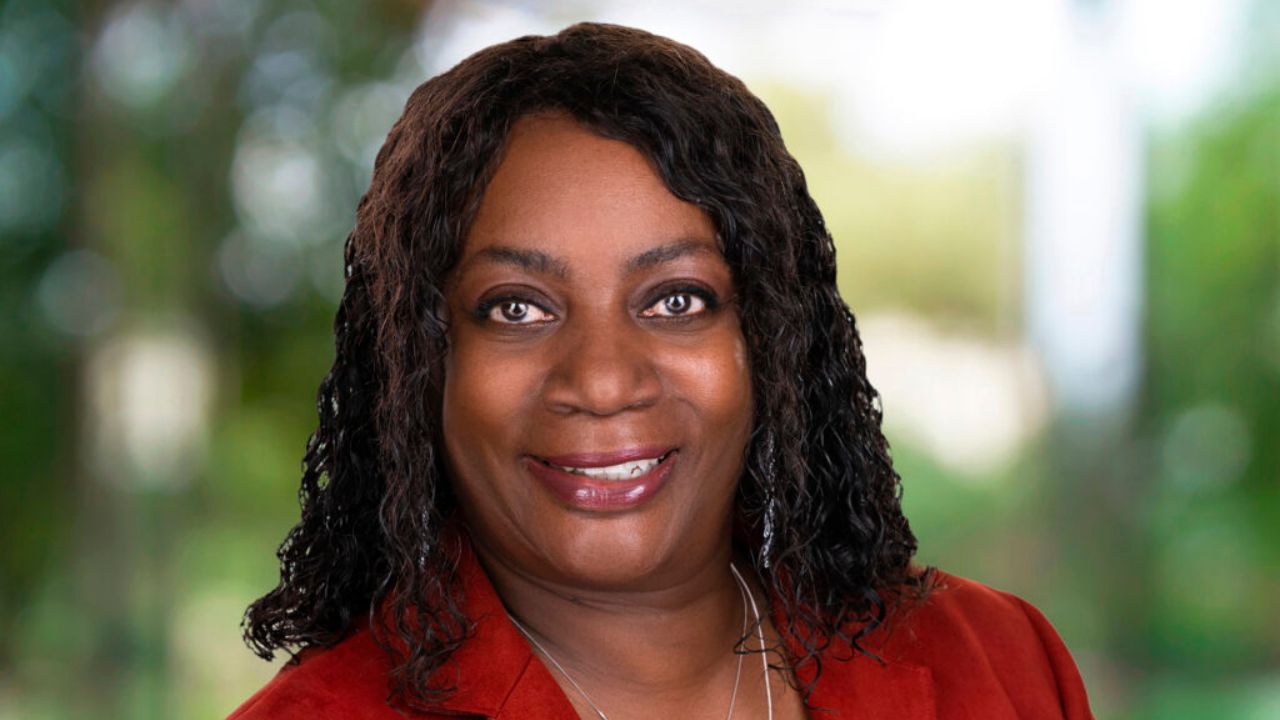
Ottawa Community Housing’s chief people and communications officer Shaun Simms recently sat down with OBJ to talk about implementing a DEI-based lens that isn’t “just a checkbox,” but rather a way of life, and how this approach positions her organization for a brighter future.
Get Instant Access to This Article
Become an Ottawa Business Journal Insider and get immediate access to all of our Insider-only content and much more.
When she joined the Ottawa Community Housing Corp. in 1991, Shaun Simms was a new graduate in the social services field looking to make a difference. It turned out the Ottawa non-profit, which is Ottawa’s largest provider of affordable housing, offering around 15,000 homes to over 32,000 tenants, including seniors, families, individuals, and people with disabilities, was just the right fit.
Now, Simms is OCH’s chief people and communications officer and has used her more than 30 years of experience to spearhead the non-profit’s diversity, equity and inclusion (DEI) philosophy.
Simms recently sat down with OBJ to talk about implementing a DEI-based lens that isn’t “just a checkbox,” but rather a way of life, and how this approach positions her organization for a brighter future.
The transcript has been edited for length and clarity.
You joined the OCH in 1994, and have been there ever since. What was the path that led you to this position?
I was in the social services field, newly graduated, and I had worked with the Children’s Aid Society and with youth. I knew I wanted to get into an organization that had a strong purpose and gave back, so I applied to OCH. At that time, it was just for a six-month contract, but I just wanted to get my foot in the door.
From there, I worked in a lot of frontline positions, not really in the position I wanted, because I wanted to work directly with tenants as a tenant support worker because of my social work background. So I worked on the frontlines for many years, worked my way to the position I wanted, and I think a lot of my supervisors recognized me as a natural leader.
From there, I moved to management and to a role as director of operations overseeing frontline staff, maintenance and tenancy administration, and then from there to a vice-president role, and then the chief role I’m in, where I’ve been for about two years now.
In this role, you’ve tasked yourself with championing DEI at OCH. What does that look like day-to-day in your work?
My overall mandate is built around pillars, and DEI is one of those. I’m at the level where I can really ensure it’s driven throughout the organization.
DEI means that people feel a sense of belonging, and there’s inclusivity where they can bring their authentic selves and their skills and all those diverse elements to the table.
It fosters a workplace and environment where employees and their talents, input and dedication shines, regardless of gender, race, sexuality, religion or background. It’s an opportunity for us as leaders to lead by example and to inspire others to foster an inclusive workspace.
How is this inclusive approach reflected tangibly in policies or initiatives within OCH?
For us, we take a grassroots approach with this. We have a champions table, we have six employee resource groups (ERGs) … Definitely, it’s about attracting and acquiring a diverse talent pool.
We’ve established and leveraged partnerships. It’s about how we lead, and for us at OCH, we’ve applied an inclusive lens to a lot of our documentation … There’s language around DEI, and we’ve also refreshed that to make sure we’re using an inclusive lens.
We have a multi-year roadmap and we’re in the third phase now, so we have to refresh it again this year. We’re putting in place plans to make sure we’re on the right track.
We also have an engagement survey about DEI for our employees, leadership training, development programs, and peer-to-peer support groups, so there’s a lot. We’re also, in terms of HR and looking at how we recruit people and post our job postings, looking at all that language to ensure that we’re inclusive in that as well.
For things like International Women’s Day, we celebrate within our organization. We also have an ERG that focuses on women in the workplace, and so a lot of the initiatives come from our own employees.
We also have a recognition program and definitely prioritize learning and development of our people and their skills.
How is the DEI landscape unique at OCH?
I think our client base and the tenants we serve are unique. We have a very diverse client base and for us it’s important that we reflect the tenants.
What’s unique is even though there are multiple languages spoken amongst our tenants, we have staff that also speak multiple languages, so we are often able to help people navigate our system if they need an interpreter.
We can often do that in-house. We deliver our business languages in English and French, but there are times other languages are helpful, and we’re able to either bridge that or link people to those services that offer that, which is unique to us.
You’ve been at OCH for 32 years now, and must have seen all kinds of changes to DEI and to the workplace in general. How has OCH, and its commitment to inclusivity, changed throughout your career there?
We’ve evolved for sure. When I first started with the organization, it was probably not as diverse as it is now.
I would also say that, after the pandemic and introducing flexible and hybrid work, that presented some challenges. As leaders, we have to lead differently, but it’s also given us a lot of opportunity.
And I would say that with the work that we’ve really done around DEI … We were able to really focus on that in the last three or four years. DEI was always in our DNA, but we were not able to focus on that space and shift it to focus it more on that area. That’s been a big change.
We’ve always had a diverse client base, so it’s in our DNA, but we were in the last few years able to really focus on that area.
Are there any challenges or barriers to OCH’s goals when it comes to DEI?
There are always challenges. I don’t know if they’re barriers. but I see them as areas and opportunities for growth and development.
One of the challenges is definitely that in our sector you do a lot of research and reach out to other people to see what they’re doing, but I think we are leading in this area a bit. So, one of the challenges is finding examples or other success stories within this area within our sector.
Another challenge or opportunity is around how we’re measuring how we refresh our strategic plan and put some language in there as well. I want it to be driven in the organization so it isn’t a tick box, but more a part of the day-to-day.
That’s a challenge, getting it to be less of a checkbox. We’re removing language that is gender-based, any policies that are less inclusive … All of that is something that, when you’re using an inclusive lens, you’re looking for, and we brought in a third party to help us navigate through the waters.
How does this DEI approach set up OCH for the future?
As we’re scaling up and moving towards the future, we want employees who are able to scale up themselves and come to work and be excited about work and invested in that work.
We know the market for our workers is very competitive, so for us it’s really about meeting the needs of our employees and preparing us for our business in the future. We know that the future of the workplace is changing, so we’re wanting to be just as agile and flexible, and you want people to bring diverse voices to the table to get the best possible outcome.
The chief people or culture officer role continues to evolve, and it’s exciting to see that we’re at the table as business partners. That role really provides insight and guidance about how to align our people with culture and initiatives within the overall business objectives.
I just look forward to this role and the role of the team to be called on in a much bigger way to ensure that we’re leveraging all of that for better decision-making, all for a richer organization.