BlackBerry’s decision to scrap a planned IPO of its connected vehicles software business could pay off for its Kanata operations as autonomous vehicles become more pervasive, a prominent local AV technology expert says. The Waterloo-based company announced Monday it was calling off plans to take its Internet of Things business public and promoting John Giamatteo […]
Get Instant Access to This Article
Become an Ottawa Business Journal Insider and get immediate access to all of our Insider-only content and much more.
BlackBerry’s decision to scrap a planned IPO of its connected vehicles software business could pay off for its Kanata operations as autonomous vehicles become more pervasive, a prominent local AV technology expert says.
The Waterloo-based company announced Monday it was calling off plans to take its Internet of Things business public and promoting John Giamatteo to chief executive.
BlackBerry said it still plans to split its IoT and cybersecurity operations into two separate divisions, but the company did not say why it is abandoning plans for an IPO.
Barrie Kirk, the executive director of the Ottawa-based Canadian Automated Vehicles Centre of Excellence, said keeping the IoT and cybersecurity arms under one umbrella is the right move for BlackBerry.
“I see the world through the lens of connected and automated vehicles, and I think there are strong synergies in this ecosystem between the cybersecurity software and the communications and IoT (platforms),” said Kirk. “They’re all interrelated. I think BlackBerry would be better to think longer term and keep all of that together.”
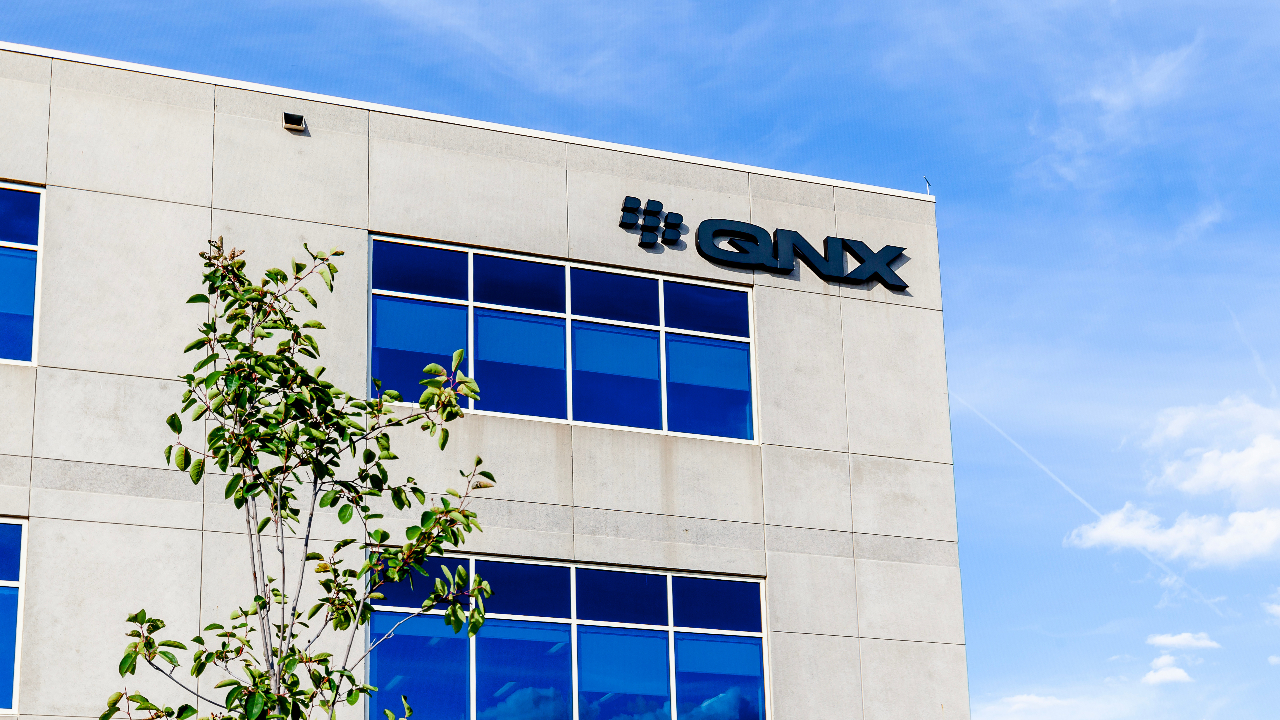
BlackBerry employs hundreds of people at its Kanata-based IoT division, called BlackBerry QNX. The organization supplies connected vehicle software to the world’s 10 largest automakers, which have installed QNX’s technology in more than 235 million vehicles.
Kirk predicts that fully autonomous vehicles won’t be ready for massive deployment until the 2030s at the earliest. At the same time, he expects QNX’s Kanata R&D hub to continue growing as advanced driver assistance systems such as self-parking and lane-keeping platforms become more commonplace.
“These things are stepping stones towards full autonomy,” he said. “But in the 2020s, cars already have connectivity, and they’ll need more.
“My crystal ball says (Kanata) will become an even more important location for them. Some of the glory will be shared with Waterloo, of course, but that’s to be expected. I’m sure (Giamatteo) understands the importance of the Kanata tech park and the benefits of staying there.”
Strategic review
BlackBerry used Monday’s announcements to reaffirm its commitment to dividing the company – one of the products of a strategic review of the business launched in May with a goal to reward shareholders.
“The board, with input from its advisors, believes that a full separation of BlackBerry's IoT and cybersecurity businesses will open up a number of strategic alternatives that can unlock shareholder value,” Dick Lynch, BlackBerry's board chair, said in a statement.
“Management is focused on moving quickly to complete this reorganization that will further enhance the focus of both businesses on their respective markets as well as their capacity for fast, flexible decision-making.”
Monday’s announcements from BlackBerry mark the latest development in a period of transition for the company that rose to fame with its smartphones but has since gone all in on cybersecurity and vehicle products.
As part of its strategic review known as Project Imperium, the company planned to carve BlackBerry into two business units, dividing its cybersecurity operations from its Internet of Things business, for which it hoped to hold an initial public offering.
On Monday, the company said the separation will centralize corporate functions into business-unit specific teams and be done with “a view to each division operating independently and on a profitable and cash flow-positive basis going forward.”
BlackBerry lost US$42 million in the second quarter of its 2024 fiscal year, compared with a loss of US$54 million in the same period last year.
To assist in the separation and “rightsizing process,” BlackBerry said it is in the final stages of selecting a consulting firm to help with an “independent, ground-up assessment.”
'Legacy of innovation'
This process will be completed under Giamatteo, who was president of BlackBerry’s cybersecurity business unit.
Giamatteo was previously president and chief revenue officer of antivirus giant McAfee and spent time in senior roles at software companies AVG Technologies, Solera and RealNetworks and telecommunications business Nortel Networks, his LinkedIn page said.
“I am honoured and excited to lead the next phase of BlackBerry's evolution as its CEO,” Giamatteo said in a statement.
“I look forward to working with the entire team to uphold our legacy of innovation and continue providing exceptional service to our customers as we deliver on our goals.”
Giamatteo takes over from John Chen, who spent a decade at the helm of BlackBerry, where he was tasked with taking the company from its telecommunications roots to a cybersecurity software firm.
Chen retired in November, saying he was saddened to be sharing the news of his retirement “with little notice.”
“However, I felt it was important that I wait for Project Imperium to run its course to avoid disrupting this critical next step for the company; a company that so many of us have poured our blood, sweat, and tears into,” he wrote.
At the time, Chen said he joined the company with three priorities: to repair BlackBerry's financial health as it was “just days away from potential bankruptcy,” to establish a new strategy for the company and to set it up for long-term growth.
“Now that each of these priorities has been achieved, the time seems right for me to leave,” he said.
– With additional reporting from the Canadian Press