Even against the backdrop of an uncertain economy, Ben Morris believes there are many dynamics in today’s environment that are leading to new opportunities for tech companies.
Get Instant Access to This Article
Become an Ottawa Business Journal Insider and get immediate access to all of our Insider-only content and much more.
Even against the backdrop of an uncertain economy, Ben Morris believes there are many dynamics in today’s environment that are leading to new opportunities for tech companies.
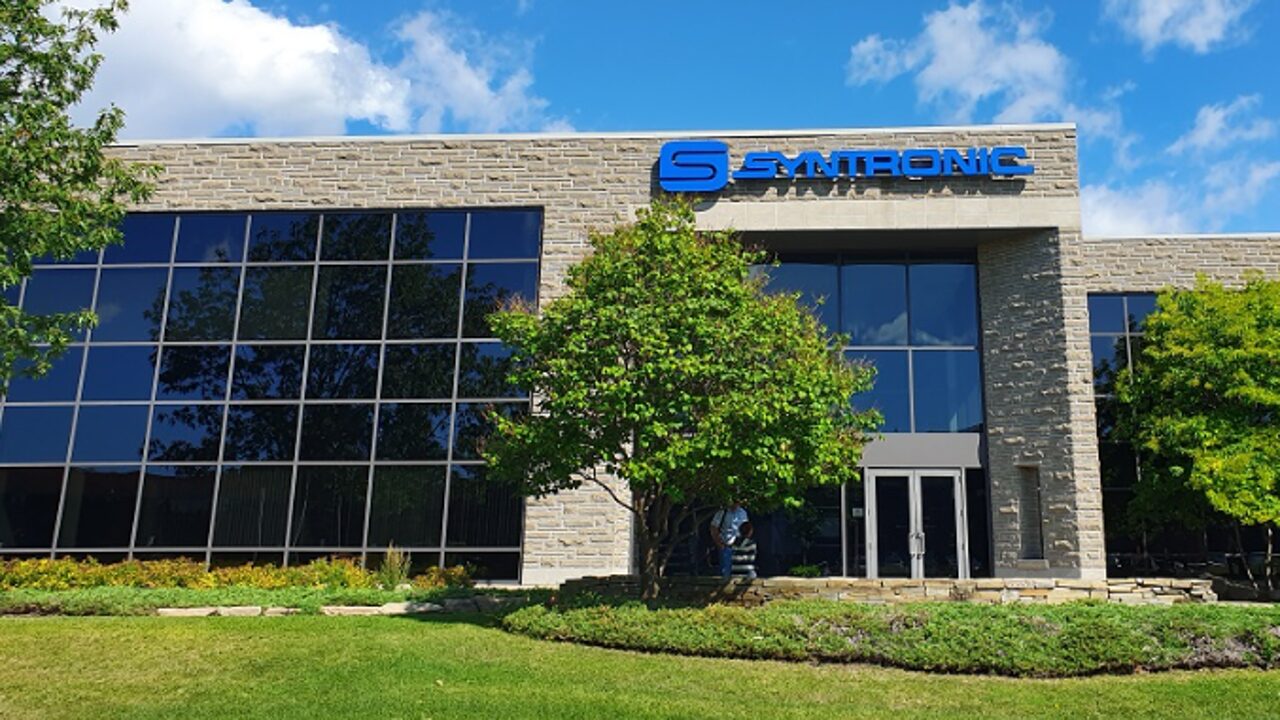
Morris is the senior vice-president and head of Canada R&D for Syntronic, a multinational engineering design firm. Headquartered in Sweden, the firm designs and manufactures software and other technology for customers in the automotive, telecommunications, medical technology, industrial and robotics sectors. Syntronic established its first Canadian R&D hub in Kanata a decade ago. The firm now has five offices in the Ottawa area, including three in Kanata and two in Stittsville, where its manufacturing facility is located.
Morris, who is also chairperson of the Kanata North Business Association, said that, in the past few years, tech companies have found ways to adapt and improve in the face of many sea changes, from AI and remote work to tariffs and trade tensions with the United States.
In this instalment of Top of Mind in Tech, Morris talks about AI as the next stage in tech advancement, how to take advantage of opportunities with tariffs, and why tech workers are perhaps more keen to get back to the office than others.
The transcript has been edited for length and clarity.
AI as a fundamental shift in efficiency and productivity
BM: First and foremost, we see AI as a fundamental shift in terms of how we can be efficient and direct productivity. There's a lot of AI implementations that are coming to market related to production and the manufacturing floor. On the manufacturing side, we are in the process of building a new production line in a variety of different places around the world and Ottawa will be one of the first places. A lot of the thinking and effort going into the outfitting of that space today is around AI-assisted manufacturing processes.
On the engineering services side, AI is already playing a significant role in helping us be more efficient and accurate. One of the most challenging parts is making sure that we are maintaining the data integrity and sovereignty of not only our work, but also the intellectual property for our clients and over-rotating on making sure that we have the right internal policies in place and the right tools.
What I have seen in some of the early AI implementations within our business is a 10-times increase on the software development side. In some cases, we’re seeing the same or similar improvements around the sales and proposal management process. It’s really helping us increase the level of satisfaction that our clients have. Massive improvements from an efficiency and from an accuracy perspective that are ultimately driving much higher customer satisfaction and employee satisfaction because of the help that people are getting (from AI).
AI is the next big shift in how people are working. Organizations need to make sure they have the appropriate guidelines in place. I think the companies that are going to win are those that have the most flexible and open policies so people can be creative and experiment, but at the same time have the right policies and procedures to make sure things aren’t hitting the web.
How tariffs are providing opportunities in the engineering services industry
BM: At the highest level, the greatest challenge with tariffs and the current political landscape is the uncertainty for what is going to happen tomorrow. Businesses for decades have dealt with policies, taxation, tariffs, economic stimulus or detractors. These are things business leaders are well-trained to deal with. What is unique in our current environment is the speed at which tariffs are being applied and withdrawn and the uncertainty that’s driving for our business community.
Beyond tariffs affecting business confidence, I see tariffs for Syntronic as a fairly neutral situation. Historically, our customers may have been buying components from U.S.-based providers and, today, those would be (affected by) tariffs. However, those same components are now available tariff-free from overseas jurisdictions. Therefore, all we’re doing is biasing our procurement away from the tariff environment. We’ve got to work a little smarter and harder for ourselves and our clients.
As an engineering services firm, that’s part of the value proposition we bring to our customers and I see an increase in business as a result of the tariff situation. At the end of the day, customers want the lowest-cost and most efficient products in terms of what components they’re putting into their end products. So if we can offer a faster path to lower-cost supplies, people will turn to us for help. At the same time, there are a lot of products that are made in the U.S. that are sold elsewhere. As a result, those tariffs are now tariffed by other countries in a reciprocal way. So another line of opportunity is where international customers say, ‘Hey, we want to buy these goods from the U.S., but they’re too expensive. Could you work with that vendor to help them engineer those products outside of the U.S.?’
How tech workers are returning to the office, but with more flexibility
BM: As the chairperson for the Kanata North Business Association, I can report that we’re seeing traffic levels on the streets at pre-2019 levels, which is fantastic. There’s very much an aggressive effort to return to the office for the purpose of collaborating with colleagues, pushing new products and innovations and generally just having that collegial and friendly environment.
I don’t think there’s a policy that’s one-size-fits-all for everybody and I’m sure that’s where we see the big differences of opinion. But some jobs do require you to be in an office, in particular when there are labs and equipment and things you actually need in the office. We’re definitely seeing more of a settling of the vector of work culturally and, overall, that’s a great thing. It does drive productivity and there’s strength in numbers. When you have these more uncertain economic periods, it does help to be together with a team, to ideate and push through some of the more challenging situations.
I think engineers and other tech people by nature are quite focused on a sense of community. There is a tight tech community that probably drives some of the behaviour and desire to work together. I’d say that’s something that’s quite consistent among my colleagues and people in the tech park.
I would say there is a greater appreciation and flexibility around work-from-home, almost like an AI tool. When I need heavy-duty concentrate time or when I have back-to-back meetings, I’m most efficient at home. I can steal back the two hours of my commute to put into work. Before COVID, I think there was a stigma. Now that’s completely gone because we can demonstrate that we can be highly productive both in and out of the office.